Monday, March 30, 2026

Daily Devotional — The First Step

Daily Devotional — The First Step

“Come unto me, all ye that labour and are heavy laden, and I will give you rest.” — Matthew 11:28

My grace is sufficient for thee: for my strength is made perfect in weakness. For when I am weak, then am I strong.” — 2 Corinthians 12:9-10

“I know that I am nothing; as to my strength I am weak… but in His strength I can do all things.” — Alma 26:12

Most of us don’t realize it, but the first wound we ever carried wasn’t our addiction—it was the lie we learned as children that we had to survive by becoming someone other than ourselves. We learned to read the room before we learned to read words. We learned to manage chaos before we learned to manage emotions. And somewhere along the way, we mistook helplessness for identity.

That early training didn’t disappear when we became adults. It followed us into our relationships, our faith, our recovery, and even our self‑talk. We still brace when someone raises their voice. We still worry as if worry is a form of love. We still perform, please, fix, rescue, or disappear—because that’s what kept us alive.

But Step 1 interrupts the old script. It invites us to stop pretending we’re the hero of our own story and finally admit the truth: We are powerless. Our lives have become unmanageable. Not because we’re weak, but because we were never meant to carry the weight of being our own savior. This is a heavy realization, but it serves as the foundation for a new beginning—a chance to reframe our lives not through the lens of our past traumas but through the lens of possibility and divine intervention.

This is where the shift begins. This is where the “shoulds” lose their grip. This is where we stop inheriting identity from our past and start receiving identity from God. It's in this profound moment of acceptance that we realize that our worth is not dictated by our past or the roles we’ve been forced into. Instead, it is shaped by love, grace, and the potential for renewal.

You’re reading this because you’re waking up. You’re recognizing the patterns you inherited. You’re seeing the wounds you carried. You’re noticing the survival roles you never chose. And you’re brave enough to ask what God might do with all of it. This act of awareness is powerful—it’s the beginning of healing, the first step towards dismantling the facades we’ve built over time. It encourages us to confront not only our behaviors but also the underlying beliefs that have served as barriers to our growth.

This devotional will walk you through that first sacred step— from learned helplessness to liberating surrender, from inherited identity to God‑given identity, from self‑reliance to grace. Each section will provide insights, reflections, and exercises designed to deepen your understanding and foster your journey toward authenticity and healing. It’s an exploration of the contours of grace and an invitation to build a relationship with a loving God who doesn’t demand perfection but rather seeks connection.

You’re not alone in this. You’re not broken beyond repair. And you’re not starting from scratch—you’re starting from truth. This truth can be unsettling, but it can also be immensely freeing. As you engage with these concepts and allow them to take root in your life, you'll find yourself evolving into the person you were always meant to be—whole, healed, and deeply loved for who you truly are. The journey ahead may be challenging, but rest assured, it is also filled with hope, love, and the promise of transformation.

Saturday, March 28, 2026

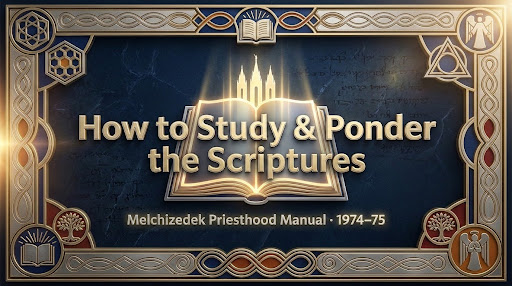
1974/75 - Melchizedek Priesthood Manual | Doctrine Lesson 4: How to Study and Ponder the Scriptures

1974/75 - Melchizedek Priesthood Manual | Doctrine Lesson 4: How to Study and Ponder the Scriptures

One of the most common criticisms against the Latter-day Saint Faith is the lack of studying the scriptures. Yet, when one searches any given general conference address, there is plenty of counsel from the General Authorities regarding how significant and important scripture study is to the Latter-day Saint faith. This includes the recent implementation of the Come Follow Me curriculum, where members are highly encouraged to study and discuss the standard works of the Church of Jesus Christ of Latter-day Saints. Those who claim we do not focus our study on the Bible (Old and New Testament) are most likely those individuals who lacked the spiritual fortitude and discipline of implementing a strong scriptural study, memorization, as a daily spiritual discipline of a solid and genuine Christian life. However, those who give themselves over to centering on the spiritual discipline of scripture study—not merely to find answers to questions, doubt, or crises of faith—begin to notice a real transformation. This transformation occurs the moment one starts noticing the questions God is personally asking of them.

Today, we are a culture and society drowning in commentary while starving for genuine revelation. How often have you skimmed over the Come Follow Me lessons without ever stepping into the deeper layers? Consider the importance of studying the patterns, understanding the Ancient Near East context, discerning the covenant signals, and exploring the spiritual architecture beneath the words. How often have you decided that what you are reading may not be applicable to you in your current moment, spiritual growth, and development of faith in who Christ is?

The hope for this post, and its related content, is to show how we are to study the scriptures instead of merely skimming over them. The objective is to illustrate how to effectively ponder them instead of merely performing, allowing the scriptures to read us as much as we read and study them. This deep approach fosters genuine connection and reflection, moving beyond a superficial reading to something profoundly transformative.

Perhaps you have spent years building a devotional practice shaped by simple guidance and principles yet have not looked into ancient sources and evidence-based spiritual formation. Our approach to scripture study must be transparent, grounded, and truly lived out. Committing to the daily spiritual discipline of not merely reading the scriptures, but engaging with them meaningfully, can lead to profound effects. This involves effectively asking questions, taking notes, and having the courage to mark and notate specific information—not just for comprehension but for incorporation, application, and living out the principal truths of the scriptures in our everyday lives.

We are to strive to seek divine revelation from our Heavenly Father on how the scriptures resonate with us and our lives today. Such a quest fosters an enriching dialogue between the Divine and us, leading to insights that can illuminate our personal paths.

Scriptures serve the crucial purpose of anchoring us in a solid foundation of revelation regarding who Jesus Christ is, the purpose our lives offer, and the meaning we derive from knowing who we are through Christ. Understanding these principles enriches our faith, providing a strong assurance in Him. We are doctrinally anchored, continuously growing in faith, light, and truth, and living out the Law and Gospel of Christ in every facet of our lives. This multifaceted approach to scripture study invites us into a deeper relationship with the Divine, encourages us to discern divine truths in our contemporary contexts, and leads us toward a more purposeful and engaged Christian life. As we venture into this commitment, we find not just knowledge but wisdom and revelation that transforms our hearts and minds.

Friday, March 27, 2026

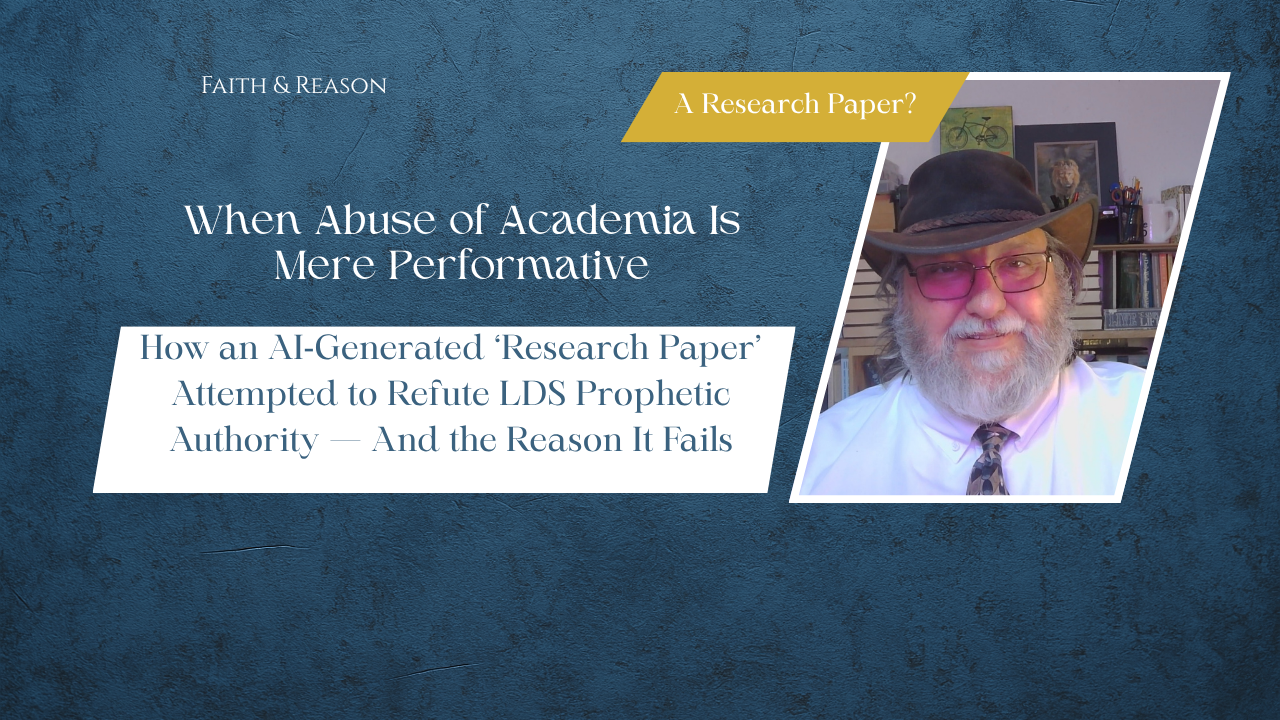
How an AI‑Generated ‘Research Paper’ Attempted to Refute LDS Prophetic Authority — And the Reason It Fails

How an AI‑Generated ‘Research Paper’ Attempted to Refute LDS Prophetic Authority — And the Reason It Fails

How do you address a supposed academic attempt to attack the Latter-day Saint Christian faith - specifically, attack one of my posts regarding A Logical and Reasonable Refutation of Bill Young's Critique of President Dallin H. Oaks? This challenge has gained traction as it is being promoted vigorously by Bill Young through his influential Truth to Mormons YouTube Channel. In a recent episode that caught the attention of many viewers, Bill Young introduced a supposed academic and apologetic research paper authored by one of his followers, BundokCowboy, which aims to undermine the credibility of my arguments. This episode marks the fourth installment in a series intended to also discredit Chandler, a Latter-day Saint Christian content creator of Restored Truth. It is essential to critically analyze the claims made in the paper - to question the paper's academic authenticity and credibility.

A seemingly polished looking research paper claiming Liberty University credentials, critiquing my work, and now being circulated as if it were a legitimate academic rebuttal. On the surface, it seems to look authoritative - until you take the time to read through it.

The document comes across as meticulously crafted, boasting an impressive layout and detailing concepts that may initially seem compelling. The way it references various theological arguments and includes citations from credible sources may easily mislead one into viewing it as an established academic critique. However, beneath this seemingly academic professionalism lies a collection of half-truths and misinterpretations that distort the purpose and context of my original work.

Since the posting of the video within the past hour (of writing out this blog post), the document appears to present a serious and theological takedown. The critiques highlighted within it might resonate with those unfamiliar with the intricacies of my arguments, however they do not hold up under proper scrutiny. It attempts to dissect my points selectively, often stripping them of their intended meaning or ignoring crucial nuances.

Thursday, March 26, 2026

Apostasy to Restoration: Lesson 7 - Religion in the Roman Empire

Apostasy to Restoration: Lesson 7 - Religion in the Roman Empire

When T. Edgar Lyon first penned Lesson 7 of Apostasy to Restoration in 1960, he invited Latter-day Saints to step into a world where religion was not just a private conviction but a fundamental component of the machinery of empire. This bold assertion set the stage for a deeper exploration of the intricate interplay between faith, culture, and politics. Sixty years later, the landscape of scholarship has transformed dramatically, yet Lyon’s central insight remains strikingly relevant: to truly understand the need for a Restoration, we must first immerse ourselves in the complex milieu that shaped the early Christian Church.

This updated lesson builds upon Lyon’s foundational work, integrating modern archaeological discoveries, peer-reviewed historical research, and contemporary Latter-day Saint scholarship to form a more nuanced understanding of the context in which early Christianity emerged. What emerges from this scholarly synthesis is a clearer, richer, and more compelling picture of the Roman religious world—a world that was teeming with a pantheon of gods, replete with elaborate rituals, and governed by a political theology that made the act of Christian discipleship both radical and perilous.

In a society where loyalty to the state was intricately tied to acts of sacrifice and devotion, where citizens adeptly navigated multiple cults without a hint of contradiction, and where the pursuit of salvation was often sought through clandestine mystery rites and the favor of emperors, the Christian proclamation of “one Lord, one faith, one baptism” represented a profound challenge to the status quo—it was nothing less than a revolutionary stance. This declaration was, in essence, a radical reformation of the religious landscape, directly opposing the established norms that dictated the relationship between the individual, the divine, and the state.

Understanding that world is essential for grasping why the early Church fractured amidst various pressures and why a Restoration was not merely desirable but indeed inevitable. The tensions between emerging Christian beliefs and the entrenched systems of power were not just obstacles to be overcome; they underscored the urgent need for a return to core principles that could unify and reinvigorate the faith community. Lyon’s insights encourage us to reflect on our own circumstances in today’s religious environment, prompting critical questions about the nature of faith, the role of community, and the ongoing quest for spiritual authenticity in an increasingly complex world. As we navigate the remnants of an ancient tapestry interwoven with faith and politics, we find ourselves inspired to reconsider the implications of our shared history and the enduring quest for a true Restoration.

Saturday, March 21, 2026

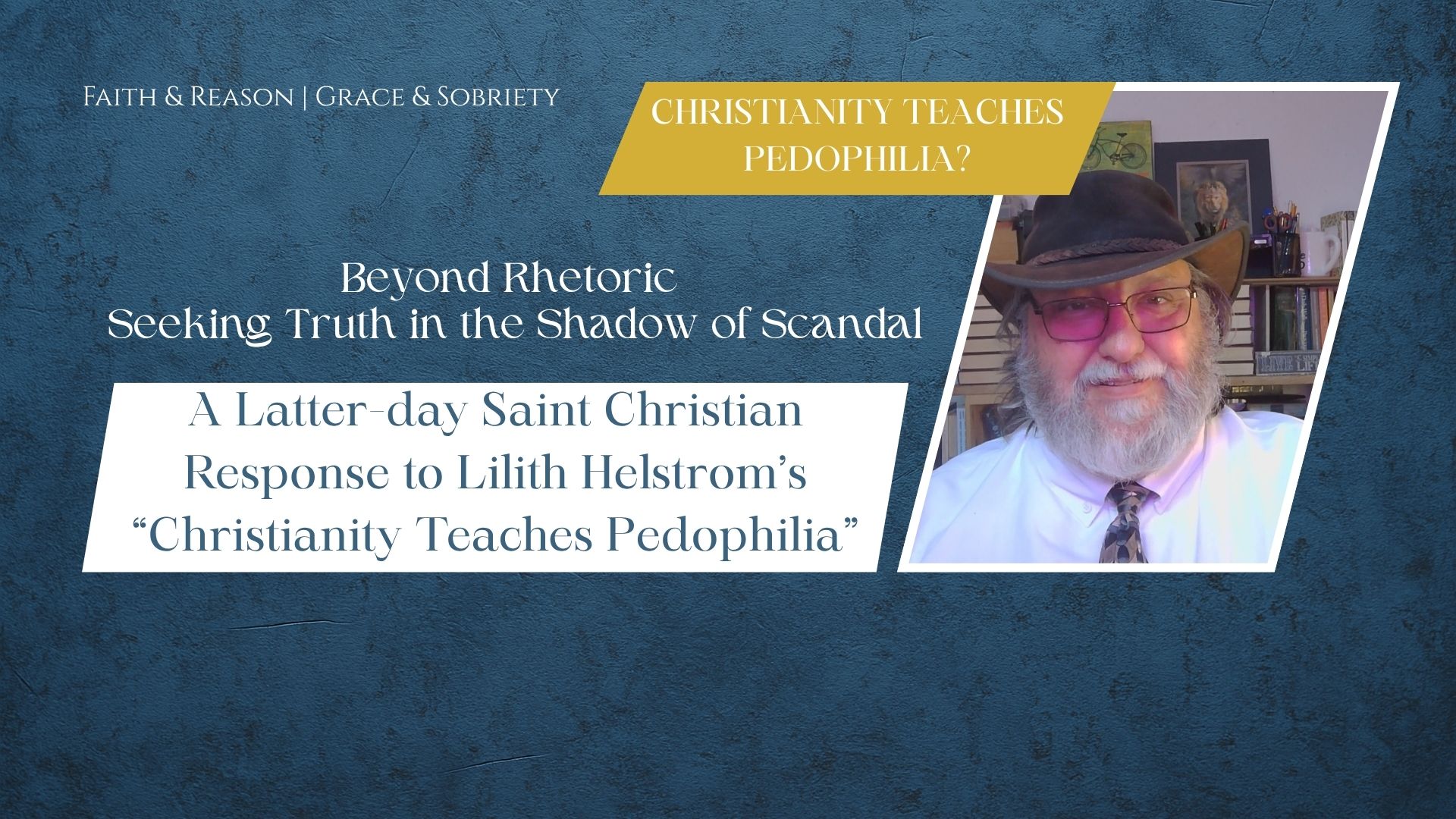
Christianity Does Not Teach Pedophilia: A Scholarly Response to Lilith Helstrom’s “Christianity Teaches Pedophilia”

Christianity Does Not Teach Pedophilia: A Scholarly Response to Lilith Helstrom’s “Christianity Teaches Pedophilia”

Introduction: Beyond Rhetoric—Seeking Truth in the Shadow of Scandal

In the modern digital landscape, the weight of a claim is often measured by its volume rather than its veracity. When an assertion is bold enough, it possesses a certain gravity that can feel persuasive to the casual observer, even when it begins to collapse under the slightest empirical scrutiny. Lilith Helstrom’s recent article, Christianity Teaches Pedophilia, is a prime example of this phenomenon. It is a piece built upon a premise that is intentionally incendiary, deeply emotionally charged, and—as the data will show—profoundly misleading.

The reality of sexual abuse is a global crisis and a harrowing human tragedy that leaves a wake of devastation in every corner of society. Because of the gravity of this issue, it demands an honest, evidence-based analysis that prioritizes the safety of the vulnerable over the scoring of ideological points. To address such a sensitive topic with sweeping generalizations is to do a disservice to survivors; it collapses complex, ancient faith traditions into flat caricatures, obscuring the very nuances that are required to build effective systems of protection.

When rhetoric is allowed to replace research, the casualties are the victims themselves. Truth is not served by inflammatory headlines that misidentify the source of a systemic problem. This response seeks to move the conversation back toward a standard of intellectual integrity. By drawing on a multi-disciplinary framework—including peer-reviewed scholarship, empirical criminology, historical biblical studies, and modern sexual-integrity research—we will evaluate Helstrom’s argument with a commitment to fairness.

Our goal is not merely to offer a rebuttal, but to "steelman" her strongest points regarding institutional failure and then provide the necessary factual and logical corrections to the errors that undermine her ultimate conclusion. In doing so, we aim to uphold a higher standard of dialogue—one where the protection of children and the pursuit of truth are held as the highest priorities.

Thursday, March 19, 2026

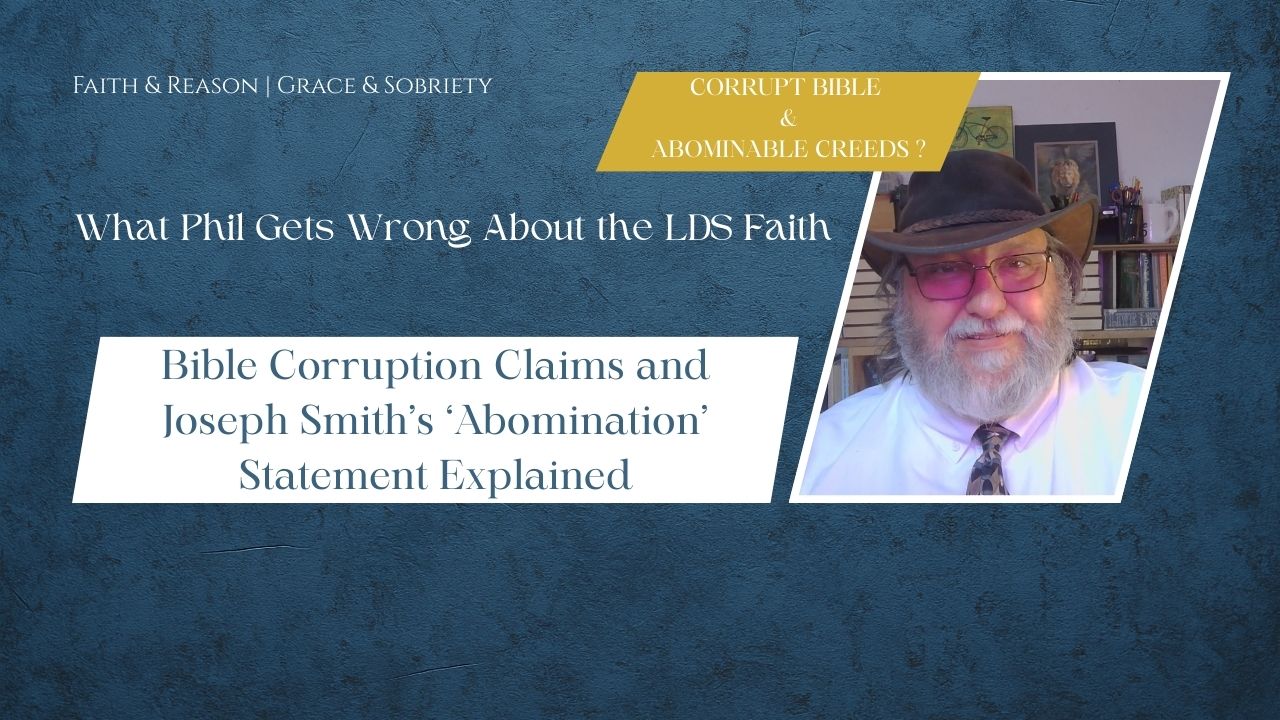
What Phil Gets Wrong About the LDS Faith: Bible Corruption Claims and Joseph Smith’s ‘Abomination’ Statement Explained

What Phil Gets Wrong About the LDS Faith: Bible Corruption Claims and Joseph Smith’s ‘Abomination’ Statement Explained

For years, critics have repeated the same two accusations: that Latter‑day Saints “claim the Bible is corrupted,” and that Joseph Smith condemned all Christian ministers as “abominable.” These claims sound alarming—until you actually examine them closely. What becomes clear, very quickly, is that the real issue isn’t Mormonism at all. It’s the fragile framework of biblical infallibility and inerrancy that many critics bring to the conversation. When that framework is held up to the light of mainstream biblical scholarship, it collapses under its own weight, revealing the complexities and nuances that are often overlooked in the heated discourse surrounding religious beliefs.

The truth is far more grounded and far less sensational than the accusations imply. Latter‑day Saints simply affirm what conservative, moderate, and liberal scholars have acknowledged for more than a century: the Bible has a complex transmission history, contains missing writings, and reflects genuine human processes of preservation. This acknowledgment isn’t fringe thinking, nor is it merely “Mormon doctrine.” It represents the academic consensus that has emerged from rigorous study and analysis. Once you grasp this broader context, the accusations directed at Joseph Smith and the Restoration begin to appear less like informed critique and more like a double standard rooted in presuppositional inerrancy—a lens through which some critics view scripture without truly considering the historical and scholarly evidence that informs our understanding of biblical texts.

My goal in this analysis is simple yet profound: to cut through the rhetoric that often obscures fruitful dialogue, examine the evidence with an open mind, and demonstrate why the claims repeated by critics don’t hold up—not because of LDS apologetics, but because of the very scholarship on which his own tradition depends. When we follow the data, explore the history, and apply logic, a far clearer picture begins to emerge—one that not only restores trust but also deepens understanding. This deeper comprehension invites a more honest and constructive conversation about scripture, revelation, and the Restoration. Engaging in this dialogue can lead to better mutual respect and a recognition of the shared elements found within our diverse faith traditions, fostering an environment where questions can be asked, and insights can be exchanged without the burden of past misconceptions.

Tuesday, March 17, 2026

When a Lie Is Repeated Enough: Exposing Modern Misreadings of LDS Grace and Covenant Theology

When a Lie Is Repeated Enough: Exposing Modern Misreadings of LDS Grace and Covenant Theology

When Misreadings Become “Truth”

What if the most dangerous lie about Latter-day Saint belief isn’t what critics say — but how often they repeat it?

Because when a misreading of scripture is repeated often enough, it stops sounding like an opinion… and starts sounding like truth. This phenomenon reveals the power of repetition in shaping perceptions and beliefs. Misinterpretations or half-truths can gain traction, leading to misconceptions that overshadow the actual teachings and principles of the faith. Critics may not always engage with the actual texts or doctrines but instead rely on sound bites or misrepresentations, creating a narrative that can feel authoritative simply due to its frequency.

Today, we’re not responding with outrage. We’re responding with scripture. It is essential to turn to the foundational texts of our faith to clarify the misunderstandings surrounding our beliefs. By examining the scriptures in their full context, we can counteract the false narratives that may circulate. The goal is not to engage in heated arguments, but rather to educate ourselves and others about the true tenets of our faith, promoting a dialogue rooted in understanding rather than controversy. We seek to illuminate the principles that guide Latter-day Saint belief, fostering a more informed and respectful conversation about what we truly stand for.

The Pattern Behind the Critique

For years, a familiar pattern has circulated through online critiques of the Book of Mormon:

A verse is isolated, often taken out of context to fit a specific critique or interpretation.

A modern theological framework is then imposed onto this ancient covenantal text, creating a disconnect between the original intent of the scripture and the contemporary understanding of concepts like grace, salvation, and the gospel.

Latter-day Saints frequently encounter assertions that they “don’t understand grace,” “don’t understand salvation,” or “don’t understand the gospel.” Such statements are heavy with condemnation and carry a tone of authority that can make them seem credible.

It sounds authoritative. It sounds confident. It sounds convincing — until you actually read the text the way it was written, with its historical and cultural context in mind.

This isn't just a misrepresentation; it's a fundamental misunderstanding of the text itself. What is often dismissed as naive or simplistic faith may, in fact, be rooted in a deeper comprehension of the intricate relationships and themes woven throughout the Book of Mormon.

This isn’t exegesis, which seeks to draw out the meaning from the scripture itself. Instead, it’s eisegesis — meaning interpretations and meanings are inserted into scripture instead of being derived from it. This approach fails to honor the complexity of the original text and the beliefs it articulates, leading to conclusions that may be misleading or inaccurate.

Understanding the Book of Mormon requires more than surface-level readings or preconceived notions; it necessitates an open heart and a willingness to engage with the text on its own terms, allowing its messages to unfold in their intended manner. Only through such an approach can a true appreciation of its teachings and doctrines be attained, along with a richer understanding of the faith it represents.

The Architecture of Anger: Navigating Threats, Expectations, and Addiction in the Refiner’s Fire of Recovery

The Architecture of Anger: Navigating Threats, Expectations, and Addiction in the Refiner’s Fire of Recovery

Anger is not a random eruption. It is a structure—a system of triggers, distortions, and emotional wounds that form a predictable pattern. This understanding of anger as a structured response is crucial because it helps us identify the root causes of our emotions rather than viewing them as mere spontaneous reactions. In recovery, gaining insights into this architecture becomes essential for healing and personal growth. Consider this, “Anger is a progressive challenge in recovery and a symptom of deeper pain.”

This notion emphasizes that anger often masks underlying issues, such as unresolved trauma, anxiety, or fear. By acknowledging these connections, we can address the true sources of our anger instead of simply reacting to it. When we learn to map its components—recognizing our triggers, understanding the distortions in our thought patterns, and confronting our emotional wounds—we stop being acted upon by these feelings.

In doing so, we transition from a passive experience of anger to one where we can act with spiritual clarity and agency. This active engagement allows us to express our emotions constructively, facilitating healthier interactions and fostering deeper connections with ourselves and others. Embracing the complexity of anger paves the way for genuine healing and allows for the development of coping strategies that contribute to a balanced emotional life. Ultimately, this journey empowers us to reclaim our well-being and operate from a place of understanding and compassion.

Wednesday, March 11, 2026

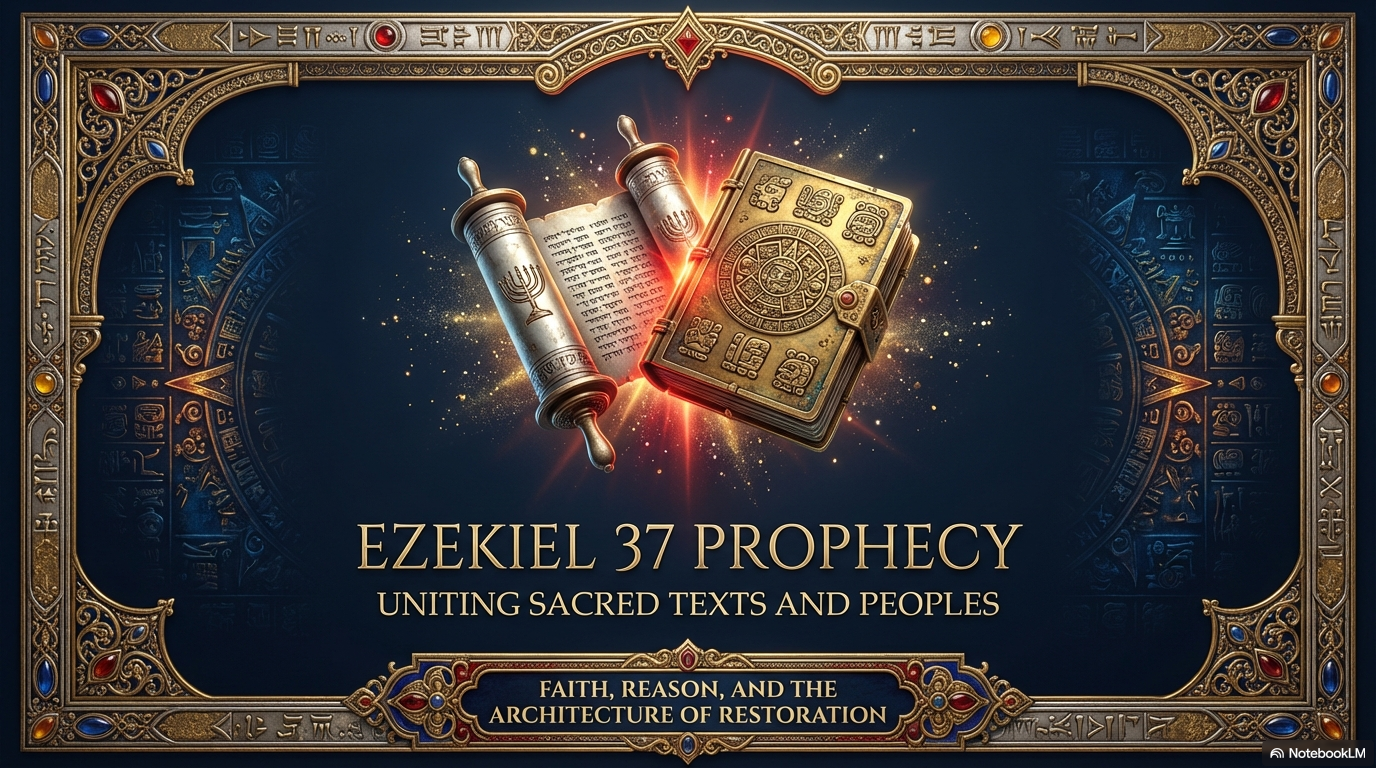
Ezekiel 37 Prophecy: Uniting Sacred Texts and Peoples

Ezekiel 37 Prophecy: Uniting Sacred Texts and Peoples

One of the challenges surrounding the Book of Mormon concerns the prophecy of Ezekiel 37 and the metaphorical concept of the two sticks. Many Latter-day Saints assert that Ezekiel 37's prophecy serves as compelling evidence for the authenticity and reality of the Book of Mormon. They argue that this prophecy signifies the reunification of sacred records and the bringing together of scattered peoples, aligning closely with the teachings and doctrines found within their faith. On the other hand, critics challenge this interpretation, positing that the true essence of Ezekiel's prophecy pertains more to the unification of a fractured and divided Israelite kingdom rather than a specific reference to the Book of Mormon or its teachings. This lively debate between Latter-day Saints and critics has persisted for many years, underscoring the complexity and nuance inherent in scriptural interpretation.

Ezekiel 37 encompasses more than just a vision of dry bones restored to life, as it holds profound implications for understanding divine sovereignty. The passage reveals a prophetic blueprint exhibiting how God, in His omnipotence, unites that which history and human actions have seemingly scattered—people, covenants, and records that are sacred. Importantly, the imagery of the two sticks transcends mere Hebrew poetic devices; rather, it articulates a divine declaration of God's work being expansive and far-reaching. It emphasizes that the divine initiative is not narrowly confined, but includes the restoration and reconciliation of a diverse array of communities under His covenant.

This particular prophecy resonates deeply with our contemporary world, which is often marked by fragmentation, division, and spiritual weariness. In an age characterized by mistrust and cultural rifts, Ezekiel's message serves as a reminder that God continues to gather His children, to restore hope, and to breathe life into situations that appear hopelessly fractured. This enduring message of unity amid diversity is crucial for our understanding of both scripture and our collective human experience.

To approach this passage appropriately, we must adopt a stance of deep reverence for its Ancient Near Eastern context, recognize its covenantal significance, and appreciate its relevance in modern times. This thoughtful examination should not rely on presuppositional arguments, sensational interpretations, or the eisegesis that misapplies contextual meaning. Instead, our strive should be toward an exegetical interpretation that centers on understanding the prophetic unity that Ezekiel foresaw. In doing so, we can engage meaningfully with the question at hand: Does this prophecy indeed validate the authenticity of the Book of Mormon, affirm its sacred nature, and align with the prophesied book of Ephraim that Ezekiel envisioned? By pursuing this inquiry with intellectual rigor and spiritual openness, we can contribute to the ongoing exploration of faith, doctrine, and scriptural truth.

Therefore, the goal is simple. To help individuals come to understand how this prophecy connects sacred texts, covenant identity, and God's ongoing work of reconciliation and redemption throughout human history.

Ezekiel 37 stands as one of the most sweeping restoration prophecies in all of scripture. Set against the backdrop of exile and despair, the chapter unfolds in two movements: the resurrection of the dry bones and the uniting of the two sticks. Together, these visions reveal God’s intent to restore life, gather His people, and reunite the sacred witnesses that testify of His Son. The vivid imagery of dry bones coming to life speaks not only to the physical resurrection of Israel but also to the spiritual awakening that can occur within the hearts of individuals and communities today.

This article explores the prophecy through its historical setting, symbolic layers, and doctrinal implications—especially its relevance to the Restoration and the coming together of sacred texts in the latter days. As we delve deeper into these themes, we can appreciate how the dry bones symbolize not only the lost hopes of a nation but also the potential for renewal and rebirth in our own lives. The uniting of the two sticks further illustrates the divine plan for unity among diverse groups, emphasizing the importance of collaboration and understanding in a fragmented world.

By examining the imagery, the covenantal themes, and the prophetic promises embedded in the chapter, we uncover a message of unity, identity, and divine purpose that speaks powerfully to our time. This exploration reveals how God’s word is alive and active, inviting us to participate in the narrative of redemption that transcends cultural and religious divides.

If you’ve ever wondered how God heals division, restores covenant identity, or brings multiple sacred records into harmony, Ezekiel 37 offers a profound and hopeful answer. The call to action is clear: we are invited to engage with this prophecy actively, to seek understanding, and to embrace our roles as connectors of truth and instruments of peace. In doing so, we become part of God's ongoing work in the world, acknowledging that the journey toward restoration—both individually and collectively—is an essential aspect of our faith and purpose.

Wednesday, March 4, 2026

Divine Protection and the Architecture of Temptation: A Comparative Analysis of the Joseph Narrative

Divine Protection and the Architecture of Temptation: A Comparative Analysis of the Joseph Narrative

Our Come Follow Me study of the Old Testament brings us to the scandals, betrayals, and failures of Jacob's family. Within this intricate tapestry of human experience, there is definitely something unexpected that reveals itself from the text: God keeps building covenant people out of deeply imperfect situations. Genesis 35-41 is not a story of spiritual elites; rather, it is the story of a God who refuses to abandon His promises, even when His people stumble, fracture, or fall.

These chapters take us on a journey that begins with the defilement of Dinah and progresses through the cleansing at Bethel, Reuben's troubling fall, and Joseph's extraordinary rise from the depths of slavery to the exalted throne room of Egypt. The narrative is raw, human, and painfully honest, reflecting not only the complexities of familial relationships but also the broader human condition. It serves as a poignant reminder that holiness can emerge from the most chaotic and fractured places.

Amidst the turmoil, there emerges a divine pattern woven into every failure: God transforms chaos into covenant, sin into sanctification, and suffering into preparation. The patriarchs are not idealized or romanticized figures; instead, their stories mirror our own spiritual formation: messy beginnings, painful corrections, and surprising victories and breakthroughs. They remind us that the journey of faith is rarely linear and often involves grappling with our shortcomings and learning from our mistakes.

What this study hopes to accomplish is a thorough examination of Ancient Hebrew word studies, rich Latter-day Saint commentary, and scholarly insights from esteemed individuals such as Kell & Delitzsch, Clarke, and others. This blend of perspectives integrates doctrinal clarity with a deep historical context, illustrating how the Lord interacted with the earliest covenant family and, by extension, how He continues to engage with us today. If you have ever found yourself wondering whether God still works with your imperfections, Genesis 35-41 is your answer. It reaffirms that divine grace is not contingent on human perfection, but rather flows abundantly within our flaws, inviting us into a deeper relationship with Him despite our human frailties.

This understanding can be both comforting and empowering, as it challenges us to reconsider our own narratives within the larger story of redemption. As we study these passages, we are invited not only to reflect on the lessons from Jacob's family but also to see our own lives as part of this ongoing testament to God's love and commitment to His people throughout history.

Sunday, March 1, 2026

Part II - Lesson 6: The Church of the First Century

Part II - Lesson 6: The Church of the First Century

Every surviving document from the earliest Christians points to one unmistakable reality: the Church of Jesus Christ was never meant to drift, improvise, or evolve by popular opinion. It was governed—actively, visibly, and globally—by living apostles who traveled, taught, corrected, and unified the Saints across thousands of miles. The idea of a fragmented, locally‑run Christianity would have been unrecognizable to the men and women who lived under apostolic direction.

Archaeologists mapping Roman travel networks now show how apostles could realistically maintain jurisdiction across vast distances. Historians studying Acts 15 identify the Jerusalem Council as the first Christian governing council—binding on every congregation. And New Testament scholars across traditions agree that Peter’s leadership was real, but never monarchical. The earliest Church functioned through a council of apostles, not a solitary bishop and not independent local leaders.

This emerging academic consensus paints a picture that looks far more like the Latter‑day Saint model of apostolic governance than the later structures of Catholicism, Orthodoxy, or Protestantism.

When Latter‑day Saints speak of a living quorum of apostles with worldwide jurisdiction, we are not inventing a new ecclesiology—we are recovering the original one. The historical record, the New Testament, and the best modern scholarship converge on the same point: the Church Christ established was led by a unified body of apostles who held authority for the entire household of faith.

This is the pattern that disappeared after their deaths. This is the pattern the Restoration restores.

What to Look for in this Lesson: 

  1. Most of the religions of the first century of the Christian era stressed the acquisition of salvation through mystical initiatory rites or elaborate ceremonies. Christianity ignored these aspects of religion and stressed a high standard of moral conduct. 
  2. Christianity was a rapidly expanding movement in the first century. Arrangements were made for supervision so that it would not become disunited. 
  3. Enrichment material. In Apostasy from the Divine Church, pp. 39-77 can be found some unique quotations and comments concerning the doctrines and worship of the early Christian church. 

How This Lesson Functions in LDS Apologetics

Apostolic jurisdiction is not an abstract ecclesiological idea—it is the structural backbone of the New Testament Church. Showing that the earliest Christians were governed by a mobile, authoritative quorum of apostles accomplishes three apologetic goals:

  • It demonstrates that the original Church was hierarchical, organized, and led by living apostles, not by Scripture alone or by independent congregations.
  • It shows that later Christian structures—papal monarchy, conciliar episcopacy, or Protestant congregationalism—do not match the first‑century pattern.
  • It clarifies that the Restoration restores a model that actually existed, rather than inventing a new one.

This lesson therefore becomes a bridge between historical reconstruction and Restoration theology.