Monday, September 14, 2026

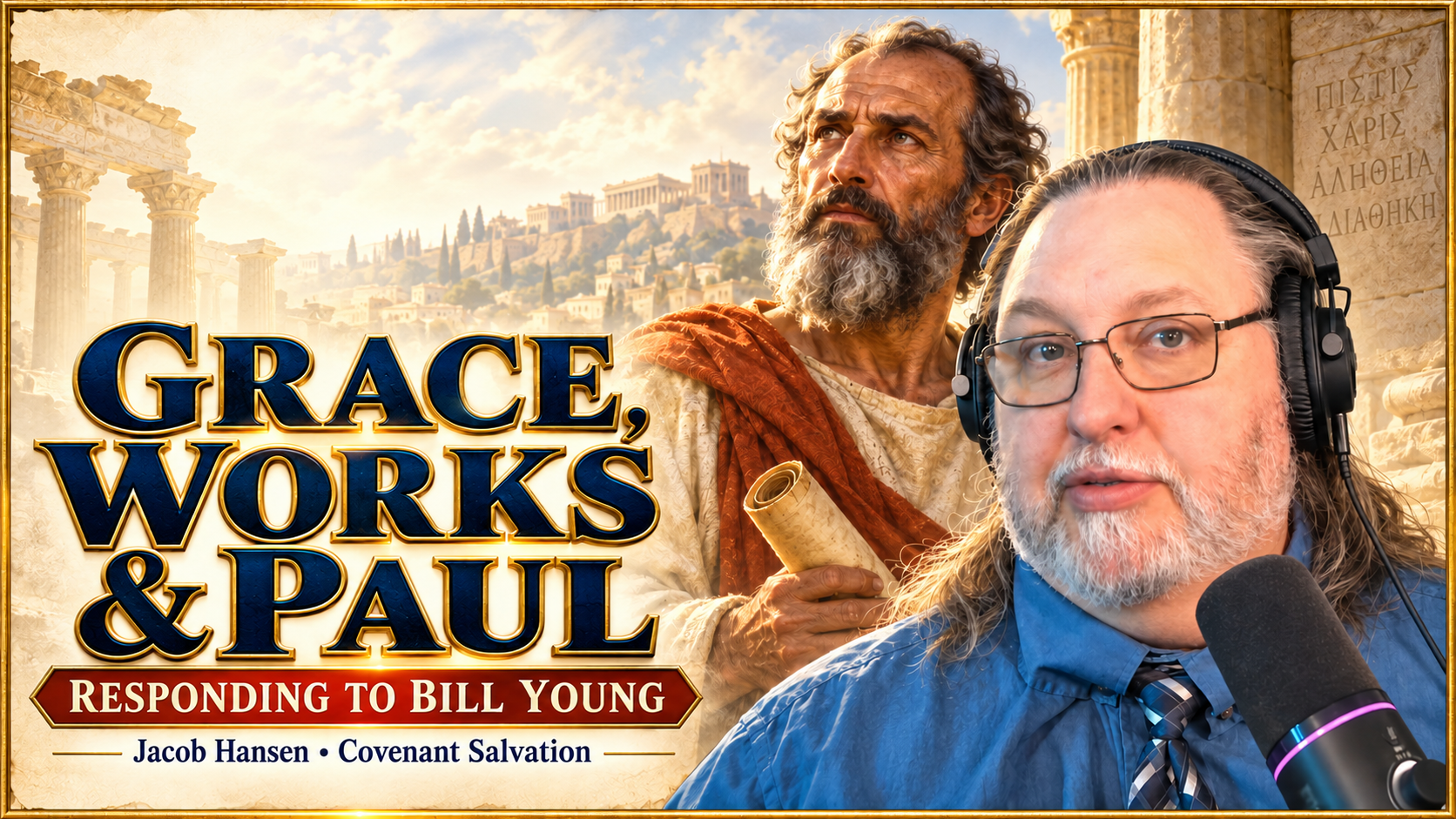
Bill Young's Response to Jacob Hansen: Does Covenant Obedience Deny Grace?

Bill Young's Response to Jacob Hansen: Does Covenant Obedience Deny Grace?

Does obedience turn the gift of salvation into a wage? That is the question beneath Bill Young’s response to Jacob Hansen—and it deserves a better answer than either “Mormonism is counterfeit” or “modern scholarship proves us right.” A Christian can affirm that Christ alone makes salvation possible while still believing that repentance, faithfulness, and a transformed life matter. The dispute begins when we ask how they matter: as payment, as conditions of receiving a gift, as evidence of living faith, or as the life that grace itself creates.

In Episode 104, Young argues that Hansen’s covenant model gives familiar LDS requirements a more attractive vocabulary without changing their function. That objection has force against any explanation that merely renames achievement as relationship. But Young’s broader conclusion—that necessary covenant obedience must therefore amount to earning salvation—requires an additional argument. Neither the presence of conditions nor the fact that human beings actually act establishes that their actions purchase God’s forgiveness.

This response approaches the debate from a Latter-day Saint perspective while taking Protestant objections seriously. It examines the supplied transcript and comment-section record alongside Pauline scholarship, Jewish historical scholarship, LDS sources, and evangelical biblical commentaries. Some of the evidence supports Young’s criticisms of oversimplified apologetics; other evidence directly challenges his portrayal of LDS grace and the scholarly alternatives he dismisses. The purpose is to identify which claims survive careful examination and to hold our treatment of other people to the Christian standard we invoke.

In this response

  • Young’s strongest objection
  • Paul, Judaism, and covenant
  • Grace, necessary works, and merit
  • “After all we can do”
  • What LDS leaders have taught
  • Comments and logical fallacies
  • The Christian standard
  • Frequently asked questions
  • Sources and further reading

What this response examines

The principal source is Young’s “Response to Jacob Hansen’s Covenant Model of Salvation”, identified as Episode 104 in the supplied materials. Quotations below follow the supplied transcript, with punctuation lightly normalized where needed; timestamps identify the relevant passages. The opening Hansen clip is presented within Young’s episode, so this article evaluates the argument as represented there rather than claiming to review every statement Hansen has made elsewhere.

Comment quotations come from the supplied document titled EP 104: Response to Jacob Hansen’s Covenantal Salvation Comment section. Usernames and document paragraph numbers identify excerpts where individual comment permalinks were not supplied. These are selected examples, not a statistical description of the entire audience. The record also contains substantive biblical arguments and objections to mockery. A commenter’s statement is attributed to that account; it is not automatically treated as Young’s own position.

Sunday, September 6, 2026

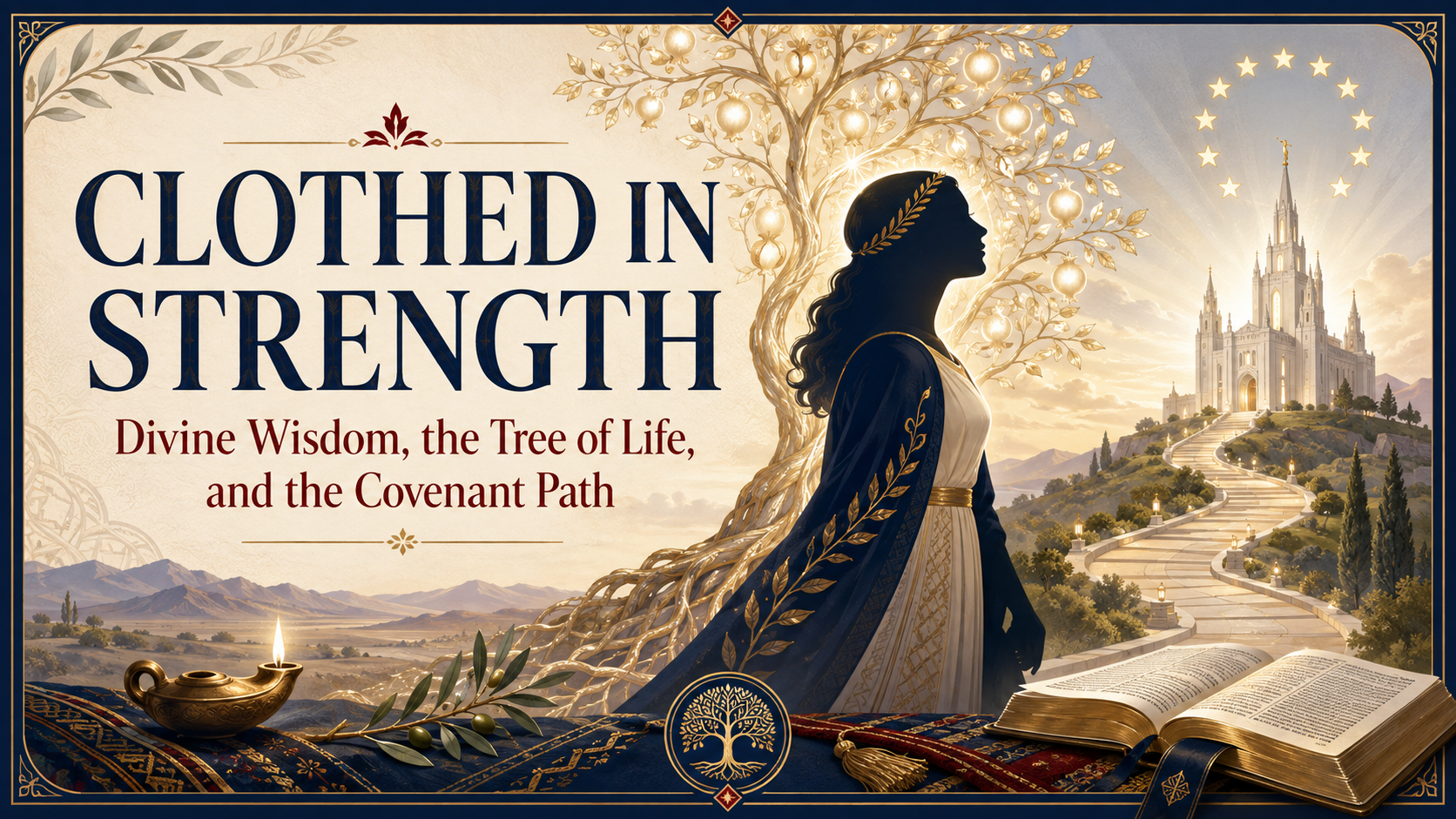
Proverbs 31, the Bride of Christ, and the Covenant Path

Proverbs 31, the Bride of Christ, and the Covenant Path

Word of Wisdom, Heavenly Parents, Temple Covenants, Theosis, and Exaltation


Proverbs 31 is often reduced to a checklist for an impossibly productive wife. Yet Proverbs 31:10–31 is first a carefully crafted Hebrew poem: an alphabetic acrostic that praises the eshet hayil, the “woman of strength,” whose fear of the Lord becomes visible in wise stewardship, economic agency, disciplined labor, faithful speech, household care, and mercy toward the poor. Read in the canonical context of Proverbs, she is not merely a passive model of private virtue. She is wisdom embodied.

This study develops a deliberately typological and temple-shaped reading of the poem. The eshet hayil becomes an icon of the Bride of Christ—the covenant community whose life is ordered by reverence, fidelity, holiness, and fruitful service. Doctrine and Covenants 89 adds an embodied discipline of appetite and spiritual receptivity; the covenants of the temple endowment give that discipleship a sacred grammar of obedience, sacrifice, the gospel of Jesus Christ, chastity, and consecration; and Revelation presents the faithful Church as a Bride made ready for the Lamb. Patristic theosis and Latter-day Saint exaltation converge in proclaiming transformation through participation in divine life, while retaining important theological distinctions. Proverbs 31 thus portrays the ordinary shape of extraordinary holiness: a people transformed by Christ until their works praise them at the gates.

A further Restoration layer emerges from the doctrine of Heavenly Parents and the feminine personification of Wisdom. Proverbs calls Wisdom a Tree of Life; 1 Nephi places a radiant tree beside the vision of a virgin mother and her divine Son; and Latter-day Saint scholars have compared these images with ancient Asherah and tree-goddess traditions. The biblical record clearly reports that Josiah removed an Asherah object from the temple, but the claim that this act erased an authentic revelation of Heavenly Mother remains a debated reconstruction. This study therefore treats the Wisdom-Tree-Mother constellation as a disciplined theological resonance, not as a substitute for revelation or proof that Lady Wisdom, Asherah, Mary, Shekhinah, and Heavenly Mother are one figure. Revelation 12 extends this pattern through a solar-clothed, star-crowned Woman who gives birth under threat from the dragon, receives divine nourishment in the wilderness, and survives as the mother of a commandment-keeping people. The Joseph Smith Translation identifies her as the Church of God and her child as the kingdom of God and Christ; the wider Israel-Zion-Mary-Bride symbolism therefore enriches divine-motherhood theology without making the Woman a direct portrait of Heavenly Mother.

How is the Lord inviting you to become a person of covenant strength? Choose one sphere—appetite, speech, money, work, fidelity, preparation, or care for the poor—and write one concrete act of consecration you will practice this week. Share the study with someone who has learned to hear Proverbs 31 as pressure rather than praise, and invite them to rediscover the woman of strength as a witness of grace-shaped wisdom.

Anchor Verse

“Favour is deceitful, and beauty is vain: but a woman that feareth the Lord, she shall be praised.” — Proverbs 31:30 (KJV)

What if Proverbs 31 is not a measuring stick but a mirror?

For generations, Proverbs 31 has been handed to women as a formidable list of domestic expectations: rise before dawn, manage a household, conduct business, produce clothing, care for the poor, speak flawlessly, and somehow never appear weary. Read that way, the poem can become less like good news and more like an inspired performance review. Women may feel judged by it, while men may assume that it addresses someone else. Both reactions miss the literary force of the text. Proverbs does not end with a spreadsheet of feminine productivity. It ends with poetry—a public song of praise celebrating what wisdom looks like when reverence for God takes flesh in the world.

The opening expression, eshet hayil, is commonly rendered “virtuous woman,” “capable wife,” “excellent wife,” or “woman of valor.” The Hebrew noun hayil carries a wide field of meaning that includes strength, capacity, wealth, competence, and valor. The woman is not praised because she is ornamental, silent, or fragile. She is strong. She evaluates a field and buys it. She plants a vineyard, trades profitably, supervises a complex household economy, speaks wisdom, prepares for adversity, and opens her hands to the poor. Her strength is neither self-display nor domination. It is power disciplined by covenant loyalty.

The poem gathers wisdom into a living covenant portrait

Proverbs begins by personifying Wisdom as a woman who calls in public places, invites the simple to learn, offers life, and warns against paths that end in death (Prov. 1:20–33; 8:1–36; 9:1–6). The book then concludes with a flesh-and-blood portrait of a woman whose decisions make wisdom visible. The literary movement is striking: Wisdom’s voice in Proverbs 1–9 becomes wisdom’s work in Proverbs 31. The fear of the Lord announced as the beginning of knowledge in Proverbs 1:7 reappears near the conclusion in Proverbs 31:30. What begins as instruction becomes character; what begins as a path becomes a practiced life.

That canonical pattern creates a responsible bridge to the New Testament’s image of the Church as the Bride of Christ. The historical woman praised in Proverbs 31 should not be erased, nor should every feature be converted into a hidden allegory. Yet Christian typology recognizes recurring covenant patterns that reach fulfillment in Jesus Christ and His people. The faithful, fruitful, mercy-giving, wisely ordered woman can therefore become an icon of the ecclesial Bride—a community that trusts her covenant Lord, clothes herself in righteous deeds, cares for the vulnerable, and prepares for the marriage supper of the Lamb (Eph. 5:25–27; Rev. 19:7–9).

For Latter-day Saints, Proverbs' feminine Wisdom also opens a question that much of Christian theology leaves underdeveloped: if exaltation means becoming like our Heavenly Parents, how might the Bible's feminine images of life, wisdom, birth, nurture, glory, and covenant presence witness to divine motherhood? That question is legitimate, but it requires disciplined distinctions. Grammatical femininity is not automatically a divine woman, a sacred tree is not automatically Heavenly Mother, and the recovery of an ancient goddess cult would not by itself establish revealed truth.

From admired virtue to temple-shaped discipleship

The central question is therefore not, “How can one woman accomplish everything in this poem?” The deeper question is, “How does the covenant people become the kind of Bride whose whole life praises the Lord?” A Restoration reading brings the Word of Wisdom and temple covenants into this conversation. Doctrine and Covenants 89 orders embodied appetite toward wisdom and revelation. The temple endowment calls disciples to obedience, sacrifice, the gospel of Jesus Christ, chastity, and consecration. Proverbs 31 shows those commitments becoming ordinary practice—in work, speech, sexuality, economics, mercy, preparation, and worship.

The added layer follows four levels of evidence. Official Restoration teaching establishes Heavenly Parents. The biblical text establishes Lady Wisdom, the Tree of Life, and Josiah's removal of the Asherah. Archaeology and comparative religion illuminate ancient tree and mother symbolism. Finally, Latter-day Saint temple theology asks what these patterns may mean. Keeping those levels distinct allows faith to become deeper without asking historical evidence to carry more than it can bear. Revelation 12 supplies an especially important control because the Joseph Smith Translation explicitly identifies the Woman with the Church and the child with God's kingdom. Any Heavenly Mother resonance must therefore remain analogical and theological rather than replace that revealed ecclesial meaning.

This reading must be stated carefully. Proverbs 31:10–31 is not known to have served as a prescribed ceremony in Solomon’s temple, and Doctrine and Covenants 89 is not the secret historical key to the poem. The phrase “temple-liturgical” in this study names a canonical and theological reading, not an unsupported claim about ancient ritual origins. The poem is temple-shaped because it portrays an ordered covenant life moving from reverence to holiness, from stewardship to consecration, and from faithful labor to praise at the gates. It is liturgical because it is a song of praise that forms the worshipping community’s imagination—and because it is still sung in many Jewish homes at the beginning of Shabbat, a custom commonly traced to early modern Jewish mysticism rather than the biblical temple period.

Every Season Under Heaven: Ecclesiastes, Temple Covenants, and the Journey to Immortality

Every Season Under Heaven: Ecclesiastes, Temple Covenants, and the Journey to Immortality

Ecclesiastes is not Scripture’s surrender to meaninglessness. It is the wisdom of mortality—the testimony of a world east of Eden, where work exhausts, injustice wounds, pleasure fades, and death exposes the limits of every human attempt at permanence. Yet Qoheleth’s repeated word hebel is better pictured as vapor than as absolute nihilism: life “under the sun” is fleeting, elusive, and impossible to master. Through the poem of appointed times in Ecclesiastes 3, the book teaches disciples to receive mortal seasons as gifts they cannot control but can faithfully inhabit. Read within the full canon and through a Restoration lens, Ecclesiastes traces a temple-shaped movement from Edenic belonging, through mortal descent and covenant formation, toward judgment, resurrection, immortality, and life in Christ. Its final summons— “Fear God and keep his commandments”—does not solve every riddle. It teaches us how to live faithfully within them.

Some seasons arrive with invitations; others arrive with diagnoses, funerals, layoffs, broken trust, unanswered prayers, or the slow realization that the future will not look like the life we planned. We gladly quote, “A time to weep, and a time to laugh,” but the beauty of Ecclesiastes 3 can make us forget how severe the poem really is. It includes birth and death, planting and uprooting, healing and killing, embracing and separation, war and peace. Qoheleth is not decorating a calendar. He is naming the mortal world in which change is relentless and control is largely an illusion.

Ecclesiastes meets us precisely there. Its burden is not that nothing matters, but that nothing mortal can be made permanent by human grasping. Achievement cannot arrest death. Wealth cannot guarantee enjoyment. Wisdom cannot control outcomes. Even righteousness does not make mortality predictable. The Hebrew word hebel, traditionally rendered “vanity,” literally evokes breath or vapor: visible for a moment, real but ungraspable, present and already passing. Qoheleth dismantles the fantasy that we can secure eternal identity with temporary things.

That dismantling can become sacred preparation. When the false foundations collapse, the disciple can receive identity as covenant gift rather than personal construction. Ecclesiastes moves from Edenic echoes to dust, from dust to reverence, and from reverence toward divine judgment. Christian Scripture then answers Qoheleth’s deepest ache in the resurrected Christ, who entered the mortal descent, passed through death, and ascended in immortal glory. Restoration scripture widens that canonical horizon by locating earthly life between premortal belonging and resurrected continuation. Every season becomes neither random fate nor automatic blessing, but a mortal sphere in which agency, grace, covenant loyalty, and holy desire form a people capable of dwelling with God.

Ecclesiastes Is the Wisdom of Mortality

The 2026 Come, Follow Me manual places Proverbs and Ecclesiastes in productive tension. Proverbs often teaches that divine wisdom produces flourishing; Ecclesiastes replies that lived experience is not always so tidy. Qoheleth can devote himself to wisdom and still discover grief and “vexation of spirit” (Ecclesiastes 1:17–18). The manual therefore asks whether meaning is possible when life appears “vain, temporary, and uncertain,” and it answers by joining Ecclesiastes 12:13 to Proverbs 3:5: fear God, keep His commandments, and trust the Lord. Life with Christ is better, though mortality is not thereby made painless or predictable.

That distinction prevents two opposite misreadings. Ecclesiastes is neither a manifesto of atheistic despair nor a sentimental promise that every event will become pleasant if we wait long enough. It is wisdom spoken from within creaturely limits. The title identifies its speaker as Qoheleth, a term related to assembly and conventionally translated Teacher or Preacher. His royal Solomonic persona tests wisdom, pleasure, projects, wealth, reputation, and labor. Each experiment exposes the same boundary: human beings cannot produce lasting “gain” from beneath the sun because time, contingency, and death eventually take everything from their hands.

The phrase “under the sun” is therefore a crucial boundary marker. It names life as experienced from within the closed horizon of mortality. From that vantage point, generations come and go, the sun rises and sets, rivers run endlessly, memory disappears, and human striving circles back upon itself (Ecclesiastes 1:3–11). The world resembles Eden and yet is no longer Eden. Gardens can be planted, fruit enjoyed, marriage cherished, wisdom pursued, and work accomplished; nevertheless, thorns remain, sweat accompanies bread, domination distorts relationships, and everybody returns to dust. Ecclesiastes is the wisdom of Genesis 3 experienced from the inside.

He Shall Direct Thy Paths: Proverbs & Ecclesiastes

He Shall Direct Thy Paths: Proverbs & Ecclesiastes

Proverbs 1-4; 15-16; 22; 31; Ecclesiastes 1-3; 11-12

The Temple Journey from Chaos to Communion

Proverbs teaches us how to walk wisely; Ecclesiastes asks whether wisdom is enough when life remains temporary, unfair, and beyond our control. Together, these books move the covenant disciple from moral formation to eternal perspective, from confidence in human calculation to reverent dependence upon God. Their unity is not a simplistic promise that righteous people will never suffer. It is the deeper testimony that life becomes rightly ordered when the Lord, rather than the isolated self, becomes its center.

This concluding study in the W.I.S.D.O.M. arc follows the appointed Come, Follow Me reading for September 7-13, 2026: Proverbs 1-4; 15-16; 22; 31 and Ecclesiastes 1-3; 11-12. Through Hebrew exegesis, Christ-centered exposition, Latter-day Saint scripture, and respected Jewish and Christian scholarship, we will trace a devotional temple movement from the two paths of wisdom and folly to the final summons to fear God, keep His commandments, and prepare for judgment. The destination is not intellectual mastery but communion: "Trust in the Lord with all thine heart ... and he shall direct thy paths" (Proverbs 3:5-6).

Introduction - When the Road Ahead Disappears

Most of us want God to give us a map. We want the next turn identified, the dangerous roads marked, and the destination guaranteed before we take the first step. Proverbs 3 offers something more demanding and more intimate. It does not promise that we will see the entire road. It promises that when we trust the Lord with the whole heart, refuse to make our own understanding the final authority, and know Him in all our ways, He will make the path straight before us.

That promise matters because discipleship is rarely lived on roads we fully understand. We make decisions with incomplete information. We pray through grief that has not resolved. We obey while consequences remain uncertain. We try to speak gently in a culture trained to reward outrage. We labor faithfully while Ecclesiastes reminds us that achievement, pleasure, wealth, reputation, and even human wisdom cannot defeat mortality. The human problem is not merely that we need better information. The deeper problem is that we are tempted to trust our own perspective as though it were complete.

Proverbs and Ecclesiastes meet us inside that tension. Proverbs says that creation possesses a moral grain: humility, diligence, fidelity, generosity, disciplined speech, and reverence ordinarily lead toward life. Ecclesiastes then refuses to let those observations harden into a mechanical formula. The wise still die. The righteous do not always receive immediate reward. Time overtakes every achievement. Much of life remains hevel - vaporous, fleeting, difficult to grasp. Biblical wisdom therefore matures when it moves beyond technique and becomes covenant trust.

This is why the final installment of our W.I.S.D.O.M. journey must end where the biblical books themselves end: not in admiration of the wise person, but in reverence before God. We have learned to Walk, Invite, Seek, Discern, Observe, and Meet. Each movement has carried us through the recurring wisdom pattern of descent and ascent: from Edenic estrangement into mortal confusion, from lament into remembrance, from self-reliance into surrender, and from the limits of human sight into the presence of the God who sees the whole way.

The 2026 Come, Follow Me manual wisely places Proverbs and Ecclesiastes in conversation. Proverbs teach that life is ordered by divine wisdom; Ecclesiastes asks what faithful life looks like when that order cannot be easily seen. Their combined witness is neither naive optimism nor cynical despair. It is covenant realism: life is temporary and often perplexing, yet it is lived before God, received as His gift, and made eternally significant through trust, obedience, repentance, and Jesus Christ.

Anchor Scripture - Proverbs 3:5-6

Trust in the Lord with all thine heart; and lean not unto thine own understanding.
In all thy ways acknowledge him, and he shall direct thy paths.

The movement of these verses is deliberate. Trust replaces self-sufficiency. The whole heart replaces divided allegiance. Knowing God in every way replaces the habit of confining Him to explicitly religious moments. The promise is not that God will endorse every route we prefer; it is that He will straighten the road of a life yielded to Him.