Sunday, June 28, 2026

Rehoboam's Pride, Elijah's Fire & the Voice You're Missing | 1 Kings 12-13; 17–22 CFM

Rehoboam's Pride, Elijah's Fire & the Voice You're Missing | 1 Kings 12-13; 17–22 CFM

Choose This Day: Finding Christ in the Divided Kingdoms of Our Lives

Quite frankly, I am grateful for the many people who have come into my life and spoken to me directly, compassionately, and with genuine understanding. They showed patience and grace without sitting in judgment over me. They met me in difficult and messy moments, listened to what I was carrying, and helped me confront unhealthy attitudes and behaviors without condemning me.

Yet, if I am completely honest, I have also carried resentment, bitterness, self-hatred, and anger toward people whom I believed had betrayed, ignored, or abandoned me.

Every one of us is shaped—lifted, wounded, strengthened, or misled—by the voices we choose to follow.

Families may rise or fall because of those voices. Communities may flourish or fracture because of them. Our faith may deepen or drift depending on whose counsel we trust and whose influence we permit to guide our decisions.

Much of the pain we carry may be traced to someone who used influence selfishly—or to someone who possessed the ability to help but refused to use it.

The opposite is also true.

Some of the deepest healing we experience comes through Christlike leaders, mentors, friends, and disciples who choose to show up, serve, and sacrifice. They meet us in places where others might pass by. They take time to understand, comfort, encourage, and help us move forward without excusing destructive behavior or enabling us to remain stuck.

That tension between selfish influence and Christlike service stands at the heart of this week’s Come, Follow Me study for June 29–July 5: “If the Lord Be God, Follow Him,” covering 1 Kings 12–13 and 17–22.

Sunday, June 21, 2026

What the Divinity of Jesus Christ Means to You

What the Divinity of Jesus Christ Means to You

Why Jesus Alone Could Accomplish the Infinite and Eternal Atonement

What manner of man commands the wind and sea—and they obey Him? He who speaks to the chaotic elements and they submit to His will, revealing His divine authority over nature itself. His voice echoes through the storm, bringing peace where there was turmoil, demonstrating an unparalleled mastery that transcends human understanding.

What manner of man possesses the power to lay down His life and take it up again? He who, with the authority inherent to His being, presents the ultimate sacrifice, fully aware of the weight of such a decision. In laying down His life, He unveils the profound mystery of love and redemption. The same strength that allows Him to give Himself away also empowers Him to conquer death, rising triumphantly to provide hope and eternal life to humanity.

What manner of man suffers more than mortal humanity can endure, yet remains until the work of redemption is complete? He bears the weight of all humanity’s sins, feeling the depths of anguish and despair, yet persevering through the agony to fulfill His purpose. His empathy is boundless, experiencing sorrow in ways that only a divine nature could comprehend. In His endurance, He illustrates the profound depth of grace, revealing that true strength is often displayed in vulnerability and unwavering commitment to a higher calling, despite the unbearable cost.

This man is a testament to the coexistence of power and humility, a divine figure whose actions reshape the narrative of humanity's relationship with the Creator. His life and legacy stand as an eternal beacon of hope, a call to embrace the extraordinary potential within each of us to rise above our circumstances and to foster love, compassion, and redemption in a world so often in need of these gifts.

These questions stand at the center of Doctrine Lesson 6, “What the Divinity of Jesus Christ Means to You,” from the 1974–75 Melchizedek Priesthood study guide When Thou Art Converted, Strengthen Thy Brethren. The lesson’s purpose was not merely to establish that Jesus was extraordinary. It invited priesthood holders to understand why Jesus Christ alone possessed power to accomplish the infinite and eternal Atonement—and why every one of us remains completely dependent upon Him.

Nearly five decades later, that central purpose remains unchanged. Some of the language used in the original lesson, however, has generated theological questions and apologetic controversy. In particular, statements by James E. Talmage and Bruce R. McConkie about Christ’s literal divine sonship have been interpreted by critics as teaching that God the Father physically descended and engaged in sexual intercourse with Mary.

A responsible modern treatment must do more than dismiss that criticism. It must distinguish among what scripture reveals, what individual Church leaders have proposed or speculated, and what the Church currently teaches as established doctrine.

It is best we do not allow controversy over the manner of Christ’s conception to distract us from the greater truth: Jesus Christ did for us what we could never do for ourselves.

Hear Thou in Heaven Their Prayer: Returning to God with All Your Heart

Hear Thou in Heaven Their Prayer: Returning to God with All Your Heart

There are moments when the distance between faithfulness and failure feels almost impossibly small.

A glance lingers. A private desire is entertained. A warning is dismissed. One compromise makes the next compromise easier, and before long, a person who once walked closely with God finds himself standing in the wreckage of choices he never imagined he would make.

That is part of the tragedy of David’s story.

Yet this week’s Come Follow Me 2026 Old Testament study does not leave us standing on the rooftop with David, trapped in the moment when temptation first entered his heart. It carries us into Nathan’s courageous confrontation, through David’s anguish and the painful consequences of sin, and onward into Solomon’s prayer for wisdom and his dedication of the house of the Lord.

At the center of these chapters is a plea filled with covenant hope:

“If they shall bethink themselves in the land whither they were carried captives, and repent, and make supplication unto thee … saying, We have sinned, and have done perversely, we have committed wickedness; And so return unto thee with all their heart, and with all their soul … then hear thou their prayer and their supplication in heaven thy dwelling place, and maintain their cause.” —1 Kings 8:47–49, KJV

This is not a lesson about flawless kings or effortless discipleship. David fell. Solomon began with wisdom and ended with a divided heart. Both stories warn us that yesterday’s spiritual strength cannot substitute for today’s surrender.

But these chapters also testify that God has provided a covenant path of return. He hears the prayer of the humble. He grants wisdom to those who sincerely seek it. He establishes His name in His holy house. Through Jesus Christ, He invites wounded, wandering, and repentant people to come home.

The question is not merely whether David or Solomon remained faithful. The question is whether our hearts are fully turned toward the Lord today.

Sunday, June 14, 2026

The Battle Is the Lord’s: Facing Your Goliath with Faith in Jesus Christ

The Battle Is the Lord’s: Facing Your Goliath with Faith in Jesus Christ

Come Follow Me | June 15-21 | “The battle is the Lord’s.” —1 Samuel 17:47

There are seasons in life when the challenge standing before us seems larger than our faith, stronger than our resolve, and better equipped than anything we possess. We may know the language of faith, remember the promises of scripture, and sincerely believe that God is with us, yet the giant still appears to dominate the valley. It calls attention to our weakness, rehearses our failures, magnifies our fears, and confidently predicts our defeat.

For one person, that giant may be addiction or the relentless temptation to return to an old way of living. For another, it may be grief, rejection, loneliness, financial uncertainty, family conflict, shame, resentment, or the lingering consequences of decisions that cannot be undone. Some giants appear suddenly, while others have occupied the valley for years, issuing the same challenge every morning and evening until fear begins to feel like the natural condition of life.

The Come, Follow Me lesson for June 15–21, covering 1 Samuel 17–18; 24–26 and 2 Samuel 5–7, invites us to look again at David’s story and hear his declaration that “the battle is the Lord’s.” That declaration does not mean our participation is unnecessary, nor does it promise that discipleship will protect us from every difficulty. David still walked into the valley, selected the stones, prepared his sling, and confronted the enemy. What he refused to do was accept the assumption that the outcome depended entirely upon his own size, strength, resources, or experience.

David understood that he was participating in a battle whose final authority belonged to God.

That same truth can transform the way we approach our spiritual battles today. We do not have to pretend that our giants are small. We do not have to deny the pain, complexity, or danger of what stands before us. Faith does not require us to minimize reality; it teaches us to see reality within the greater reality of God’s power, covenant faithfulness, and redemptive purposes.

Friday, June 12, 2026

Social Media Gainsayers: The Anti-Mormon Playbook Has Not Changed—Only the Platforms Have

Social Media Gainsayers: The Anti-Mormon Playbook Has Not Changed—Only the Platforms Have

How Ex-Mormon Influencers, Evangelical Critics, and Online Ministries Repackage the Same Arguments for YouTube, TikTok, Facebook, Podcasts, and Livestreams

In 1989, anti-Latter-day Saint ministries, often referred to as Counter-cult or Anti-Mormon groups, relied heavily on printed tracts, cassette tapes, books, traveling seminars, church presentations, and controversial films—most notably, The Godmakers. Pastors would announce special meetings from their pulpits, offering "classes" on how to witness to Mormons. If you strolled into any brick-and-mortar Christian bookstore, you'd find a substantial collection of books specifically discussing the Church of Jesus Christ of Latter-day Saints. Among the more notable titles were Kingdom of the Cults by the late Walter Martin, Letters to a Mormon Elder by James White of Alpha and Omega Ministries, Mormonism 101 by Bill McKeever and Eric Johnson, and Mormons Answered Verse by Verse by David A. Reed and John R. Farkas. In addition to these apologist works, you'd also discover a range of small group and individual study guides about the LDS faith.

As if that weren't enough, it wasn't uncommon for members of the faith to be invited over to a family friend's or relative's home for dinner, only to be introduced to a friendly couple. The gentleman would often start the conversation with, "I used to be a Mormon, but I’ve found Jesus." This felt like a kind of religious intervention aimed at coaxing you to leave the church. I experienced this firsthand in my early twenties when my mother-in-law invited my then-wife and me over for dinner. That evening plunged me into the world of Anti-Mormonism and apologetics. I had already purchased They Lie in Wait to Deceive by the Browns (I had all four volumes at that time), The Truth About the Godmakers by Gilbert Scharff, and The Gainsayers: A Converted Anti-Mormon Responds to the Critics of the LDS Church by Derrick T. Evenson—this last book serving as the foundation for my Social Media Gainsayers series.

This atmosphere left minimal opportunity for individuals to hear a meaningful response from Latter-day Saints. The urgency of the message was unmistakable: “They are stealing your people. They must be stopped,” as Ed Decker wrote in his letter to pastors, promoting his book and film, The Godmakers. Fast forward more than three decades, and we see that the media landscape has undergone a dramatic transformation. Pamphlets have turned into Facebook posts, and cassette tapes have been replaced by podcasts. Traveling seminars have morphed into YouTube livestreams and channels, while the controversial film The Godmakers has resurfaced on social media platforms, mainly appearing as "The Mormon Banned Cartoon." Church basement presentations have transitioned into TikTok debates and live discussions. The once-printed quotations, often stripped of context, have been condensed into fifteen-second video clips and responses. What used to be the anti-Mormon bookstore shelf has now become algorithmically generated playlists.

The technology has changed, distribution has accelerated, and the audience is now global. Yet, the underlying playbook remains startlingly familiar. Today’s social media gainsayers might identify themselves as Ex-Mormons, evangelical Christian pastors, Christian apologists, cult experts, deconstruction coaches, religious commentators, or former "insiders." Though they use differing methods, it’s crucial to note that not every critic of the Church of Jesus Christ of Latter-day Saints is manipulative, dishonest, or deceptive.

Legitimate criticisms deserve legitimate responses. Difficult historical questions should never be ignored, and former members have every right to share their personal experiences. Likewise, Christians have every right to express their disagreements with Latter-day Saint theology. The challenge arises when personal experiences are framed as universal facts, theological disagreements are marketed as scandals, and mockery and insults take the place of honest discussions. Unfortunately, algorithms often amplify the most hostile narratives.

That’s when criticism turns into gainsaying. As Latter-day Saints, we bear the responsibility to stand firm in our faith and testimony, for it is through “sound doctrine that we both exhort and convince the gainsayers” (Titus 1:9, KJV).

Sunday, June 7, 2026

Set the Sail for Recovery & Sobriety — The Urge to Share

Set the Sail for Recovery & Sobriety — The Urge to Share

In my own life, I’ve learned that the most powerful ministry moments are never scripted—they are Spirit‑led. They happen when we are sensitive to the still small voice, when our hearts are open, and when we allow God to interrupt our day for the sake of someone else’s pain.

Years ago, I was at a local church, carrying more than I could handle. A phone call from my father had shaken me, and a careless comment from someone nearby only deepened the wound. I stepped outside, sat on the front steps, and honestly—I wasn’t praying. I was stewing. Hurting. Lost in the swirl of emotion.

Then a young man walked up, sat beside me, and wrapped his arm around my shoulder. “I was driving by,” he said quietly, “and the Holy Spirit told me to turn around. Anything I can pray for?” He didn’t preach. He didn’t correct. He didn’t offer advice. He simply sat with me and prayed.

That moment has stayed with me for years because it revealed something essential about the heart of Christ: To share the light of Jesus is to sit with people in their mess without judgment. This is not merely an act of companionship but a profound demonstration of love and solidarity. It challenges us to look beyond our own struggles and step into the vulnerability of another, reflecting the grace we have received in our own times of need.

This is the heart of today’s message. In an age where everyone seems to be vying for attention, it can be exceedingly rare to find someone who is willing to pause, listen, and simply be present. Yet, it is in these unassuming moments that we often see the clearest reflection of Christ's love. When we allow ourselves to connect with another’s sorrow, we become vessels of hope.

Anchor verse: Romans 10:10“For with the heart man believeth unto righteousness; and with the mouth confession is made unto salvation.” This verse serves as a reminder that our faith is rooted in a heart-to-heart connection with God, which in turn shapes how we connect with others. The Lord looks upon the heart of a person (1 Samuel 16:7) because it is within the heart where we struggle with identity and purpose, grappling with understanding how God loves those who are so broken and distraught. To have the heart of the Father (Psalm 103:13) means we have a deep and compassionate concern for those suffering.

Our ministry efforts, our outreach, and our words should mirror this heart of compassion. How we minister—how we share—and the urge and desire to comfort those in distress are accomplished through the ministering of the Holy Spirit. It is through the Holy Spirit that we find the strength to empathize, listen, and provide solace. This is how we build up the Kingdom of God, by fulfilling the call to truly mourn with those who mourn and walk alongside them, carrying their burden as Christ carried our burdens (Galatians 6:2).

Today, we are going to look at the Urge to share the message of hope and how we minister as the light of Christ and the Glory of the Father. We are set upon the hill, shining as a beacon for all who are struggling in their own despair. More than just an act of faith, sharing our hope involves actively engaging with those around us, bringing the light of Christ to their darkness. We must be vigilant and willing to heed the call when the Holy Spirit nudges us, reminding us that even the smallest actions can lead to significant transformations in the lives of others. Let us embrace our roles as conduits of God’s love, ensuring that the light we shine is a reflection of His unconditional love and grace.

Thursday, June 4, 2026

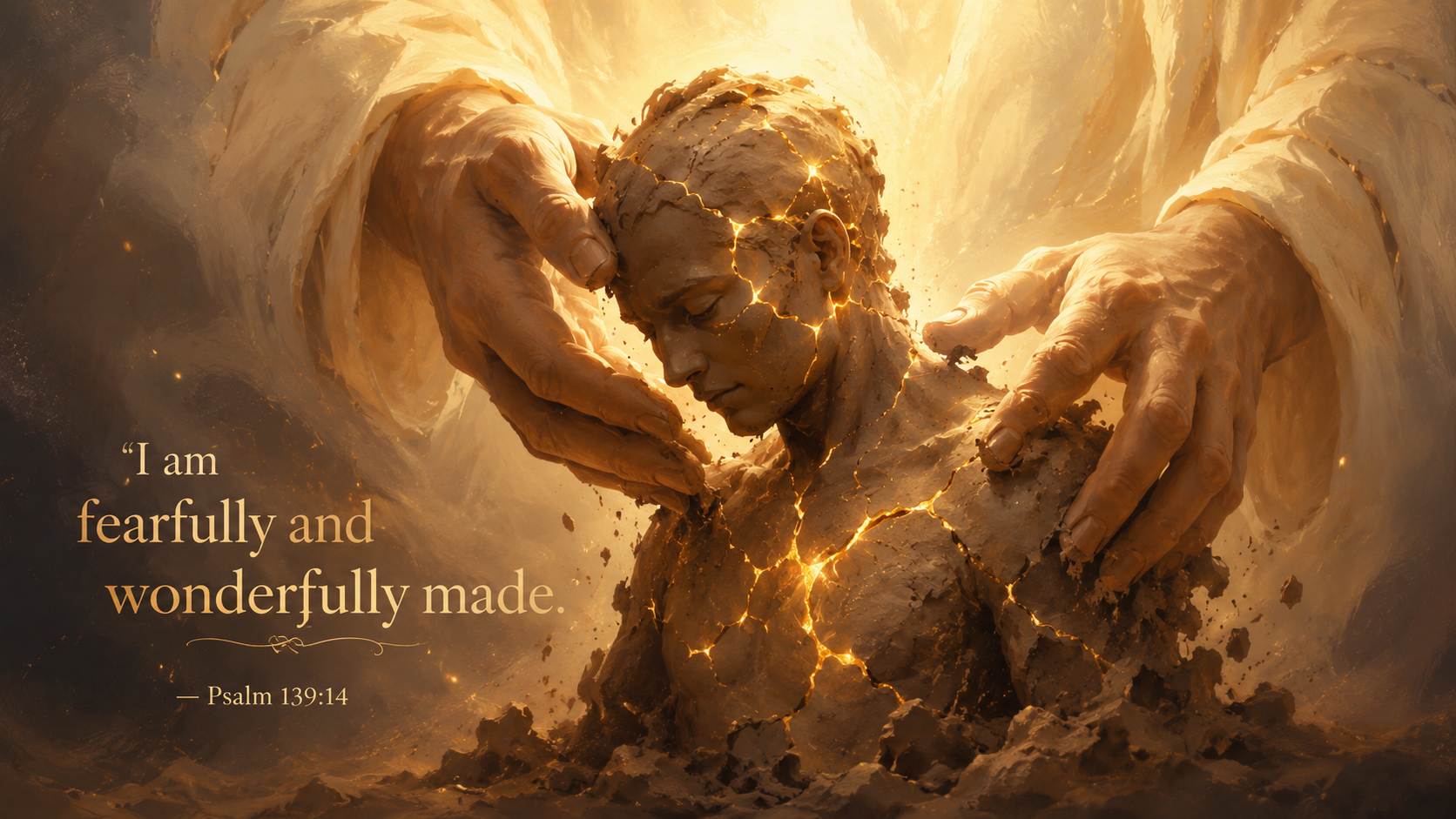
Molded by God: Identity, Healing, and the Beauty of Being Fearfully and Wonderfully Made (Psalm 139:14)

Molded by God: Identity, Healing, and the Beauty of Being Fearfully and Wonderfully Made (Psalm 139:14)

I always had this inclination that something was wrong. And whenever that feeling rose up, I was convinced it was because of someone else. Someone failing me. Someone not stepping up. Someone not doing the honorable thing. I lived with this constant sense that other people were the reason I suffered. And underneath all of that? A deep ache that no one truly cared, no one appreciated me, no one saw the effort I poured out trying to prove myself.

I chased validation like oxygen. I wanted approval so badly that I shaped myself around what I thought others wanted. I tried to be the “better person” in the eyes of everyone else, all while never actually seeing who I was. I was blind to my own entitlement, blind to my victimhood, blind to the way I was both the victim and the villain in someone else’s story. Hypervigilant. Defensive. Exhausted. And yes—hurt by real betrayals, real lies, real wounds that left me carrying depression, resentment, bitterness, and anxiety like a backpack full of bricks.

And then came the moment that broke me open.

My father had just been released from the hospital after months in intensive care from a brutal auto accident. I had given up everything to be there. And yet, I found myself standing on a cold Seattle curb in January of 2005 with nothing but a backpack, work boots, and three cartons of cigarettes. No home. No money. No plan. No one.

I walked the streets of Seattle wondering if this was the end of me.

But God had other plans.

A transitional housing program took me in. I rested. I worked. I rebuilt. And slowly—slowly—I found my way back to faith. But even then, I still couldn’t see myself clearly. I still felt unworthy. I still lived for validation. I still believed I had to earn dignity, earn love, earn respect.

It wasn’t until years later that the Holy Spirit began breaking the spiritual blindness I had carried for so long. And the revelation was simple, but it shook me to my core:

I didn’t know who I was. And I didn’t know how my Heavenly Father saw me.

Anchor Verse — Psalm 139:14 (NASB2020): I will give thanks to You, for I am fearfully and wonderfully made; Wonderful are Your works, And my soul knows it very well.

Two words rise like mountains in this verse: fearfully and wonderfully. Fearfully — yārē’ — to stand in awe, reverence, astonishment. Wonderfully — pālā’ — marvelous, extraordinary, beyond human ability.

This is not casual language. This is identity language. God is not saying, “You’re barely acceptable.” He is saying, “You are My intentional, awe-inspiring work.” We are His workmanship, created in Christ Jesus for good works that He prepared beforehand (Ephesians 2:10). Even when we feel like a mistake, God calls us purposeful, crafted, and known (Psalm 139:1–4).

So today, let’s walk slowly through what it means to be fearfully and wonderfully made—especially when we don’t feel like it. Especially when addiction, shame, trauma, or codependency have distorted the mirror we look into. Especially when our past tells us one story, but God is trying to tell us another.

Wednesday, June 3, 2026

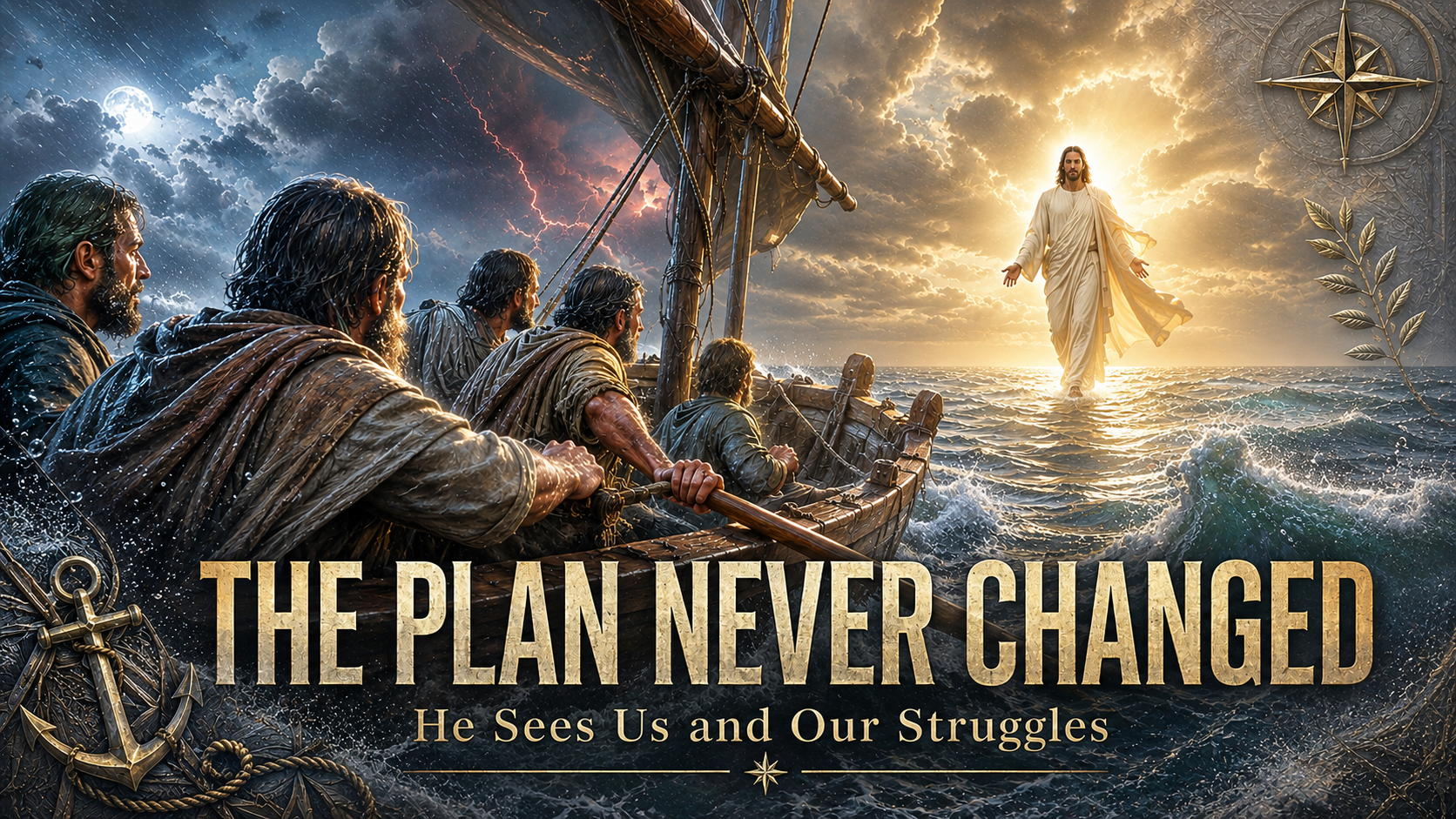
The Plan Never Changed - He Sees Us and Our Struggles

The Plan Never Changed - He Sees Us and Our Struggles

There was a moment in my youth where I learned a lesson I didn’t understand until much later. It happened during a Boy Scout outing one summer. We were out on the bay near my hometown, and it was the first time I ever learned how to paddle a canoe.

Okay, so what — you got to go out on the water, learn to paddle, in a canoe. What’s the big deal?

Here’s the lesson.

On the way back to shore, the tide was going out. We were paddling against it. Not upstream on a river — against the tide of the bay. And the harder we paddled, the slower we moved. Every inch forward took every ounce of strength we had.

Life feels like that sometimes. Recovery feels like that often. You’re straining at the oars, wondering if you’re even moving, wondering when you’ll reach the destination, wondering when the struggle will ease.

I didn’t think about that moment again until I came across a reel of a guy with a sideways cap, tattoos, and piercings teaching on Mark 6 — the same chapter where Jesus feeds the 5,000, right after He receives word of John the Baptist’s death, and right after He commissions the Twelve to preach the Gospel.

Anchor Verse — Mark 6:47–48 (NRSVUE): “When evening came, the boat was out on the sea, and he was alone on the land. When he saw that they were straining at the oars against an adverse wind, he came toward them early in the morning, walking on the sea. He intended to pass them by.”

And that’s where everything shifted. Pastor Kelly K said something that stopped me cold: If Jesus saw them, He sees you too.” The disciples were in serious trouble — rowing hard, struggling against the wind and waves. And Jesus saw them long before He ever stepped onto the water. Just like He sees you. Then came the line that most of us have never paid attention to: “He intended to go past them.” Why would Jesus walk toward them… but not stop?

This Crucified Life: What I No Longer Miss

This Crucified Life: What I No Longer Miss

What is the purpose of this message today? Why focus on what I no longer miss? Because today's message is about what dies and what rises within each one of us. Luke 9 is the clearest, the sharpest, and the most recovery aligned call Jesus ever gives. It is a call to deny self. A call for us to take up our cross daily. A call to follow after Him. And it is one where we are asked to count the cost because it requires that we lose our life in order to save it. It is where we come to the end of ourselves, attempting to gain the appeasement of those around us, to gain what the world may offer us, yet lose our very soul in the process. It speaks directly to the "things I no longer miss" in my own addiction, codependency, chasing the girlies, and pretending to be someone I never was.

Welcome back, fellow travelers. If you haven’t watched the recent devotional in our Set of the Sail series— “The Lord Giveth Knowledge: The Spiritual Awakening of Christian Recovery”—I encourage you to do that. In that message, we talked about walking the crucified life… not coping, not managing, not surviving… but dying to self so that Christ may live fully in us. Having a real genuine spiritual awakening to the things of God.

Today, we’re going deeper. Because if we’re honest, many of us have spent years trying to “manage” life on life’s terms. But Sacred Sobriety is not about management. It’s about transformation. It’s about stepping boldly into the victory Christ already secured.

You and I have twenty‑four hours today. And I want to take a few of those minutes to speak directly to the wounds, addictions, anxieties, fears, and faith crises that have shaped us.

Because there are things I no longer miss. And I want to show you why.

Anchor Verse — Luke 9:23–26: “If any want to become my followers, let them deny themselves and take up their cross daily and follow me. For those who want to save their life will lose it, and those who lose their life for my sake will save it.

This is the heartbeat of recovery. This is the heartbeat of discipleship. This is the heartbeat of Sacred Sobriety.

Jesus is not calling us to cope. He is calling us to die— to ego, to self‑will, to the old patterns, to the old wounds, to the old survival strategies. And in that death… He calls us to live. To live a blessed and abundant life. To live with peace of mind and joy in our hearts. Yet to do this - he invites us in because we are heavy laden, weary travelers and are in much need of rest (Matthew 11:28-29).

Monday, June 1, 2026

From Surviving to Thriving: The Spiritual Awakening Every Christian in Recovery Needs

From Surviving to Thriving: The Spiritual Awakening Every Christian in Recovery Needs

If you’re not familiar with the early story of Alcoholics Anonymous, it’s often said that the ideas behind the Twelve Steps were shaped by the Oxford Group—a gathering of Christian men committed to honesty, confession, restitution, and surrender. Bill Wilson, one of AA’s founders, was deeply influenced by them. But today’s devotional isn’t about the origins of AA. It’s about a man named Rowland Hazard, whose struggle with alcoholism led him to seek help from the famed psychiatrist Carl Jung in the early 1930s.

After extensive treatment, Jung told Hazard something that sounds harsh but is deeply honest: his condition was hopeless from a medical standpoint. His only hope, Jung said, was a spiritual experience—a profound awakening that would transform him from the inside out. That realization eventually shaped the foundation of AA itself. Hazard’s spiritual awakening, experienced through the Oxford Group, was shared with Bill Wilson, and from that encounter the Twelve Steps were born.

Let’s sit with that for a moment. Because in my own journey—through recovery, sobriety, homelessness, fear, doubt, and a faith crisis—I had to face the same truth: everything was utterly hopeless until I had a spiritual awakening. Some call it “hitting bottom.” But I’ve come to see it as the moment the Holy Spirit reveals Christ to us in a way the intellect alone could never reach.

Today, many try to think their way into faith. They know about God but never come to know God Himself. And that brings us to the heart of today’s message: What does it mean to truly know God—and Jesus Christ whom He has sent? (John 17:3)

Our anchor verse is Isaiah 1:18–20, where God invites us to “come and reason together.”

Come now, let us argue it out, says the Lord: if your sins are like scarlet, will they become like snow? If they are red like crimson, will they become like wool? If you are willing and obedient, you shall eat the good of the land, but if you refuse and rebel, you shall be devoured by the sword, for the mouth of the Lord has spoken.

This is not an intellectual debate—it is an invitation to examine our hearts, our wounds, our failures, and our inability to save ourselves. It is a call to return, to be still, and to know that He is God.

Today, we explore what it means to know Christ, to know the Father, and to know who we truly are through a genuine spiritual awakening.