Wednesday, April 29, 2026

The Truth’s Most Powerful Ally: A Life That Speaks Louder Than Words

The Truth’s Most Powerful Ally: A Life That Speaks Louder Than Words

We live in a world overflowing with opinions, arguments, podcasts, and social media posts—yet we often find ourselves starving for authenticity. People tend to trust what they see far more than what they hear. You can win an argument but still lose a connection. You can defend the truth yet fail to embody it. Amid this tension, many of us who are in recovery, healing, or rebuilding our lives ask ourselves a deeper question: Does my life truly reflect the truth I claim to believe?

A.W. Tozer cuts through the noise with such piercing clarity when he says, “The most effective argument for Christianity is still the good lives of those who profess it.” It's not about eloquence or theology or debate. It's about a life transformed by Christ.

Scripture backs this up with sobering clarity: James 2:17 (NRSVUE) reminds us that “So faith by itself, if it has no works, is dead.”

For those navigating recovery, untangling from toxic relationships, or breaking free from codependency, this truth hits home. Transformation isn't some abstract idea—it’s something you can see. It shows in the way you set boundaries, the way you walk away from chaos, and the way you choose peace over control. These decisions become living sermons that nobody can overlook.

A transformed life isn’t just an addition to your faith; it’s tangible evidence of it. In recovery, this looks like opting for boundaries instead of people-pleasing, choosing truth over denial, and embracing surrender over control.

1 Peter 2:12 (NRSVUE) takes this even further: “Conduct yourselves honorably among the gentiles, so that… they may see your honorable deeds and glorify God…”

People might never pick up a Bible, but they will read your life. They draw conclusions about God based on what they observe in you.

Every small act of kindness, every moment of self-discipline, and every decision based in love turns into a testimony. It’s in these everyday choices that the authenticity of your faith shines the brightest. When someone sees genuine transformation, it offers hope that real change is indeed possible. They’re not just hearing the Gospel; they’re witnessing it in action through your life.

Anchor verse - Matthew 5:16: “In the same way, let your light shine before others, so that they may see your good works and give glory to your Father in heaven.” (NRSVUE)

So if you’ve battled with guilt, shame, or a crisis of faith, hear this loud and clear: God isn’t asking you to be perfect. He’s inviting you into a real transformation.

2 Corinthians 3:18 (NRSVUE) tells us: “And all of us… seeing the glory of the Lord as though reflected in a mirror, are being transformed into the same image from one degree of glory to another…”

This is a process—a journey of becoming. It’s a gradual reshaping of your life that others can't help but notice.

And even on days when your voice feels quiet, your life—anchored in Christ—becomes a testimony that resonates with undeniable clarity.

Engaging with others in their struggles, rather than offering empty platitudes, creates deep connections. The beautiful truth is that God doesn’t call you to perform truth; He calls you to be transformed by it. This transformation, evident in your actions and choices, becomes a beacon of hope to those around you who are seeking meaning and reassurance.

By choosing to embody love, grace, and perseverance—qualities that Christ offers—you not only nurture your own growth but also inspire others to embark on their own journeys toward healing and authenticity. Your life can stand as a powerful testament, gently guiding others out of darkness into a place where they can truly see and experience real change for themselves.

Melchizedek Priesthood Study Manual - 1974/75 | Doctrine Lesson 5: In Whom Do You Have Faith

Melchizedek Priesthood Study Manual - 1974/75 | Doctrine Lesson 5: In Whom Do You Have Faith

Is Jesus Christ Jehovah? That question sits at the center of Latter‑day Saint belief and shapes how scripture, worship, and devotion fit together.

Many Latter‑day Saints answer this simply: yes. The claim that Jesus Christ is Jehovah—the God of the Old Testament—threads through the Bible, the Book of Mormon, and modern LDS scripture. When you read those texts together, a single, continuous picture of the Savior emerges: the same divine Being who made covenants with Israel is the One who came to earth, taught, and atoned for us.

Scriptural Evidence That Connects the Names

The Old Testament presents Jehovah as Israel’s covenant‑making, creative, and redeeming God. The New Testament introduces Jesus as the divine Word who was with God in the beginning and through whom all things were made. The Book of Mormon and Doctrine and Covenants pick up that same thread and make the connection explicit. For example, when the resurrected Savior declares, “Behold, I am Jesus Christ” (3 Nephi 11:10–11), it reads as a direct fulfillment of the prophetic voice that spoke for God in earlier scripture.

Prophecies such as Isaiah 9:6 calling the coming child “Mighty God,” and John 1:1–3 identifying the Word as God, point to one eternal actor in salvation history. Passages like Colossians 1:16, which speak of Christ’s role in creation, reinforce the idea that the One who created and guided Israel is the same One who walked the earth as Jesus.

LDS Doctrinal Context

Latter‑day Saint teaching emphasizes that Jehovah is Jesus Christ. Modern prophets and revelations encourage members to read the Old and New Testaments together with latter‑day scripture, seeing continuity rather than contradiction. The doctrine of premortality—where Jesus is chosen as Savior before the world’s foundation (see Abraham 3:27)—underscores that His divine role predates His mortal life. Doctrine and Covenants passages that affirm the Lord’s universal lordship further shape this understanding.

Why This Matters for Faith and Practice

Seeing Jesus as Jehovah changes how scripture is read and how worship is lived. It ties the covenants and promises of Israel to the life, Atonement, and Resurrection of Christ. That continuity makes the Savior’s teachings feel less like a new chapter and more like the central thread of a single, unfolding story. For believers, it deepens trust in His unchanging nature and invites a more personal relationship with the God who has always been involved in human history.

Curious how Latter‑day Saints answer the question, “Is Jesus Christ Jehovah?” — and why it matters? Read more to see a clear, scripture‑rooted explanation that’s both simple and soul‑stirring.

Tuesday, April 28, 2026

General Conference Reflection: Come Home - The Savior's Call to the Weary

General Conference Reflection: Come Home - The Savior's Call to the Weary

There have been those moments in my own life when silence felt louder than any noise - when distance from God doesn't come through rebellion, it comes through weariness, disappointments, or quiet drifting. In those moments - I never thought of them as sacred hidden places. However, Elder Clark G. Gilbert's message, Come Home, reminded me of how Christ rescued me. Elder Gilbert's testimony is both disarming and deeply personal: Jesus Christ is not waiting to condemn you - He is actively calling you back. This is not an invitation for us to return to any religious belief - it is a return to a covenantal relationship where Christ desires to bring us face-to-face with our Heavenly Father. Through this process, we find healing, restoration, peace, and the joy that surpasses all understanding. It is an invitation for those wandering and lost today.

And here is the profound truth Elder Gilbert centers his message: Christ is not only our Redeemer - but He is also our Repairer. This distinction is of immense importance. Many of us hold to the idea that Jesus forgives us - however, how many of us truly believe and experience the reality of His power to restore us? Through personal stories, doctrinal clarity, and prophetic and apostolic witness, this message unfolds the spiritual reality and truth - no fracture; spiritual, emotional, or relational, is beyond the Savior's power to amend through the gift and tender mercies of the infinite atonement.

Elder Gilbert's message acknowledges the real barriers that prevent people from returning. It is these barriers I have found myself referring back to regarding my own devotional teachings and messages. The very same barriers I’ve struggled with over the years in returning back to the faith of the Restored Gospel. Feelings of not belonging, feelings of inadequacy, doubt, or even feeling trapped within cultural or religious expectations often obscure an intimate relationship with Jesus Christ. Elder Gilbert does not dismiss these struggles; instead, he speaks directly into them with compassion and clarity. His approach is refreshing as it resonates with the hearts of many who grapple with these complex emotions.

For me, the ultimate truth of this message is not about people leaving the faith - it is about the reason they are able to return. And for me, the Gospel of Jesus Christ is not a place for perfect people - it is a home for those returning. This home isn’t just a metaphorical return; it’s a genuine invitation to embrace love, understanding, and acceptance in the arms of a Savior who knows our struggles intimately.

Consider what the Savior taught regarding this profound and yet simplistic principle and truth:

"As Jesus was walking along, he saw a man called Matthew sitting at the tax-collection station, and he said to him, "Follow me." And he got up and followed him. And as he sat at dinner in the house, many tax collectors and sinners came and were sitting with Jesus and his disciples. When the Pharisees saw this, they said to his disciples, "Why does your teacher eat with tax collectors and sinners?" But when he heard this, he said, "Those who are well have no need of a physician, but those who are sick. Go and learn what this means, I desire mercy, not sacrifice. For I have not come to call the righteous but sinners." (Matthew 9:10-13, NRSVUE).

In this scene, Jesus is having a meal with Matthew, a former tax collector, and a mixed crowd of people whom the religious leaders dubbed as tax collectors and sinners. When the Pharisees, the self-appointed guardians of what’s pure and pious, ask why he would spend time with such unclean folks, Jesus turns the whole conversation on its head. He doesn’t see himself as a judge but as a healer. He highlights that his mission isn’t about reaffirming those who think they’re just fine—essentially the self-righteous—but about reaching out to those who are honest enough to see their own brokenness. By quoting the prophet Hosea—“I desire mercy, not sacrifice”—he underscores that compassion trumps strict religious rules or pushing people away.

In addition to this powerful depiction, it's crucial to reflect on the implications of this teaching in our daily lives. The moments we find ourselves in judgment rather than in service can detract from our mission as followers of Christ. When we look at the world with eyes that see brokenness, we are called to serve rather than criticize. Our posture should always be one of humility, recognizing our own need for mercy.

For me, Christ is not waiting to condemn; even the Apostle Paul writes: "Therefore there is now no condemnation for those who are in Christ Jesus" (Romans 8:1, NRSVUE). In my own life, those I have ministered to and sat in counsel with over the years have experienced this invitation to come back to Him. And the sad reality is: how often do we stand in the shoes of the Pharisees? How often are we prone to judge and criticize those who have left the LDS Faith, or even those who have left the Christian faith in general? While the Pharisees saw the dinner table as a place of judgment and an opportunity to avoid those who are deemed unworthy - sinners - Christ saw it as a place of ministry, healing, and deep connection.

One of the oft-repeated excuses that frustrates me is this: The Gospel is Perfect; the Church is True - the people are not. This bumper sticker cliché seems to slap a band-aid on people who have truly been disappointed, hurt, or pushed to the side as if they don't matter or belong. This perspective can inadvertently perpetuate a culture of exclusion rather than inclusion, failing to recognize that the essence of the Gospel is about love and reconciliation.

In reality, Jesus' message invites every individual, regardless of their past or present struggles, to experience the fullness of His grace and mercy—a message that should resonate deeply within the walls of every church and community devoted to His service.

Our Heavenly Family: What the Gospel Teaches About Premortal Life and the Plan of Progression

Our Heavenly Family: What the Gospel Teaches About Premortal Life and the Plan of Progression

What if your identity didn’t start at birth—but before time as you know it?

Culture and society constantly attempt to define you by your past, your struggles, or your achievements, the restored gospel of Jesus Christ offers a radically different foundation: you are not an accident—you are a child of God.

This truth sits at the very heart of Latter-day Saint belief and shapes everything from purpose to destiny. If you’ve ever wondered, Who am I? Why am I here? Where am I going? —this doctrine answers all three with clarity, hope, and eternal perspective. Understanding this inherent identity offers comfort amidst life's challenges and reassures you that your existence is meaningful and intentional.

The idea that your identity predates your mortal experience invites a profound reflection on the nature of your soul. It posits that you were known to God before the foundation of the world, reinforcing a sense of belonging that transcends earthly definitions. This foundational belief encourages individuals to look beyond transient labels and societal expectations, fostering a deeper connection with the divine.

In this post, we’ll walk through the doctrine of our Heavenly Family as taught in Chapter 2 of the Gospel Principles manual—unpacking it through scripture, thoughtful explanation, and real-life application. We will explore how viewing yourself as a beloved child of Heavenly Parents impacts your day-to-day life, the decisions you make, and the way you interact with others. By examining scripture, we’ll delve into key passages that illuminate your divine lineage and help you internalize the powerful message that you are part of a larger, eternal family.

Join us as we navigate these teachings together, uncovering the significance of your eternal identity and how it serves as a guiding light through trials and triumphs alike. Through this exploration, may you gain a renewed perspective on your divine worth and a deeper understanding of your eternal purpose.

Monday, April 27, 2026

Power of Silence in the Christian Life

Power of Silence in the Christian Life

The world disciples you in noise—but God forms you in stillness.

From the first waking moment, your soul is pulled outward—demands, responsibilities, distractions, internal unrest. Even your prayers can become hurried transactions, filled with words yet empty of encounter. But Scripture reveals a different way—a hidden life cultivated not in striving, but in stillness before God.

Most believers have learned how to speak to God. Few have learned how to be with Him. This distinction is crucial for those seeking a more profound relationship. Speaking often feels like filling an obligation, while being allows for an intimate exchange that transcends mere words. In this fast-paced world, the stillness can feel foreign, almost uncomfortable, yet it is within this quiet space that the heart finds its rest and revelation.

Yet the invitation remains: not to louder devotion, but to deeper communion. Not to more words—but to greater awareness of His presence. As we step back from the clamor of life, we begin to attune our hearts to His whispers, learning that sometimes silence is the most powerful form of communication. The question is not whether God is speaking… but whether you have become quiet enough to hear.

In stillness, you discover a sacred rhythm where your spirit can align with His. You can find strength for your day, peace that surpasses understanding, and clarity in the midst of confusion. It is in these still moments that the burdens of the world begin to lift, surrendering your concerns into His capable hands. Embrace the call to stillness; allow it to transform your relationship with the Divine, leading you not only into a deeper understanding but a more vibrant experience of faith.

Anchor Verse: “Stop striving and know that I am God; I will be exalted among the nations, I will be exalted in the earth.” — Psalm 46:10 (NASB 2020)

Stillness, then, is not a passive retreat from life—it is a deliberate return to the One who holds your life. It is the quiet reorientation of the soul, the sacred pause where you stop letting the world set your pace and allow God to set your posture. In stillness, you are not withdrawing from responsibility; you are withdrawing from the illusion that you must carry it all alone.

This is why Scripture does not merely suggest stillness—it commands it. Because without stillness, you cannot hear. Without stillness, you cannot discern. Without stillness, you cannot remember who God is or who you are in Him. Stillness becomes the doorway through which trust is formed, faith is strengthened, and clarity is restored.

This command is more than an invitation to quiet your mind; it is a call to reorient your entire inner life around the reality of who God is. Stillness becomes the place where striving finally loosens its grip and trust begins to take root. But what does it actually look like to live this out in the chaos of real life? How do we move from noise to knowing, from hurry to holy stillness?

That’s where the deeper work begins.

Sunday, April 26, 2026

Powerless Over the Storm — Not Powerless Over the Sail

Powerless Over the Storm — Not Powerless Over the Sail

Ever have one of those moments where clarity doesn’t arrive with fireworks, but with a quiet, unmistakable shift inside your chest—a soft Aha, a gentle epiphany that feels less like a thought and more like a whisper settling into your spirit? That happened to me as I was preparing for today's devotional message. I was sitting with A. W. Tozer’s The Set of the Sail, revisiting the opening chapter, when something in those pages caught me off guard. And then it hit me—clean, sharp, and humbling. How have I missed what the Third Step may truly be inviting us into?

For anyone unfamiliar, the Third Step in recovery says that we “made a decision to turn our will and our lives over to the care of God as we understood Him.” On the surface, it sounds simple enough—surrender your will, your autonomy, your desires. Let God take the helm. But beneath that simplicity lies the raw truth that brought many of us to recovery in the first place: we finally saw how far we had drifted, how powerless we had become, how our lives had unraveled into chaos, disorder, and ruin. And in that unraveling, we recognized our need for a power greater than ourselves to intervene.

But here’s the part we rarely talk about. That moment of surrender doesn’t usually feel holy. It doesn’t feel triumphant. It feels like waking up from a long, heavy fog—numb, disoriented, spiritually exhausted. Faith feels distant. Purpose feels fractured. And somewhere in the stillness of that inner ache, a question rises: Am I drifting? And the honest answer is yes. We have drifted. And that truth cuts through the noise of our anxious, chaotic thoughts with a clarity we can’t ignore. Because in that moment, we’re no longer moved by emotion—we’re moved by a deliberate, trembling desire to choose something different.

Tozer writes that the direction of a life is not determined by the strength of the wind, but by the set of the will. He echoes Ella Wheeler Wilcox’s line: “It is the set of the sails and not the gales which tells us the way to go.” That line stopped me. Because if we’re honest—with ourselves and with our Heavenly Father—when we’re standing in the middle of doubt, fear, anxiety, or spiritual fatigue, this truth matters more than we realize.

It matters because the confrontation of the Third Step is not merely about surrender. It is about resetting the sails of our recovery, our faith, and our lives. It is about choosing—sometimes with trembling hands—to turn the bow of our soul back toward the One who has been waiting to guide us all along.

Anchor Verse: "Now if you are unwilling to serve the Lord, choose this day whom you will serve, whether the gods your ancestors served in the region beyond the River or the gods of the Amorites in whose land you are living, but as for me and my household, we will serve the Lord." - Joshua 24:15, NRSVUE

I know—at first glance, this verse can feel like a cliché. It’s the kind of Scripture that ends up on wall art, coffee mugs, and Christian décor aisles. And for those who know the context, it might even raise a question: Why use Joshua 24:15 here? Why bring in a verse where Joshua is telling Israel to choose between the Lord and the gods of their ancestors or the gods of the Amorites?

But that’s exactly why I love this verse. Because Joshua isn’t simply telling Israel to “choose God.” He’s confronting them with a deeper truth: if you do not choose to serve the Lord, you will still serve something. You will serve the gods of your past, or the gods of the culture around you—but you will serve something.

And suddenly, the connection to the Third Step becomes painfully clear.

Thursday, April 23, 2026

Repentability: The Courage to Admit, the Grace to Change

Repentability: The Courage to Admit, the Grace to Change

There’s a line from John Everett that hits like a freight train: “No man ever enters heaven until he is first convinced that he deserves hell.” This profound statement opens a window into a deeper understanding of our human condition. It’s not simply about despair; it’s about arriving at clarity, the kind that pierces through the fog of self-deception and allows us to see ourselves in our truest form.

For those who have journeyed along the path of recovery, this truth resonates deeply: Breakthrough doesn’t begin with strength. It begins with surrender. This surrender is an act of will, a choice to lay down our pretense and pride in favor of an honest reckoning with our flaws and failures.

When we engage with Scripture, a steady theme of humility emerges, woven through every page like a rich tapestry. Jesus begins the Beatitudes with a powerful assertion: “Blessed are the poor in spirit, for theirs is the kingdom of heaven.” (Matthew 5:3) This verb "blessed" signifies a state of being that arises from recognizing our spiritual poverty—a necessary acknowledgment that opens us to the grace that God offers.

The apostle Peter echoes this sentiment, reinforcing the idea that humility is essential when he states: “God opposes the proud but gives grace to the humble.” (1 Peter 5:5–6) These words remind us that humility isn’t merely a suggestion—it’s foundational to our spiritual lives. It’s the nutrient-rich soil in which the seeds of repentance can take root and grow.

Nowhere is this more vividly illustrated than in 2 Samuel 12:1–13, during Nathan’s confrontation with King David. Here we find the narrative of God’s chosen king, who fell from grace through grievous sins: adultery and murder. When Nathan shared the parable of the stolen lamb, David's fury ignited, until the piercing truth struck him: “You are the man.”

The gravity of this moment cannot be overstated. David, instead of employing the common defense mechanisms we often resort to—defensiveness, denial, or blame—did something remarkable. He broke within himself. He uttered the words, “I have sinned against the LORD.” (2 Samuel 12:13) This is what we might call true repentability. It's humility in motion, a posture that God can work with, one that opens the door for restoration and healing.

Wednesday, April 22, 2026

Solidarity in Our Suffering

Solidarity in Our Suffering

Every one of us knows what it feels like to wake up inside a prison we never saw ourselves enter. Not a prison of steel bars, but the kind built from fear, shame, distorted thinking, and the quiet suffering we carry alone. These are the prisons that don’t show up on a background check—but they shape our lives all the same.

And here’s the part we rarely admit to ourselves: most of the time, we don’t even realize we’re locked inside. We just feel the weight. The cycle. The hopelessness. Recovery calls this “your side of the street.” MRT calls it “recognizing your prison.” Scripture calls it remembering—remembering those in chains as though you were chained with them (Hebrews 13:3). Because the moment you recognize your own captivity is the moment you become capable of standing with someone else in theirs. Not with pity. Not with judgment. But with solidarity born from shared humanity and redeemed suffering.

I’ve lived in those invisible cells. I’ve counseled people trapped in them. And I’ve watched God use both literal and internal prisons to refine character, restore dignity, and reveal His mercy in ways comfort never could. So when I talk about suffering in solidarity, I’m not speaking as an observer—I’m speaking as someone who has been behind those walls and found Christ already waiting there. This devotional isn’t about theory. It’s about truth. It’s about recovery. It’s about the Gospel. And it’s about learning to see our own captivity clearly enough that we can walk beside others without superiority, without fear, and without pretending we’ve never been imprisoned ourselves.

What is the prison of your own suffering? For me, it was those moments where my life seemed to come undone - the rug pulled right out from underneath me. Locked in my own irrational thought process, false beliefs, and not understanding the reason I seemed to constantly be in this never-ending cycle of always finding myself in a place of brokenness, suffering, and hopelessness. There are moments in many individuals lives where they are in some form of a prison. And this prison may be a literal prison, or it may be a product of one’s circumstances. Whether this is a place of financial debt, broken relationship, physical limitations, disability, or injury, or any other constraining circumstance. 

Yet, the single most travesty within our Christian faith communities and fellowship is when fellow saints perceive those who are in some form of prison and are suffering - see them with a biased assumption that God has not favored them. That, they have committed some form of sin, or are spiritual rebellion. To some extent, there are those who have this idea that Christians suffering in their own prisons are lacking faith in God. 

However, let’s consider the Apostle Paul: he probably experienced similar judgments and perceptions. Specifically, when we read his epistles that were written while he was in prison and suffering for the cause of the Gospel. Early saints of the way may have seen his trouble as a sign of God’s own disfavor and wondered how someone with so much potential had fallen to such lowly depths. 

Now, consider the reality of what I am wanting to share with you today. Prisons today different from person to person - and are full of God’s beloved sons and daughters. Despite this reality, He uses these prison moments in profound and mighty ways. We see how he used Paul’s suffering and prison moments, Joseph of Egypt, John the Baptist, John the beloved disciple, and numerous other men within scripture. Most of these men were used by God in powerful ways and they have experienced imprisonment, captivity, or depth of loneliness and despair - and our Heavenly Father, in His tender mercies, used those moments. 

Tuesday, April 21, 2026

Ministering — “That Ye Love One Another; as I Have Loved You”

Ministering — “That Ye Love One Another; as I Have Loved You”

Ministering is truly loving and caring for others as the Savior would. It is a way of being; it is the way of our Savior, Jesus Christ.

How do we view ministering? When we approach this sacred assignment, are we simply checking off a task on our to-do list? Do we juggle it in our already packed schedules, overwhelmed and overloaded, perhaps even a bit overstimulated? Sister Kristin M. Yee encourages us to reframe our understanding of ministering—an understanding that emphasizes fulfilling our covenants. She beautifully illustrates that ministering is not just an obligation to fulfill, but a profound opportunity to invite the Spirit into our lives and create a sacred space. It’s about edifying, encouraging, and healing those who might have lost hope or are struggling to exercise their faith.

Sister Yee shares a touching story about her father—a man who didn’t need elaborate lectures, programs, or perfectly crafted plans to feel the warmth of fellowship. All it took were two faithful servants of God who consistently showed up, embodying the love, light, and truth of our Heavenly Father. Week after week, year after year, they stood by him, guiding him to the temple. There were no grand gestures, no fanfare—just simple, covenant love in action. It was through this quiet, consistent effort that her father began to experience God’s presence and, in turn, rediscovered the love of the Father. He found within himself the capacity to love again, leading him to a deeper sense of purpose and meaning in life.

This is the essence of ministering that transforms individuals, strengthens families, rescues souls, and rewrites personal stories for the better.

Let’s take a moment to reflect: Have you ever felt unsure, unqualified, or awkward about ministering? While pondering this, consider another question: Have you ever felt uncertain, unqualified, or awkward about being ministered to? This message resonates deeply with me, and I hope it speaks to you as well.

Sister Yee addresses each of us directly, acknowledging that many of us may feel this way at times. She testifies that the Savior steps in to fill those gaps in our lives. He magnifies our smallest efforts, turning our simple presence into sacred moments of healing, restoration, and forgiveness. Through this, He invites the Spirit to embrace us, allowing us to feel His immense love as we share it with others.

Remember, this journey is not about achieving perfection; it’s about embracing genuine and faithful discipleship. It’s about stewardship—showing up with Christ and allowing Him to work through us, doing what only He can do.

Monday, April 20, 2026

Gospel Principles: Lesson One - Our Heavenly Father

Gospel Principles: Lesson One - Our Heavenly Father

God is real, God is our Heavenly Father, and He wants us to come to Know Him (John 17:3)

Have you ever gone through life with a quiet question that is rarely said out loud: "Is God really there...and does He actually know me?" It is a question that may show up in the middle of the night, in moments of loss and difficulty, or even in those moments of personal reflection and joy. A moment when something deep within us whispers that life has to mean more than survival and routine.

Here is the beautiful part about the restored Gospel of Jesus Christ. It does not simply answer the question with doctrine - it answers this question with a relationship. God is not some abstract force or a distant creator. He is our divine Heavenly Father. And once you see him this way, everything may change. May change how you pray, how you see yourself, and how you interpret personal struggles. It may even change how you might recognize His hand in your daily life.

Today, we are going to get back to basics and establish the fundamental and foundational doctrine of any Christian faith. Coming to know and understanding who our Heavenly Father is. This chapter from the Gospel Principles Manual opens the door in a simple, and profound conversational way. It is showing how we are to come to know and understand who God is through small, steady, spiritual practices that shape our hearts toward godliness.

In this post, and the attached video, I want to walk you through the core ideas of Chapter One. And I want to do this in a way that is accessible, personal, and grounded in lived discipleship. While the foundation may come from the Church's official manual, the reflections and applications are my own - shaped by personal years of study and centered on faith-based conversations. My goal here is to help you not merely understand Latter-day Saint doctrine and teaching on God. The purpose is to assist in showing how you are may experience God - to see how knowing our Heavenly Father may bring clarity, peace, and purpose into everyday living.

Reader's Note: This post, and video, draws from Gospel Principles, Chapter 1: Our Heavenly Father, published by The Church of Jesus Christ of Latter-day Saints. The core ideas come from the official manual, but the reflections, explanations, and applications shared here represent my own study and teaching approach. This adaptation is intended to support personal learning and devotional growth and should not be viewed as an official statement of Church doctrine.

Pressing Forward with Steadfast Faith

Pressing Forward with Steadfast Faith

There comes a moment in every believer’s life—and in every person walking out recovery—when God says something that feels almost unreasonable: “Go forward.” This divine command often arrives not when the sea has parted, not when the fear has settled, and certainly not when you feel your strongest. Instead, it comes at a time when we might feel the most vulnerable, beckoning us to take that leap of faith—forward… right now. This call exposes our innermost beliefs. It reveals whether we trust the God who speaks or if we allow the circumstances around us to intimidate and paralyze us.

Charles Spurgeon once articulated that vigorous faith often laughs at impossibility—and this idea is rooted in the assurance that the matter has been settled in prayer. When we commit our burdens to God, there’s a shift. Our faith rises; it stands up, wipes its eyes, and begins to walk toward what has previously seemed terrifying. Scripture reinforces this call to action with compelling encouragement: press toward the mark (Philippians 3:14), run with patience (Hebrews 12:1), be not weary in well doing (Galatians 6:9), resist steadfast in the faith (1 Peter 5:9), continue instant in prayer (Romans 12:12), and press forward with a steadfastness in Christ (2 Nephi 31:20). The pattern here is unmistakable—moving forward is the posture of those who genuinely trust God.

“Brethren, a vigorous faith will often shut its eyes to difficulties. When faith looks upon a difficulty as being exceedingly great, then she turns to prayer; but, on the other hand, after having sought God’s help, and having received it, she frequently laughs at the impossibility, and cries, “It shall be done;” and then, instead of betaking herself any longer to her knees, she boldly marches on, believing that the difficulty will vanish before her, that the crooked will be made straight, and the rough places plain. We are not to be always praying over a difficulty; when we have fairly committed it to God, we are to act upon the assurance that he has heard us; nor will such an action be the fruit of rashness, for it is a solid and substantial fact, that prayer does avail with God. Beloved, it strikes me that the advice which the Lord gave to Moses, was such as he has given to the preacher to-night; and that the message which Moses delivered to the children of Israel, is a very fit one for me to deliver to you. Short, prompt, soldier-like, here is the whole of it: “Forward! forward!” If you have been sitting down or tempted to go back— “Forward!” We have long been praying, let us to-night “Go forward.” The one subject we shall take up and try to deliver to different classes of character, is, “Thus saith the Lord, ye children of Israel, Forward!” (Charles H. Spurgeon, October 18, 1863;  “Forward! Forward! Forward!” Metropolitan Tabernacle Pulpit Volume 10)

Reflecting on the Israelites at the Red Sea, it’s clear that their moment of decision wasn’t about their strength—their circumstances appeared utterly impossible. It was about recognizing God’s unwavering faithfulness. The command to move forward was not only a call to action but an affirmation that God was already working in their favor. When God says “Forward,” He is not pushing you into peril; rather, He is leading you into deliverance and growth. This same God who parted the waters for Moses, who fortified Paul during his trials, who steadied Peter in the storms, and who sustained the early saints through persecution is the same God who walks with you right now. You can trust Him. You can move beyond your fears and doubts. You can take that step forward, knowing that He is leading you into a brighter and more fulfilling future. Your journey may be filled with uncertainty, but remember, every step taken in faith is a step walked in the light of His promises. You can go forward.

Thursday, April 9, 2026

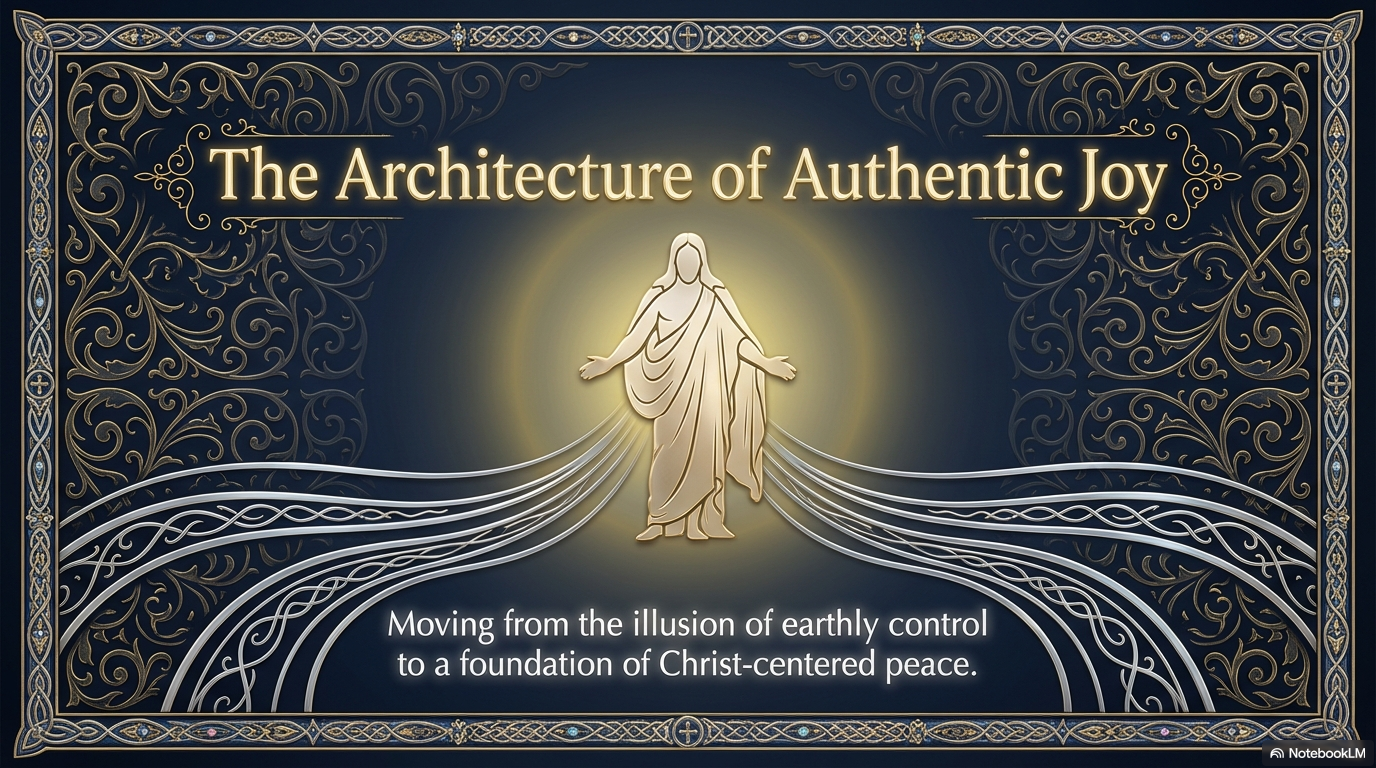
The Spiritual Architecture of Authentic Joy

The Spiritual Architecture of Authentic Joy

Every one of us knows what it feels like to have parts of our life in ruins — our peace, our confidence, our identity, our sense of direction. Just like the people in Nehemiah’s day, we look around and realize the walls we thought would protect us have crumbled, and the life we were trying to hold together through sheer effort isn’t working anymore.

And in that moment, we all chase the same thing: “If I can just fix this… then I’ll finally be happy.”

Scripture gives us a different picture. Nehemiah shows us that joy doesn’t come from getting everything under control — it comes from letting God rebuild what we cannot.

And Christ teaches the same truth in Matthew 16:24 - “If any man will come after me, let him deny himself, and take up his cross, and follow me…”

The life we attempt to save through control is the life we lose. The life we surrender to Him is the life where joy becomes possible.

When the people in Nehemiah 8 heard the word of God, they broke down. They wept. They realized how far they had drifted, how empty their efforts had become, and how exhausted they were from trying to manage life on their own.

But Nehemiah didn’t say, “Stay in your sorrow.” He said: “Do not mourn… for the joy of the Lord is your strength.” (Nehemiah 8:10)

Not the joy of circumstances. Not the joy of achievement. Not the joy of control. The joy of the Lord.

This is the same joy Christ points to in Matthew 16 — the joy that comes after surrender, after discipleship, after laying down the old life.

Nehemiah rebuilt walls. Christ rebuilds people. And both teach us that joy is not something we chase — it’s something God builds in us when we stop trying to build life on our own terms.

It is the reason Christ says that we are to Seek after the Kingdom of God and His Righteousness in order to experience all that the Father desires to bestow upon each one of us. Not because we need to beg God to do anything for us. Instead, we are to place our faith and trust in who God is and believing on Jesus Christ - knowing that our Heavenly Father will provide. And we do this with a thankful heart (1 Thessalonians 5:18).

I’m not teaching this as theory. I’ve lived the illusion of control. I’ve watched people chase happiness until they’re exhausted, empty, and spiritually malnourished. And I’ve watched what happens when someone finally lets go — when they deny the old self, take up the cross, and follow Christ into a life that is actually sustainable.

Here are the reality and truth: Short‑term happiness is fleeting. Joy is durable. Contentment is stabilizing. Peace is transformative. And Christ is the only One who can reorder our lives so that joy becomes possible.

Nehemiah shows us the reality and truth. Christ shows us the path. And together they teach us that authentic joy is not found in control — it is found in surrender.

Monday, April 6, 2026

Elder Patrick Kearon: "About His Business" | Sandpaper People and the Refiner’s Fire

Elder Patrick Kearon: "About His Business" | Sandpaper People and the Refiner’s Fire

How often have we walked into our Sunday meetings looking for a sanctuary from the world that seems to be troubled, in a state of confusion, and quite volatile and toxic? And yet, we step into a place where one may frequently find something much more challenging: a room full of people who have a wide range of differences. It may be quite tempting to see these differences as hinderances or even obstacles to our own spiritual growth. However, what if such annoyances of our specific wards are actually the very tools God uses to encourage, edify, and strengthen us? And sometimes, these people seemed to rub us the wrong way - you know - sandpaper people.1

Wait...what? Sandpaper people? Yep, exactly - sandpaper people are those who may rub us the wrong way. You know, the ones that seemingly get under our skin sometimes? The ones we may want to avoid, even at church. And yet, you may be wondering - what is a sandpaper person? And furthermore, what purpose do they serve?

Sandpaper is designed to smooth out and refine surfaces. A sheet, or strip, of paper that is quite abrasive, depending on the grade, where it smooths out rough spots, removes rust or old paint. It is also used to prepare surfaces for painting, staining, and polishing. In essence, sandpaper's sole intention and purpose is to refine and smooth out the rough edges. And that is exactly what sandpaper do - they smooth out the rough edges and refine us in ways that help shape and transform us into whom our Heavenly Father has called us to become.

Isaiah 48:10 says, "See, I have refined you but not like silver; I have tested you in the furnace of adversity." And you may be wondering, what does Isaiah 48:10 and sandpaper people have to do with attending Church?

Here is the simple truth: God does not refine us in isolation, nor does He shape us only through peaceful, agreeable circumstances. Instead, our Heavenly Father refines us in the furnace of adversity - and sometimes, that furnace of adversity looks surprisingly ordinary. You know, the person singing loudly behind you during Sacrament meeting. The kids with an apparent case of ants in their pants and parents doing their best to help them practice reverence. Or the person who shows up in jeans and a shirt with no tie. People that somehow do not fit our mold or expectations. Let's face it - our wards consist of people full of personalities, preferences, quirks, and rough edges that collide with our own.

And this is an uncomfortable and beautiful reality.

Sandpaper people are part of God's refining fire where we are to come together in unity of faith, common consent, and edifying and strengthening one another in the faith. Not because they are problematic. Not because they may appear less spiritual. And certainly, not because they are annoying obstacles to our worship. Because Our Heavenly Father, in his infinite wisdom, places us in communities where our rough edges meet theirs - and in that friction, something holy happens. Something we may not ever choose, yet something we desperately need.

Elder Patrick Kearon opened up the Saturday Morning Session of General Conference with a message titled About His Business" regarding how our service is a choice, an offering to God and a blessing. He appears to reframe the local ward, not as a social club for the like-minded individuals. Instead, he provided insight on how this may be a divine place of fellowship. A place where the friction of serving people who are "very different to us" creates the heat necessary to forge Christlike virtues - charity, meekness, and forgiveness - that simply may not be developed in isolation. If you've ever struggled to find your place in a diverse congregation, you are not failing the test; you are finally in the right place.

I want to take a moment and walk with you as we bridge the gap between modern apostolic counsel and ancient scripture. To understand how The Body of Christ requires every different member to function - and the reason our growth depends on the person sitting three pews away.

Sunday, April 5, 2026

Covenant Judgment Cycles: The Four Great Destructions - A Unified Apocalyptic Pattern of Judgment, Wrath, and Divine Deliverance

Covenant Judgment Cycles: The Four Great Destructions - A Unified Apocalyptic Pattern of Judgment, Wrath, and Divine Deliverance

I want to invite you into a discuss in order to deepen our understanding on a study that brings together Egypt, Jerusalem, the Nephite lands, and the Andean darkness into one unified prophetic pattern. Today we begin where the pattern becomes unmistakable—Exodus 7 through 13—and we set it side by side with 3 Nephi 6 through 11, where the same God reveals the same covenant warnings, the same escalating judgments, and the same merciful deliverance to a different people on a different continent.

When you read Exodus and 3 Nephi together, the Scriptures stop feeling like isolated stories and start sounding like a single divine voice speaking across time. Pharaoh’s Egypt and the Nephite nation both reach a point where pride becomes national policy, where prophetic warnings are dismissed, and where the people harden their hearts against the very God who is attempting to save them. In Egypt, the Lord sends Moses with signs, wonders, and escalating plagues. In the Nephite world, the Lord sends prophets who testify of Christ’s coming, only to be rejected, imprisoned, and executed. Two civilizations, two continents, two eras—and yet the same covenant pattern unfolds with chilling precision.

In Exodus 7–13, we watch God dismantle Egypt’s false gods one by one. The Nile, the livestock, the sun, the firstborn—every plague exposes the emptiness of Egypt’s trust in its own power. In 3 Nephi 6–11, we watch the Nephites follow the same path. Secret combinations rise. The government collapses. The people divide into tribes. The prophets are silenced. And just like Egypt, the nation crosses the threshold where warnings end and judgment begins. The result is the same: the earth shakes, the cities fall, the darkness descends, and the voice of the Lord declares why these things have come upon them.

But the contrast is just as important as the comparison. In Egypt, Moses stands as the mediator, pleading with Pharaoh to soften his heart. In the Nephite destruction, there is no mortal mediator left. Christ Himself becomes the voice that speaks out of the darkness. In Egypt, the Passover lamb protects the covenant people from the destroyer. In the Nephite lands, the Lamb of God has already been slain, and His sacrifice becomes the dividing line between destruction and deliverance. In Egypt, Israel is preserved in Goshen. In the Nephite world, the righteous are preserved wherever they are found, scattered among the ruins, waiting for the voice that will gather them again.

These parallels are not literary coincidences. They are covenant realities. They reveal a God who deals with nations consistently, who warns before He wounds, who judges only after long-suffering mercy, and who always preserves a remnant prepared to receive greater light. Egypt had its plagues. The Nephites had their signs and wonders. Both civilizations experienced supernatural darkness. Both witnessed the collapse of their cities. Both were confronted with the consequences of rejecting divine warnings. And both were offered deliverance through the blood of the Lamb—one symbolically, one literally.

As we walk through these four great destructions, I want you to hear the echoes between Moses standing before Pharaoh and Christ speaking to the surviving Nephites. I want you to see how the plagues in Egypt mirror the signs in the Americas. I want you to notice how covenant patterns repeat themselves with mathematical precision across cultures that never met. And I want you to recognize that these ancient patterns are not just historical—they are prophetic. They reveal how God deals with nations, how He calls people to repentance, and how He prepares the world for the coming of His Son.

By the end of this study, you will see Exodus differently. You will see 3 Nephi differently. And you may even see our own world differently. Because the God who judged Egypt and the Nephites is the same God who speaks today. His patterns have not changed. His covenant has not changed. And His invitation to return has not changed.

So, let’s step into the plagues of Egypt, the downfall of the Nephite nation, the voice from the darkness, and the Lamb who stands at the center of every deliverance. Let’s uncover the unified apocalyptic pattern that ties these civilizations together. And let’s discover what these four great destructions reveal about the justice, the mercy, and the unchanging character of God.

Saturday, April 4, 2026

The Ten Plagues, The Apocalypse, and The Ascent of the Saints: From Exodus to Revelation and the Doctrine of Exaltation

The Ten Plagues, The Apocalypse, and The Ascent of the Saints: From Exodus to Revelation and the Doctrine of Exaltation

We are stepping into one of the most overlooked patterns within the scriptural narrative of Exodus chapters 7-13 - the journey from the Ten Plagues of Egypt to Exaltation - Divine Glory with Christ and the Father. We are going to look at the trajectory of moving from darkness of Egypt to the radiance of the divine presence of the Father and the Son. From judgment to redemption. From mortality to immortality and eternal life with Christ (Moses 1:39).. The ten plagues are not ancient catastrophes; they are a prophetic roadmap foreshadowing how we are to become heirs and joint-heirs with Christ (Romans 8:17). Having overcome as He has overcame (Revelation 3:21) in order to sit with Christ on thrones the Father has prepared for each of us (Matthew 20:23).

Every plague reverses a day of creation. Every judgment against the Egyptian God’s, Pharaoh, and the Egyptian empire, culture, and society exposes a counterfeit god. And it is every act of divine power pushing Israel one step closer to the mountain of God. 

This is the pattern scripture reveals: descent into chaos, confrontation with darkness, and the ascent into God’s presence. Exodus establishes the divine architectural blueprint that Revelation completes. 

Christ, and the infinite atonement that is revealed through the plan of salvation, is at the center. It is the redemptive arc narrative - the covenantal path of righteousness we enter into. From the blood in the Nile to the blood of the Lamb of God slain from the foundation of the world (Revelation 13:8), the story is always pointing forward. The plagues themselves reveal the cost of spiritual rebellion. However, they also reveal the depth of God’s divine sovereign grace and mercy. 

The Passover Lamb, the Firstborn Son, the deliverance through water - baptism for the remission of sins - these are not mere isolated events. They are shadows of Christ’s victory over sin, death, and spiritual bondage (Matthew 16:18-26). 

The purpose of God is specific: to bring to pass the immortality and eternal life of man (Moses 1:39). It was never about escape. God was not simply removing Israel from Egypt; He was raising them into a people with a covenantal identity. Today, our Heavenly Father’s desire is to do the same with each one of us. Bring us out of our own Egypts, our own spiritual bondage, to awaken us so that we may arise from the dust and shake off the awful chains that hold us bound (Isaiah 52:2) so that we are able to put on the armor of righteousness and come forth out of obscurity (2 Nephi 1:23). 

The plagues themselves are the very chain breakers. Sinai is where a covenant people are formed. The story of the Exodus is not complete because the redeemed will eventually stand in the glory of God’s presence. For this is what Christ prayed for: This is life eternal that they may know thee, the one true God, and Jesus Christ whom thou hast sent (John 17:3). 

Revelation mirrors Exodus because the same God is acting. the bowls, the trumpets, the judgments - they echo the plagues because the final deliverance follows the same pattern as the first. The Saints are not merely escaping Egypt, Babylon, or Jerusalem; they are ascending into divine heavenly Glory, ascending into the New Jerusalem and its Heavenly Temple (Ezekiel 48:35; Revelation 3:12; Revelation 21-22; apocryphal works 4 Ezra, 2 Baruch, 3 Baruch). Directly into the presence of the Lamb of God. 

Reason this matters for us today is because every one of us walks this specific journey of spiritual growth and covenantal faith. We are moving from bondage to freedom. From darkness and into light, from spiritual Egypts to the mountain of a Holy Sovereign and Gracious God. The plagues themselves show us the cost of our sin, our spiritual rebellion, and disobedience. They also reveal God’s divine grace, His tender mercies, and the unstoppable trajectory of redemption - from plagues to glory is our covenantal path of righteousness and movement toward spiritual perfection and strait and narrow way that leads toward the Celestial Kingdom (Matthew 7:14). 

So, as we begin, keep this truth in mind: God does not leave His people in the place of judgment or condemnation. He leads them through it, beyond it, and into divine heavenly glory. The Exodus narrative is our own personal story and the ascent into immortality, eternal life, and exaltation is our calling. 

Friday, April 3, 2026

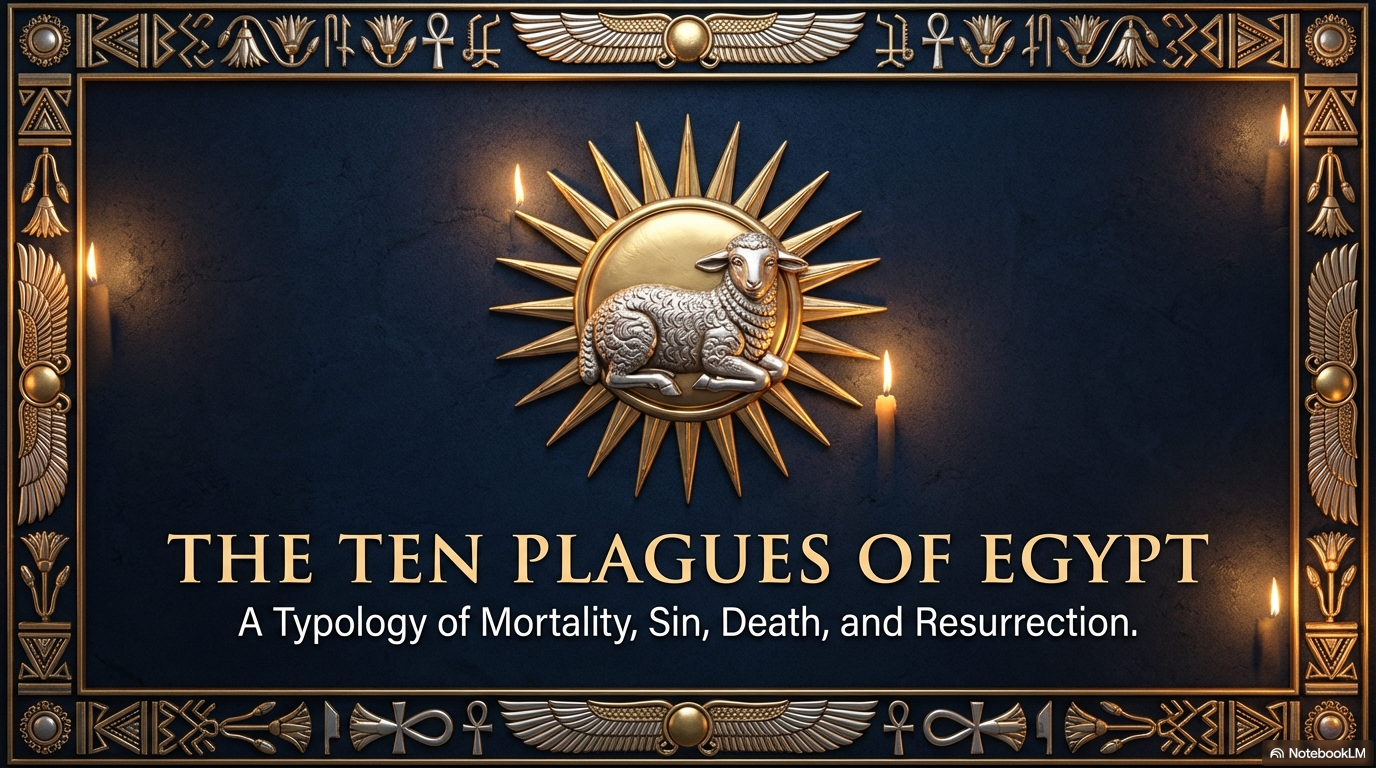
The Ten Plagues of Egypt: A Typology of Mortality, Sin, Death, and Resurrection

The Ten Plagues of Egypt: A Typology of Mortality, Sin, Death, and Resurrection

When most people think of the Ten Plagues, they imagine frogs, flies, and fire raining down. However, the plagues were never random acts of divine wrath. Instead, they served as a spiritual roadmap — revealing what happens when humanity turns away from God, and how God still works to redeem His people. Each plague acts as a mirror. It reflects something about us, the world we inhabit, and the God who refuses to leave us trapped in bondage. When you connect the plagues with Genesis, the Gospels, Revelation, and even the Book of Mormon, a clear pattern appears — a cycle of descent, judgment, mercy, and ascent.

The plagues are not merely ancient events. They symbolize the human condition — mortality, sin, corruption, spiritual darkness, and ultimately death. They also represent deliverance — the Lamb, the Light, the Firstborn Son, the Passover, the Exodus, and the path toward resurrection. This is the reason the plagues resonate throughout scripture: in John’s Apocalypse, the Nephites’ cycles of destruction, the fall of Jerusalem, and the ultimate gathering of Israel. The plagues are one of many scriptural apocalypse.

I want to invite you as we take a moment to examine each plague in depth — the gods they challenged, the creation they overturned, and the Christ they foreshadowed. Hopefully you might see how each plague breaks down false systems, uncovers spiritual sickness, and unveils aspects of the gospel.

And I want us to take a broader view. By doing so, I want to show how the entire structure of the ten plagues forms the core of biblical prophecy, temple theology, covenant ascent, and God’s ultimate redemption of His people. This story is not just about Egypt. It is the story of every person that has ever needed deliverance.

As we begin, remember this: the plagues are not the conclusion. They are the gateway. They are the descent that precedes the ascent. They are the shadow that reveals the Lamb.”

Let us enter the pattern — from bondage to freedom, from darkness to light, from death to resurrection.