A Come, Follow Me Study for August 17-23, 2026: Psalms 1-2; 8; 19-33; 40; 46
"For thou art with me." - Psalm 23:4
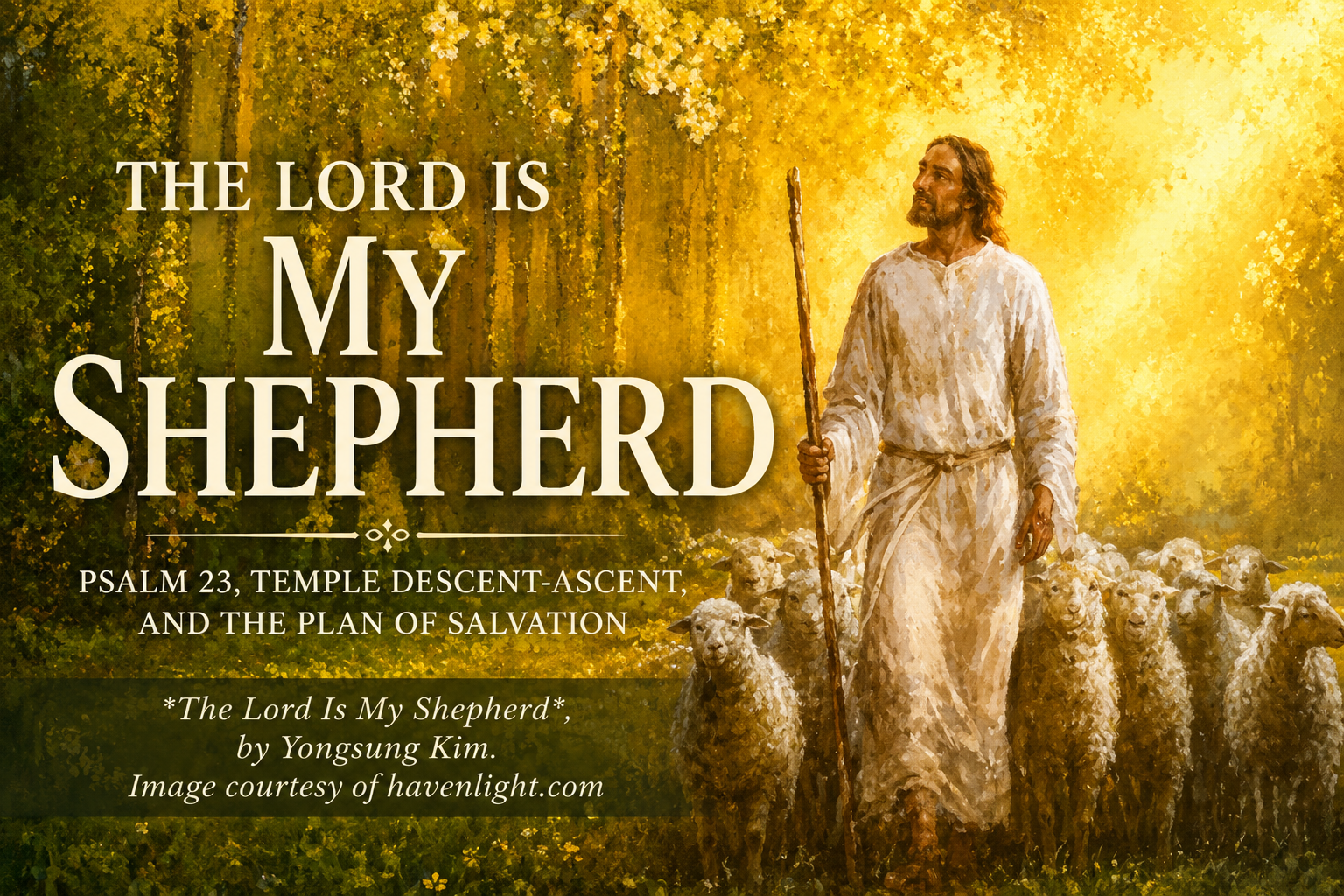
Most of us first learned Psalm 23 as a psalm of comfort. We hear it at funerals, repeat it in hospital rooms, and reach for it when grief has stripped life down to its most difficult questions. That use is neither accidental nor misplaced. Yet Psalm 23 does more than assure us that God will remain near when we die. It poetically traces an entire journey: the Lord provides, restores, guides, accompanies, protects, welcomes, anoints, and finally brings the worshipper into His house.
That movement makes Psalm 23 especially meaningful for Latter-day Saints. Its imagery can be read as a temple-shaped journey from ordered life into mortal darkness and then upward into covenant fellowship and the presence of God. Read within the immediate sequence of Psalms 22-24, the pattern becomes even more striking: lament and suffering in Psalm 22, the Shepherd's presence in Psalm 23, and ascent to the holy hill with the King of glory in Psalm 24. Nancy deClaissé-Walford's intertextual study similarly argues that these three neighboring psalms form a powerful statement of trust when read together (deClaissé-Walford 139-52).
This interpretation requires one careful qualification. Psalm 23 is not demonstrably a word-for-word transcript of an ancient Israelite temple ceremony, and the full Latter-day Saint plan of salvation should not be projected backward into every Hebrew phrase as though the psalmist were writing a systematic doctrinal manual. Psalm 23 is commonly classified as a psalm of trust or confidence, while a pilgrimage setting that culminates at the temple remains a respected scholarly proposal rather than an uncontested conclusion (Smith 61-66; Tappy 255-80). The temple and plan-of-salvation reading offered here is therefore a disciplined canonical and theological synthesis: it begins with what the Hebrew poem says, follows the intertextual patterns the Psalter supplies, reads the psalm through Jesus Christ, and then asks how Restoration scripture enlarges its hope.
What Come, Follow Me Actually Assigns for August 17-23
The official 2026 reading is often abbreviated as "Psalms 1-46," but the assigned passages are selections rather than every chapter in that range: Psalms 1-2; 8; 19-33; 40; and 46. The manual invites readers to notice the Psalms' vivid images of the Savior, including the green pastures, still waters, rod, staff, and overflowing cup of Psalm 23. It then connects Psalm 24's "hill of the Lord" with the temple and with preparation to enter the presence of God (Come, Follow Me).
The broader three-week schedule is also selective. August 24-30 covers Psalms 49-51; 61-66; 69-72; 77-78; and 85-86, while August 31-September 6 covers Psalms 102-103; 110; 116-119; 127-128; 135-139; and 146-150. Keeping the actual readings clear strengthens the study because it allows Psalm 23 to function as the focal text for this week without forcing an artificial structure onto every psalm from 1 through 46.
How suffering, covenant faithfulness, divine perspective, and restoration reveal the plan of salvation
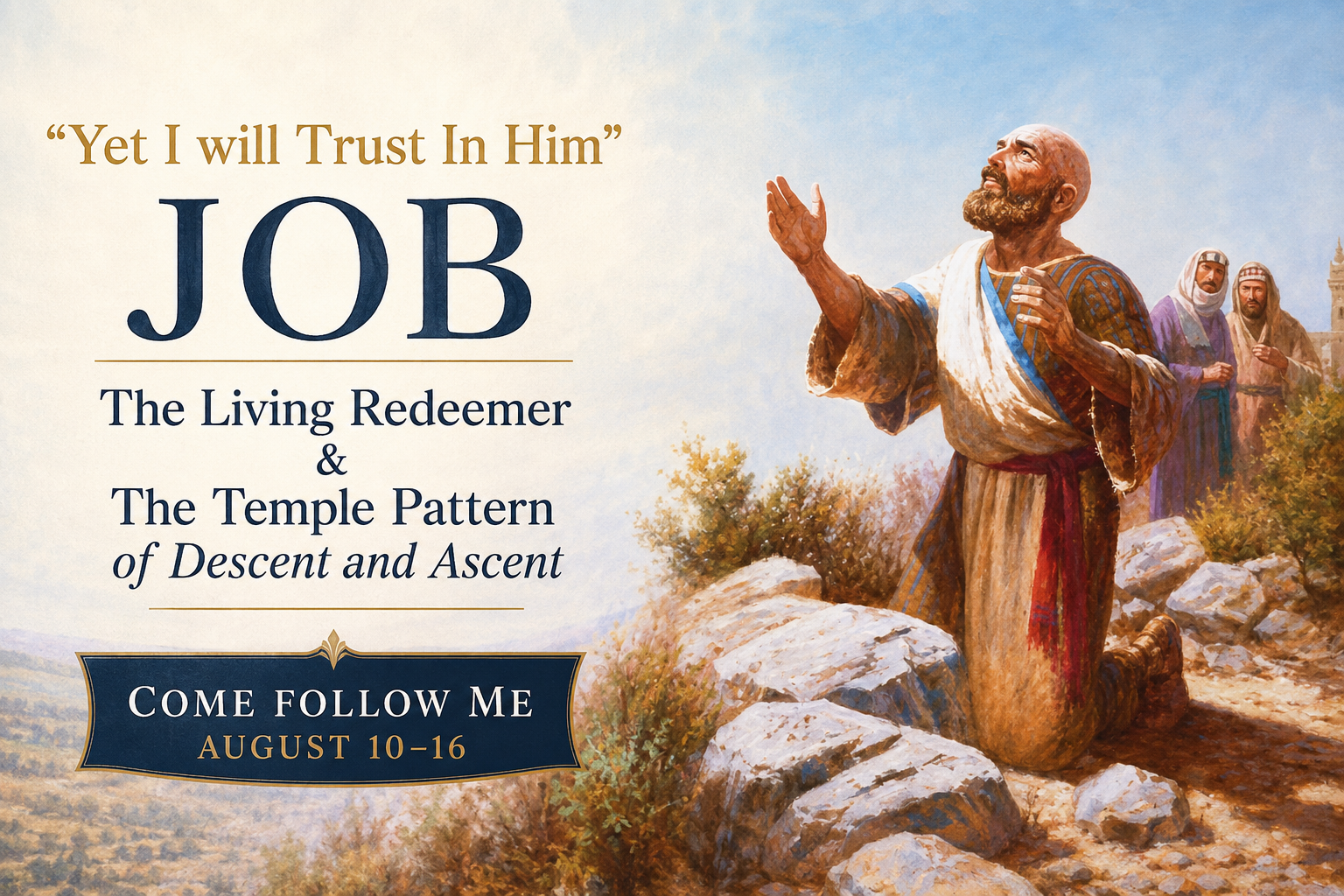
What do we do when life falls apart—not because we have walked away from God, but while we are doing our best to remain faithful to Him? What do we say when prayer does not immediately change the diagnosis, restore the relationship, return what was lost, or explain why a righteous person has been permitted to suffer? Those questions are not signs of spiritual failure. They are among the deepest questions of mortality, and the book of Job refuses to answer them with a slogan.
Job is not a story about a man who never struggled. He grieved, protested, questioned, and pleaded for God to answer him. He described himself as stripped of glory, surrounded by darkness, abandoned by loved ones, and unable to find the God he still longed to meet. Yet his anguish never became indifference. Job kept turning toward God, even when he could not understand God. His questions and his faith occupied the same ash heap.
That is the spiritual tension at the heart of the 2026 Come, Follow Melesson on Job. The manual emphasizes that faith in Job is questioned and tested without being completely abandoned. Not every question receives an explanation, but questions can coexist with faith. Job therefore becomes more than a case study in the problem of evil. He becomes a witness of what covenant trust looks like when familiar answers no longer seem adequate.
Read as a whole, Job is a temple-shaped wisdom drama of descent, covenant testing, divine encounter, intercession, and restoration. Its movement carries Job from abundance into ashes, from ashes into argument, from argument toward a living Redeemer, and from limited mortal understanding into the presence of God. The book does not merely ask, “Why do righteous people suffer?” It presses us toward a more searching question: How does a covenant disciple remain faithful until God reveals a larger perspective through the living Redeemer?
How Should We Read the Book of Job?
The first step in responsible expository teaching is to respect the kind of literature we are reading. Job begins with a prose prologue in chapters 1–2, moves into an extended poetic body in chapters 3–41, and returns to prose in the concluding portion of chapter 42. Within the poetic core are Job’s lament, three cycles of debate with Eliphaz, Bildad, and Zophar, Job’s extended defense, the speeches of Elihu, and the Lord’s response from the whirlwind. This carefully arranged structure is one reason Job should not be read as if it were a modern courtroom transcript.
The Religious Studies Center essay “Hast Thou Considered My Servant Job?” acknowledges both the possible historical foundation of Job and the book’s evident literary shaping. Modern scholarship commonly classifies Job as wisdom literature, but that label does not exhaust the book. Will Kynes notes that Job can also be read through the lenses of lament, drama, controversy dialogue, lawsuit, exemplary sufferer narrative, epic, prophecy, and apocalyptic literature. Carol A. Newsom describes the book as a contest of moral imaginations because Job and his interlocutors do not simply exchange information; they present competing visions of God, justice, suffering, and human righteousness.
This literary awareness also helps us understand the heavenly scene in Job 1–2. The Come, Follow Me manual explains that these chapters poetically emphasize Satan’s role as adversary or accuser and should not be treated as a literal transcript of a conversation between God and Satan. The scene reveals the theological issue driving the drama: Is Job’s devotion genuine, or is it merely the price he pays for prosperity and protection? The question is not only whether Job will survive suffering. The question is whether worship can remain worship when the expected rewards disappear.
Catherine Petrany sharpens this literary observation by attending to the Hebrew expression ha-satan, “the adversary” or “the accuser.” The definite article makes the expression function like a title rather than a personal name. Within Job’s ancient heavenly-court scene, this figure roams, investigates, and prosecutes a case; he is not yet portrayed with every feature that later Jewish and Christian texts associate with the Devil. That historical distinction explains the role this character plays in Job without requiring Latter-day Saint readers to discard restored teachings about Satan’s premortal rebellion. The disciplined approach is to let Job’s prologue define the accuser’s narrative function, then let the wider canon supply additional doctrine without forcing all later details back into two poetic chapters.
To call Job a wisdom drama, or even to recognize mythic and liturgical dimensions in it, is not to call it false. In biblical studies, mythic can describe a narrative’s use of cosmic imagery, creation symbolism, heavenly councils, chaos creatures, and archetypal conflict. Liturgical can describe patterns of mourning, petition, divine encounter, sacrifice, and restored communion. Those categories help us see how Job’s personal anguish is placed within a cosmic frame without requiring us to deny that the story may preserve the memory of a real righteous sufferer.
There are moments in our journey when God invites us to step out of isolation and into something deeper — something healing, something holy, something shared. Today’s livestream devotional, Healing Together: The S.A.I.N.T.S. Path to Spiritual Recovery, is one of those moments.
If you’ve been carrying burdens alone… If you’ve been trying to heal in silence… If you’ve been longing for connection, clarity, or renewal… This devotional is for you.
Today we’re walking through the S.A.I.N.T.S. framework — a powerful, Spirit‑led path that shows us how God heals us through community, not apart from it. We’ll explore what it means to be:
Sanctified Together
Anchored in Christ
Interdependent, Not Independent
Nourished by the Word
Transformed in Fellowship
Sent to Serve
This isn’t just another message. It’s an invitation into the divine workshop of the soul — where Christ refines us, restores us, and surrounds us with people who help us grow.
🕕 Live at 6 AM PST📍 Streaming on YouTube, Facebook, Instagram, TikTok, and X
Come join us. Bring your coffee, your Bible, your questions, your story — and your hope. You don’t have to heal alone. You were never meant to.
Step out of the shadows. Step into the communion of saints.
When T. Edgar Lyon first penned Lesson 7 of Apostasy to Restoration in 1960, he invited Latter-day Saints to step into a world where religion was not just a private conviction but a fundamental component of the machinery of empire. This bold assertion set the stage for a deeper exploration of the intricate interplay between faith, culture, and politics. Sixty years later, the landscape of scholarship has transformed dramatically, yet Lyon’s central insight remains strikingly relevant: to truly understand the need for a Restoration, we must first immerse ourselves in the complex milieu that shaped the early Christian Church.
This updated lesson builds upon Lyon’s foundational work, integrating modern archaeological discoveries, peer-reviewed historical research, and contemporary Latter-day Saint scholarship to form a more nuanced understanding of the context in which early Christianity emerged. What emerges from this scholarly synthesis is a clearer, richer, and more compelling picture of the Roman religious world—a world that was teeming with a pantheon of gods, replete with elaborate rituals, and governed by a political theology that made the act of Christian discipleship both radical and perilous.
In a society where loyalty to the state was intricately tied to acts of sacrifice and devotion, where citizens adeptly navigated multiple cults without a hint of contradiction, and where the pursuit of salvation was often sought through clandestine mystery rites and the favor of emperors, the Christian proclamation of “one Lord, one faith, one baptism” represented a profound challenge to the status quo—it was nothing less than a revolutionary stance. This declaration was, in essence, a radical reformation of the religious landscape, directly opposing the established norms that dictated the relationship between the individual, the divine, and the state.
Understanding that world is essential for grasping why the early Church fractured amidst various pressures and why a Restoration was not merely desirable but indeed inevitable. The tensions between emerging Christian beliefs and the entrenched systems of power were not just obstacles to be overcome; they underscored the urgent need for a return to core principles that could unify and reinvigorate the faith community. Lyon’s insights encourage us to reflect on our own circumstances in today’s religious environment, prompting critical questions about the nature of faith, the role of community, and the ongoing quest for spiritual authenticity in an increasingly complex world. As we navigate the remnants of an ancient tapestry interwoven with faith and politics, we find ourselves inspired to reconsider the implications of our shared history and the enduring quest for a true Restoration.
One of the challenges surrounding the Book of Mormon concerns the prophecy of Ezekiel 37 and the metaphorical concept of the two sticks. Many Latter-day Saints assert that Ezekiel 37's prophecy serves as compelling evidence for the authenticity and reality of the Book of Mormon. They argue that this prophecy signifies the reunification of sacred records and the bringing together of scattered peoples, aligning closely with the teachings and doctrines found within their faith. On the other hand, critics challenge this interpretation, positing that the true essence of Ezekiel's prophecy pertains more to the unification of a fractured and divided Israelite kingdom rather than a specific reference to the Book of Mormon or its teachings. This lively debate between Latter-day Saints and critics has persisted for many years, underscoring the complexity and nuance inherent in scriptural interpretation.
Ezekiel 37 encompasses more than just a vision of dry bones restored to life, as it holds profound implications for understanding divine sovereignty. The passage reveals a prophetic blueprint exhibiting how God, in His omnipotence, unites that which history and human actions have seemingly scattered—people, covenants, and records that are sacred. Importantly, the imagery of the two sticks transcends mere Hebrew poetic devices; rather, it articulates a divine declaration of God's work being expansive and far-reaching. It emphasizes that the divine initiative is not narrowly confined, but includes the restoration and reconciliation of a diverse array of communities under His covenant.
This particular prophecy resonates deeply with our contemporary world, which is often marked by fragmentation, division, and spiritual weariness. In an age characterized by mistrust and cultural rifts, Ezekiel's message serves as a reminder that God continues to gather His children, to restore hope, and to breathe life into situations that appear hopelessly fractured. This enduring message of unity amid diversity is crucial for our understanding of both scripture and our collective human experience.
To approach this passage appropriately, we must adopt a stance of deep reverence for its Ancient Near Eastern context, recognize its covenantal significance, and appreciate its relevance in modern times. This thoughtful examination should not rely on presuppositional arguments, sensational interpretations, or the eisegesis that misapplies contextual meaning. Instead, our strive should be toward an exegetical interpretation that centers on understanding the prophetic unity that Ezekiel foresaw. In doing so, we can engage meaningfully with the question at hand: Does this prophecy indeed validate the authenticity of the Book of Mormon, affirm its sacred nature, and align with the prophesied book of Ephraim that Ezekiel envisioned? By pursuing this inquiry with intellectual rigor and spiritual openness, we can contribute to the ongoing exploration of faith, doctrine, and scriptural truth.
Therefore, the goal is simple. To help individuals come to understand how this prophecy connects sacred texts, covenant identity, and God's ongoing work of reconciliation and redemption throughout human history.
Ezekiel 37 stands as one of the most sweeping restoration prophecies in all of scripture. Set against the backdrop of exile and despair, the chapter unfolds in two movements: the resurrection of the dry bones and the uniting of the two sticks. Together, these visions reveal God’s intent to restore life, gather His people, and reunite the sacred witnesses that testify of His Son. The vivid imagery of dry bones coming to life speaks not only to the physical resurrection of Israel but also to the spiritual awakening that can occur within the hearts of individuals and communities today.
This article explores the prophecy through its historical setting, symbolic layers, and doctrinal implications—especially its relevance to the Restoration and the coming together of sacred texts in the latter days. As we delve deeper into these themes, we can appreciate how the dry bones symbolize not only the lost hopes of a nation but also the potential for renewal and rebirth in our own lives. The uniting of the two sticks further illustrates the divine plan for unity among diverse groups, emphasizing the importance of collaboration and understanding in a fragmented world.
By examining the imagery, the covenantal themes, and the prophetic promises embedded in the chapter, we uncover a message of unity, identity, and divine purpose that speaks powerfully to our time. This exploration reveals how God’s word is alive and active, inviting us to participate in the narrative of redemption that transcends cultural and religious divides.
If you’ve ever wondered how God heals division, restores covenant identity, or brings multiple sacred records into harmony, Ezekiel 37 offers a profound and hopeful answer. The call to action is clear: we are invited to engage with this prophecy actively, to seek understanding, and to embrace our roles as connectors of truth and instruments of peace. In doing so, we become part of God's ongoing work in the world, acknowledging that the journey toward restoration—both individually and collectively—is an essential aspect of our faith and purpose.
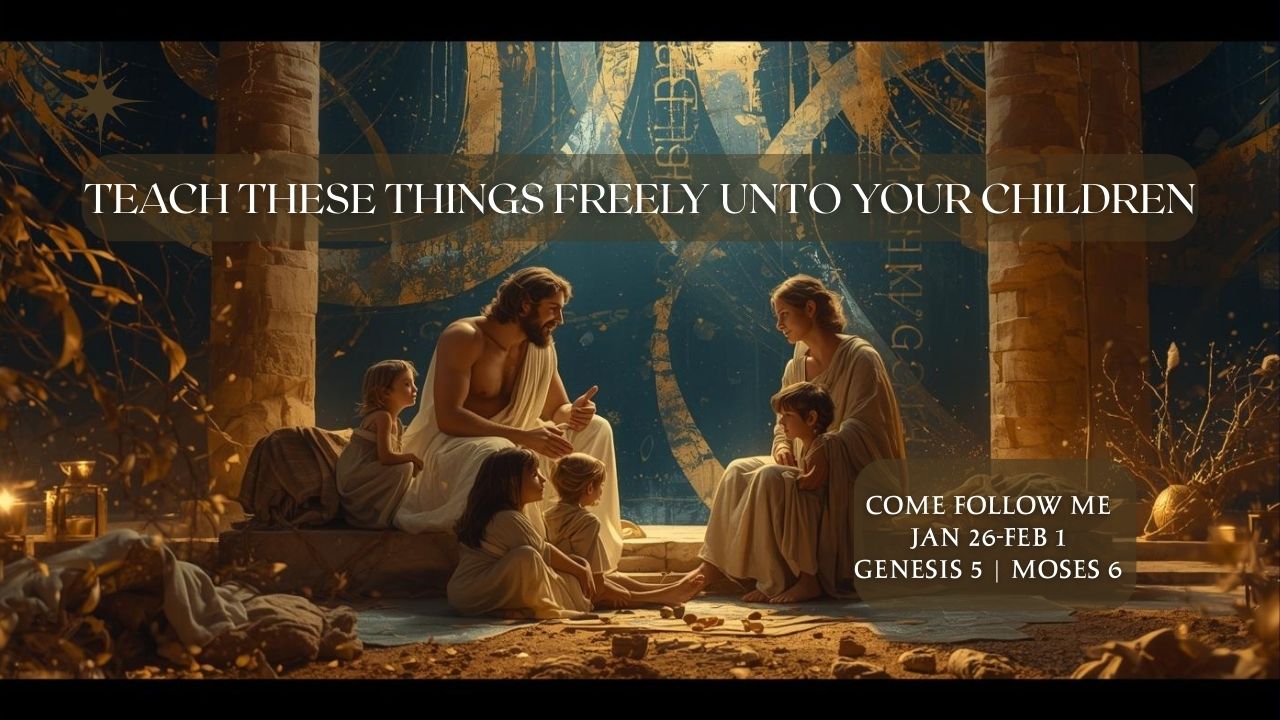
Many of us most likely assume the gospel began in the New Testament. Yet Genesis 5 and Moses 6 reveal something astonishing: the fullness of the gospel—faith in Christ, repentance, baptism, the Holy Ghost, priesthood, and covenant discipleship—was taught from the very beginning. These chapters unveil a sweeping narrative of divine instruction, generational faithfulness, and the sacred responsibility to teach truth to rising generations.
For many of us, navigating a morally chaotic world can be incredibly challenging. In these turbulent times, these chapters offer a profound blueprint for spiritual resilience. The teachings found within Genesis and Moses not only provide guidance but also serve as a reminder that the principles of the gospel are timeless. They anchor us in our faith and help us to cultivate a sense of moral clarity amid confusion and chaos. For those in recovery, these scriptures reveal the ancient pattern of redemption, rebirth, and transformation through Christ, showcasing how individuals have consistently turned to God for restoration and new beginnings.
This study for the Come Follow Me - Old Testament invites us to delve deeply into the genealogies, doctrines, and prophetic ministries of pivotal figures like Adam, Seth, and Enoch, along with their descendants. It illuminates the remarkable legacy of faith that was passed down through generations. The narratives of these early prophets illustrate how their teachings and life experiences reflect Christ’s redemptive work. They emphasize the importance of our covenantal responsibility to “teach these things freely unto your children” (Moses 6:58), urging us to carry forward the torch of faith and truth to future generations.
As we engage with these ancient texts, we not only gain insights into the foundations of our beliefs but also discover the imperative to be proactive stewards of spiritual knowledge. In doing so, we can empower those around us to withstand the pressures of the world, fostering a community that thrives on the principles of the gospel. By sharing the stories and teachings of our ancestors, we reaffirm the enduring relevance of their faith and the everlasting hope that can be found in Christ.
"Welcome to Mindful Latter-day Saint Christian Living and Apologetics, where we explore the truths of the Restored Gospel of Jesus Christ! I’m your host, Timothy Berman, and today we’re diving into an inspiring episode titled 'When Thou Art Converted, Strengthen Thy Brethren.' Our subtitle, straight from Doctrine and Covenants 88:77, is 'Teach One Another the Doctrine of the Kingdom,' and our focus is 'Priesthood: The Core of Teaching and Defending Truth.'
If you’re a Priesthood holder—or anyone seeking to share the Gospel—this episode is for you. We’re here to uncover how you can authentically engage on social media to edify, encourage, instruct, teach, and defend the principles of the Restored Gospel, all while inviting people worldwide to come unto Christ and discover a personal testimony of His fullness.
So, grab your scriptures, hit that like button, and let’s get started! Stick around to the end for some thought-provoking discussion questions you can share in the comments!"
Introduction
"Have you ever wondered how we, as Priesthood holders, are truly empowered to strengthen one another? The answer lies in teaching and learning the doctrine of the kingdom. Today, we’ll explore how this sacred duty ties into our everyday lives—and yes, even our social media presence.
Our guiding scripture comes from John 21:15-17, where Jesus asks Simon Peter, 'Simon, son of John, do you love Me more than these?' Peter replies, 'Yes, Lord; You know that I love You.' And Jesus responds, 'Tend My sheep.' This is a direct call to action for us—to care for and teach God’s children.
Elder John A. Widtsoe put it perfectly:
'The progress of the Church depends upon the activity of the Priesthood. When the Priesthood is active, the Church surges forward; when inactive, the Church creeps along.' And as Jesus taught in John 7:17, 'If any man will do His will, he shall know of the doctrine.' That’s our foundation today—action and understanding through the Priesthood."
Scriptural Foundation
"Let’s set the stage with the scriptural backbone of this episode. In Doctrine and Covenants 88:77, the Lord commands us to 'teach one another the doctrine of the kingdom.' This revelation came in 1832 in Kirtland, Ohio, during the School of the Prophets—a time when early Saints were called to educate and uplift each other spiritually.
What’s the 'doctrine of the kingdom'? It’s the core of Christ’s Gospel: faith, repentance, baptism, the gift of the Holy Ghost, and enduring in righteousness. This commandment isn’t just about personal growth—it’s a collective responsibility to share and learn together, building faith and fellowship rooted in truth.
Ephesians 4:11-13 tells us Christ gave us apostles, prophets, and teachers to edify His church, while Mosiah 18:21 urges us to avoid contention and focus on God’s glory. Together, these scriptures highlight mutual learning and unity—key themes we’ll unpack today."
Personal and Spiritual Applications
"So, how do we live this out? It starts with consistent spiritual disciplines. Daily scripture study, prayer, and fasting strengthen us personally and as families. Think about Family Home Evening—a dedicated time to teach Gospel principles. Or Sunday School, Relief Society, and Priesthood Quorums, where we share insights and experiences.
Even informal moments—like a chat with a friend, a ministering visit, or a quick social media post—offer chances to share the Gospel and build faith. These small acts ripple outward, fulfilling our Priesthood duty to strengthen others."
Session 1.1: Spiritual Discipline - Rooted in Scripture
Now, let’s dive into Session 1.1: Spiritual Discipline - Rooted in Scripture. For Melchizedek Priesthood holders, scripture study is our bedrock, forming the foundation upon which our spiritual lives are built. It’s what equips us to teach, preach, and defend the faith with confidence—whether at home, work, in our quorums, or online.
By immersing ourselves in the scriptures, we gain insights that deepen our understanding of God’s will for us and strengthen our ability to share that knowledge with others. Furthermore, engaging in regular scripture study fosters a personal connection with the divine and enhances our ability to discern truth amidst the complexities of life. Ultimately, this vital discipline not only shapes our own spiritual journeys but also empowers us to uplift those around us, creating a ripple effect of faith and knowledge within our communities.
Why Scripture Study Matters
John 5:39 says, 'Search the scriptures; for in them ye think ye have eternal life: and they are they which testify of me.' This profound invitation emphasizes the essential role of scripture in our spiritual journey, urging individuals to delve deeply into the texts that hold the key to understanding life eternal. Similarly, Alma 17:2-4 illustrates how the diligent scripture study of the sons of Mosiah, combined with earnest fasting and fervent prayer, endowed them with remarkable prophetic power, enabling them to become powerful instruments in the hands of God.
Their unwavering commitment to the word of God not only strengthened their faith but also prepared them to face challenges with divine guidance. Acts 17:11-12 highlights the Bereans' noble-mindedness, as they were commended for their daily scripture study, which reflects a thirst for knowledge and a sincere desire to align their lives with divine truth. This dedication to consistent learning serves as an inspiring model for all believers, encouraging us to engage with the scriptures not just as historical documents, but as living sources of wisdom and revelation that can transform our lives for the better.
Scripture study helps us:
Know Heavenly Father and Jesus Christ (John 17:3)
Teach with authority (Matthew 7:29)
Discern truth (Acts 17:11-12)
Grow spiritually (Psalm 1:1-3)
Transform our lives (Romans 12:1-3)
Apply God’s word daily (1 Nephi 19:23-24)
Transformation Through Scripture
Romans 12:1-3 calls us to be 'transformed by the renewing of your mind,' which emphasizes the importance of intentional spiritual growth and the pursuit of a deeper relationship with God. Daily scripture study not only aligns our thoughts with God’s will but also equips us with the wisdom and discernment necessary to navigate life's challenges.
Psalm 1:1-3 paints a beautiful picture of a fruitful tree by the water—this imagery represents how being immersed in scripture roots us firmly in faith, enabling us to withstand trials and adversities. As we allow God’s Word to nourish our spirits, we begin producing the fruit of the Spirit, which encompasses love, joy, peace, and patience, among other virtues. This transformation is not just a personal journey; it also serves as a testament to those around us, illustrating the profound impact of God’s truth in our lives.
Equipping for Ministry
In Alma 17:2-4, preparation through scripture empowered the sons of Mosiah to teach effectively, illustrating the profound influence that sacred texts can have on one's ability to convey truth and inspire others. Their dedication to spiritual preparedness not only strengthened their own testimonies but also allowed them to connect deeply with those they taught, fostering a transformative learning environment. Furthermore, 3 Nephi 23:1-5 shows Jesus commanding us to search and teach diligently—a divine mandate rooted in scripture that emphasizes the importance of ongoing study and application of His teachings in our lives.
This call-to-action challenges believers to engage actively with the scriptures, ensuring they remain well-equipped to share their knowledge with others and fulfill their responsibilities as disciples. The intertwining of these scriptural accounts highlights a timeless principle: effective teaching is grounded in diligent study and a sincere commitment to following Christ's teachings.
Discernment in a Digital Age
The Bereans in Acts 17:11-12 sifted truth from error through daily study, demonstrating a commendable diligence in their pursuit of knowledge. In today’s world of endless online noise, this practice is more vital than ever—especially when defending the Gospel on social media, where misinformation can spread rapidly and often goes unchecked.
By carefully examining the Scriptures and comparing them against the teachings they encountered, the Bereans set an example for believers to cultivate a discerning mindset. In an age where diverse opinions bombard us constantly, taking the time to study God's Word equips us with the wisdom and clarity needed to navigate complex discussions and stand firm in our faith. Engaging with the truth not only strengthens our understanding but also empowers us to share the Gospel effectively, ensuring that our voices remain grounded in sound doctrine amid the clamor of contemporary discourse.
Likening Scriptures to Ourselves
Nephi, in 1 Nephi 19:23-24, likened scriptures to his people for their profit, emphasizing their timeless importance and relevance. He understood that these sacred texts were not just historical accounts, but a source of profound wisdom and guidance tailored for each individual's journey.
Ask yourself: 'How does this verse apply to me?' This reflection invites deeper contemplation and encourages us to find personal connections within the teachings. It’s a doorway to personal revelation and a stronger testimony, leading us to insights that can illuminate our lives and strengthen our faith, prompting us to explore the scriptures with a heart open to learning, growth, and transformation.
Scriptures for Meditation
Meditate on 2 Timothy 3:16-17—scripture equips us for every good work and serves as a foundational guide in our spiritual journey. Reflecting on the teachings found in the scriptures not only enhances our understanding but also fortifies our character. Additionally, consider Doctrine and Covenants 84:85, which urges us to treasure up God’s words in our hearts, emphasizing the importance of internalizing divine wisdom.
This practice fosters a deeper relationship with the Lord and illuminates our path in times of uncertainty, allowing us to find solace in His presence and guidance. As we engage in this spiritual discipline, we cultivate a greater sense of trust and confidence in His divine plan for our lives, even when challenges arise. This connection not only strengthens our faith but also provides comfort and clarity, enabling us to navigate the complexities of our circumstances with grace and resilience. Through prayer, meditation, and reflection, we are reminded of the unwavering support that surrounds us, empowering us to move forward courageously.
Furthermore, Joshua 1:8 promises prosperity through constant meditation on God’s law, assuring us that when we dwell on His principles day and night, we will find success in our endeavors and spiritual growth. In essence, engaging with these verses cultivates a rich, fruitful life grounded in faith and purpose.
Scripture in the Digital Age
Being rooted in scripture is key for sharing the Gospel online. On platforms like YouTube, Twitter, or Instagram, we can:
Share insights that inspire
Answer questions with kindness and clarity
Anchor discussions in Gospel truth
Defend the faith confidently, guided by the Holy Spirit
Discussion Questions
Here’s some food for thought—drop your answers in the comments!
How has scripture study strengthened your testimony or Priesthood service?
What obstacles block your daily study, and how can you overcome them?
How can we use social media responsibly to teach and defend the Gospel?
As Priesthood holders, we recognize that scripture study is not just a routine task, but a sacred practice that transforms us from within, empowering our ministry and guiding our spiritual journey. The words of the scriptures become alive when we actively apply them to our daily lives, allowing their teachings to resonate within our hearts and minds.
Reflecting on Luke 22:32— ‘When thou art converted, strengthen thy brethren’—challenges us to think deeply about our unique roles and responsibilities. How does this call apply to you in your life? Are you supporting those around you through service and guidance? Consider the ways you can reach out to uplift others, share insights drawn from your own spiritual experiences, and foster an environment of growth and faith. By doing so, we not only fulfill our divine purpose but also strengthen the bonds of brotherhood and sisterhood within our communities.
Session 1.2: Spiritual Disciplines - Praying and Fasting
Next up, Session 1.2: Spiritual Disciplines - Praying and Fasting. These important practices draw us closer to God, serving as powerful tools not only for personal growth but also for deepening our connection with the divine.
Through prayer, we engage in meaningful conversations with God, expressing our thoughts, gratitude, and desires, while also listening for His guidance. Fasting, on the other hand, allows us to step away from distractions, cultivating a space for reflection and inner clarity. Together, these disciplines unlock personal revelation, reveal truths about us and our purpose, and ultimately strengthen our faith and relationships, enabling us to live more fully in accordance with His will.
Prayer: Our Lifeline to God
Prayer isn’t just a ritual—it’s personal communication with Heavenly Father, a sacred opportunity to express our deepest thoughts and feelings. Alma 34:17-27 urges us to pray in all circumstances—daily, not just on Sundays, emphasizing the importance of making prayer a consistent part of our lives. In every moment of joy, sorrow, confusion, or celebration, we are encouraged to turn to Him in prayer.
This practice allows us to express gratitude for our blessings, seek wisdom for our decisions, and align our will with His divine purpose. Romans 8:26 promises the Holy Spirit intercedes for us, especially when we struggle to find the right words, comforting us with the knowledge that our needs are understood.
Furthermore, D&C 8:2-3 reassures us that revelation comes to our hearts and minds as we engage in sincere prayer, guiding us in our daily lives. In this way, prayer becomes both a refuge and a source of strength, fostering a deeper connection with our Creator and illuminating our path forward.
Fasting: Deepening Our Connection
Fasting—abstaining from food and drink for spiritual purposes—pairs with prayer to seek guidance, deliverance, or revelation, creating a profound connection with the divine. This spiritual discipline is deeply rooted in many religious traditions, providing a means to purify the soul and enhance one’s spiritual sensitivity. Isaiah 58:6-11 illustrates that true fasting not only blesses the individual but also serves to uplift and support those in need, bringing light to the lives of others through acts of compassion.
Alma 5:46 credits fasting as a catalyst for personal enlightenment and deepened understanding, as it allows individuals to transcend mundane concerns and focus on higher truths. Through the practice of fasting, believers often report experiencing greater clarity of thought and a renewed sense of purpose, reinforcing their faith and commitment to serving others. Ultimately, fasting is not merely a physical act but a transformative journey that fosters spiritual growth and communal solidarity, enriching the overall experience of worship and devotion.
Conversion Through Prayer and Fasting
These disciplines transform us, deeply affecting our spiritual journey and personal growth. Alma 5:14-16 poignantly asks if we’ve been truly born of God, prompting introspection about our spiritual rebirth and the changes that accompany such an experience. In addition, Moroni 10:4-5 invites us to pray sincerely and fervently for truth, encouraging us to seek divine guidance and clarity in our lives.
These practices not only build testimony but also cultivate faith and endurance in the face of challenges. Furthermore, Matthew 6:5-6 emphasizes the importance of sincerity in our religious expressions—underscoring that God values heartfelt intent over mere outward appearances or ostentation. By engaging in these disciplines sincerely, we can foster a deeper connection with the divine and strengthen both our personal convictions and communal bonds.
Strengthening Priesthood Power
Prayer and fasting unite families, quorums, and communities, serving as a powerful reminder of the strength found in collective spiritual efforts. D&C 84:106 emphasizes that the strong edify the weak, reinforcing the responsibility we have to support one another in our spiritual journeys. In this context, we are called not only to uplift those around us but also to engage deeply in our faith practices.
D&C 107:22 calls us to uphold leaders through faith and prayer, highlighting the vital role of intercession in maintaining the spiritual health of our communities. When we gather in prayer and fasting, we cultivate an environment where each individual's needs are met, and we can collectively seek divine guidance and strength, fostering deeper connections among us. As we commit to these sacred practices, we not only strengthen our bonds with one another but also align ourselves more closely with God's will.
Practical Tips
Set consistent prayer times—morning and evening.
Fast monthly with purpose—seek guidance or pray for those you minister to.
Pair fasting with service and reflection.
What’s one way prayer or fasting has blessed your life? Share below!"
Section 2.1: Principles for Teaching and Learning
Finally, Section 2.1: Principles for Teaching and Learning. We’re called to teach as the Savior did—with truth, love, and the Spirit, embracing the profound responsibility that comes with this sacred task.
Teaching is not merely a transfer of knowledge; it is an act of service that involves nurturing the hearts and minds of our students, guiding them on their journey toward understanding and enlightenment. By embodying the Savior’s example, we foster an environment where learning thrives, built on trust and respect, helping each individual to recognize their inherent worth and potential. In this way, our teachings become a powerful tool for transformation, inspiring others to seek knowledge and wisdom in all aspects of their lives.
Part 1: Teach with Truth
Base your teaching on scriptures and prophetic counsel, like D&C 88:77 and the 4th Article of Faith, which encourages us to seek knowledge and truth through divine guidance. Invite others to reason together (Isaiah 1:18), creating a space where open dialogue fosters understanding and unity, and edify one another (1 Thessalonians 5) by sharing insights that uplift and strengthen our faith.
As you engage in these discussions, be mindful of the diverse perspectives that arise, allowing for thoughtful exchange that enriches our collective spiritual journey. Share your testimony boldly, expressing the profound impact of these teachings on your life and encouraging others to discover the light and hope found within them. This shared exploration not only deepens our understanding but also builds a community rooted in love, support, and shared values.
Part 2: Unity and Engagement
Seek unity in doctrine through group study, as this collaboration fosters a deeper understanding and sense of community. Tailor teaching to individual needs by proactively asking what others want to learn and ensuring all voices are heard.
Engage with thought-provoking questions, relatable stories, and interactive activities that not only capture attention but also encourage active participation among members. Remember, by creating an inclusive environment where everyone feels valued, you will enhance the learning experience and strengthen the bonds within the group.
Part 3: Rely on the Spirit
Always seek the Holy Spirit’s guidance. This divine assistance is crucial as we navigate the complexities of life and our spiritual journeys. By regularly opening and closing our endeavors with prayer, we invite God’s presence into our activities and decisions, fostering a deeper connection with Him. Standing firm in your testimony enables you to be a pillar of strength in your community, demonstrating unwavering faith that inspires others. It can be beneficial to reflect on your personal growth during this journey—consider keeping a journal where you document your thoughts, experiences, and revelations. This practice not only solidifies your learning but also provides a tangible reminder of how far you have come.
Teaching one another is a vital aspect of strengthening faith and fostering unity within the body of believers. As we engage in meaningful discipleship, we help create a resilient support system, where everyone feels valued and encouraged in their spiritual walk. D&C 88:77 serves as our call to action as Priesthood holders, emphasizing that our efforts must be rooted in scripture, prayer, fasting, and humility. This foundation allows us to effectively serve those around us and create an environment where spiritual growth is nurtured.
Furthermore, Luke 22:32 reminds us that conversion isn’t the end of our journey; rather, it marks the beginning of a lifetime commitment to strengthen and uplift others. As we deepen our understanding of the gospel and experience personal transformation, we are called to share that light with others. By doing so, we not only enrich our own lives but also contribute to the growth and fellowship of our faith community. Through this ongoing process, we embody the love and grace of Christ, becoming vessels of His teachings in our everyday lives.
Conclusion
"That’s a wrap! Today, we’ve explored how Priesthood holders can teach and defend the Gospel authentically—online and off—through scripture, prayer, and fasting. Apply these principles and watch your faith and influence grow.
If this resonated with you, hit that like button, subscribe, and share your thoughts on the discussion questions in the comments. How will you strengthen your brethren this week? Let’s keep this conversation going!
Until next time, may you teach with truth and love. God bless!"
Introduction: Blending Maslow’s Theory with Spiritual Growth for a Sober Life
For Christians navigating the challenging yet rewarding path of recovery and sobriety, spiritual fulfillment often becomes the cornerstone of lasting transformation. In 1943, humanist psychologist Abraham Maslow introduced his groundbreaking Hierarchy of Needs in the paper A Theory of Human Motivation, later expanded in his book Motivation and Personality. Maslow’s theory outlines five levels of human motivation—typically depicted as a pyramid—ranging from basic physiological requirements to the pinnacle of self-actualization. Over time, a sixth level, transcendence, was proposed to include spiritual dimensions like altruism and wisdom.
While Maslow’s framework originally focused on temporal and psychological needs, it offers a powerful lens for understanding spiritual growth, especially for Christians in recovery. This article reimagines Maslow’s hierarchy as a Spiritual Hierarchy of Needs, tailored to those seeking sobriety through faith in Jesus Christ. By addressing five key spiritual needs—faith, relationships, meaning, peace, and wisdom—this guide provides a roadmap for aligning recovery with spiritual maturity, empowering believers to live sober, purposeful lives.
The Foundation: Temporal Needs and Their Spiritual Connection
Before delving into the spiritual hierarchy, it’s worth noting how temporal needs intersect with spiritual ones. Maslow’s original pyramid begins with:
Physiological Needs: Food, water, air, shelter—essentials for survival.
Safety Needs: Security, health, protection from harm.
Social Needs: Love, belonging, relationships with family and community.
Self-Actualization: Realizing one’s full potential and purpose.
For Christians, these temporal needs are not separate from faith. Jesus taught, “Seek first the kingdom of God and His righteousness, and all these things will be added to you” (Matthew 6:33, ESV). In recovery, meeting basic needs—like stable housing or physical health—creates a foundation for spiritual growth. Yet, true sobriety transcends the temporal, requiring a deeper reliance on God’s provision and grace.
Now, let’s explore the five spiritual needs that build upon this foundation, offering Christians in recovery a path to healing and sobriety.
Spiritual Need #1: Faith, Trust, and Hope in Jesus Christ
The Bedrock of Recovery and Spiritual Awakening
At the base of the spiritual hierarchy lies the most essential need: faith, trust, and hope in Jesus Christ. This foundational need underpins all others, serving as the anchor for Christians in recovery. Scripture repeatedly calls believers to trust in God, emphasizing its necessity for spiritual fulfillment. Consider these passages:
Acts 4:10–12: “There is salvation in no one else, for there is no other name under heaven given among men by which we must be saved.”
Mosiah 3:17 (Book of Mormon): “There shall be no other name given nor any other way nor means whereby salvation can come unto the children of men, only in and through the name of Christ.”
Moroni 7:24–26: Faith in Christ enables all good things.
Articles of Faith 1:4: Faith in Jesus Christ is the first principle of the gospel.
For those in recovery, faith is more than belief—it’s a lifeline. It begins with accepting Christ’s reality, embracing His character, and striving to align with His will. This trust acknowledges our dependence on His love, wisdom, and power, even when understanding eludes us. As Hebrews 11:1 (NIV) states, “Faith is confidence in what we hope for and assurance about what we do not see.”
Faith as Transformation
Faith sparks a spiritual awakening, often described as being “born again” (John 3:3–5). Paul writes, “Therefore, if anyone is in Christ, he is a new creation. The old has passed away; behold, the new has come” (2 Corinthians 5:17, ESV). For Christians in recovery, this transformation is literal shedding the “old self” of addiction for a renewed identity in Christ. Mosiah 3:19 speaks of yielding to the Spirit, becoming “a saint through the atonement of Christ.”
This process isn’t instantaneous; it’s a journey of growth. Faith motivates believers to follow Christ, bear fruit (John 15:5), and discover their worth and purpose. In sobriety, it’s the courage to face each day, trusting that Christ, who “has overcome the world” (John 16:33), walks alongside them. It culminates in loving God “with all your heart and with all your soul and with all your mind and with all your strength” (Mark 12:30, NIV)—a love that fuels recovery.
Practical Application in Recovery
For Christians battling addiction, faith might mean surrendering control to God daily through prayer, attending worship services, or meditating on scriptures like Psalm 23: “The Lord is my shepherd; I shall not want.” It’s the assurance that, despite past failures, Christ’s redemption offers a fresh start. This foundational need empowers believers to build sobriety on unshakable ground.
Spiritual Need #2: Deep and Enriching Relationships
Connection as a Pillar of Sobriety
The second spiritual need is deep and enriching relationships. Humans are inherently social, craving connections that provide fulfillment, purpose, and mutual respect. For Christians in recovery, these relationships—within families, faith communities, and even workplaces—become vital support systems. Scripture underscores this need:
1 Corinthians 1:10: “I appeal to you, brothers and sisters, in the name of our Lord Jesus Christ, that all of you agree with one another in what you say and that there be no divisions among you, but that you be perfectly united in mind and thought” (NIV).
John 13:35: “By this everyone will know that you are my disciples, if you love one another.”
At Corinth, Paul addressed a fractured church, urging unity. Similarly, those in recovery need a community united in love and purpose to thrive. Isolation often fuels addiction; connection counters it.
Relationships in Recovery
In sobriety, relationships offer practical and emotional support. A spouse might provide encouragement during temptation, a church group might pray through a crisis, or a mentor might share wisdom from their own journey. These bonds affirm worth and belonging—antidotes to the shame and loneliness addiction breeds.
Yet, building these relationships requires vulnerability, a challenge for those accustomed to hiding struggles. Jesus modeled this intimacy, dining with sinners (Matthew 9:10–13) and comforting disciples (John 14:27). For recovering Christians, it means seeking fellowship—perhaps through recovery ministries like Celebrate Recovery—where stories are shared, and burdens are lifted together.
Overcoming Isolation
Modern life, with its digital distractions, can deepen isolation, making this need urgent. Proverbs 17:17 says, “A friend loves at all times, and a brother is born for a time of adversity.” In recovery, such friends might be found in Bible studies, support groups, or even casual coffee meetups with fellow believers. These connections remind us we’re not alone, reinforcing sobriety with love.
Spiritual Need #3: Possessing a Sense of Meaning and Purpose
Finding Direction Through Faith
The third spiritual need is possessing a sense of meaning and purpose. Built upon faith and relationships, this need drives Christians to answer life’s big questions: Who am I? Why am I here? What’s my destiny? For those in recovery, this pursuit reframes addiction’s chaos into a narrative of redemption.
Scripture provides clarity:
Romans 8:16–17: “The Spirit himself testifies with our spirit that we are God’s children.”
Moses 1:39: “For behold, this is my work and my glory—to bring to pass the immortality and eternal life of man.”
James 1:2–4: Adversity produces perseverance and maturity.
We are God’s children, created to grow through life’s trials. Addiction, though painful, becomes a chapter in a larger story of overcoming, reliant on faith and community.
Purpose in Sobriety
For Christians in recovery, purpose might mean serving others with newfound clarity—perhaps mentoring someone still struggling—or simply living as a testament to God’s grace. This sense of direction replaces the aimlessness addiction often brings. As Ephesians 2:10 (NIV) declares, “We are God’s handiwork, created in Christ Jesus to do good works, which God prepared in advance for us to do.”
This need also combats despair. When relapse tempts, knowing “I’m here for a reason” can shift focus from fleeting highs to eternal goals. It’s a daily recommitment to sobriety as an act of worship.
Practical Steps
Finding purpose might involve journaling to reflect on God’s past faithfulness, volunteering in church, or setting small, faith-driven goals (e.g., reading a Psalm daily). Each step reinforces identity and hope, key to sustained sobriety.
Spiritual Need #4: Peace, Assurance, and Confidence
Resting in Christ Amid Life’s Storms
The fourth spiritual need is peace, assurance, and confidence. In a world of uncertainty—especially for those in recovery facing triggers or guilt—this need offers stability. Jesus promised, “Peace I leave with you; my peace I give you. I do not give to you as the world gives” (John 14:27, NIV). This peace, rooted in His atonement, reflects God’s character: strength, love, and sovereignty.
Philippians 4:6–7: “The peace of God, which transcends all understanding, will guard your hearts and your minds in Christ Jesus.”
Matthew 7:7: “Ask, and it will be given to you; seek, and you will find.”
Peace in Recovery
For Christians in sobriety, this peace counters anxiety and fear. It’s the assurance that God provides—spiritually and temporally—when we seek Him. It enables harmony with others, showing Christ-like love, and ministering in times of need (Galatians 6:2). In practical terms, it might mean resting in prayer after a stressful day rather than turning to old habits.
This confidence also builds resilience. Knowing “all things work together for good” (Romans 8:28) reframes setbacks as opportunities for growth, not failure. It’s a peace the world’s temporary fixes can’t replicate.
Cultivating Peace
Meditation on scriptures like Isaiah 26:3 (“You will keep in perfect peace those whose minds are steadfast”) or worship through song can anchor this need. Recovery groups often emphasize “one day at a time,” aligning with Christ’s call to trust God daily (Matthew 6:34).
Spiritual Need #5: Wisdom, Grace, Truth, and Light
The Pinnacle of Spiritual Maturity in Sobriety
At the top of the spiritual hierarchy is wisdom, grace, truth, and light. These qualities crown a life rooted in faith, relationships, meaning, and peace, guiding Christians toward their eternal destiny. James 1:5 invites, “If any of you lacks wisdom, you should ask God, who gives generously to all without finding fault.”
John 8:32: “You will know the truth, and the truth will set you free.”
Ephesians 5:8: “For you were once darkness, but now you are light in the Lord.”
Living Wisely in Recovery
For those in sobriety, wisdom discerns triggers and builds accountability. Grace forgives past mistakes, offering freedom from shame. Truth aligns actions with faith, while light shines through service to others. Together, they shape a life of integrity and joy.
This need deepens awareness of others’ struggles—resentment, rejection, grief—equipping believers to support healing. In recovery, it might mean leading a group, sharing a testimony, or simply listening with empathy.
Practical Wisdom
Daily practices like studying Proverbs, seeking godly counsel, or reflecting on Christ’s example (John 1:14) nurture these qualities. They ensure sobriety isn’t just abstinence but a vibrant, purpose-filled life.
Conclusion: Integrating Spiritual and Temporal Needs for Lasting Sobriety
While spiritual needs drive this hierarchy, temporal needs remain vital. Jesus assured that prioritizing God’s Kingdom ensures provision (Matthew 6:33). As faith grows, so does alignment with God’s will, yielding blessings through obedience (Deuteronomy 28:1–2). For Christians in recovery, this integration transforms sobriety into a holistic journey—spiritually rich and temporally sustained.
Call to Action
Where are you in your spiritual journey? What challenges test your sobriety today? Reflect on these needs and share your thoughts below. Join our community for more messages of hope, and let’s walk this path together.
Have you ever pondered what it truly means to be "saved"? In the vast landscape of Christian theology, few topics stir the soul and spark debate quite like soteriology—the study of salvation. For those seeking a mindful exploration of faith, particularly from a Latter-day Saint perspective, understanding how different traditions view salvation can deepen your spiritual journey and equip you for meaningful conversations. Welcome to Mindful Latter-day Saint Christian Living and Apologetics, where we’re saddling up—cowboy style—to explore the doctrines of salvation through the lenses of Latter-day Saint soteriology, Reformed Theology, and Five-Point Calvinism, with a special focus on the "Once Saved Always Saved" doctrine.
In this journey, we’ll unravel the complexities of these theological perspectives, compare their commonalities and differences, and reflect on how they can enrich our faith. Whether you’re a lifelong member of The Church of Jesus Christ of Latter-day Saints, a curious Christian from another tradition, or simply someone wrestling with big questions about grace, works, and eternity, this article is for you. We’ll dive into scripture, history, personal insights, and practical takeaways, regarding "Latter-day Saint soteriology," "Reformed Theology," "Calvinism," and "Once Saved Always Saved". So, grab your scriptures, settle in, and let’s ride into this deep dive!
Understanding Soteriology and "Once Saved Always Saved"
Before we gallop into the specifics, let’s lay the groundwork by defining our terms and setting the stage for this theological roundup.
What Is Soteriology?
Soteriology derives from the Greek words soteria (salvation) and logos (study), making it the branch of theology that explores how humanity is redeemed from sin and death and restored to a relationship with God. It tackles profound questions:
How are we saved from the consequences of sin?
What role does Jesus Christ play in our salvation?
Is salvation a one-time event, or a lifelong process?
What part do our actions play alongside God’s grace?
Every Christian tradition offers its own answers, shaped by scripture, tradition, and interpretation. Here, we’ll focus on two distinct perspectives: the teachings of The Church of Jesus Christ of Latter-day Saints and the doctrines of Reformed Theology, particularly as articulated in Five-Point Calvinism. These views not only differ in their mechanics but also in their implications for daily living and eternal hope.
What Does "Once Saved Always Saved" Mean?
The phrase "Once Saved Always Saved" is a hallmark of Reformed and Calvinistic soteriology, encapsulating the doctrine known as the Perseverance of the Saints. This teaching asserts that once a person is genuinely saved—having truly accepted Jesus Christ and been justified by faith—their salvation is eternally secure. No sin, doubt, or failure can sever that bond, for God Himself ensures their perseverance to the end.
This doctrine is the final petal of the TULIP acronym, which outlines the Five Points of Calvinism:
Total Depravity: Humanity is wholly sinful and incapable of saving itself without God’s intervention.
Unconditional Election: God chooses who will be saved based solely on His sovereign will, not human merit.
Limited Atonement: Christ’s sacrifice is effective only for the elect, those predestined for salvation.
Irresistible Grace: God’s grace cannot be rejected by those He has chosen; it irresistibly draws them to Him.
Perseverance of the Saints: The elect will endure in faith, their salvation guaranteed by God’s power.
Once Saved Always Saved flows from this framework, emphasizing God’s sovereignty and the believer’s eternal security. Supporters often cite John 10:28-29:
"And I give unto them eternal life; and they shall never perish, neither shall any man pluck them out of my hand. My Father, which gave them me, is greater than all; and no man is able to pluck them out of my Father’s hand."
This promise of unshakeable salvation stands in stark contrast to other views, including that of Latter-day Saints, as we’ll soon see.
Why This Matters
Why spend time wrangling with these doctrines? For one, understanding soteriology clarifies what we believe about God, ourselves, and our eternal destiny. It also fosters empathy and insight when engaging with Christians of different backgrounds—whether in a chapel, a coffee shop, or an online forum. Plus, it’s a chance to reflect on our own faith: How do we find assurance? What motivates us to live righteously? As we explore Latter-day Saint and Calvinistic soteriology, these questions will guide our path.
Latter-day Saint Soteriology: A Journey of Grace and Growth
Latter-day Saint soteriology offers a rich, multifaceted view of salvation, blending the universal reach of Christ’s Atonement with the personal responsibility to follow Him. It’s a doctrine of hope, agency, and eternal progression, rooted in scripture and modern revelation. Let’s break it down into its core components.
Universal Redemption: A Gift for All
At the heart of Latter-day Saint theology lies the doctrine of universal redemption. Through the infinite Atonement of Jesus Christ, every person who has ever lived will be resurrected—saved from physical death. This is an unconditional gift, bestowed upon all humanity regardless of faith, actions, or worthiness.
The Book of Mormon underscores this truth with clarity. In 2 Nephi 9:21-22, we read:
"And he cometh into the world that he may save all men if they will hearken unto his voice; for behold, he suffereth the pains of all men... And he suffereth this that the resurrection might pass upon all men, that all might stand before him at the great and judgment day."
Similarly, Alma 11:41 declares:
"The day cometh that all shall rise from the dead and stand before God, and be judged according to their works."
This universal resurrection reflects God’s boundless love and mercy. Whether saint or sinner, every soul will overcome the grave, a testament to the Savior’s victory over death. It’s a doctrine that assures us no one is beyond the reach of Christ’s redeeming power—at least in this foundational sense.
Conditional Exaltation: The Path to Eternal Life
While resurrection is universal, exaltation—the fullness of salvation, living in God’s presence in the celestial kingdom—is conditional. It requires active faith in Jesus Christ, repentance, baptism, receiving the Holy Ghost, and enduring to the end in righteousness. This isn’t about earning salvation through a checklist; rather, it’s about becoming like Christ through a partnership with His grace.
Nephi captures this beautifully in 2 Nephi 31:19-20:
"And now, my beloved brethren, after ye have gotten into this strait and narrow path, I would ask if all is done? Behold, I say unto you, Nay... Wherefore, ye must press forward with a steadfastness in Christ, having a perfect brightness of hope, and a love of God and of all men... and endure to the end, behold, thus saith the Father: Ye shall have eternal life."
Here, salvation is a journey, not a single moment—a process of pressing forward with Christ as our guide.
Doctrine and Covenants 76:50-70 further details the qualifications for celestial glory:
Receiving the testimony of Jesus.
Being baptized by immersion.
Receiving the Holy Ghost by the laying on of hands.
Keeping God’s commandments and being cleansed from sin.
Overcoming by faith and being sealed by the Holy Spirit of Promise.
These steps highlight that while Christ’s grace is the foundation, our choices and faithfulness play a vital role in achieving the highest degree of salvation.
Baptism and Covenants: The Covenant Path
In Latter-day Saint theology, baptism is the gateway to salvation—a sacred ordinance where individuals covenant to take upon themselves the name of Christ, always remember Him, and keep His commandments. In return, they receive the promise of the Holy Ghost’s constant companionship (see Doctrine and Covenants 20:77, 79). Unlike some traditions where baptism might be repeated, Latter-day Saints view it as a one-time event (unless one has been excommunicated), renewed weekly through the sacrament.
This covenant relationship is dynamic. Straying from the path doesn’t mean salvation is lost forever; the door to repentance remains open. As the Apostle Paul taught in 2 Corinthians 3:18, we are transformed "from glory to glory" through ongoing refinement—a process Latter-day Saints often liken to a refiner’s fire.
Judgment and Degrees of Glory
After resurrection, all will face judgment, where they’ll be assigned to one of three kingdoms of glory—or, in rare cases, outer darkness—based on their works and the desires of their hearts (see Doctrine and Covenants 76). These degrees of glory are:
Celestial Kingdom: The highest, reserved for those valiant in their testimony of Jesus, who have kept their covenants and lived faithfully. Here, they dwell with God and Christ.
Terrestrial Kingdom: For honorable people who accepted Jesus but were not valiant in their faith. It’s a lesser glory, still magnificent.
Telestial Kingdom: For those who rejected the gospel and lived in wickedness, yet it’s described as surpassing human understanding in beauty.
Outer darkness awaits the sons of perdition, those who knowingly rebel against God after receiving a sure knowledge of the truth—a fate reserved for very few.
This doctrine offers a nuanced view: nearly all will be "saved" in some kingdom, but exaltation requires steadfastness. It’s a hopeful vision that balances justice and mercy.
A Personal Example: The Power of Repentance
Consider the story of a friend I’ll call John. He joined the Church with zeal, was baptized, and served actively. But life’s trials—job loss, family struggles—led him astray. For years, he distanced himself from the gospel. Yet, through the prompting of the Spirit and the support of his ward, John returned. He repented, renewed his covenants, and now thrives in his faith.
In Latter-day Saint soteriology, John’s salvation wasn’t lost during those wayward years; it was a matter of realigning with the covenant path. This reflects the doctrine’s emphasis on agency and redemption: we can always turn back to Christ.
Summary of Latter-day Saint Soteriology
Latter-day Saint soteriology teaches that Christ’s Atonement saves all from physical death through universal resurrection, while exaltation in God’s presence requires faith, obedience, and endurance. It’s a doctrine of grace and growth, where salvation is both a gift and a process—a journey made possible by the Savior’s love.
Reformed and Calvinistic Soteriology: The Sovereignty of God
Now, let’s shift our gaze to Reformed Theology and Five-Point Calvinism, where salvation is viewed as the sovereign work of God, secured for the elect and preserved by His unchanging will. This perspective, shaped by luminaries like John Calvin, offers a stark contrast to the Latter-day Saint view.
The Five Points of Calvinism (TULIP)
Calvinism’s soteriology is encapsulated in TULIP, a framework developed at the Synod of Dort (1618-1619) in response to Arminianism’s emphasis on free will. Let’s unpack each point:
Total Depravity: Humanity is utterly fallen, incapable of choosing God without His grace. Romans 3:10-11 states, "There is none righteous, no, not one... there is none that seeketh after God."
Unconditional Election: God elects individuals for salvation based on His will, not their merits. Ephesians 1:4-5 reads, "He hath chosen us in him before the foundation of the world... having predestinated us unto the adoption of children by Jesus Christ to himself."
Limited Atonement: Christ’s sacrifice atones only for the elect, not all humanity. John 10:15 says, "I lay down my life for the sheep," implying a specific flock.
Irresistible Grace: God’s grace effectually calls the elect, overcoming their resistance. John 6:37 affirms, "All that the Father giveth me shall come to me."
Perseverance of the Saints: The elect will persevere in faith, their salvation secure. Philippians 1:6 promises, "He which hath begun a good work in you will perform it until the day of Jesus Christ."
Perseverance of the Saints: The Core of "Once Saved Always Saved"
The "P" in TULIP is where "Once Saved Always Saved" shines. Calvinists believe that true believers—those elected by God—cannot fall away. Their salvation is anchored in God’s immutable decree. John 10:28-29 reinforces this: "They shall never perish, neither shall any man pluck them out of my hand." If someone appears to abandon faith, Calvinists might argue they were never truly elect, as 1 John 2:19 suggests: "They went out from us, but they were not of us; for if they had been of us, they would no doubt have continued with us."
This doctrine offers profound assurance but hinges on God’s sovereignty, leaving little room for human agency in securing salvation.
Predestination and Election
Predestination is the backbone of Calvinistic soteriology. Before the world began, God chose the elect for salvation, a decision unswayed by their future actions. Romans 8:29-30 outlines this golden chain: "For whom he did foreknow, he also did predestinate... whom he did predestinate, them he also called: and whom he called, them he also justified: and whom he justified, them he also glorified." This view emphasizes God’s control over salvation’s every step.
The Role of Works
In Calvinism, works don’t earn salvation—they evidence it. A true believer’s life will bear fruit (see Matthew 7:16-20), not to gain God’s favor but as a natural outflow of His grace. This contrasts sharply with the Latter-day Saint view, where works are integral to the process of exaltation.
Assurance of Salvation
How do Calvinists know they’re saved? Assurance comes from examining one’s life for signs of election—faith, repentance, and good works—coupled with trust in God’s promises. Yet, the mystery of election can leave room for doubt, a tension Calvin himself acknowledged.
Historical Context
Reformed Theology emerged during the Protestant Reformation, with John Calvin’s Institutes of the Christian Religion (1536) laying its foundation. The Synod of Dort formalized TULIP, countering Arminianism’s focus on free will. This historical backdrop highlights the centuries-long debate over grace and agency.
Personal Reflection
As a Latter-day Saint, I find the security of "Once Saved Always Saved" appealing—who wouldn’t want unshakeable assurance? Yet, it raises questions: If God has already chosen, what role do my choices play? Calvinism’s emphasis on sovereignty can feel limiting compared to the agency central to my faith.
Summary of Reformed Soteriology
Calvinistic soteriology portrays salvation as God’s sovereign act, initiated and completed for the elect. Works confirm, rather than contribute to, salvation, and perseverance is guaranteed by divine power—a view rooted in God’s unchanging will.
Comparing and Contrasting Latter-day Saint and Calvinistic Soteriology
With both perspectives laid out, let’s put them side by side to highlight their shared ground and diverging trails.
Common Ground
Despite their differences, Latter-day Saint and Calvinistic soteriology share key convictions:
Christ Is Central: Both affirm that salvation hinges on Jesus Christ’s Atonement. Without Him, there’s no redemption.
Works Matter: Each sees good works as significant—Latter-day Saints as part of exaltation, Calvinists as evidence of election.
Eternal Perspective: Both look to an eternal outcome, whether celestial glory or glorification with God.
Key Differences
The contrasts, however, are striking:
Scriptural Cross-Reference
Scripture illuminates these differences:
Latter-day Saint: Doctrine and Covenants 76:50-70 details the requirements for celestial glory, emphasizing faithfulness.
Calvinistic: Ephesians 1:4-5 underscores election: "He hath chosen us in him before the foundation of the world."
Analogy: Salvation as a Journey
Picture salvation as a journey. For Latter-day Saints, it’s a trail you hike—Christ provides the map and strength, but you must walk, endure, and stay the course. For Calvinists, it’s a ride in God’s wagon—He chooses you, carries you, and ensures you arrive. Both trust in Christ, but the traveler’s role differs.
Addressing Misconceptions
Latter-day Saints Earn Salvation?Not quite. We believe Christ’s grace enables our works, which help us become like Him—a partnership, not a transaction.
Calvinists Ignore Works?False. Works are vital as fruit of salvation, though not its cause. A true believer’s life reflects God’s grace.
Summary of the Comparison
Both views center on Christ, but they diverge on how salvation is secured and our role in it. Latter-day Saints see a cooperative journey; Calvinists see a sovereign gift. This contrast showcases the diversity of Christian thought.
Personal and Spiritual Takeaways
Exploring these doctrines isn’t just academic—it’s soul-stirring. Here are some reflections to ponder:
Enduring to the End
Latter-day Saint soteriology calls us to endure, a reminder that faith is a marathon, not a sprint. Trials refine us, and Christ’s grace sustains us. This motivates me to keep striving, even when the trail gets steep.
Grace and Responsibility
I cherish how our theology balances grace and agency. Christ saves us, but our choices shape our destiny. It’s empowering to know my efforts matter, humbling to know I rely on Him.
Hope in Christ
Both perspectives point to Christ as the source of hope—whether through enduring faith or trusting election. He’s the heart of salvation, uniting us across theological divides.
Personal Reflection
Studying these views has deepened my appreciation for God’s plan and challenged me to live my beliefs more intentionally. It’s a reminder that theology isn’t static—it’s a living conversation with eternal stakes.
Closing: A Call to Reflect and Engage
We’ve ridden through the landscapes of Latter-day Saint and Calvinistic soteriology, from universal redemption to perseverance of the saints. We’ve seen how they align, diverge, and inspire. Now, it’s your turn:
How does your view of salvation shape your daily life?
What role do works play in your faith?
How do you find assurance in your relationship with God?
Share your thoughts in the comments below! If this journey has enriched your faith, subscribe to Mindful Latter-day Saint Christian Living and Apologetics for more explorations. Share this article with a friend, and let’s keep the conversation alive. Until next time, keep the faith, trust in Christ, and ride on!




.jpg)

.jpg)
