Showing posts with label Christian Blogging. Show all posts

Monday, September 14, 2026

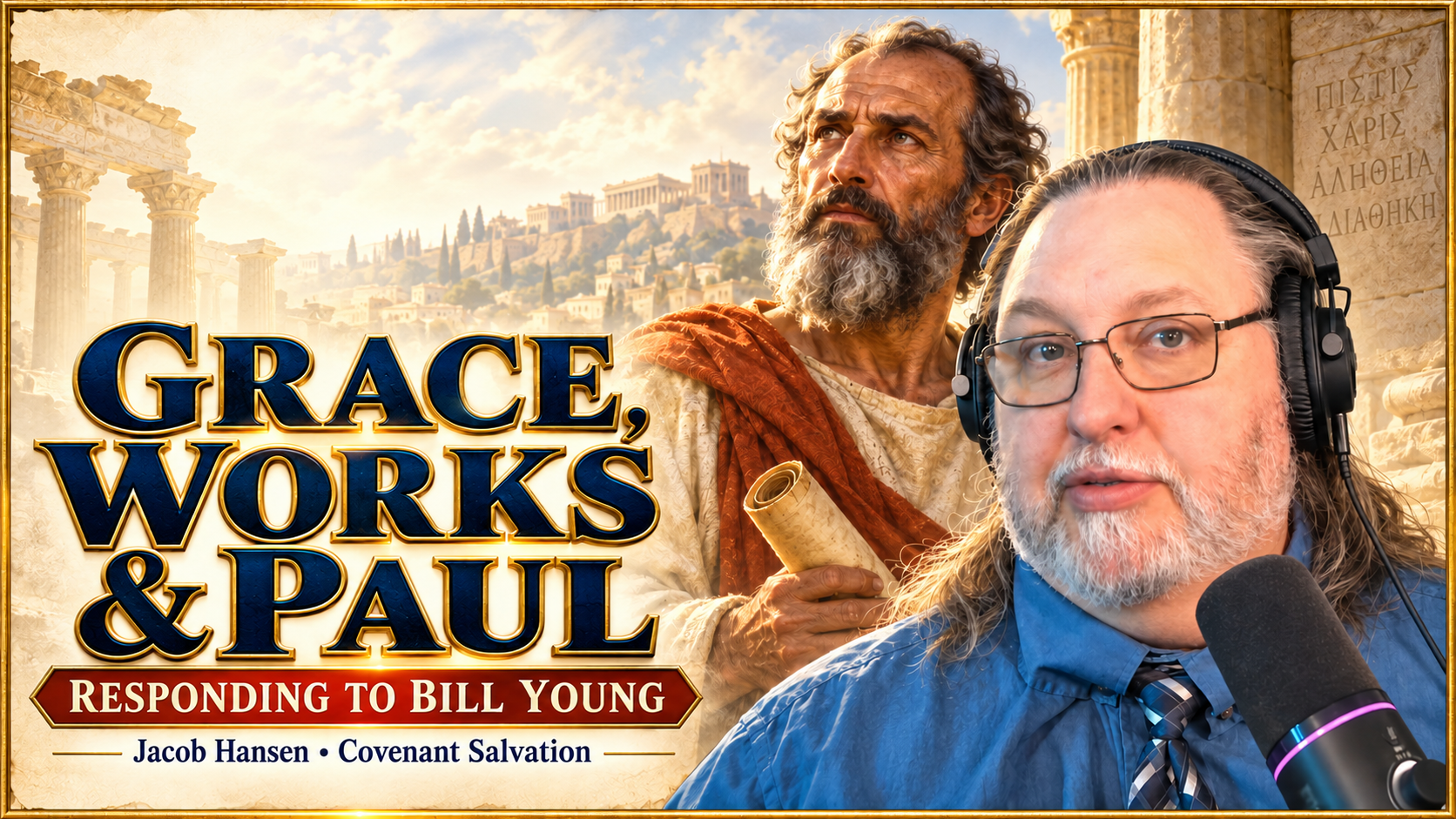
Bill Young's Response to Jacob Hansen: Does Covenant Obedience Deny Grace?

Bill Young's Response to Jacob Hansen: Does Covenant Obedience Deny Grace?

Does obedience turn the gift of salvation into a wage? That is the question beneath Bill Young’s response to Jacob Hansen—and it deserves a better answer than either “Mormonism is counterfeit” or “modern scholarship proves us right.” A Christian can affirm that Christ alone makes salvation possible while still believing that repentance, faithfulness, and a transformed life matter. The dispute begins when we ask how they matter: as payment, as conditions of receiving a gift, as evidence of living faith, or as the life that grace itself creates.

In Episode 104, Young argues that Hansen’s covenant model gives familiar LDS requirements a more attractive vocabulary without changing their function. That objection has force against any explanation that merely renames achievement as relationship. But Young’s broader conclusion—that necessary covenant obedience must therefore amount to earning salvation—requires an additional argument. Neither the presence of conditions nor the fact that human beings actually act establishes that their actions purchase God’s forgiveness.

This response approaches the debate from a Latter-day Saint perspective while taking Protestant objections seriously. It examines the supplied transcript and comment-section record alongside Pauline scholarship, Jewish historical scholarship, LDS sources, and evangelical biblical commentaries. Some of the evidence supports Young’s criticisms of oversimplified apologetics; other evidence directly challenges his portrayal of LDS grace and the scholarly alternatives he dismisses. The purpose is to identify which claims survive careful examination and to hold our treatment of other people to the Christian standard we invoke.

In this response

  • Young’s strongest objection
  • Paul, Judaism, and covenant
  • Grace, necessary works, and merit
  • “After all we can do”
  • What LDS leaders have taught
  • Comments and logical fallacies
  • The Christian standard
  • Frequently asked questions
  • Sources and further reading

What this response examines

The principal source is Young’s “Response to Jacob Hansen’s Covenant Model of Salvation”, identified as Episode 104 in the supplied materials. Quotations below follow the supplied transcript, with punctuation lightly normalized where needed; timestamps identify the relevant passages. The opening Hansen clip is presented within Young’s episode, so this article evaluates the argument as represented there rather than claiming to review every statement Hansen has made elsewhere.

Comment quotations come from the supplied document titled EP 104: Response to Jacob Hansen’s Covenantal Salvation Comment section. Usernames and document paragraph numbers identify excerpts where individual comment permalinks were not supplied. These are selected examples, not a statistical description of the entire audience. The record also contains substantive biblical arguments and objections to mockery. A commenter’s statement is attributed to that account; it is not automatically treated as Young’s own position.

Sunday, September 6, 2026

Proverbs 31, the Bride of Christ, and the Covenant Path

Proverbs 31, the Bride of Christ, and the Covenant Path

Word of Wisdom, Heavenly Parents, Temple Covenants, Theosis, and Exaltation


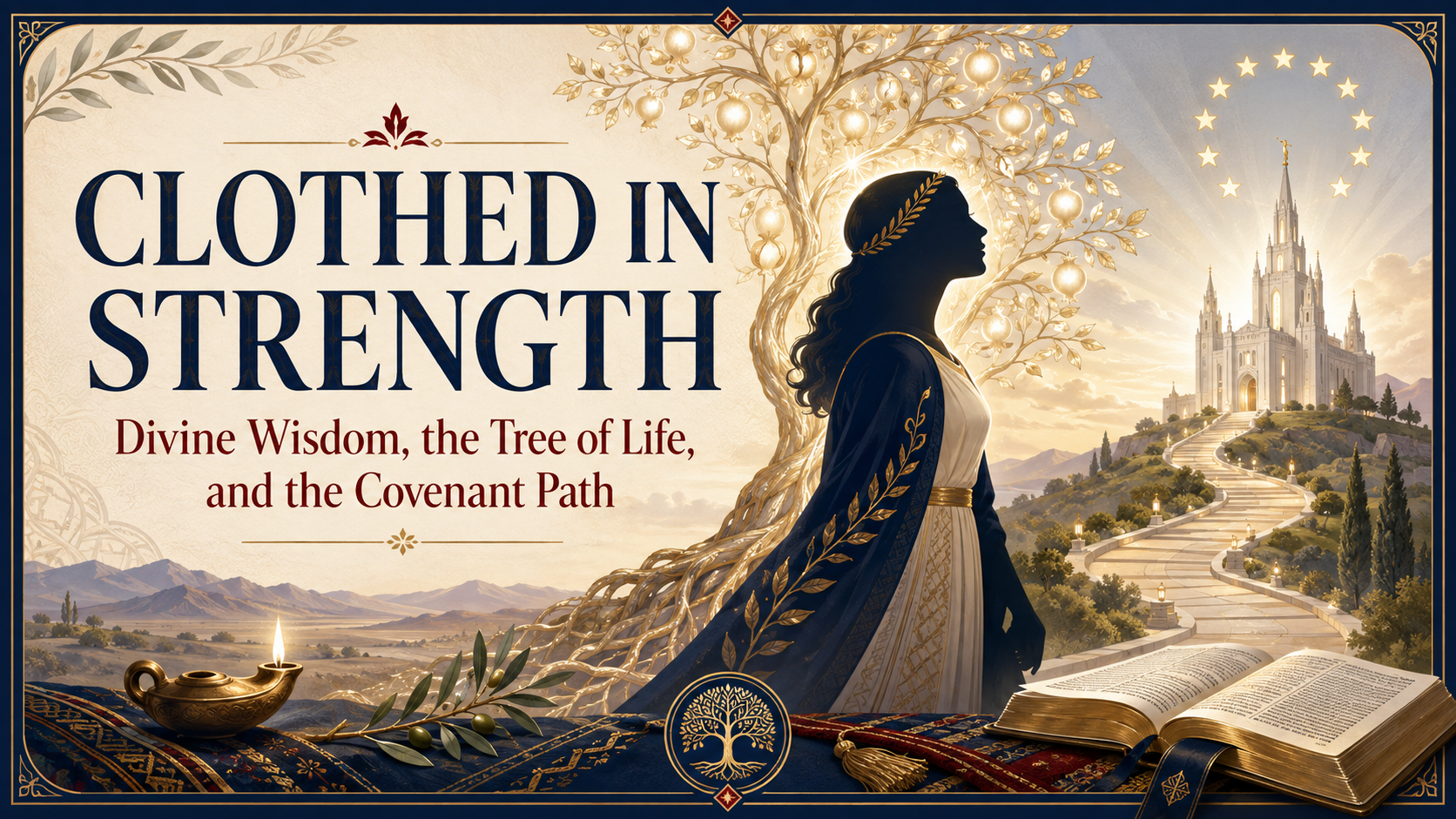
Proverbs 31 is often reduced to a checklist for an impossibly productive wife. Yet Proverbs 31:10–31 is first a carefully crafted Hebrew poem: an alphabetic acrostic that praises the eshet hayil, the “woman of strength,” whose fear of the Lord becomes visible in wise stewardship, economic agency, disciplined labor, faithful speech, household care, and mercy toward the poor. Read in the canonical context of Proverbs, she is not merely a passive model of private virtue. She is wisdom embodied.

This study develops a deliberately typological and temple-shaped reading of the poem. The eshet hayil becomes an icon of the Bride of Christ—the covenant community whose life is ordered by reverence, fidelity, holiness, and fruitful service. Doctrine and Covenants 89 adds an embodied discipline of appetite and spiritual receptivity; the covenants of the temple endowment give that discipleship a sacred grammar of obedience, sacrifice, the gospel of Jesus Christ, chastity, and consecration; and Revelation presents the faithful Church as a Bride made ready for the Lamb. Patristic theosis and Latter-day Saint exaltation converge in proclaiming transformation through participation in divine life, while retaining important theological distinctions. Proverbs 31 thus portrays the ordinary shape of extraordinary holiness: a people transformed by Christ until their works praise them at the gates.

A further Restoration layer emerges from the doctrine of Heavenly Parents and the feminine personification of Wisdom. Proverbs calls Wisdom a Tree of Life; 1 Nephi places a radiant tree beside the vision of a virgin mother and her divine Son; and Latter-day Saint scholars have compared these images with ancient Asherah and tree-goddess traditions. The biblical record clearly reports that Josiah removed an Asherah object from the temple, but the claim that this act erased an authentic revelation of Heavenly Mother remains a debated reconstruction. This study therefore treats the Wisdom-Tree-Mother constellation as a disciplined theological resonance, not as a substitute for revelation or proof that Lady Wisdom, Asherah, Mary, Shekhinah, and Heavenly Mother are one figure. Revelation 12 extends this pattern through a solar-clothed, star-crowned Woman who gives birth under threat from the dragon, receives divine nourishment in the wilderness, and survives as the mother of a commandment-keeping people. The Joseph Smith Translation identifies her as the Church of God and her child as the kingdom of God and Christ; the wider Israel-Zion-Mary-Bride symbolism therefore enriches divine-motherhood theology without making the Woman a direct portrait of Heavenly Mother.

How is the Lord inviting you to become a person of covenant strength? Choose one sphere—appetite, speech, money, work, fidelity, preparation, or care for the poor—and write one concrete act of consecration you will practice this week. Share the study with someone who has learned to hear Proverbs 31 as pressure rather than praise, and invite them to rediscover the woman of strength as a witness of grace-shaped wisdom.

Anchor Verse

“Favour is deceitful, and beauty is vain: but a woman that feareth the Lord, she shall be praised.” — Proverbs 31:30 (KJV)

What if Proverbs 31 is not a measuring stick but a mirror?

For generations, Proverbs 31 has been handed to women as a formidable list of domestic expectations: rise before dawn, manage a household, conduct business, produce clothing, care for the poor, speak flawlessly, and somehow never appear weary. Read that way, the poem can become less like good news and more like an inspired performance review. Women may feel judged by it, while men may assume that it addresses someone else. Both reactions miss the literary force of the text. Proverbs does not end with a spreadsheet of feminine productivity. It ends with poetry—a public song of praise celebrating what wisdom looks like when reverence for God takes flesh in the world.

The opening expression, eshet hayil, is commonly rendered “virtuous woman,” “capable wife,” “excellent wife,” or “woman of valor.” The Hebrew noun hayil carries a wide field of meaning that includes strength, capacity, wealth, competence, and valor. The woman is not praised because she is ornamental, silent, or fragile. She is strong. She evaluates a field and buys it. She plants a vineyard, trades profitably, supervises a complex household economy, speaks wisdom, prepares for adversity, and opens her hands to the poor. Her strength is neither self-display nor domination. It is power disciplined by covenant loyalty.

The poem gathers wisdom into a living covenant portrait

Proverbs begins by personifying Wisdom as a woman who calls in public places, invites the simple to learn, offers life, and warns against paths that end in death (Prov. 1:20–33; 8:1–36; 9:1–6). The book then concludes with a flesh-and-blood portrait of a woman whose decisions make wisdom visible. The literary movement is striking: Wisdom’s voice in Proverbs 1–9 becomes wisdom’s work in Proverbs 31. The fear of the Lord announced as the beginning of knowledge in Proverbs 1:7 reappears near the conclusion in Proverbs 31:30. What begins as instruction becomes character; what begins as a path becomes a practiced life.

That canonical pattern creates a responsible bridge to the New Testament’s image of the Church as the Bride of Christ. The historical woman praised in Proverbs 31 should not be erased, nor should every feature be converted into a hidden allegory. Yet Christian typology recognizes recurring covenant patterns that reach fulfillment in Jesus Christ and His people. The faithful, fruitful, mercy-giving, wisely ordered woman can therefore become an icon of the ecclesial Bride—a community that trusts her covenant Lord, clothes herself in righteous deeds, cares for the vulnerable, and prepares for the marriage supper of the Lamb (Eph. 5:25–27; Rev. 19:7–9).

For Latter-day Saints, Proverbs' feminine Wisdom also opens a question that much of Christian theology leaves underdeveloped: if exaltation means becoming like our Heavenly Parents, how might the Bible's feminine images of life, wisdom, birth, nurture, glory, and covenant presence witness to divine motherhood? That question is legitimate, but it requires disciplined distinctions. Grammatical femininity is not automatically a divine woman, a sacred tree is not automatically Heavenly Mother, and the recovery of an ancient goddess cult would not by itself establish revealed truth.

From admired virtue to temple-shaped discipleship

The central question is therefore not, “How can one woman accomplish everything in this poem?” The deeper question is, “How does the covenant people become the kind of Bride whose whole life praises the Lord?” A Restoration reading brings the Word of Wisdom and temple covenants into this conversation. Doctrine and Covenants 89 orders embodied appetite toward wisdom and revelation. The temple endowment calls disciples to obedience, sacrifice, the gospel of Jesus Christ, chastity, and consecration. Proverbs 31 shows those commitments becoming ordinary practice—in work, speech, sexuality, economics, mercy, preparation, and worship.

The added layer follows four levels of evidence. Official Restoration teaching establishes Heavenly Parents. The biblical text establishes Lady Wisdom, the Tree of Life, and Josiah's removal of the Asherah. Archaeology and comparative religion illuminate ancient tree and mother symbolism. Finally, Latter-day Saint temple theology asks what these patterns may mean. Keeping those levels distinct allows faith to become deeper without asking historical evidence to carry more than it can bear. Revelation 12 supplies an especially important control because the Joseph Smith Translation explicitly identifies the Woman with the Church and the child with God's kingdom. Any Heavenly Mother resonance must therefore remain analogical and theological rather than replace that revealed ecclesial meaning.

This reading must be stated carefully. Proverbs 31:10–31 is not known to have served as a prescribed ceremony in Solomon’s temple, and Doctrine and Covenants 89 is not the secret historical key to the poem. The phrase “temple-liturgical” in this study names a canonical and theological reading, not an unsupported claim about ancient ritual origins. The poem is temple-shaped because it portrays an ordered covenant life moving from reverence to holiness, from stewardship to consecration, and from faithful labor to praise at the gates. It is liturgical because it is a song of praise that forms the worshipping community’s imagination—and because it is still sung in many Jewish homes at the beginning of Shabbat, a custom commonly traced to early modern Jewish mysticism rather than the biblical temple period.

He Shall Direct Thy Paths: Proverbs & Ecclesiastes

He Shall Direct Thy Paths: Proverbs & Ecclesiastes

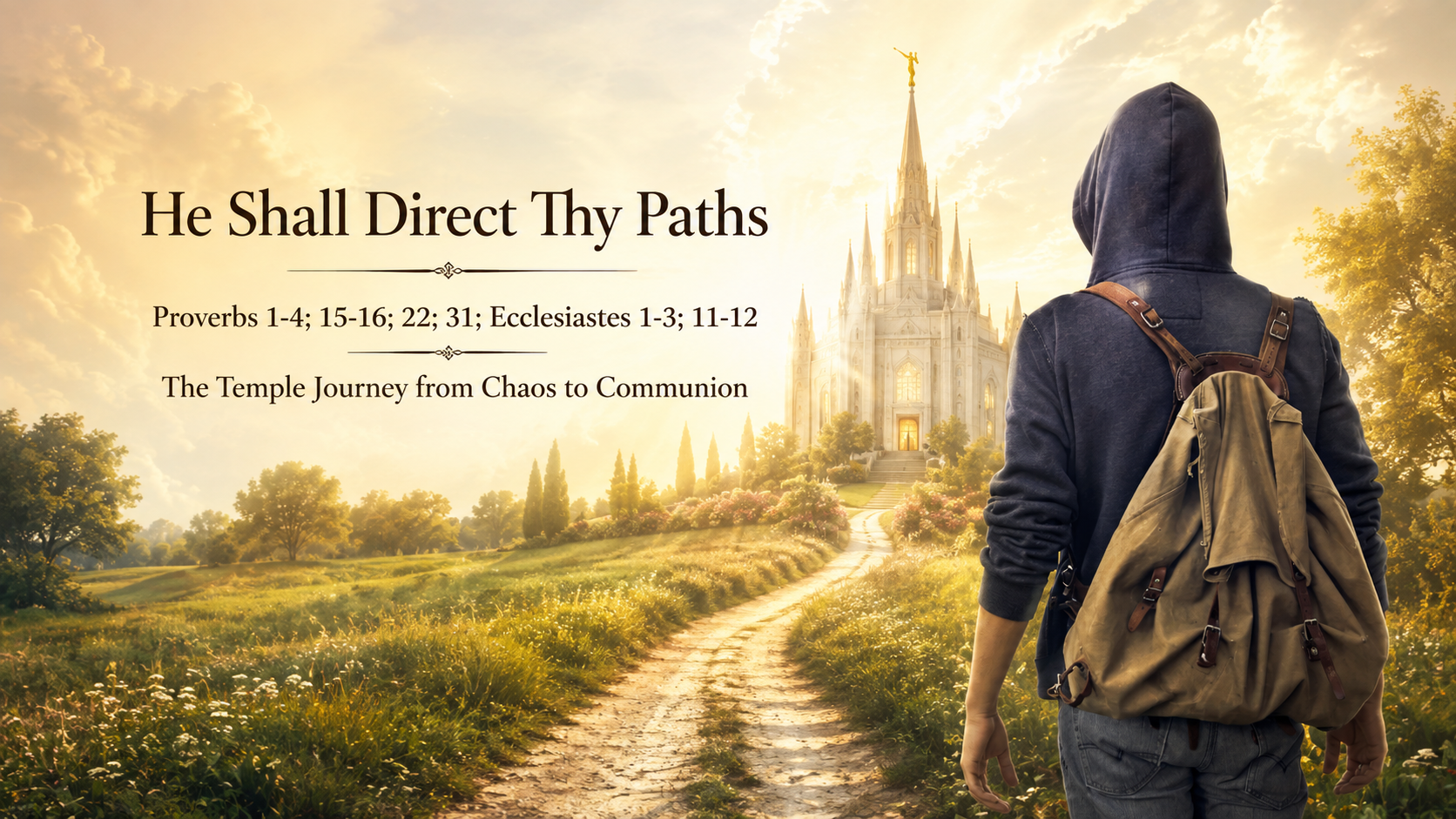
Proverbs 1-4; 15-16; 22; 31; Ecclesiastes 1-3; 11-12

The Temple Journey from Chaos to Communion

Proverbs teaches us how to walk wisely; Ecclesiastes asks whether wisdom is enough when life remains temporary, unfair, and beyond our control. Together, these books move the covenant disciple from moral formation to eternal perspective, from confidence in human calculation to reverent dependence upon God. Their unity is not a simplistic promise that righteous people will never suffer. It is the deeper testimony that life becomes rightly ordered when the Lord, rather than the isolated self, becomes its center.

This concluding study in the W.I.S.D.O.M. arc follows the appointed Come, Follow Me reading for September 7-13, 2026: Proverbs 1-4; 15-16; 22; 31 and Ecclesiastes 1-3; 11-12. Through Hebrew exegesis, Christ-centered exposition, Latter-day Saint scripture, and respected Jewish and Christian scholarship, we will trace a devotional temple movement from the two paths of wisdom and folly to the final summons to fear God, keep His commandments, and prepare for judgment. The destination is not intellectual mastery but communion: "Trust in the Lord with all thine heart ... and he shall direct thy paths" (Proverbs 3:5-6).

Introduction - When the Road Ahead Disappears

Most of us want God to give us a map. We want the next turn identified, the dangerous roads marked, and the destination guaranteed before we take the first step. Proverbs 3 offers something more demanding and more intimate. It does not promise that we will see the entire road. It promises that when we trust the Lord with the whole heart, refuse to make our own understanding the final authority, and know Him in all our ways, He will make the path straight before us.

That promise matters because discipleship is rarely lived on roads we fully understand. We make decisions with incomplete information. We pray through grief that has not resolved. We obey while consequences remain uncertain. We try to speak gently in a culture trained to reward outrage. We labor faithfully while Ecclesiastes reminds us that achievement, pleasure, wealth, reputation, and even human wisdom cannot defeat mortality. The human problem is not merely that we need better information. The deeper problem is that we are tempted to trust our own perspective as though it were complete.

Proverbs and Ecclesiastes meet us inside that tension. Proverbs says that creation possesses a moral grain: humility, diligence, fidelity, generosity, disciplined speech, and reverence ordinarily lead toward life. Ecclesiastes then refuses to let those observations harden into a mechanical formula. The wise still die. The righteous do not always receive immediate reward. Time overtakes every achievement. Much of life remains hevel - vaporous, fleeting, difficult to grasp. Biblical wisdom therefore matures when it moves beyond technique and becomes covenant trust.

This is why the final installment of our W.I.S.D.O.M. journey must end where the biblical books themselves end: not in admiration of the wise person, but in reverence before God. We have learned to Walk, Invite, Seek, Discern, Observe, and Meet. Each movement has carried us through the recurring wisdom pattern of descent and ascent: from Edenic estrangement into mortal confusion, from lament into remembrance, from self-reliance into surrender, and from the limits of human sight into the presence of the God who sees the whole way.

The 2026 Come, Follow Me manual wisely places Proverbs and Ecclesiastes in conversation. Proverbs teach that life is ordered by divine wisdom; Ecclesiastes asks what faithful life looks like when that order cannot be easily seen. Their combined witness is neither naive optimism nor cynical despair. It is covenant realism: life is temporary and often perplexing, yet it is lived before God, received as His gift, and made eternally significant through trust, obedience, repentance, and Jesus Christ.

Anchor Scripture - Proverbs 3:5-6

Trust in the Lord with all thine heart; and lean not unto thine own understanding.
In all thy ways acknowledge him, and he shall direct thy paths.

The movement of these verses is deliberate. Trust replaces self-sufficiency. The whole heart replaces divided allegiance. Knowing God in every way replaces the habit of confining Him to explicitly religious moments. The promise is not that God will endorse every route we prefer; it is that He will straighten the road of a life yielded to Him.

Sunday, August 30, 2026

Let Everything That Hath Breath Praise the Lord: When Lament Becomes Hallelujah

Let Everything That Hath Breath Praise the Lord: When Lament Becomes Hallelujah

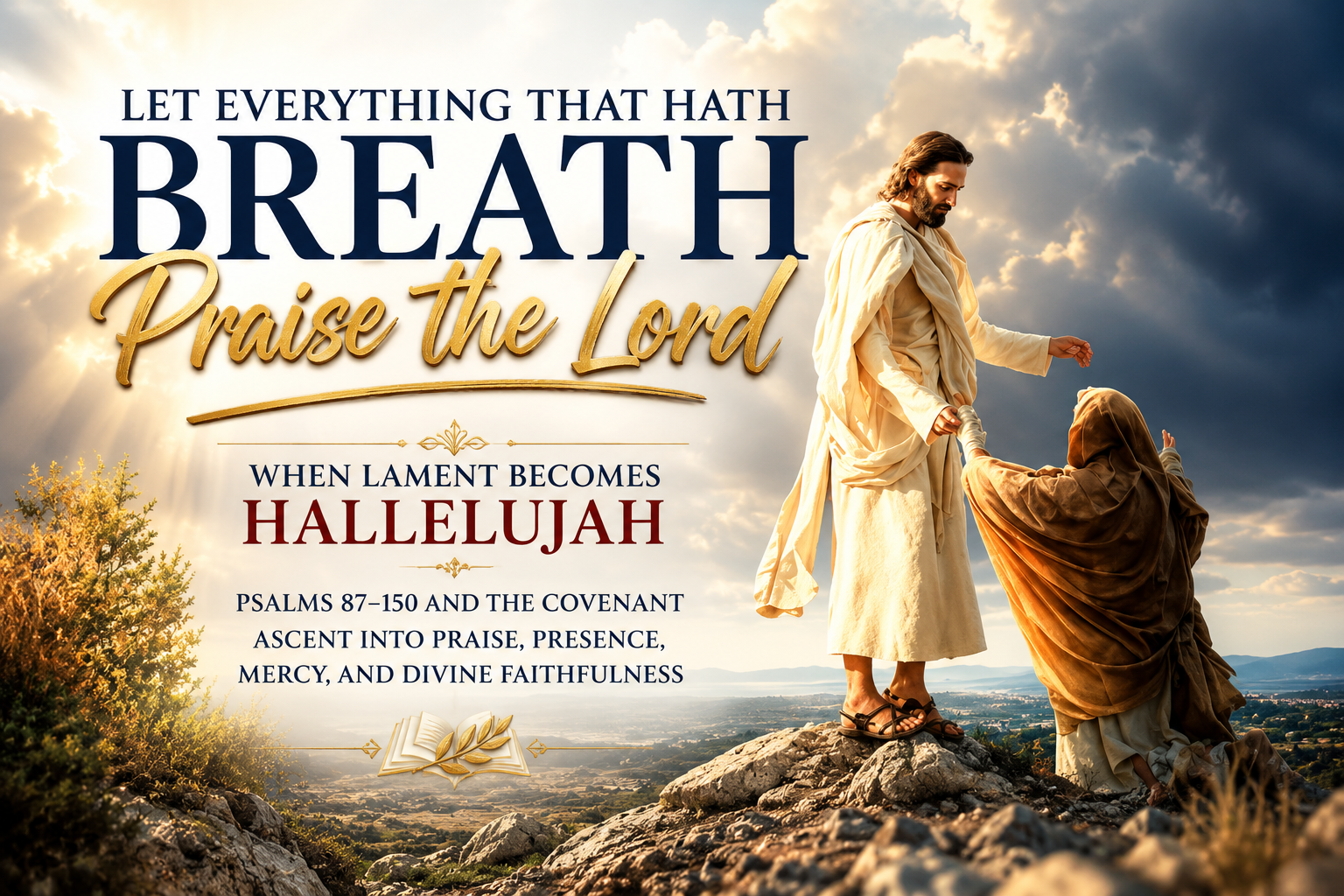
Psalms 87–150 and the Covenant Ascent into Praise, Presence, Mercy, and Divine Faithfulness


The closing movement of the Psalms rises like a liturgical crescendo, but it does not reach hallelujah by pretending that suffering never happened. It carries affliction, exile, mortality, repentance, unanswered questions, and covenant longing into the presence of God. There, pain is neither minimized nor given the final word. Psalms 87–150 teach that biblical praise is more than religious enthusiasm. Praise is covenant memory: the deliberate act of remembering who God is, what He has done, and why His faithfulness remains trustworthy when life feels unsteady.

This Christ-centered Come, Follow Me study focuses on the 2026 reading assignment—Psalms 102–103; 110; 116–119; 127–128; 135–139; and 146–150—while placing those texts within the wider closing movement beginning with Zion in Psalm 87. Together, these psalms reveal the Lord as Creator, covenant Keeper, healer, righteous King, and refuge of the afflicted. They point Christian readers toward Jesus Christ as the enthroned Lord, eternal High Priest, rejected Cornerstone, and compassionate Savior. The Psalter finally summons every instrument, every nation, and “every thing that hath breath” to praise the Lord—not because mortality is painless, but because mercy endures, God reigns, and the road home remains open.

Reading the Closing Psalms as a Covenant Journey

The traditional Jewish name for the Psalter is Tehillim, “Praises.” That title may initially seem surprising because the book contains grief, protest, confession, fear, anger, royal celebration, wisdom instruction, and even prayers that make modern readers uncomfortable. Yet the name tells us where the whole collection is headed. The Psalms do not say that every moment feels praiseworthy. They teach the covenant people how to bring every moment—including the most painful one—before the God who is worthy of praise. The 2026 Come, Follow Me lesson similarly emphasizes that praise can take the form of singing, praying, bearing testimony, and deepening our commitment to follow the Lord.

Biblical scholar Walter Brueggemann famously describes a recurring movement in the Psalms from orientation, through disorientation, into a new orientation. That pattern is not a mechanical formula, and not every psalm moves through all three stages. It is nevertheless a helpful pastoral lens. Faith begins with received assurances about God and the world; suffering then destabilizes what once seemed secure; grace finally creates a renewed confession that has passed through pain rather than bypassed it. The resulting praise is deeper because it is no longer naïve. It has learned that lament can be faithful speech and that worship can survive the night.

The final two books of the Psalter, Psalms 90–106 and 107–150, also answer the crisis left by the apparent collapse of Davidic kingship in Psalm 89. Human thrones fail, generations pass, and Israel experiences exile, but the Lord remains King. Torah still gives light. Zion still represents divine presence and covenant hope. The final five psalms then gather the entire creation into praise. Canonical scholars such as Gerald H. Wilson and the authors of The Book of Psalms have therefore encouraged readers to attend not only to each psalm individually but also to the theological meaning created by the Psalter’s final arrangement. The destination of this prayer book matters: after every lament has been heard, the last canonical word is hallelujah.

A Note on the Reading Range

The official August 31–September 6, 2026, Come, Follow Me assignment includes Psalms 102–103; 110; 116–119; 127–128; 135–139; and 146–150. This study briefly uses Psalms 87–93 as a bridge from Zion to divine kingship and then concentrates on the assigned passages. That wider frame preserves the larger canonical ascent without confusing the supplemental material with the official reading list.

Sunday, August 23, 2026

"I Will Declare What He Hath Done for My Soul" | COME FOLLOW ME - OLD TESTAMENT 2026 | Psalms 49-86

"I Will Declare What He Hath Done for My Soul" | COME FOLLOW ME - OLD TESTAMENT 2026 | Psalms 49-86

The Temple Pattern of Descent, Ascent, and Exaltation in Israel's Hymnal of Redemption

"Come and hear, all ye that fear God, and I will declare what he hath done for my soul." - Psalm 66:16 KJV


This study reads the selected Psalms 49-86 as a canonical and theological journey through mortality, sin, lament, repentance, remembrance, redemption, and public witness. These poems do not form a single authored liturgy; they cross the boundary between Books II and III of the Psalter and include wisdom instruction, penitential prayer, individual and communal lament, historical recital, royal hope, and testimony. Read together, however, they trace a temple-shaped movement from estrangement toward the presence of God. Psalm 49 exposes the inability of wealth or human power to ransom life from death; Psalm 51 turns confession into a prayer for divine re-creation; Psalms 63, 69, and 77 give faithful language to abandonment and distress; Psalms 66, 71, and 78 transform remembered deliverance into covenant testimony; and Psalms 72, 85, and 86 direct personal restoration toward righteous kingship and Zion. The Book of Mormon intensifies this pattern in Alma 36, Alma 26, Alma 34, and Alma 42, where anguish gives way to joy through Jesus Christ and redeemed experience becomes missionary proclamation. The central claim is that biblical ascent does not deny descent. The worshipper rises by bringing mortality, guilt, fear, and unanswered questions into covenant relationship with the God who alone can redeem, cleanse, heal, and receive the soul. Psalm 66:16 therefore becomes more than a memorable line: it is the vocation of a redeemed people.

Scripture and method note. Biblical quotations follow the King James Version unless otherwise noted. This article distinguishes the psalms' ancient literary setting, their Christian canonical fulfillment in Jesus Christ, and their Latter-day Saint resonance. "Exaltation" is used first for being lifted into divine presence, covenant joy, and praise; restored doctrine gives that movement its fuller horizon in eternal life with God.

The Psalms as the Soul's Ascent Back to Eden

The soul does not merely want relief from pain. At its deepest level, it longs for the presence of God - for the wholeness, communion, and holy order represented by Eden. That longing is one reason the Psalms remain indispensable. They do not speak only from the summit of faith. They also pray from the pit, the wilderness, the sickbed, the battlefield, the guilty conscience, and the long night when God seems silent. The Psalter gives covenant people permission to bring the whole truth of mortal life into worship.

Calling the Psalms Israel's "temple hymnal" captures something essential, but it also requires care. Many psalms are rooted in sanctuary worship, sacrifice, procession, royal ceremony, pilgrimage, and public praise. Others may have begun in personal or communal crisis before being gathered for liturgical use. Sigmund Mowinckel emphasized the Psalms' setting in Israel's worship, while Claus Westermann stressed the dynamic relationship between lament and praise. James Luther Mays therefore describes the Psalms as both scripture and liturgy: ancient prayers that became the prayerbook of later communities (Mowinckel; Westermann; Mays).

The temple lens becomes especially fruitful when joined to the pattern of descent, ascent, and exaltation. The biblical sanctuary represents ordered creation and the divine dwelling among humanity; temple worship moves symbolically toward holiness and presence (Levenson 275-98). In the Psalms, that movement is often existential rather than architectural. The worshipper descends into fear, sin, mortality, exile, or confusion; ascends through remembrance, repentance, sacrifice, trust, and covenant appeal; and is lifted into renewed joy, praise, divine fellowship, and testimony. Walter Brueggemann's well-known categories of orientation, disorientation, and new orientation offer a closely related account of the spiritual world of the Psalter (Brueggemann).

This pattern does not mean that every psalm begins in Eden, passes through a fixed ritual sequence, and ends in triumph. Hebrew poetry resists mechanical outlines. Its parallel lines deepen, contrast, intensify, and sometimes destabilize one another. Yet across Psalms 49-86, a recurring theological grammar becomes visible: false securities fail, the soul cries out, God's mighty acts are remembered, mercy opens a path, and the redeemed worshipper declares what God has done. The result is a spiritual autobiography of redemption, not because all the psalms were written by one person, but because generations of worshippers can find their own descent and ascent within Israel's inspired songs.

Sunday, August 16, 2026

"The Lord Is My Shepherd": Psalm 23, Temple Descent-Ascent, and the Plan of Salvation

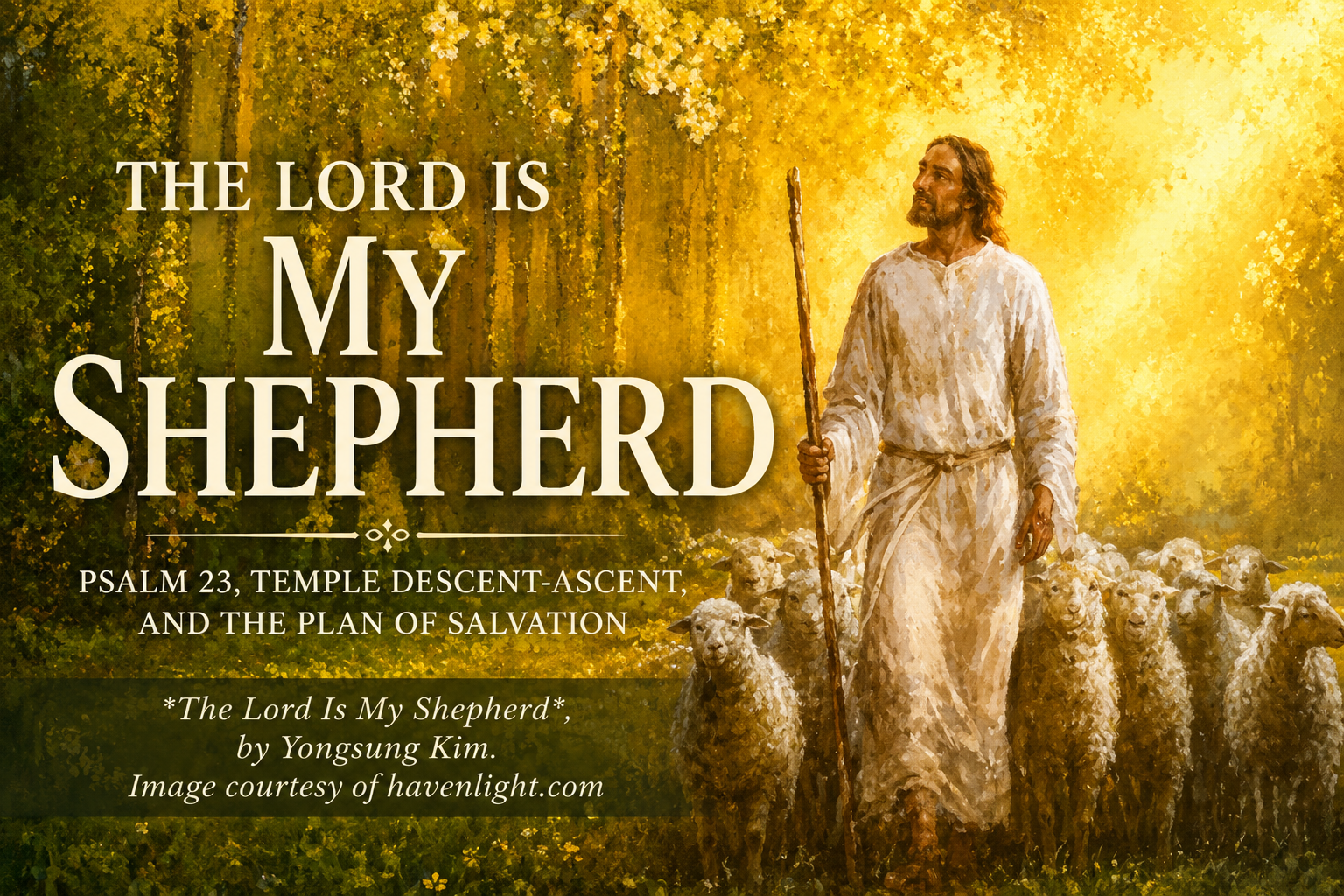
"The Lord Is My Shepherd": Psalm 23, Temple Descent-Ascent, and the Plan of Salvation

A Come, Follow Me Study for August 17-23, 2026: Psalms 1-2; 8; 19-33; 40; 46

"For thou art with me." - Psalm 23:4

Most of us first learned Psalm 23 as a psalm of comfort. We hear it at funerals, repeat it in hospital rooms, and reach for it when grief has stripped life down to its most difficult questions. That use is neither accidental nor misplaced. Yet Psalm 23 does more than assure us that God will remain near when we die. It poetically traces an entire journey: the Lord provides, restores, guides, accompanies, protects, welcomes, anoints, and finally brings the worshipper into His house.

That movement makes Psalm 23 especially meaningful for Latter-day Saints. Its imagery can be read as a temple-shaped journey from ordered life into mortal darkness and then upward into covenant fellowship and the presence of God. Read within the immediate sequence of Psalms 22-24, the pattern becomes even more striking: lament and suffering in Psalm 22, the Shepherd's presence in Psalm 23, and ascent to the holy hill with the King of glory in Psalm 24. Nancy deClaissé-Walford's intertextual study similarly argues that these three neighboring psalms form a powerful statement of trust when read together (deClaissé-Walford 139-52).

This interpretation requires one careful qualification. Psalm 23 is not demonstrably a word-for-word transcript of an ancient Israelite temple ceremony, and the full Latter-day Saint plan of salvation should not be projected backward into every Hebrew phrase as though the psalmist were writing a systematic doctrinal manual. Psalm 23 is commonly classified as a psalm of trust or confidence, while a pilgrimage setting that culminates at the temple remains a respected scholarly proposal rather than an uncontested conclusion (Smith 61-66; Tappy 255-80). The temple and plan-of-salvation reading offered here is therefore a disciplined canonical and theological synthesis: it begins with what the Hebrew poem says, follows the intertextual patterns the Psalter supplies, reads the psalm through Jesus Christ, and then asks how Restoration scripture enlarges its hope.

What Come, Follow Me Actually Assigns for August 17-23

The official 2026 reading is often abbreviated as "Psalms 1-46," but the assigned passages are selections rather than every chapter in that range: Psalms 1-2; 8; 19-33; 40; and 46. The manual invites readers to notice the Psalms' vivid images of the Savior, including the green pastures, still waters, rod, staff, and overflowing cup of Psalm 23. It then connects Psalm 24's "hill of the Lord" with the temple and with preparation to enter the presence of God (Come, Follow Me).

The broader three-week schedule is also selective. August 24-30 covers Psalms 49-51; 61-66; 69-72; 77-78; and 85-86, while August 31-September 6 covers Psalms 102-103; 110; 116-119; 127-128; 135-139; and 146-150. Keeping the actual readings clear strengthens the study because it allows Psalm 23 to function as the focal text for this week without forcing an artificial structure onto every psalm from 1 through 46.

Saturday, August 8, 2026

From the Ash Heap to the Holy Mountain: Hebrew Poetry and Wisdom Literature through the Temple Pattern of Descent and Ascent

From the Ash Heap to the Holy Mountain: Hebrew Poetry and Wisdom Literature through the Temple Pattern of Descent and Ascent

A Come, Follow Me introduction to Job, Psalms, Proverbs, and Ecclesiastes

Job, Psalms, Proverbs, and Ecclesiastes do not offer one flat explanation of faithful life. They give us an inspired conversation. Job protests any theology that reduces suffering to a predictable equation. The Psalms teach covenant Israel to pray through joy, guilt, abandonment, fear, gratitude, and praise. Proverbs forms moral perception by training the disciple to fear the Lord and choose wisdom over folly. Ecclesiastes exposes the vapor-like instability of mortal achievement and the limits of human control. Read together, these books move repeatedly from order into disorientation and from disorientation toward a renewed, humbler communion with God.

This study proposes the temple pattern of descent and ascent as a theological and devotional framework for that movement. Descent names mortality, estrangement, lament, disorder, and the collapse of false certainty. Ascent names purification, covenant formation, divine instruction, unveiled perspective, and renewed presence. The framework is grounded most directly in the temple setting of many Psalms—especially Psalm 24—but it should not be mistaken for a claim that Job, Proverbs, and Ecclesiastes were all composed as a single temple ritual. Instead, it is a canonical, Christ-centered reading that brings the wisdom books into conversation with Israel’s worship, the plan of salvation, and the Latter-day Saint journey back into God’s presence. The W.I.S.D.O.M. arc developed below provides the series structure: Walk, Invite, Seek, Discern, Observe, and Meet.

Sunday, July 26, 2026

“I Am Doing a Great Work”: Stay on the Wall and Finish What God Called You to Do

“I Am Doing a Great Work”: Stay on the Wall and Finish What God Called You to Do

“I Am Doing a Great Work”

Stay on the Wall and Finish What God Called You to Do
Come, Follow Me—July 27–August 2 | Ezra 1; 3–7; Nehemiah 2; 4–6; 8


There are some distractions that do not look dangerous because they look quite reasonable. 

They arrive as invitations, conversations, controversies, urgent notifications, unexpected opportunities, and demands for our immediate attention. They ask us to take a moment and step away from what God may have placed before us - not necessarily forever, just long enough for us to lose our concentration and focus. 

This was the very strategy used against Nehemiah. 

Nehemiah’s enemies did not begin by openly commanding him to abandon the rebuilding of Jerusalem. Instead, they repeatedly invited him to leave the work and meet them in the plain of Ono. Such a proposal sounded quite diplomatic; however, Nehemiah recognized the deception beneath. He was able to discern and understood that not every invitation deserved an answer. Nor every controversy deserved his attention and presence. 

His response has become one of the most significant and clearest declarations of spiritual focus in scripture: “I am doing a great work, so that I cannot come down” (Nehemiah 6:3). Nehemiah was not boasting about his personal importance. What he did is declare the significance of the assignment - or calling - God had entrusted to him. More to the point, Nehemiah took seriously the stewardship of what God called him to accomplish. 

The wall was more than stone and timber. Jerusalem’s restoration represented covenant renewal, spiritual protection, communal identity, temple worship, and the fulfillment of God’s promises. 

This week’s Come Follow Me Study for the Old Testament is about more than rebuilding a temple or repairing a city wall. It is regarding how we are open and willing to recognize the work God has placed before each of us, resisting whatever pulls us away from it, and trusting that the Lord will strengthen our hands as we remain faithful and obedient to His will, purpose, and plans. 

Sunday, June 7, 2026

Set the Sail for Recovery & Sobriety — The Urge to Share

Set the Sail for Recovery & Sobriety — The Urge to Share

In my own life, I’ve learned that the most powerful ministry moments are never scripted—they are Spirit‑led. They happen when we are sensitive to the still small voice, when our hearts are open, and when we allow God to interrupt our day for the sake of someone else’s pain.

Years ago, I was at a local church, carrying more than I could handle. A phone call from my father had shaken me, and a careless comment from someone nearby only deepened the wound. I stepped outside, sat on the front steps, and honestly—I wasn’t praying. I was stewing. Hurting. Lost in the swirl of emotion.

Then a young man walked up, sat beside me, and wrapped his arm around my shoulder. “I was driving by,” he said quietly, “and the Holy Spirit told me to turn around. Anything I can pray for?” He didn’t preach. He didn’t correct. He didn’t offer advice. He simply sat with me and prayed.

That moment has stayed with me for years because it revealed something essential about the heart of Christ: To share the light of Jesus is to sit with people in their mess without judgment. This is not merely an act of companionship but a profound demonstration of love and solidarity. It challenges us to look beyond our own struggles and step into the vulnerability of another, reflecting the grace we have received in our own times of need.

This is the heart of today’s message. In an age where everyone seems to be vying for attention, it can be exceedingly rare to find someone who is willing to pause, listen, and simply be present. Yet, it is in these unassuming moments that we often see the clearest reflection of Christ's love. When we allow ourselves to connect with another’s sorrow, we become vessels of hope.

Anchor verse: Romans 10:10“For with the heart man believeth unto righteousness; and with the mouth confession is made unto salvation.” This verse serves as a reminder that our faith is rooted in a heart-to-heart connection with God, which in turn shapes how we connect with others. The Lord looks upon the heart of a person (1 Samuel 16:7) because it is within the heart where we struggle with identity and purpose, grappling with understanding how God loves those who are so broken and distraught. To have the heart of the Father (Psalm 103:13) means we have a deep and compassionate concern for those suffering.

Our ministry efforts, our outreach, and our words should mirror this heart of compassion. How we minister—how we share—and the urge and desire to comfort those in distress are accomplished through the ministering of the Holy Spirit. It is through the Holy Spirit that we find the strength to empathize, listen, and provide solace. This is how we build up the Kingdom of God, by fulfilling the call to truly mourn with those who mourn and walk alongside them, carrying their burden as Christ carried our burdens (Galatians 6:2).

Today, we are going to look at the Urge to share the message of hope and how we minister as the light of Christ and the Glory of the Father. We are set upon the hill, shining as a beacon for all who are struggling in their own despair. More than just an act of faith, sharing our hope involves actively engaging with those around us, bringing the light of Christ to their darkness. We must be vigilant and willing to heed the call when the Holy Spirit nudges us, reminding us that even the smallest actions can lead to significant transformations in the lives of others. Let us embrace our roles as conduits of God’s love, ensuring that the light we shine is a reflection of His unconditional love and grace.

Thursday, June 4, 2026

Molded by God: Identity, Healing, and the Beauty of Being Fearfully and Wonderfully Made (Psalm 139:14)

Molded by God: Identity, Healing, and the Beauty of Being Fearfully and Wonderfully Made (Psalm 139:14)

I always had this inclination that something was wrong. And whenever that feeling rose up, I was convinced it was because of someone else. Someone failing me. Someone not stepping up. Someone not doing the honorable thing. I lived with this constant sense that other people were the reason I suffered. And underneath all of that? A deep ache that no one truly cared, no one appreciated me, no one saw the effort I poured out trying to prove myself.

I chased validation like oxygen. I wanted approval so badly that I shaped myself around what I thought others wanted. I tried to be the “better person” in the eyes of everyone else, all while never actually seeing who I was. I was blind to my own entitlement, blind to my victimhood, blind to the way I was both the victim and the villain in someone else’s story. Hypervigilant. Defensive. Exhausted. And yes—hurt by real betrayals, real lies, real wounds that left me carrying depression, resentment, bitterness, and anxiety like a backpack full of bricks.

And then came the moment that broke me open.

My father had just been released from the hospital after months in intensive care from a brutal auto accident. I had given up everything to be there. And yet, I found myself standing on a cold Seattle curb in January of 2005 with nothing but a backpack, work boots, and three cartons of cigarettes. No home. No money. No plan. No one.

I walked the streets of Seattle wondering if this was the end of me.

But God had other plans.

A transitional housing program took me in. I rested. I worked. I rebuilt. And slowly—slowly—I found my way back to faith. But even then, I still couldn’t see myself clearly. I still felt unworthy. I still lived for validation. I still believed I had to earn dignity, earn love, earn respect.

It wasn’t until years later that the Holy Spirit began breaking the spiritual blindness I had carried for so long. And the revelation was simple, but it shook me to my core:

I didn’t know who I was. And I didn’t know how my Heavenly Father saw me.

Anchor Verse — Psalm 139:14 (NASB2020): I will give thanks to You, for I am fearfully and wonderfully made; Wonderful are Your works, And my soul knows it very well.

Two words rise like mountains in this verse: fearfully and wonderfully. Fearfully — yārē’ — to stand in awe, reverence, astonishment. Wonderfully — pālā’ — marvelous, extraordinary, beyond human ability.

This is not casual language. This is identity language. God is not saying, “You’re barely acceptable.” He is saying, “You are My intentional, awe-inspiring work.” We are His workmanship, created in Christ Jesus for good works that He prepared beforehand (Ephesians 2:10). Even when we feel like a mistake, God calls us purposeful, crafted, and known (Psalm 139:1–4).

So today, let’s walk slowly through what it means to be fearfully and wonderfully made—especially when we don’t feel like it. Especially when addiction, shame, trauma, or codependency have distorted the mirror we look into. Especially when our past tells us one story, but God is trying to tell us another.

Wednesday, June 3, 2026

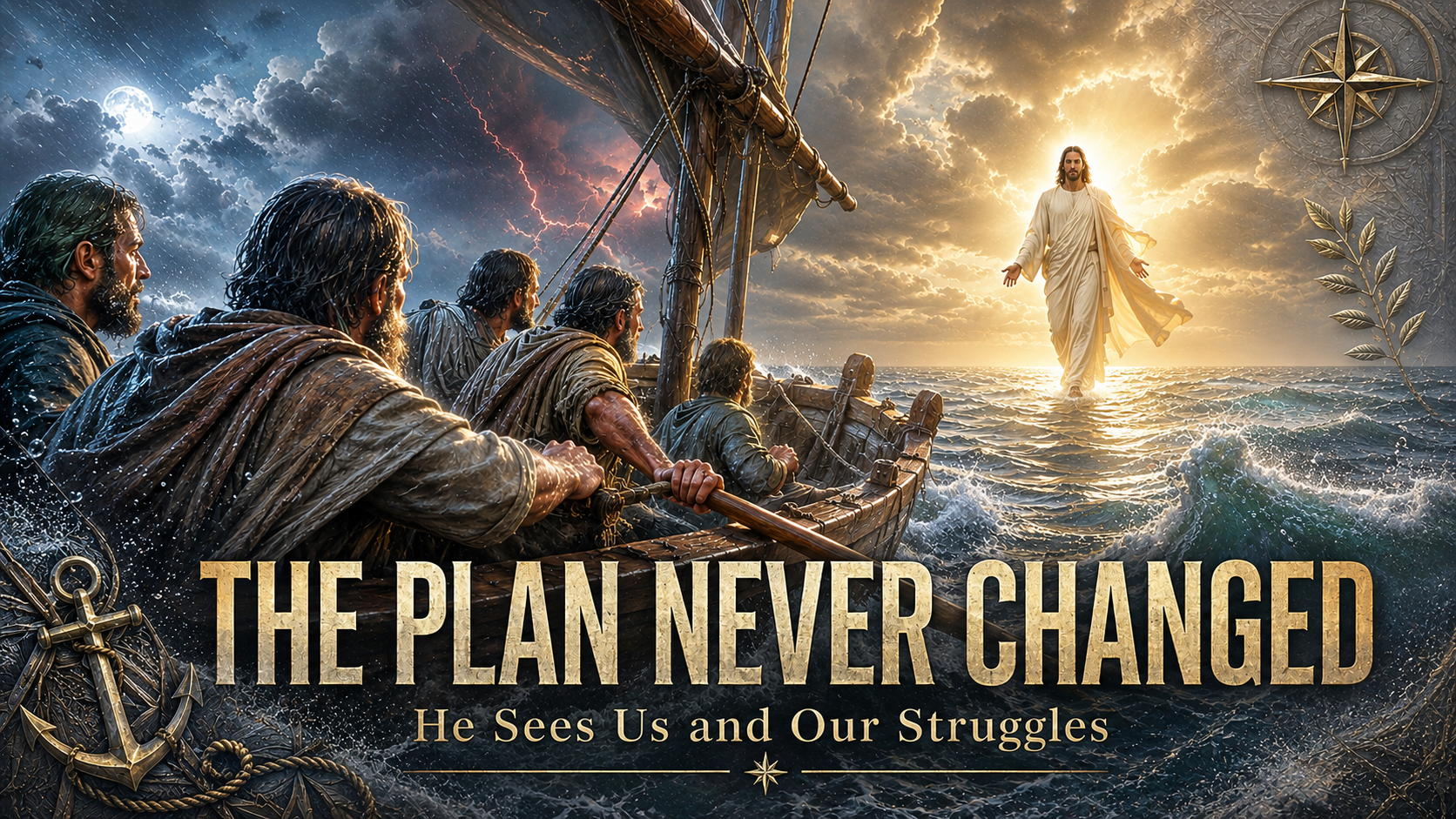
The Plan Never Changed - He Sees Us and Our Struggles

The Plan Never Changed - He Sees Us and Our Struggles

There was a moment in my youth where I learned a lesson I didn’t understand until much later. It happened during a Boy Scout outing one summer. We were out on the bay near my hometown, and it was the first time I ever learned how to paddle a canoe.

Okay, so what — you got to go out on the water, learn to paddle, in a canoe. What’s the big deal?

Here’s the lesson.

On the way back to shore, the tide was going out. We were paddling against it. Not upstream on a river — against the tide of the bay. And the harder we paddled, the slower we moved. Every inch forward took every ounce of strength we had.

Life feels like that sometimes. Recovery feels like that often. You’re straining at the oars, wondering if you’re even moving, wondering when you’ll reach the destination, wondering when the struggle will ease.

I didn’t think about that moment again until I came across a reel of a guy with a sideways cap, tattoos, and piercings teaching on Mark 6 — the same chapter where Jesus feeds the 5,000, right after He receives word of John the Baptist’s death, and right after He commissions the Twelve to preach the Gospel.

Anchor Verse — Mark 6:47–48 (NRSVUE): “When evening came, the boat was out on the sea, and he was alone on the land. When he saw that they were straining at the oars against an adverse wind, he came toward them early in the morning, walking on the sea. He intended to pass them by.”

And that’s where everything shifted. Pastor Kelly K said something that stopped me cold: If Jesus saw them, He sees you too.” The disciples were in serious trouble — rowing hard, struggling against the wind and waves. And Jesus saw them long before He ever stepped onto the water. Just like He sees you. Then came the line that most of us have never paid attention to: “He intended to go past them.” Why would Jesus walk toward them… but not stop?

This Crucified Life: What I No Longer Miss

This Crucified Life: What I No Longer Miss

What is the purpose of this message today? Why focus on what I no longer miss? Because today's message is about what dies and what rises within each one of us. Luke 9 is the clearest, the sharpest, and the most recovery aligned call Jesus ever gives. It is a call to deny self. A call for us to take up our cross daily. A call to follow after Him. And it is one where we are asked to count the cost because it requires that we lose our life in order to save it. It is where we come to the end of ourselves, attempting to gain the appeasement of those around us, to gain what the world may offer us, yet lose our very soul in the process. It speaks directly to the "things I no longer miss" in my own addiction, codependency, chasing the girlies, and pretending to be someone I never was.

Welcome back, fellow travelers. If you haven’t watched the recent devotional in our Set of the Sail series— “The Lord Giveth Knowledge: The Spiritual Awakening of Christian Recovery”—I encourage you to do that. In that message, we talked about walking the crucified life… not coping, not managing, not surviving… but dying to self so that Christ may live fully in us. Having a real genuine spiritual awakening to the things of God.

Today, we’re going deeper. Because if we’re honest, many of us have spent years trying to “manage” life on life’s terms. But Sacred Sobriety is not about management. It’s about transformation. It’s about stepping boldly into the victory Christ already secured.

You and I have twenty‑four hours today. And I want to take a few of those minutes to speak directly to the wounds, addictions, anxieties, fears, and faith crises that have shaped us.

Because there are things I no longer miss. And I want to show you why.

Anchor Verse — Luke 9:23–26: “If any want to become my followers, let them deny themselves and take up their cross daily and follow me. For those who want to save their life will lose it, and those who lose their life for my sake will save it.

This is the heartbeat of recovery. This is the heartbeat of discipleship. This is the heartbeat of Sacred Sobriety.

Jesus is not calling us to cope. He is calling us to die— to ego, to self‑will, to the old patterns, to the old wounds, to the old survival strategies. And in that death… He calls us to live. To live a blessed and abundant life. To live with peace of mind and joy in our hearts. Yet to do this - he invites us in because we are heavy laden, weary travelers and are in much need of rest (Matthew 11:28-29).

Wednesday, May 27, 2026

Learning to Love Myself Through God's Eyes

Learning to Love Myself Through God's Eyes

Learning to love myself was the first mountain I ever had to climb in recovery. Jesus said the greatest commandment is to love God with all our heart, soul, mind, and strength—and the second is like it: to love our neighbor as ourselves. I thought I loved God. I thought I loved others. But I had never learned how to love me. And when I finally faced that truth, I realized I didn’t just “not love myself”—I despised myself.

When I was drunk and alone, I’d curse myself. I’d repeat the harsh words spoken over me by others—especially family. Emotional abuse, degradation, bullying, name‑calling… all of it became the internal script I lived by. I believed I was worthless, stupid, manipulative, selfish, unlovable. And because I believed it, I lived it.

So I kept God at arm’s length. I kept people at arm’s length. I feared abandonment, rejection, and judgment. I feared giving God my whole heart because I assumed He would eventually reject me too. Shame became the lens through which I saw myself, others, and God.

But recovery forced me to confront the lies. It forced me to ask: Who does God say I am? And in that painful, holy unraveling, I began to learn to love God with what little I had. I began to see myself through His eyes. And only then could I begin to love others with sincerity, depth, and courage.

Anchor verse - Hebrews 1:3 - He is the reflection of God’s glory and the exact imprint of God’s very being, and he sustains all things by his powerful word. When he had made purification for sins, he sat down at the right hand of the Majesty on high.

Christ is the exact imprint of God’s being—and through Him, we learn who God is, who we are, and how deeply we are loved.

Tuesday, March 17, 2026

When a Lie Is Repeated Enough: Exposing Modern Misreadings of LDS Grace and Covenant Theology

When a Lie Is Repeated Enough: Exposing Modern Misreadings of LDS Grace and Covenant Theology

When Misreadings Become “Truth”

What if the most dangerous lie about Latter-day Saint belief isn’t what critics say — but how often they repeat it?

Because when a misreading of scripture is repeated often enough, it stops sounding like an opinion… and starts sounding like truth. This phenomenon reveals the power of repetition in shaping perceptions and beliefs. Misinterpretations or half-truths can gain traction, leading to misconceptions that overshadow the actual teachings and principles of the faith. Critics may not always engage with the actual texts or doctrines but instead rely on sound bites or misrepresentations, creating a narrative that can feel authoritative simply due to its frequency.

Today, we’re not responding with outrage. We’re responding with scripture. It is essential to turn to the foundational texts of our faith to clarify the misunderstandings surrounding our beliefs. By examining the scriptures in their full context, we can counteract the false narratives that may circulate. The goal is not to engage in heated arguments, but rather to educate ourselves and others about the true tenets of our faith, promoting a dialogue rooted in understanding rather than controversy. We seek to illuminate the principles that guide Latter-day Saint belief, fostering a more informed and respectful conversation about what we truly stand for.

The Pattern Behind the Critique

For years, a familiar pattern has circulated through online critiques of the Book of Mormon:

A verse is isolated, often taken out of context to fit a specific critique or interpretation.

A modern theological framework is then imposed onto this ancient covenantal text, creating a disconnect between the original intent of the scripture and the contemporary understanding of concepts like grace, salvation, and the gospel.

Latter-day Saints frequently encounter assertions that they “don’t understand grace,” “don’t understand salvation,” or “don’t understand the gospel.” Such statements are heavy with condemnation and carry a tone of authority that can make them seem credible.

It sounds authoritative. It sounds confident. It sounds convincing — until you actually read the text the way it was written, with its historical and cultural context in mind.

This isn't just a misrepresentation; it's a fundamental misunderstanding of the text itself. What is often dismissed as naive or simplistic faith may, in fact, be rooted in a deeper comprehension of the intricate relationships and themes woven throughout the Book of Mormon.

This isn’t exegesis, which seeks to draw out the meaning from the scripture itself. Instead, it’s eisegesis — meaning interpretations and meanings are inserted into scripture instead of being derived from it. This approach fails to honor the complexity of the original text and the beliefs it articulates, leading to conclusions that may be misleading or inaccurate.

Understanding the Book of Mormon requires more than surface-level readings or preconceived notions; it necessitates an open heart and a willingness to engage with the text on its own terms, allowing its messages to unfold in their intended manner. Only through such an approach can a true appreciation of its teachings and doctrines be attained, along with a richer understanding of the faith it represents.

Tuesday, December 16, 2025

Important Update: Sacred Sobriety Is Moving

For many years, Sacred Sobriety: A Path for the Soul has served as a quiet refuge—a place for reflection, healing, and Christ-centered recovery. I’m deeply grateful for every person who has read, shared, or found strength in the words published here.

As my ministry continues to grow, especially through the Faith and Reason community on Patreon, I’m consolidating and archiving content to create a more focused, sustainable, and spiritually grounded experience for those walking the path of recovery and discipleship.

What’s Changing

All existing content from Sacred Sobriety is being moved and archived within the Faith and Reason Patreon community. This shift allows everything—devotionals, recovery reflections, spiritual tools, and new teachings—to live in one organized, intentional space.

No new content will be posted on this WordPress site. The site will remain available as an access point, but ongoing updates, resources, and community interaction will take place elsewhere.

Where You Can Continue the Journey

You can stay connected with my work and the broader ministry in two places:

Main Website – Timothy R. Berman

For updates on writing, ministry projects, and creative work

Faith and Reason Patreon Community

For archived Sacred Sobriety content, new devotionals, recovery-focused teachings, and community engagement

Your support—whether through reading, sharing, or participating—means more than you know. This transition helps me continue offering thoughtful, spiritually rich content while building a community centered on faith, healing, and meaningful Christian living.

Thank you for walking this path with me. I look forward to continuing the journey together in the new space.

Thursday, September 11, 2025

Ecclesiastes 3: A Time for Everything – A Devotional Message of Hope and Encouragement in Times of Despair and Hardship

Finding Hope in Chaos: A Devotional Message

Join me for a thoughtful livestream discussion at 2-pm PST of Ecclesiastes 3: A Time for Everything, a devotional message crafted to bring hope in despair and encouragement in hardship. In this episode, I want to get into the timeless wisdom of Ecclesiastes 3, reflecting on divine timing, the cycle of life, and how to trust God’s plan amidst personal and societal challenges. We address recent tragedies, including the heartbreaking death of Iryna Zarutska, the shocking assassination of Charlie Kirk at Utah Valley University, and the ongoing cultural divisiveness tearing at our communities. How do we find peace in chaos? Through prayer, meditation, and the eternal perspective offered by Scripture, we uncover hope and resilience.

What You’ll Discover:

  • Biblical Insights: Unpack Ecclesiastes 3’s message of God’s perfect timing, with references to Romans 8:18, Colossians 3:2, and more.
  • Guest Perspectives: Hear from Pastor Michael, Sobriety Coach Lisa, and Community Leader Jamal on navigating grief, recovery, and division.
  • Practical Steps: Learn 5 actionable ways to embrace your season, trust God’s timing, find joy in the present, seek an eternal perspective, and build community.
  • Sobriety and Faith: Discover how Ecclesiastes 3 speaks to those pursuing sobriety and spiritual growth, with tips for staying grounded in tough times.

This episode is for anyone seeking Christian encouragement, spiritual growth, or sobriety support in a world filled with uncertainty. Whether you’re grieving, battling addiction, or navigating cultural clashes, Ecclesiastes 3 reminds us that God makes “everything beautiful in its time” (Eccl. 3:11).

Subscribe & Share: Don’t miss an episode of Sacred Sobriety! Hit the like button, subscribe, and share this message of hope with someone who needs it.

Be sure to join the Patreon Sacred Sobriety: A Path for the Soul Community Consider becoming a paid member and enjoy a 7-day free trial as well as a 25% discount for this month.

Ecclesiastes 3: A Time for Everything – A Devotional Message of Hope and Encouragement in Times of Despair and Hardship

Finding Hope in Chaos: A Devotional Message

Join me for a thoughtful livestream discussion at 2-pm PST of Ecclesiastes 3: A Time for Everything, a devotional message crafted to bring hope in despair and encouragement in hardship. In this episode, I want to get into the timeless wisdom of Ecclesiastes 3, reflecting on divine timing, the cycle of life, and how to trust God’s plan amidst personal and societal challenges. We address recent tragedies, including the heartbreaking death of Iryna Zarutska, the shocking assassination of Charlie Kirk at Utah Valley University, and the ongoing cultural divisiveness tearing at our communities. How do we find peace in chaos? Through prayer, meditation, and the eternal perspective offered by Scripture, we uncover hope and resilience.

What You’ll Discover:

  • Biblical Insights: Unpack Ecclesiastes 3’s message of God’s perfect timing, with references to Romans 8:18, Colossians 3:2, and more.
  • Guest Perspectives: Hear from Pastor Michael, Sobriety Coach Lisa, and Community Leader Jamal on navigating grief, recovery, and division.
  • Practical Steps: Learn 5 actionable ways to embrace your season, trust God’s timing, find joy in the present, seek an eternal perspective, and build community.
  • Sobriety and Faith: Discover how Ecclesiastes 3 speaks to those pursuing sobriety and spiritual growth, with tips for staying grounded in tough times.

This episode is for anyone seeking Christian encouragement, spiritual growth, or sobriety support in a world filled with uncertainty. Whether you’re grieving, battling addiction, or navigating cultural clashes, Ecclesiastes 3 reminds us that God makes “everything beautiful in its time” (Eccl. 3:11).

Subscribe & Share: Don’t miss an episode of Sacred Sobriety! Hit the like button, subscribe, and share this message of hope with someone who needs it.

Be sure to join the Patreon Sacred Sobriety: A Path for the Soul Community Consider becoming a paid member and enjoy a 7-day free trial as well as a 25% discount for this month.

Wednesday, September 3, 2025

Crucified with Christ | Believing Makes a Difference

In the latest episode of Sacred Sobriety: A Path for the Soul, this devotional, “Believing Makes a Difference,” discusses the power of faith for those on the journey of sobriety. Part of the ongoing The Crucified Life: Daily Reflections for Christians in Recovery series, this devotional message unpacks 1 Peter 1:8-9 (NASB1995), where Peter reminds us that believing in Jesus, even without seeing Him, fills us with “joy inexpressible and full of glory,” leading to the salvation of our souls.

Through expository preaching and inductive scripture study, we explore how faith anchors you in trials, replaces shame with hope, and becomes a daily choice in recovery. Drawing on scriptures like Hebrews 11:6, Romans 15:13, and Psalm 34:8, this message offers practical insights and reflective questions to help you weave faith into your sobriety journey. Key takeaways include starting each day with prayer, connecting with a recovery community, and trusting your God-given conscience to guide your choices.

A.W. Tozer’s profound questions— “What do you think of Christ? What are you going to do with Christ?”—challenge us to make faith active, while Saint Augustine’s words remind us that the reward of faith is seeing what we believe. Whether you’re battling addiction or seeking spiritual renewal, this devotional offers hope, encouragement, and actionable steps to live out your faith.

Join the Livestream!

Don’t miss the chance to experience this powerful message live! Subscribe to Sacred Sobriety: A Path for the Soul and join our community for the livestream on YouTube. Engage with fellow believers, share your reflections, and grow in faith and recovery and let’s walk this path together!

Crucified with Christ | Believing Makes a Difference

In the latest episode of Sacred Sobriety: A Path for the Soul, this devotional, “Believing Makes a Difference,” discusses the power of faith for those on the journey of sobriety. Part of the ongoing The Crucified Life: Daily Reflections for Christians in Recovery series, this devotional message unpacks 1 Peter 1:8-9 (NASB1995), where Peter reminds us that believing in Jesus, even without seeing Him, fills us with “joy inexpressible and full of glory,” leading to the salvation of our souls.

Through expository preaching and inductive scripture study, we explore how faith anchors you in trials, replaces shame with hope, and becomes a daily choice in recovery. Drawing on scriptures like Hebrews 11:6, Romans 15:13, and Psalm 34:8, this message offers practical insights and reflective questions to help you weave faith into your sobriety journey. Key takeaways include starting each day with prayer, connecting with a recovery community, and trusting your God-given conscience to guide your choices.

A.W. Tozer’s profound questions— “What do you think of Christ? What are you going to do with Christ?”—challenge us to make faith active, while Saint Augustine’s words remind us that the reward of faith is seeing what we believe. Whether you’re battling addiction or seeking spiritual renewal, this devotional offers hope, encouragement, and actionable steps to live out your faith.

Join the Livestream!

Don’t miss the chance to experience this powerful message live! Subscribe to Sacred Sobriety: A Path for the Soul and join our community for the livestream on YouTube. Engage with fellow believers, share your reflections, and grow in faith and recovery and let’s walk this path together!

Monday, August 18, 2025

Sacred Sobriety: Transitioning to Patreon for Exclusive Content and Free Devotional Resources

Introduction

At Sacred Sobriety: A Path for the Soul, I have decided to migrate all content from WordPress to Patreon. This move allows me to have one manageable place to create a more intimate, supportive space for Christians who are walking the path of sobriety and spiritual growth. Whether you’re a long-time follower or new to this community, I invite you to join me on Patreon, where both free and exclusive content awaits to nourish your soul.

Reason I am Moving to Patreon

My decision to transition to Patreon reflects my commitment to providing accessible, high-quality Christian devotional messages and content while fostering a sustainable platform for my work. All archived content will now be available exclusively to those who are paid Patreon members. This ensures that the most dedicated supporters gain access to a treasure trove of resources designed to inspire and uplift. By centralizing my content on Patreon, I am creating a seamless experience for you to explore the full library while staying connected to my mission of living a life that is mindful and crucified unto Christ - thriving in a sacred sober life.

Free Content for All: What to Expect

I personally believe that spiritual growth and sobriety support should be accessible to everyone, which is the reason all recent and new content will remain free on Patreon. This includes my latest devotional messages, downloadable PDF inductive bible study worksheets, and podcast episodes filled with hope and inspiration. Whether you’re seeking daily encouragement or practical tools for your sobriety journey, these free offerings are designed to meet you where you are. Bookmark the Patreon page to stay updated on these free resources and join the growing community of Christians seeking to deepen their faith, grow in Christ, and strengthening one another.

Livestream Schedule: Join Us Live!

Our daily livestreams remain a cornerstone of Sacred Sobriety’s mission to foster connection and spiritual awakening. Tune in Monday through Friday from 6:30 AM to 7:30 AM PST on Facebook and YouTube for morning devotional sessions, filled with scriptural messages. In the afternoons, join me from 4:00 PM to 5:00 PM PST on Facebook and X for an evening devotional message from the morning livestream. These livestreams are free for all, offering a sacred space to start and end your day with intention. Don’t miss out—bookmark my Patreon page for easy access. Be sure to follow me on Facebook and X, as well as subscribe to the YouTube channel for all content, announcements, and updates.

How to Stay Connected on Patreon

To ensure you never miss a moment of Sacred Sobriety’s offerings, I encourage both current and new subscribers to bookmark the Patreon page. Paid memberships unlock the full archive, providing a wealth of resources to support your spiritual and sobriety journey. Meanwhile, free members will enjoy all new content, including livestream links, downloadable documents, and podcast episodes. By joining me on Patreon, you’re not just accessing content—you’re becoming part of a vibrant community dedicated to healing, growth, and sacred living. Visit the Patreon today and take the next step on your path.

A New Home for Sacred Sobriety

I am beyond excited to bring Sacred Sobriety: A Path for the Soul to Patreon, where I am able to share the message of hope, healing, and spiritual awakening. Whether you choose a paid membership to dive into the archives or join for free to access new content, your presence in this community is a gift. Bookmark the Patreon page now to stay connected, and join me for our daily livestreams on Facebook, YouTube, and X. Together, let’s walk this sacred path of sobriety and soulful transformation.

Check Out the Latest Content on Patreon

Crucified with Christ | Being a Son of Encouragement

Anchored in Proverbs 15:30 (ESV) – "The light of the eyes rejoices the heart, and good news refreshes the bones" – this message explores how being crucified with Christ (Galatians 2:20) transforms us into Sons and Daughters of Encouragement, like Barnabas.

Crucified with Christ | God Sees Our Value

Anchor Verse: "But the Lord said to Samuel, 'Do not look on his appearance or on the height of his stature, because I have rejected him. For the Lord sees not as a man sees: man looks on the outward appearance, but the Lord looks on the heart" (1 Samuel 16:7, ESV).

The Healing of Service

Anchor Verse: “Whoever would be great among you must be your servant, and whoever would be first among you must be your slave, even as the Son of Man came not to be served but to serve, and to give his life as a ransom for many.” (Matthew 20:26-28, ESV)

Crucified with Christ | A Worthy Disciple

Anchor Verse: “He has told you, O man, what is good; And what does the LORD require of you but to do justice, to love kindness, and to walk humbly with your God?” (Micah 6:8, NASB1995)

Crucified with Christ | Hope During Dark Days

In 2 Kings 20:5, God speaks to King Hezekiah, assuring him that his prayers are heard, his tears are seen, and healing is coming. This divine assurance is a beacon of hope for those battling inner turmoil or a crisis of faith. No matter how heavy the chains of your struggle, God’s grace is sufficient, and His power is made perfect in your weakness (2 Corinthians 12:9).

Crucified with Christ | Courage for the Journey

The Christian Walk is a journey of faith, especially for those in recovery, where courage is essential to overcome the chains of addiction, shame, guilt, or bitterness. Hebrews 13:5-6 reminds us that God’s presence is unwavering, empowering us to face every struggle with confidence.