Saturday, May 30, 2026

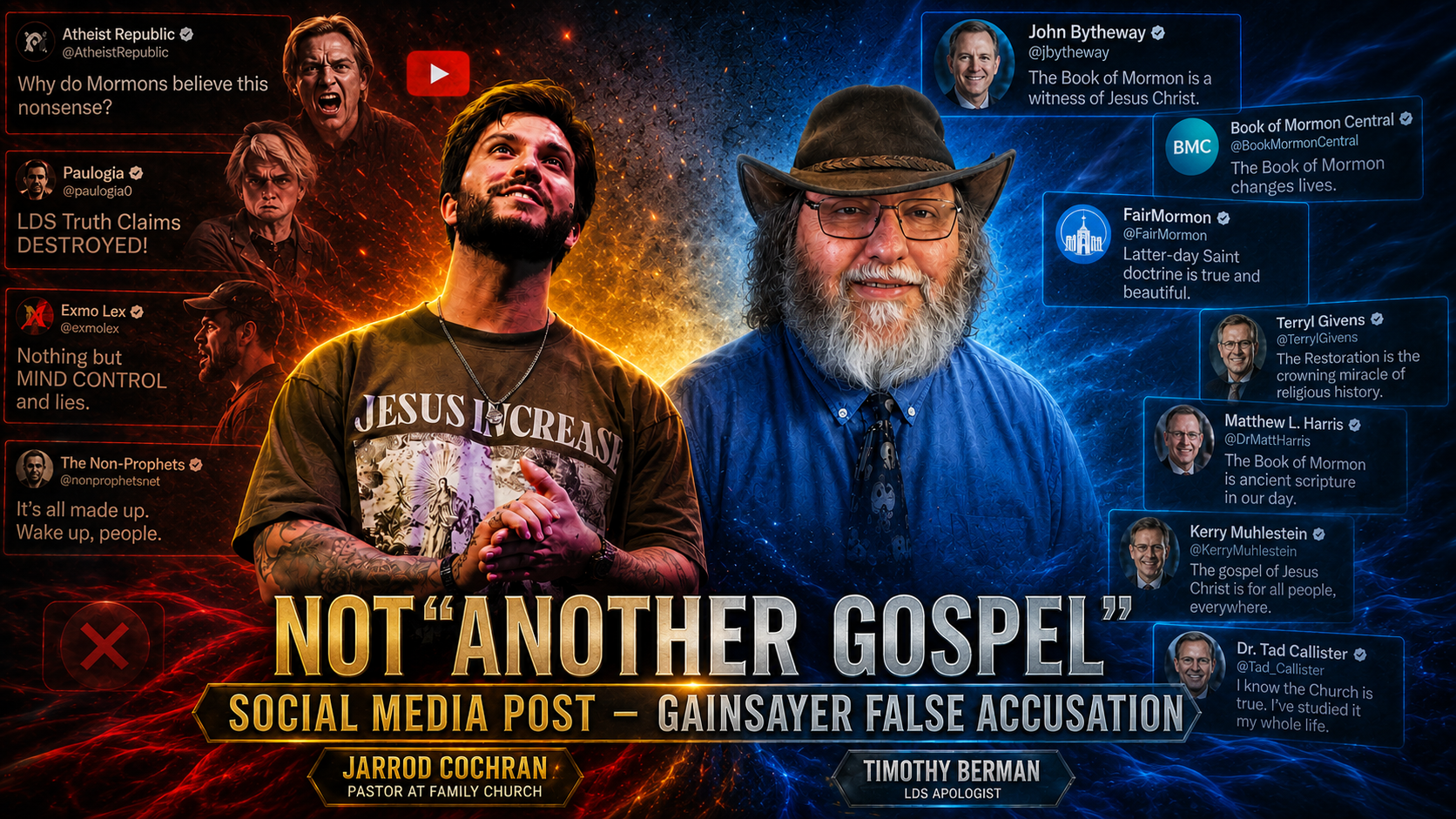
Not “Another Gospel”: A False Accusation Against Christ

Not “Another Gospel”: A False Accusation Against Christ

It really never fails that someone who has issues, without tissues, against the Church of Jesus Christ of Latter-day Saints recycle the same accusation and anti-LDS tropes. And typically, the go to Evangelical eisegesis "gotcha" verse is Galatians 1:8. A weaponized verse used to bludgeon Joseph Smith into the status of being accursed, preaching a different gospel and the case is closed. It sounds bold and confident. However, it is mere haughty arrogance posturing from a place of one being completely illiterate of properly interpreting the scriptures. Evidence of another gainsayer who is ever learning and never understanding:

You must understand this, that in the last days distressing times will come. For people will be lovers of themselves, lovers of money, boasters, arrogant, abusive, disobedient to their parents, ungrateful, unholy, unfeeling, implacable, slanderers, profligates, brutes, haters of good, treacherous, reckless, swollen with conceit, lovers of pleasure rather than lovers of God, holding to the outward form of godliness but denying its power. Avoid them! For among them are those who make their way into households and captivate immature women, overwhelmed by their sins and swayed by all kinds of desires, who are always studying yet never able to recognize truth. As Jannes and Jambres opposed Moses, so these people, of corrupt mind and counterfeit faith, also oppose the truth. But they will not make much progress because, as in the case of those two men, their folly will become plain to everyone. ... Indeed, all who want to live a godly life in Christ Jesus will be persecuted. But wicked people and impostors will go from bad to worse, deceiving others and being deceived. But as for you, continue in what you have learned and firmly believed, knowing from whom you learned it and how from childhood you have known sacred writings that are able to instruct you for salvation through faith in Christ Jesus. All scripture is inspired by God and is useful for teaching, for reproof, for correction, and for training in righteousness, so that the person of God may be proficient, equipped for every good work. (2 Timothy 3:1- 9, 12-17).

Yet, such arguments consistently collapse the moment we examine the text, the history, and the logic.

The claim is simple: Because Paul warned about another gospel and because Joseph Smith reported an angelic visitation, therefore the Restoration must be a demonic deception. An arrogant and boastful claim. One that appears to sound quite powerful - until you take the time to read Paul, understand his context, and compare it to what Latter-day Saints actually teach. Yet, these internet gainsayers are mere lazy learners who do not want to test their claims against truth. They want to sound loud and proud screaming into the Social Media landscape to deceive people. And they don't want their claims challenged.

Therefore, I am not here to dodge the passage. In fact, the only person that appears to dodge a real discussion is the gainsayer refusing to have a livestream discussion on whether or not the Book of Mormon is demonic. As such is the individual's claim. Neither am I here to soften Paul. I am here to take the claim seriously, steelman it, and then show how it fails on every textual, historical, and theological level.

Today, let's examine Jarrod Cochran's claims regarding Joseph Smith, the Book of Mormon, and an unfolding dialogue regarding whether or not this gentleman is speaking truth - or perpetuating ongoing lies and deceptions.

Friday, May 29, 2026

Book of Mormon Contradictions? A Latter-day Saint Responds to Paul Gee on "Baptism" and "Church" in Mosiah 18

Book of Mormon Contradictions? A Latter-day Saint Responds to Paul Gee on "Baptism" and "Church" in Mosiah 18

We are going to look at a very specific claim: that the Book of Mormon story of baptism in Mosiah is just Joseph Smith copying Acts 2 - and that baptism for the remission of sins could not have existed before Jesus Christ, therefore the Book of Mormon contradicts the Bible. If this is true, Latter-day Saint scripture definitely collapses. If it is not, then this criticism is built on a very sandy foundation. Let's actually examine to see if such a claim has any credibility and validity to truth or if it is a false claim.

Now, I am not asking you to take my own word for it. I am asking that we open up the scriptures, open up our hearts and minds because we are going to walk through Paul Gee's argument, steelman it, and then test it against scripture, history, and essential logic. By doing this, we can critically assess the merits of his claims and their implications for the understanding of both the Book of Mormon and biblical texts.

This is not an attack on Paul. In fact, he reached out and asked me to read it as it will supposedly prove that the Book of Mormon is false. And I will quote him fairly, present his argument in its strongest form, and will show how I believe it fails - scripturally, historically, and logically. By carefully dissecting the specifics of his argument, we can delve deeper into the theological and historical context of baptism and its significance within both texts.

Understanding that baptism as a practice existed in various forms before Christ and that the concept of a remission of sins is not exclusively tied to any one scripture, we must analyze whether the Old Testament precedents and the teachings of Christ later broaden our comprehension of baptism. This exploration will hopefully shed new light on claims made against the Book of Mormon, fostering a more nuanced and comprehensive understanding of the narrative within its pages.

As we navigate through this intricate discussion, I invite all readers to remain open-minded and reflect critically on the scriptures, drawing personal insights even as we engage with challenging interpretations. A sincere examination can lead us to a deeper faith and understanding of these profound spiritual texts.

Thursday, May 28, 2026

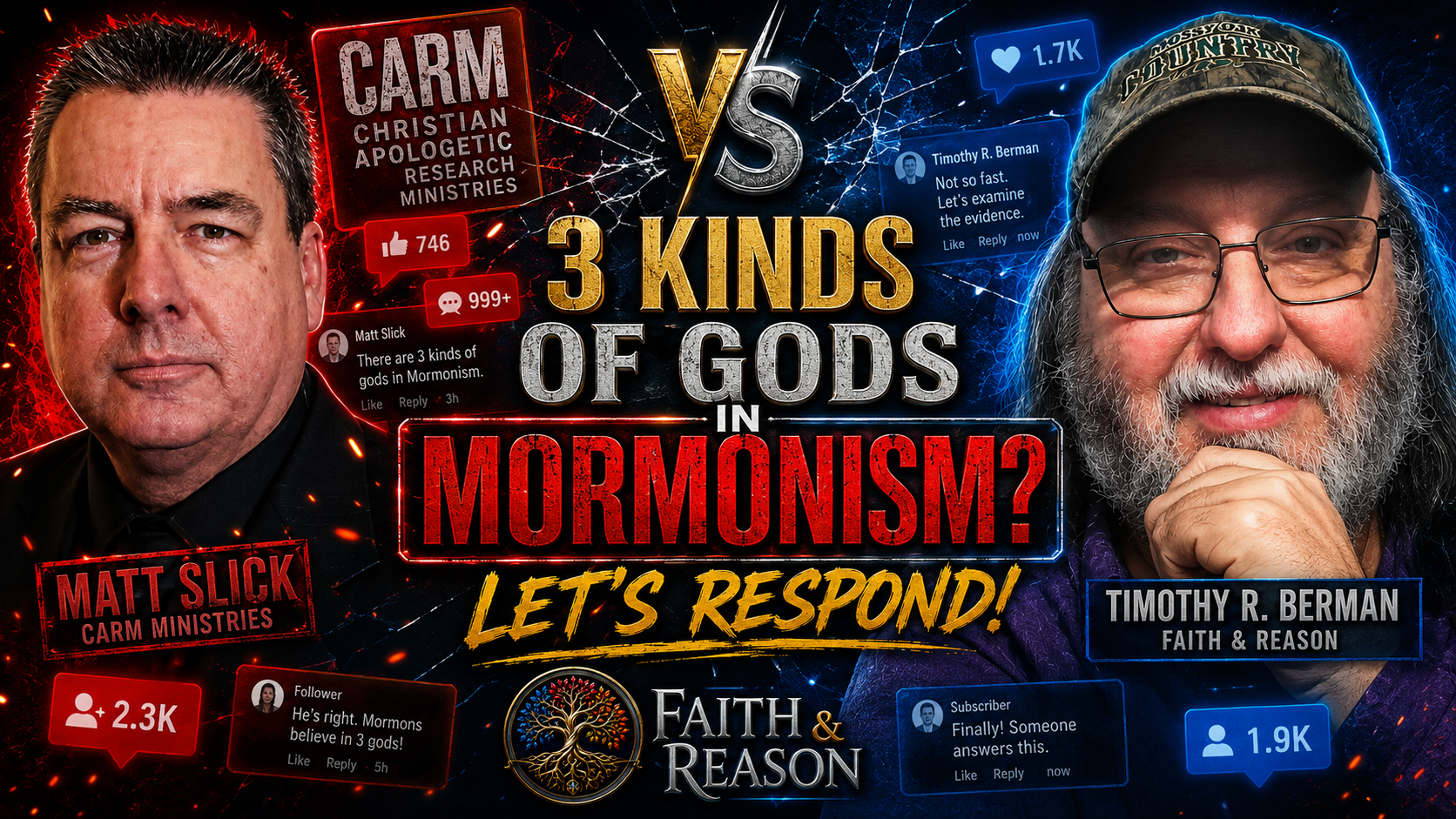
Does the LDS Faith Have 3 Kinds of God?

Does the LDS Faith Have 3 Kinds of God?

Are there three Gods within the LDS Faith, or is Matt Slick of the Christian Apologetics Research Ministry making three specific category errors? He appears to contend that Latter-day Saint theology contains three types of gods. Yet, his conclusion seems to depend entirely on misunderstandings, inaccuracies in reading LDS sources, and the imposition of post-Nicene metaphysics onto texts that do not utilize them.

When we scrutinize Slick's assertions, it becomes apparent that they stem from misrepresentations of key doctrinal points. The Latter-day Saint understanding of God emphasizes a singular divine nature, with a clear distinction between God the Father, Jesus Christ, and the Holy Ghost, who are unified in purpose but distinct in being. This understanding challenges Slick’s insistence on a concept of multiple gods existing in separate categories, which does not align with LDS beliefs as how we interpret our scriptures and teachings.

By examining the categories he uses and applying a proper lens through which to analyze LDS doctrine, one may ultimately see that Slick's arguments significantly falter. His framework seems to force the doctrine into a misunderstanding of the term 'God,' failing to account for the context and nuances within Latter-day Saint theology.

His claims not only misrepresent what Latter-day Saints uphold but also create contradictions within his argumentation regarding what he purports they teach. This is not merely a disagreement over religious interpretation; it represents a profound mischaracterization that undermines genuine discourse.

Today, I wish to respond to this critique with clarity, doctrinal precision, and integrity, standing firm in the belief that the truth of Latter-day Saint doctrine deserves to be presented honestly. It is vital that we engage with those who misunderstand or misrepresent our beliefs with a spirit of boldness and respect—exhorting and convincing the gainsayer (Titus 1:9) through proper correction and thoughtful rebuke (2 Timothy 3:16). By addressing these misunderstandings directly, we can foster a more accurate understanding of Latter-day Saint teachings and encourage meaningful dialogue that respects differences while seeking common ground.

Wednesday, May 27, 2026

Learning to Love Myself Through God's Eyes

Learning to Love Myself Through God's Eyes

Learning to love myself was the first mountain I ever had to climb in recovery. Jesus said the greatest commandment is to love God with all our heart, soul, mind, and strength—and the second is like it: to love our neighbor as ourselves. I thought I loved God. I thought I loved others. But I had never learned how to love me. And when I finally faced that truth, I realized I didn’t just “not love myself”—I despised myself.

When I was drunk and alone, I’d curse myself. I’d repeat the harsh words spoken over me by others—especially family. Emotional abuse, degradation, bullying, name‑calling… all of it became the internal script I lived by. I believed I was worthless, stupid, manipulative, selfish, unlovable. And because I believed it, I lived it.

So I kept God at arm’s length. I kept people at arm’s length. I feared abandonment, rejection, and judgment. I feared giving God my whole heart because I assumed He would eventually reject me too. Shame became the lens through which I saw myself, others, and God.

But recovery forced me to confront the lies. It forced me to ask: Who does God say I am? And in that painful, holy unraveling, I began to learn to love God with what little I had. I began to see myself through His eyes. And only then could I begin to love others with sincerity, depth, and courage.

Anchor verse - Hebrews 1:3 - He is the reflection of God’s glory and the exact imprint of God’s very being, and he sustains all things by his powerful word. When he had made purification for sins, he sat down at the right hand of the Majesty on high.

Christ is the exact imprint of God’s being—and through Him, we learn who God is, who we are, and how deeply we are loved.

Tuesday, May 26, 2026

Set the Sail of Recovery and Sobriety: "If Any Would Follow..."

Set the Sail of Recovery and Sobriety: "If Any Would Follow..."

I do not recall the specific moment in my own recovery journey when Jesus placed a crossroad before. For one, I have had multiple crossroads placed before. And I am sure many of you have had those same crossroads placed in your own life and path. These crossroads were not placed with thunder, not spectacle, because they were often placed with a quiet, piercing invitation. At times, and for me, came by way of conviction that brought me to the knees of humility because of an entitled selfish attitude. Other times came in moments of comfort and spiritual direction when someone took the time to obey without delay the promptings of the Holy Spirit. And still other moments where it is the quiet witness of confirmation, and then further confirmed by another's message and teaching.

That tiny word if holds the weight of your destiny as well as my own destiny. it is the hinge between us surviving and thriving, between bondage and freedom, between the life we've known and the life Christ longs to give us - you know, that abundant life where there are peace and joy in Him? An abundant life where we come to rest in Him.

Today, we are stepping right into this profound, simple, and quiet invitation with courage, clarity, and a sound mindset that is honest. Stepping into understanding how the cross becomes transformative in our path, in our lives, and in our relationships.

Anchor Verse — Matthew 16:23–26 (cf. Luke 9:23–26, NRSVUE): "Then Jesus told his disciples, “If any wish to come after me, let them deny themselves and take up their cross and follow me. For those who want to save their life will lose it, and those who lose their life for my sake will find it. For what will it profit them if they gain the whole world but forfeit their life? Or what will they give in return for their life?"

Welcome back, fellow travelers, to Sacred Sobriety: A Path for the Soul. We are continuing our series Set the Sail for Recovery and Sobriety. Today we’re walking with Jesus into one of the most demanding—and liberating—teachings He ever gave. Matthew 16:23–26 and Luke 9:23–26 confront us with the truth that discipleship is not an accessory to life; it is the surrender of life. And yet, in that surrender, we discover the abundant life we’ve been aching for. As Tozer writes in Salvation Walks the Earth, “Every man holds his future in his hand… destiny waits on the nod of his head.” Today, we nod toward Christ.

From Rockpiles to Cathedrals

From Rockpiles to Cathedrals

I never realized how many various rock-piles I've carried with me. And I also realized I was not alone because every one of us carries rock-piles - a place in our lives that feels heavy, unfinished, unlovely, or overwhelming. In the throes of our addiction, codependency, fear, shame - a relationship may feel stuck. A past feels immovable. A future feels uncertain.

However, scripture insists that God sees more in us than the rubble we carry. He sees the cathedral hidden inside the stones.

Anchor verse - Isaiah 61:3: "...to give them a garland instead of ashes, the oil of gladness instead of mourning, the mantle of praise instead of faint spirit. They will be called oaks of righteousness, the planting of the Lord, to display his glory."

God does not merely remove the ashes - He transforms them. He does not simply clear the rubble - He builds something enduring, beautiful, and strong.

Welcome back fellow travelers. As we continue our journey through sacred sobriety, we pause today to consider the quiet miracle of imagination - holy imagination. The ability to see what God sees. The courage to believe that the rubble of our lives is not the end of our story.

Monday, May 25, 2026

Set the Sail - Faith Rests Upon God's Character

Set the Sail - Faith Rests Upon God's Character

The destiny of one’s recovery is shaped by the idea of God a person carries. Traditional recovery thought teaches that newcomers enter a spiritual program where they are free to identify God “as they understand Him.” For some, this means the fellowship itself becomes a Higher Power; for others, it means any concept of a power greater than themselves.

Over time, a peculiar phrase emerged in recovery culture: “Your Higher Power can be anything — even a doorknob.” It is repeated so often that many assume it comes from the Big Book or the Twelve Steps and Twelve Traditions.

It does not.

Neither text suggests that an inanimate object can restore sanity, guide moral change, or receive a surrendered will. The “doorknob god” appears nowhere in AA’s foundational literature.

Anchor verse - Psalm 9:10: "Those who know your name put their trust in you, for you, O Lord, have not forsaken those who seek you.

The idea actually surfaced in the treatment centers of the 1970s and 1980s. As addiction treatment became professionalized — especially in secular or state‑funded programs — counselors avoided religious language to prevent the appearance of imposing faith on clients. To lower resistance, some staff used exaggerated examples: “Even a doorknob can be your Higher Power if it helps you get started.”

It was never meant to be literal. It was a strategy to reduce defensiveness.

But like many exaggerated teaching tools, it escaped its context. It became folklore. It became satire. Critics of 12‑step spirituality used it to mock the idea of a non‑religious Higher Power. Newcomers repeated it without understanding its origin. And eventually, it became a kind of shorthand for the early, clumsy attempts to describe surrender without demanding theology.

When Confession Breaks the Illusion: Walking in the Light of Real Recovery

When Confession Breaks the Illusion: Walking in the Light of Real Recovery

William James once wrote: “For him who confesses, shams are over and realities have begun; he has exteriorized his rottenness.”

Confession ends the exhausting work of pretending. It pulls what is hidden into the light—not to shame us, but to free us. In recovery, confession is not a one‑time event; it is a rhythm, a posture, a way of walking honestly before God and others. It invites us to step into authenticity, shedding the masks we often wear and revealing the true selves beneath.

When we consider the act of confession, it is crucial to understand that it goes far beyond simply admitting wrongdoings. It encompasses acknowledging our vulnerabilities, our fears, and our shortcomings. It is about facing the parts of ourselves that we might prefer to keep hidden or buried deep within. Confession invites us into a space of liberation, where we can experience the healing power of honesty, not just with ourselves, but with those around us.

Anchor verse - 1 John 1:9 - "If we confess our sins, he who is faithful and just will forgive us our sins and cleanse us from all unrighteousness.”

This divine reassurance underscores the importance of confession in our lives. This is never a one-and-done moment. Confessing our sins is an active part of our path and spiritual growth. There is a continuous invitation to engage in this practice, to reflect regularly on our actions and attitudes, and to communicate them with sincerity. The act of confession can take various forms: it might be through prayer, journaling, or discussions with trusted friends and mentors.

There is also a communal aspect to confession; it's about allowing others to bear witness to our journey of growth. This sharing fosters deeper connections, trust, and support within our communities. Confession can also serve as a catalyst for accountability, encouraging us to maintain our commitments to growth and change.

And there is more to confessing than we may fully understand. What are some of the ways we may confess? And what does it refer to when it says to confess our sins? What exactly are we confessing? Most of us may answer that we are to confess any wrongdoing on our part. And that is definitely an aspect of confessing.

But it may also refer to confessing our failures, our doubts, and our feelings of inadequacy. It may involve voicing the pain we carry and the burdens we bear, creating an opportunity for healing. Confession is a profound act of vulnerability that invites grace and understanding into our lives, not only from God but also from those around us who may offer support and encouragement. Through confession, we can truly experience the freedom that comes with honesty, forgiveness, and a renewed sense of purpose on our spiritual journey.

Today - we are going to take a look at how confession is the very courage to stop pretending. To step out of the idea that we need to fake it till we make it. And to see how this all ties into a twelve-step recovery program for Christians walking a path of recovery, desiring to thrive in their sobriety.

Sunday, May 24, 2026

Yellow Journalism and the Rise of Social Media Gainsayers

Yellow Journalism and the Rise of Social Media Gainsayers

Yellow journalism once referred to the sensationalistic, lurid exaggerations of 19th‑century newspapers — the kind of “sensational chauvinism” that relied on distortion, outrage, and emotional manipulation to attract readers. The term itself emerged from the era of the Yellow Kid comic strip, whose popularity fueled a wave of sensational reporting and media manipulation. Today, the same spirit thrives, but its printing press is no longer ink and paper. It is the algorithm.

At its core, yellow journalism is not merely exaggeration, but an intricate perspective that is biased, zealous, and often militant in its distortion. This form of communication is driven by blind devotion to a cause, frequently accompanied by hostility toward opposing viewpoints. Historically, yellow journalism manifested in various forms such as political propaganda that aimed to shape public opinion by presenting information selectively or misleadingly. Social agitation often followed the sensational narratives promoted by journalists who prioritized flare over factual reporting, heightening tensions around contentious issues.

Furthermore, yellow journalism also found expression through religious polemics, where exaggerated claims and dramatic storytelling were employed to gain adherents or demonize rival beliefs. The fervor of the 19th century, characterized by the quest for readership, led to practices that set the tone for future media. In contemporary times, this distortion is propagated through digital platforms where algorithms curate content that reinforces existing beliefs, often leading to echo chambers.

As society moves deeper into the digital age, the implications of yellow journalism become more pervasive. Information can spread rapidly, while critical thinking and journalistic integrity may wane. The lessons of the past remind us that while sensationalism may attract attention, the long-term impact of such journalism can erode trust in media and polarize societies. It encourages a critical evaluation of news sources, urging consumers to discern truth amidst the cacophony of competing narratives. As such, the battle against yellow journalism is ongoing, requiring vigilance from both media producers and consumers alike to uphold the principles of responsible journalism.

Today, it thrives on social media

Friday, May 22, 2026

WEEKLY RECAP: WALKING IN TRUTH — A Sacred Sobriety Reflection

WEEKLY RECAP: WALKING IN TRUTH — A Sacred Sobriety Reflection

Our daily walk in recovery and thriving in sobriety provides a story. I love what the apostle Paul writes, "You yourselves are our letter, written on our hearts, known and read by all, and you show that you are a letter of Christ, prepared by us, written not with ink but with the Spirit of the living God, not on tablets of stone but on tablets that are human hearts." (2 Corinthians 3:2-3, NRSVUE). Our testimonies are living epistles. This is the reason I love what is said in the Celebrate Recovery rooms, 'He took my mess and turned it into a message and took my test and turned it into a testimony."

These stories are of struggle, of quiet faithfulness - and yet always a story of God's sovereign and divine grace in our moments of weakness (2 Corinthians 12:9). This past week, the devotional messages formed a single thread woven through four powerful themes.

  • Spiritual Discernment
  • Spiritual Direction
  • Mindful Prayer
  • Distinctiveness of a life transformed by Christ

Each one of these messages point us back to one central truth: Thriving in recovery and sobriety requires spiritual clarity, honest self-examination, and a heart anchored in Christ. And through the acrostics - we explored:

  • T.R.U.T.H
  • D.I.R.E.C.T.I.O.N
  • P.R.A.Y.E.R
  • H.O.L.Y

Hopefully you discovered a pathway that strengthens your heart, mind, and spirit; steadies the steps of anyone seeking lasting freedom.

Thursday, May 21, 2026

The True Saint in Recovery and Sobriety is Different

The True Saint in Recovery and Sobriety is Different

There was no doubt in my mind that when I first desired to seek God - I did not want to allow Him full reign and residence in my heart. I only wanted Him when it was convenient. Never willing to fully surrender. After all, I had to do all that I was capable of doing and then seek Him to help pick up the slack where I was frustrated, needing rescue, or assistance.

There comes a moment in every recovery journey when you realize the life you’re stepping into cannot look like the life you’re leaving behind. Something in you knows—almost instinctively—that healing requires difference. Not perfection. Not performance. But a holy, courageous difference.

A.W. Tozer argues that the Church’s greatest influence comes not from blending in, but from standing apart: “Her power lies in her being different… and sinks as the difference diminishes.” In recovery, the same truth hits home: the more we resemble our old patterns, the more powerless we feel. The more we embrace the new life Christ offers, the more strength rises in us.

You don’t have to pretend you’re strong. You don’t have to manufacture holiness. You don’t have to force transformation. God is not asking you to be impressive—He’s asking you to be His. And belonging to Him will inevitably make you different. This is not merely a change in behavior or outward appearances; it's a deep, spiritual metamorphosis that occurs within.

Anchor verse - Romans 12:2 “Do not be conformed to this world, but be transformed by the renewing of your minds…”

Tozer reminds us that the Church loses her witness when she tries to imitate the world. In a world where conformity is often encouraged, recovery teaches the same: compromise always costs more than it promises. Every time you choose to blend in instead of standing firm in your convictions, you jeopardize the unique calling God has placed on your life. But difference—holy difference—opens the door to freedom, clarity, and spiritual power. This holy difference not only sets you apart but also illuminates the path for others who might still be lost in their struggles.

As you navigate your recovery, remember that each step you take towards embracing your new identity in Christ is a victory. Recognize that transformation is a process, and each moment spent in genuine connection with God is a step forward. You are no longer defined by your past; rather, you are being reshaped into the person He has destined you to be.

Wednesday, May 20, 2026

Pressing Into the Profit of Prayer

Pressing Into the Profit of Prayer

Have you ever had someone challenge you regarding prayer? Maybe mock you for praying? Perchance you've had someone tell you that they no longer have faith in God because their prayers never were answered, and they questioned the existence of God.

The ancient skeptic in Job sneered, “What is the Almighty, that we should serve him? And what profit should we have if we pray to him?” (Job 21:15). Tozer notes that the tone was dripping with contempt, tossed aside “like Pilate, without waiting for a reply.” Yet Scripture and the lived testimony of the saints thunder back: there is profit in prayer—much every way.

Tozer writes, “An invitation to prayer is an invitation to omnipotence, for prayer engages the Omnipotent God and brings Him into our human affairs.” This statement is staggering and profound. It launches us into the reality that prayer transcends mere verbal expression; it allows us to interact with the divine authority of God Himself. Prayer is not a religious hobby; rather, it is the God-ordained means by which heaven bends low into human history. When we pray, we are not simply whispering into the void—we are summoning the God who parts seas, raises the dead, and renews the weary.

Perhaps the most compelling aspect of prayer is that it is not bound by the limitations of human understanding or experience. The act of prayer invites the supernatural into our mundane realities, connecting us with the Creator who desires to be intimately involved in our lives. How often do we overlook the opportunity to engage the infinite just because we cannot see immediate results? Tozer emphasizes this beautifully. “An invitation to prayer is an invitation to omnipotence, for prayer engages the Omnipotent God and brings Him into our human affairs.”

As Scripture reminds us, the anchor verse - Hebrews 11:6“Without faith it is impossible to please God, for whoever would approach him must believe that he exists and that he rewards those who seek him.” In times of doubt and uncertainty, this verse serves as a crucial reminder of the foundational belief that our faith ignites our relationship with God—the very essence that fuels our prayers and hopes.

In a world that still echoes Job’s question, we stand firm on the testimony of the ages. Tozer reminds us that “God Himself has supplied the answer, and the universal consensus of the ages has added an Amen.” The saints testify across time: prayer works because God works. Prayer profits because God is present. Prayer transforms because God responds.

Tuesday, May 19, 2026

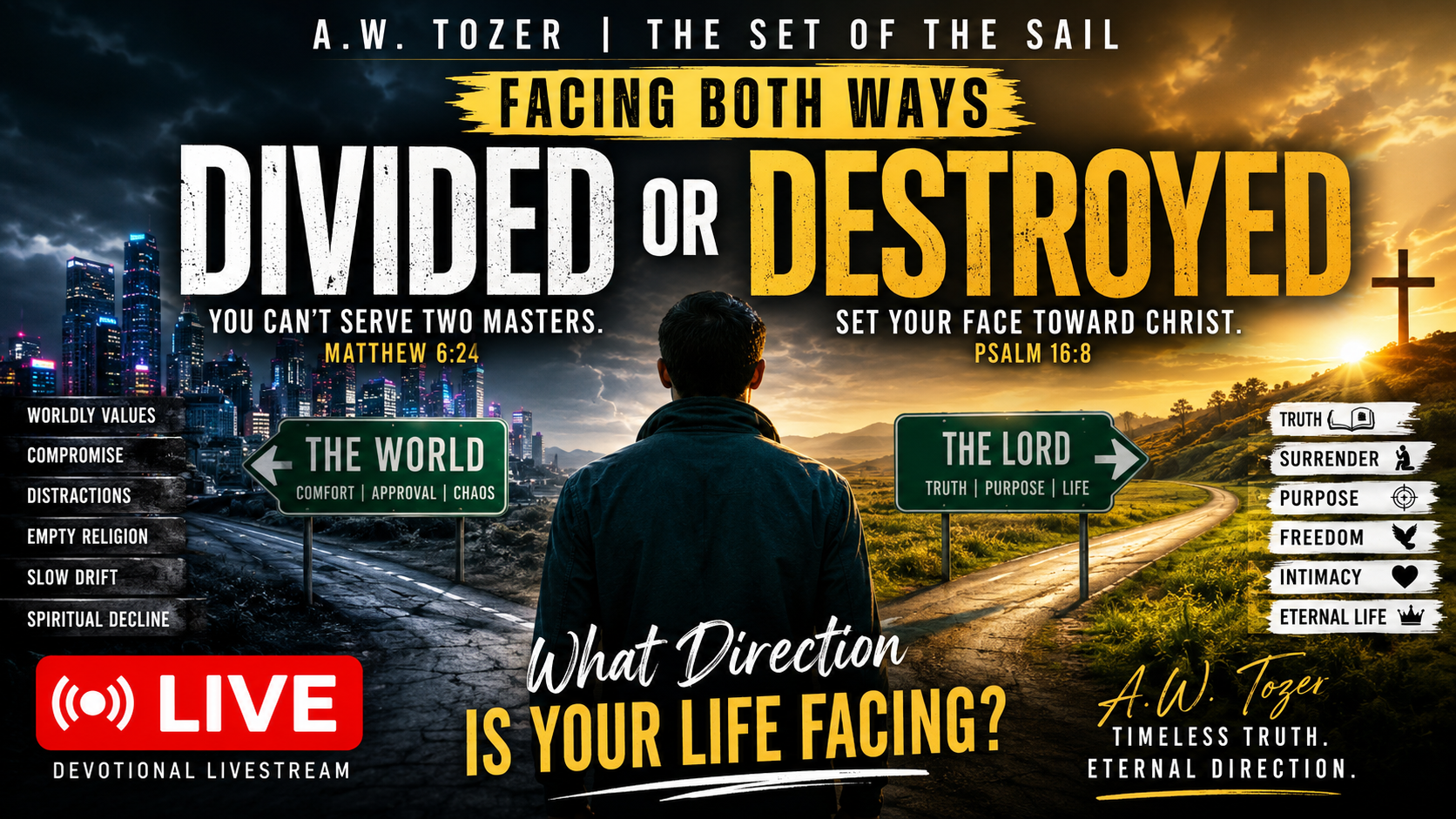
Facing Both Ways: When Christian Recovery Loses Its Direction and the Soul Begins to Drift

Facing Both Ways: When Christian Recovery Loses Its Direction and the Soul Begins to Drift

I have found moments in my own recovery journey, faith, and life when I realized I have been living divided. One part of my heart longs for God, healing, peace, and truth. Yet, another part wanted to reach back toward toxic patterns, unhealthy attachments, worldly validation, and spiritual compromise. And I found that I am not alone - many people today are exhausted, not because they do not love Christ, because they are attempting to face two different directions at once. This is the spiritual condition A.W. Tozer exposed quite powerfully within Chapter Seven of his work The Set of the Sail. The chapter is titled, Facing Both Ways. Tozer observed a Christianity that spoke Christian lingo while slowly adopting worldly values. He warned of a divided orientation - a soul that attempted to follow God while remaining emotionally attached to the systems that once kept the person in bondage.

For many of us fellow travelers, walking through recovery from addiction, codependency, family dysfunction, spiritual abuse, or faith crisis, this tension feels painfully familiar. Each of us desires freedom, yet sometimes we mourn the chains left behind. We seek Christ, yet fear surrendering our life and will over to His care. We pray for healing yet continue to entertain voices that have wounded us.

However, the Gospel never calls us to a divided direction. Christ invites us into His rest with a wholehearted orientation.

Anchor Verse - Psalm 16:8 (NRSVUE): "I have set the Lord before me; because he is at my right hand, I shall not be moved."

A divided heart creates instability. Scripture teaches that "the double-minded are unstable in every way" (James 1:8, NRSVUE). Recovery becomes quite fragile when our own direction is unclear. Faith becomes shallow when we attempt to seek both the approval of God and the acceptance of unhealthy systems that tend to distract and lead us away from Him.

Today, let's take a moment to reflect on how Tozer diagnosed modern Christianity with what he called dual orientation. Theology that faces God, yet desires continue facing the world. The result is spiritual confusion, emotional exhaustion, compromised conviction, and diluted discipleship.

Let's face it: many Christians on a path of recovery understand this quite deeply and personally. Addiction itself is often rooted in divided affection - wanting peace while feeding into the chaos. Desiring intimacy while hiding in the darkness of dysfunction. Wanting God yet remaining emotionally tethered to destructive patterns.

Christ does not merely improve our attitude and behavior - He reorients the entire person. Are you ready for a spiritual reorientation of the heart, mind, and spirit today?

Monday, May 18, 2026

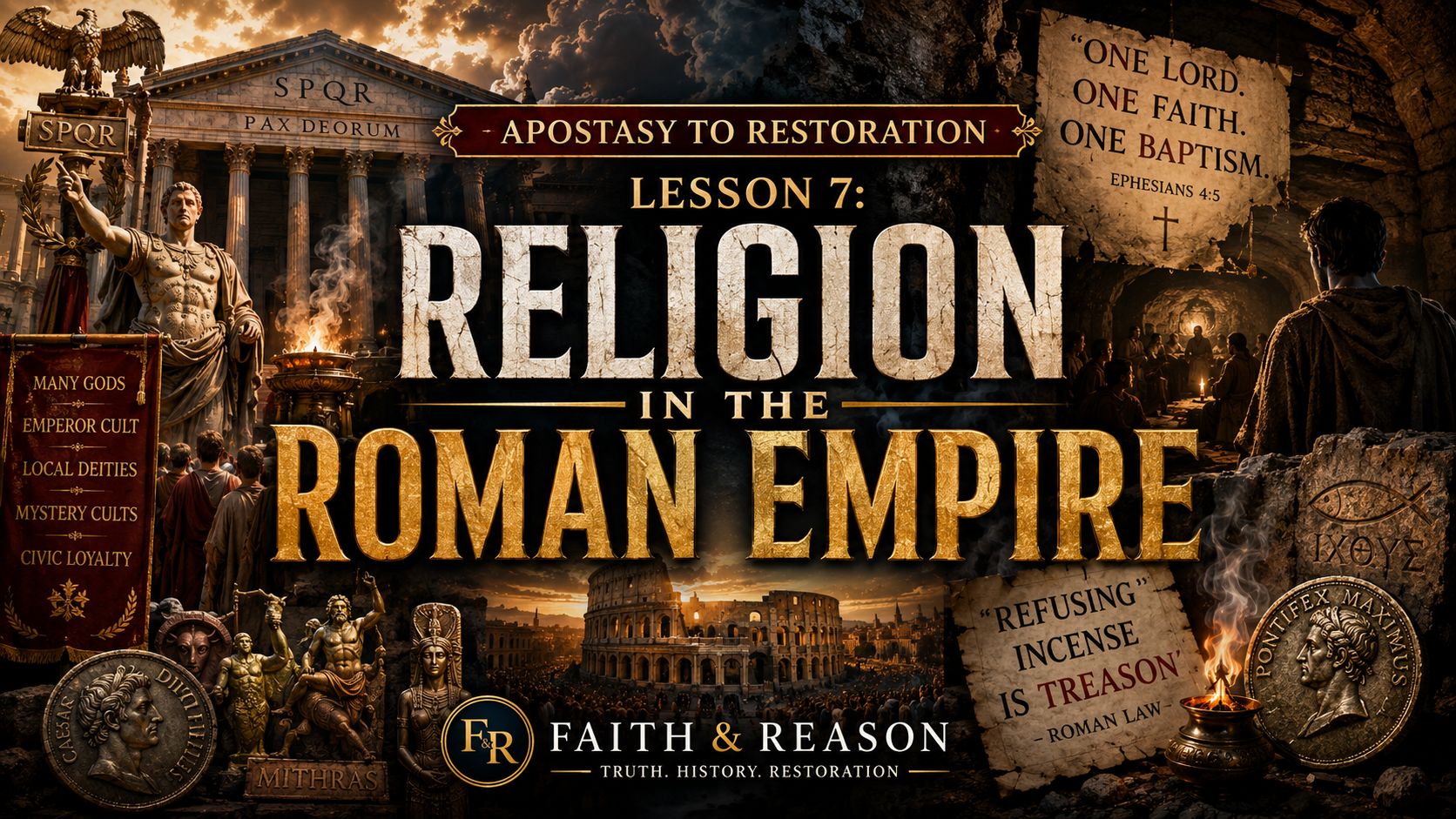
Apostasy to Restoration: Lesson 7: Religion in the Roman Empire

Apostasy to Restoration: Lesson 7: Religion in the Roman Empire

When T. Edgar Lyon first penned Lesson 7 of Apostasy to Restoration in 1960, he invited Latter-day Saints to step into a world where religion was not just a private conviction but a fundamental component of the machinery of empire. This bold assertion set the stage for a deeper exploration of the intricate interplay between faith, culture, and politics. Sixty years later, the landscape of scholarship has transformed dramatically, yet Lyon’s central insight remains strikingly relevant: to truly understand the need for a Restoration, we must first immerse ourselves in the complex milieu that shaped the early Christian Church.

This updated lesson builds upon Lyon’s foundational work, integrating modern archaeological discoveries, peer-reviewed historical research, and contemporary Latter-day Saint scholarship to form a more nuanced understanding of the context in which early Christianity emerged. What emerges from this scholarly synthesis is a clearer, richer, and more compelling picture of the Roman religious world—a world that was teeming with a pantheon of gods, replete with elaborate rituals, and governed by a political theology that made the act of Christian discipleship both radical and perilous.

In a society where loyalty to the state was intricately tied to acts of sacrifice and devotion, where citizens adeptly navigated multiple cults without a hint of contradiction, and where the pursuit of salvation was often sought through clandestine mystery rites and the favor of emperors, the Christian proclamation of “one Lord, one faith, one baptism” represented a profound challenge to the status quo—it was nothing less than a revolutionary stance. This declaration was, in essence, a radical reformation of the religious landscape, directly opposing the established norms that dictated the relationship between the individual, the divine, and the state.

Understanding that world is essential for grasping why the early Church fractured amidst various pressures and why a Restoration was not merely desirable but indeed inevitable. The tensions between emerging Christian beliefs and the entrenched systems of power were not just obstacles to be overcome; they underscored the urgent need for a return to core principles that could unify and reinvigorate the faith community. Lyon’s insights encourage us to reflect on our own circumstances in today’s religious environment, prompting critical questions about the nature of faith, the role of community, and the ongoing quest for spiritual authenticity in an increasingly complex world. As we navigate the remnants of an ancient tapestry interwoven with faith and politics, we find ourselves inspired to reconsider the implications of our shared history and the enduring quest for a true Restoration.

We Must Test the Spirits of Recovery and Sobriety

We Must Test the Spirits of Recovery and Sobriety

When recovery meets revelation, discernment becomes a moment of thriving in sobriety. We test substances for purity — why not spirits? The same vigilance that guards sobriety must guard faith. The relapse of the soul begins when we stop testing what we trust.

We find ourselves in a time when the mantra of “to thine own self be true” echoes throughout recovery circles, highlighting a growing trend that prioritizes subjective authenticity over absolute truths. This modern movement in recovery and sobriety often veers away from the profound spiritual truths embedded in Scripture and the Christian faith, diluting the very essence of what it means to be truly free.

In this era of counterfeit light, our culture is awash with spiritual noise—false prophets promising quick fixes, hollow promises of peace, and fleeting joys that inevitably fade. Many are turning to a version of recovery that embraces personal desire and subjective experience over divine guidance and genuine transformation.

Yet, Christ calls us to something deeper. He invites us not into cynicism or despair but into a clear and sober understanding of our identity in Him. True sobriety is not merely the absence of substances; it is the presence of a spirit anchored in truth. It is about discerning the lies that this world offers and embracing the flawless truth of God’s Word.

As we embark on this journey of genuine recovery, let us challenge the shallow waters of modern self-discovery and dive into the depths of spiritual sobriety. Surrendering to Christ means shedding the noise of empty promises and embracing the clarity that comes from knowing Him. True recovery is about reclaiming our lives from distraction, grounding ourselves in faith, and walking in the light of His truth.

In a world saturated with uncertainty, let us hold fast to the enduring hope found in Christ, where true transformation begins and lasting sobriety thrives. Are you ready to embrace a recovery journey that leads to true freedom?

Anchor Verse: "Beloved, do not believe every spirit, but test the spirits to see whether they are from God; for many false prophets have gone out into the world." - 1 John 4:1, NRSVUE

Sunday, May 17, 2026

Beware Lest Thou Forget: A Covenant Journey Through Deuteronomy

Beware Lest Thou Forget: A Covenant Journey Through Deuteronomy

Explore the profound power of covenant remembrance in Deuteronomy, which serves as a foundational text rich with spiritual significance. Learn to cultivate a "circumcised heart," a concept that emphasizes the importance of inward transformation and a sincere commitment to God. This transformative process calls believers to maintain spiritual sobriety, reflecting an awareness of their spiritual state and a conscious effort to stay aligned with God's will. Furthermore, as you navigate life's complexities, choose life through the grace of Christ, who empowers you to embrace hope, experience redemption, and live boldly according to the covenant promises, fostering a deeper relationship with God and a purposeful life guided by faith.

Moses stands upon the sun-bleached crags of Mount Nebo, his mantle a heavy drape of midnight blue against the gold of a descending sun, the colors swirling together in a breathtaking tapestry of nature’s beauty. Before him lies a promise, a land flowing with milk and honey that he will not touch in mortality, yet his heart is full, rich with the memories of countless journeys and the weight of leadership. The wind whispers stories of a people who have wandered, and his thoughts echo with the hopes and fears of his kin. Deuteronomy is his final plea: Remember the Lord or perish in the forgetfulness of prosperity, for he knows all too well the danger of complacency that comes with abundance, urging them to hold fast to their covenant, lest they become lost amidst the distractions of their new home.

Saturday, May 16, 2026

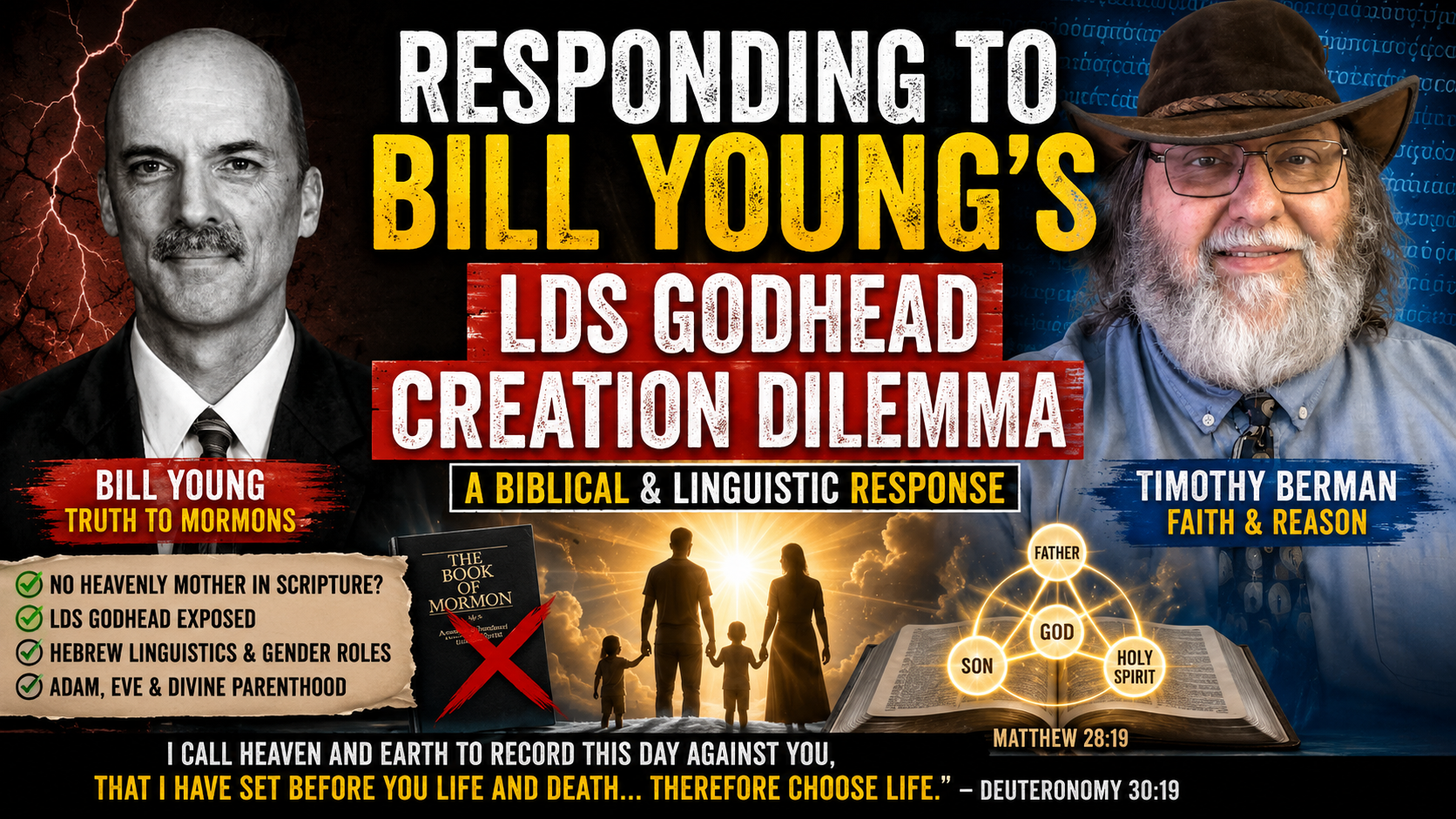
The Divine Architecture of Gender: An LDS Analysis of the "Godhead Creation Dilemma" and Biblical Exegesis

The Divine Architecture of Gender: An LDS Analysis of the "Godhead Creation Dilemma" and Biblical Exegesis

In his podcast (Episode 87), “The LDS Godhead Creation Dilemma,” critic Bill Young attempts to force a theological checkmate onto Latter-day Saints. He argues that because a Heavenly Mother is not explicitly canonized in LDS standard works, the entire Latter-day Saint cosmology and understanding of the Godhead collapses. His argument is rhetorically forceful, emotionally charged, and heavily dependent on satire and selective framing.

However, the central irony of his critique is profound: Bill repeatedly attacks Latter-day Saints for deriving doctrine through theological inference while simultaneously defending the mainstream doctrine of the Trinity. This defense is particularly troubling given that the Trinity is a doctrine that likewise emerges through synthesis, philosophical formulation, and post-biblical doctrinal development rather than from a singular, explicit biblical statement. This selective application of inference highlights a critical inconsistency in his argument and reveals a double standard that is structurally unsustainable.

To unpack why this critique fails historically, linguistically, and methodologically, we must move past an intuitive, "feels-right" approach to scripture and dive into the rigorous reality of biblical exegesis. Historical context plays a crucial role in understanding both Latter-day Saint doctrines and mainstream Christian beliefs. The development of the Trinity, for instance, did not occur in a vacuum; it was the result of centuries of theological discourse and debate among early church leaders.

In contrast, the concept of a Heavenly Mother may not be as explicitly outlined in LDS scripture, but the principle of a divine feminine presence is woven throughout the fabric of Latter-day Saint theology. By ignoring this contextual nuance and dismissing the significant theological development within Latter-day Saint thought, Bill’s critique falls flat.

Furthermore, linguistically, the words we choose to frame our understanding of God significantly influence how doctrines are perceived and articulated. In Latter-day Saint belief, the concept of a Mother in Heaven is not merely an optional addendum but a vital part of understanding the divine family structure. By failing to engage with this linguistic complexity, Bill oversimplifies a rich and profound belief system.

Methodologically, the task of drawing theological conclusions must be approached with care. Relying solely on explicit biblical texts can lead to an incomplete understanding of the intricate and often subtle ways that spiritual truths manifest. Both the Latter-day Saint perspective and the traditional Christian views on the Godhead are informed by interpretation, historical development, and communal understanding.

In concluding this analysis, it is essential to recognize that engaging with theological beliefs requires depth, patience, and a willingness to explore the intricacies that shape those beliefs. By fostering a spirit of inquiry and open dialogue, rather than reductive criticisms, we can appreciate the multifaceted nature of faith that transcends oversimplified arguments.

Tuesday, May 12, 2026

Healing Together — Join Today’s Livestream Devotional

Healing Together — Join Today’s Livestream Devotional

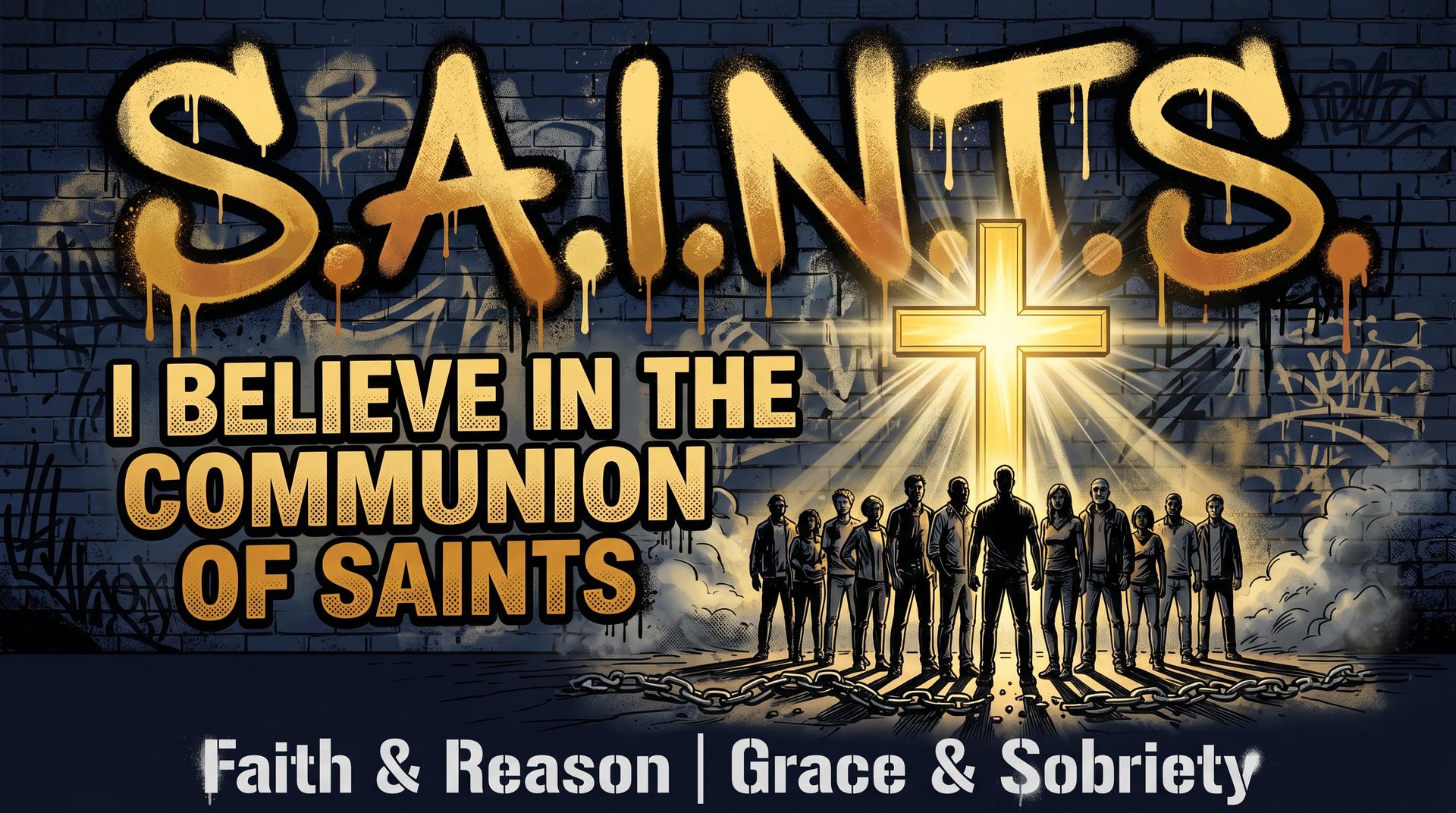
There are moments in our journey when God invites us to step out of isolation and into something deeper — something healing, something holy, something shared. Today’s livestream devotional, Healing Together: The S.A.I.N.T.S. Path to Spiritual Recovery, is one of those moments.

If you’ve been carrying burdens alone… If you’ve been trying to heal in silence… If you’ve been longing for connection, clarity, or renewal… This devotional is for you.

Today we’re walking through the S.A.I.N.T.S. framework — a powerful, Spirit‑led path that shows us how God heals us through community, not apart from it. We’ll explore what it means to be:

  • Sanctified Together
  • Anchored in Christ
  • Interdependent, Not Independent
  • Nourished by the Word
  • Transformed in Fellowship
  • Sent to Serve

This isn’t just another message. It’s an invitation into the divine workshop of the soul — where Christ refines us, restores us, and surrounds us with people who help us grow.

🕕 Live at 6 AM PST 📍 Streaming on YouTube, Facebook, Instagram, TikTok, and X

Come join us. Bring your coffee, your Bible, your questions, your story — and your hope. You don’t have to heal alone. You were never meant to.

Step out of the shadows. Step into the communion of saints.

Monday, May 11, 2026

"I Believe in the Communion of Saints"

"I Believe in the Communion of Saints"

In our personal recovery journey, there needs to be a moment of clarity when one realizes they were never meant to heal alone. Isolation may have helped each one of us survive, but it is within communion and fellowship that we truly learn to thrive. A.W. Tozer poignantly expressed this truth, stating, "Men are made for each other, and this is never more apparent than in the church." In today's culture and society, fractures within families, persistent codependent patterns, cycles of addiction and relapse, as well as faith crises, continue to plague many. Yet, amid this turmoil, God offers something completely different: a spiritual home where wounded people can become whole.

The common narrative suggests, "the Gospel is true and perfect - but the people are not." However, this perspective can lead individuals to believe that they do not need a community or fellowship. If one clings to this misleading notion, they are walking in deception and obeying the lies of the adversary. The truth is that our Heavenly Father fervently calls us into fellowship with one another, urging us to form a united front in our faith, all to fulfill the law of Christ as articulated in Galatians 6:2, which encourages us to bear one another's burdens.

Anchor verse - Acts 2:42 (NRSVUE): They devoted themselves to the apostles' teaching and fellowship, to the breaking of bread and the prayers.

Today's devotional delves into and explores A.W. Tozer's conviction that the Church, as Christ's redeemed community, stands as the most significant body on Earth. For those in recovery, the communion of saints is not a luxury; it is a prerequisite for true spiritual growth and discipleship. We grow best, heal deepest, and thrive most fully when we engage with others who, like us, are being transformed by grace. This message seeks to unpack Tozer's profound insights, apply them to the realm of recovery, and offer a practical acrostic—S.A.I.N.T.S.—to help individuals embody the communion that God has designed for us.

Sunday, May 3, 2026

Committed to the Whole Message of Recovery and Sobriety

Committed to the Whole Message of Recovery and Sobriety

I want to take this moment and ask you a personal question. Are you a Christian walking the path of recovery - sober, yet still battling fear, doubt, maybe a lingering faith crisis, or feeling stuck where you are not truly thriving? How many of us have tasted the sweet relief of initial forgiveness through God's sovereign grace and tender mercies? Only to watch it fade and leave us unsatisfied. Finding ourselves cycling back to old patterns, people, and even those places we were to come away from?

A. W. Tozer's words are quite bold for us today. These words come from The Set of the Sail, and they cut through the noise. And that noise is this idea that conversion does not often work for people as much as it may have once did. Maybe it is because modern culture and society have settled for a watered-down version of the Gospel. And maybe, many have settled for a watered-down version of a message for recovery and sobriety.

Today's devotional will hopefully anchor you in the full message of Christ - pardoned and transformed in a newness of life. A life that not only equips you to navigate real recovery, real sobriety, and genuine spiritual revival but also fills your heart with the joy of living in the abundance of His grace. This is a life that recognizes the deep-rooted struggles of fear and doubt yet chooses to stand firm in faith, believing in the promises of God that assure us we are never alone in our journey.

As you read through this, I pray you will find direction, courage, and hope grounded in God's unchanging truth. The truth that He is with you every step of the way, offering strength when you feel weak and guidance when the path seems unclear.

Anchor verse for Today: "For the grace of God has appeared, bringing salvation to all, training us to renounce impiety and worldly passions, and in the present age to live lives that are self-controlled, upright, and godly, while we wait for the blessed hope and the manifestation of the glory of our Great God and Savior, Jesus Christ. He it is who gave himself for us that he might redeem us from all iniquity and purify for himself a people of his own who are zealous for good deeds." (Titus 2:11-14, NRSVUE).

It is time we face reality, folks: we are in a society and culture fixated on quick spiritual fixes and partial truths. A. W. Tozer delivers quite the wake-up call for all Christians, and specifically for many of us on a path of recovery and sobriety. In his work The Set of the Sail, he warns that many conversions leave people unchanged because the gospel has been reduced to the "good news" of pardon alone. A gospel that is peddled as, per Dietrich Bonhoeffer, cheap grace. However, the New Testament calls each of us to repentance, temperance, righteousness, godliness, and the amendment of one's life, separation from the world and culture, in order to be cross-bearing disciples of Christ - living a mindful crucified life through Him (Galatians 2:20).

This devotional will integrate Tozer's wisdom with strong scriptures in order to help you move beyond spiritual and recovery survivalism to thriving, abundant living in sobriety and faith. Overcoming fear, doubt, and feeling stuck once and for all requires not just a moment of spiritual awakening but a commitment to a lifelong journey of transformation. This process involves persistent prayer, engaging with Scripture, and surrounding yourself with a community of believers who understand the struggles and victories of the recovery path.

By leaning into God's Word, inviting the Holy Spirit's guidance, and holding each other accountable, we can cultivate an environment where growth is not only possible but expected. Embrace the fullness of His grace and allow it to empower you to break free from the chains of the past, emerging into a life characterized by hope, purpose, and unshakeable joy. May this devotional be a beacon that guides you into deeper waters of faith and recovery, encouraging you to experience the richness of life that God intends for you.

Friday, May 1, 2026

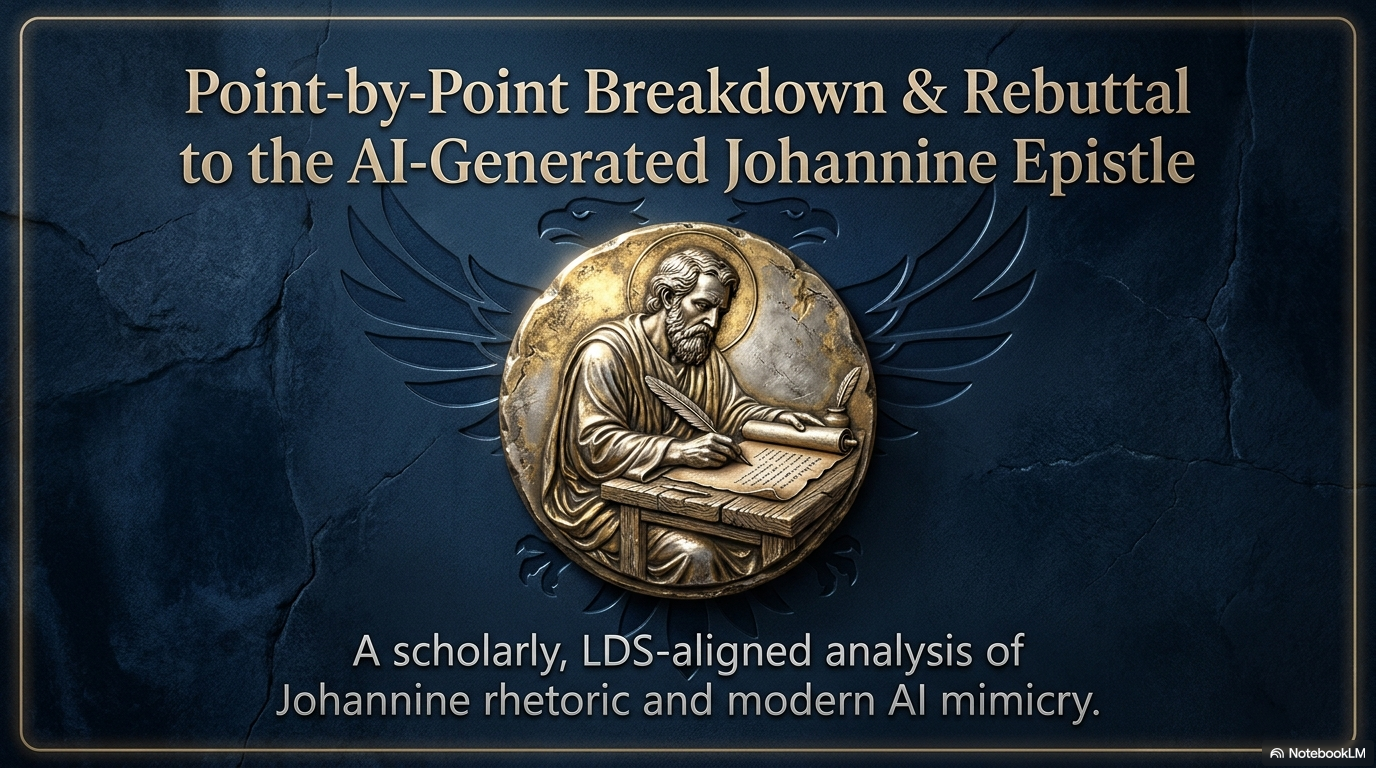
A Latter-day Saint Rebuttal to ChristAzure1624's AI Generated "Johannine Epistle to the Mormons"

A Latter-day Saint Rebuttal to ChristAzure1624's AI Generated "Johannine Epistle to the Mormons"

My previous video critique of an “AI Pauline Style Letter to the Mormons” was to examine how a YouTube Commentator by the name of ChristAzure1624 decided to weaponize New Testament style against Latter-day Saint (LDS) beliefs. He then decided that it was okay to post a comment of a “Johannine” styled pastoral epistle to the members of the LDS Faith. Yet, all he did was provide an example where he does exactly the same thing — and it fails for the same reasons.

I am going to provide a structured analysis drawing from a peer-reviewed New Testament scholarship on Johannine rhetoric (e.g., Raymond E. Brown, Rudolf Schnackenburg, and others) and a clear-eyed look at the anti-LDS tropes it recycles. Not only will I address the rhetorical techniques employed in this letter, but I will also delve deeper into how these methods align or misalign with authentic Johannine texts.

First, I will quote each major section of the letter and indicate how it attempts (and ultimately fails) to imitate the Johannine style. For instance, the use of specific phrases and a focus on community-related themes are common in genuine Johannine literature, intended to provide warmth and fellowship. However, ChristAzure1624’s approach tends to strip away the compassionate undertones, reducing the message to mere rhetoric rather than heartfelt communication.

Next, I will steelman the underlying evangelical critique that he is trying to convey. This involves presenting the best version of his arguments to honestly assess their merits. Even while critiquing LDS beliefs, it is important to recognize the passion behind such religious discourse, and this critique will consider the historical and cultural context of these discussions.

Lastly, I will rebut the arguments with logical inconsistencies, fallacies, and scholarly context. This will include highlighting instances where his claims reflect a misunderstanding of key theological points in LDS doctrine, as well as instances where he unwittingly mirrors strawman criticisms often leveled against religious movements. By the end of this analysis, readers should have a clearer understanding of both the rhetorical shortcomings of ChristAzure1624's missive and the deeper significance of genuine Johannine communication.