Showing posts with label Covenant Path. Show all posts

Sunday, September 6, 2026

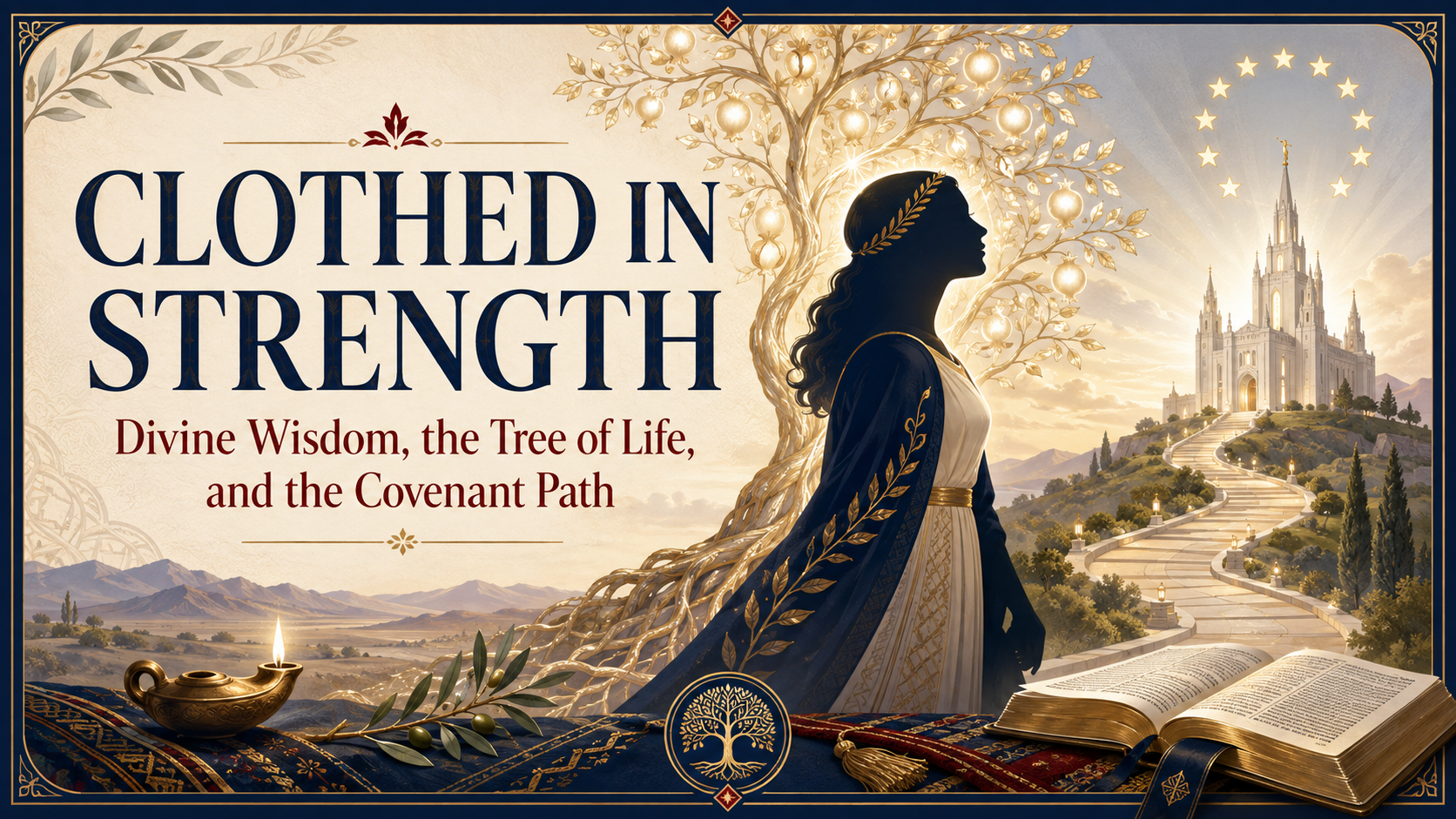
Proverbs 31, the Bride of Christ, and the Covenant Path

Proverbs 31, the Bride of Christ, and the Covenant Path

Word of Wisdom, Heavenly Parents, Temple Covenants, Theosis, and Exaltation


Proverbs 31 is often reduced to a checklist for an impossibly productive wife. Yet Proverbs 31:10–31 is first a carefully crafted Hebrew poem: an alphabetic acrostic that praises the eshet hayil, the “woman of strength,” whose fear of the Lord becomes visible in wise stewardship, economic agency, disciplined labor, faithful speech, household care, and mercy toward the poor. Read in the canonical context of Proverbs, she is not merely a passive model of private virtue. She is wisdom embodied.

This study develops a deliberately typological and temple-shaped reading of the poem. The eshet hayil becomes an icon of the Bride of Christ—the covenant community whose life is ordered by reverence, fidelity, holiness, and fruitful service. Doctrine and Covenants 89 adds an embodied discipline of appetite and spiritual receptivity; the covenants of the temple endowment give that discipleship a sacred grammar of obedience, sacrifice, the gospel of Jesus Christ, chastity, and consecration; and Revelation presents the faithful Church as a Bride made ready for the Lamb. Patristic theosis and Latter-day Saint exaltation converge in proclaiming transformation through participation in divine life, while retaining important theological distinctions. Proverbs 31 thus portrays the ordinary shape of extraordinary holiness: a people transformed by Christ until their works praise them at the gates.

A further Restoration layer emerges from the doctrine of Heavenly Parents and the feminine personification of Wisdom. Proverbs calls Wisdom a Tree of Life; 1 Nephi places a radiant tree beside the vision of a virgin mother and her divine Son; and Latter-day Saint scholars have compared these images with ancient Asherah and tree-goddess traditions. The biblical record clearly reports that Josiah removed an Asherah object from the temple, but the claim that this act erased an authentic revelation of Heavenly Mother remains a debated reconstruction. This study therefore treats the Wisdom-Tree-Mother constellation as a disciplined theological resonance, not as a substitute for revelation or proof that Lady Wisdom, Asherah, Mary, Shekhinah, and Heavenly Mother are one figure. Revelation 12 extends this pattern through a solar-clothed, star-crowned Woman who gives birth under threat from the dragon, receives divine nourishment in the wilderness, and survives as the mother of a commandment-keeping people. The Joseph Smith Translation identifies her as the Church of God and her child as the kingdom of God and Christ; the wider Israel-Zion-Mary-Bride symbolism therefore enriches divine-motherhood theology without making the Woman a direct portrait of Heavenly Mother.

How is the Lord inviting you to become a person of covenant strength? Choose one sphere—appetite, speech, money, work, fidelity, preparation, or care for the poor—and write one concrete act of consecration you will practice this week. Share the study with someone who has learned to hear Proverbs 31 as pressure rather than praise, and invite them to rediscover the woman of strength as a witness of grace-shaped wisdom.

Anchor Verse

“Favour is deceitful, and beauty is vain: but a woman that feareth the Lord, she shall be praised.” — Proverbs 31:30 (KJV)

What if Proverbs 31 is not a measuring stick but a mirror?

For generations, Proverbs 31 has been handed to women as a formidable list of domestic expectations: rise before dawn, manage a household, conduct business, produce clothing, care for the poor, speak flawlessly, and somehow never appear weary. Read that way, the poem can become less like good news and more like an inspired performance review. Women may feel judged by it, while men may assume that it addresses someone else. Both reactions miss the literary force of the text. Proverbs does not end with a spreadsheet of feminine productivity. It ends with poetry—a public song of praise celebrating what wisdom looks like when reverence for God takes flesh in the world.

The opening expression, eshet hayil, is commonly rendered “virtuous woman,” “capable wife,” “excellent wife,” or “woman of valor.” The Hebrew noun hayil carries a wide field of meaning that includes strength, capacity, wealth, competence, and valor. The woman is not praised because she is ornamental, silent, or fragile. She is strong. She evaluates a field and buys it. She plants a vineyard, trades profitably, supervises a complex household economy, speaks wisdom, prepares for adversity, and opens her hands to the poor. Her strength is neither self-display nor domination. It is power disciplined by covenant loyalty.

The poem gathers wisdom into a living covenant portrait

Proverbs begins by personifying Wisdom as a woman who calls in public places, invites the simple to learn, offers life, and warns against paths that end in death (Prov. 1:20–33; 8:1–36; 9:1–6). The book then concludes with a flesh-and-blood portrait of a woman whose decisions make wisdom visible. The literary movement is striking: Wisdom’s voice in Proverbs 1–9 becomes wisdom’s work in Proverbs 31. The fear of the Lord announced as the beginning of knowledge in Proverbs 1:7 reappears near the conclusion in Proverbs 31:30. What begins as instruction becomes character; what begins as a path becomes a practiced life.

That canonical pattern creates a responsible bridge to the New Testament’s image of the Church as the Bride of Christ. The historical woman praised in Proverbs 31 should not be erased, nor should every feature be converted into a hidden allegory. Yet Christian typology recognizes recurring covenant patterns that reach fulfillment in Jesus Christ and His people. The faithful, fruitful, mercy-giving, wisely ordered woman can therefore become an icon of the ecclesial Bride—a community that trusts her covenant Lord, clothes herself in righteous deeds, cares for the vulnerable, and prepares for the marriage supper of the Lamb (Eph. 5:25–27; Rev. 19:7–9).

For Latter-day Saints, Proverbs' feminine Wisdom also opens a question that much of Christian theology leaves underdeveloped: if exaltation means becoming like our Heavenly Parents, how might the Bible's feminine images of life, wisdom, birth, nurture, glory, and covenant presence witness to divine motherhood? That question is legitimate, but it requires disciplined distinctions. Grammatical femininity is not automatically a divine woman, a sacred tree is not automatically Heavenly Mother, and the recovery of an ancient goddess cult would not by itself establish revealed truth.

From admired virtue to temple-shaped discipleship

The central question is therefore not, “How can one woman accomplish everything in this poem?” The deeper question is, “How does the covenant people become the kind of Bride whose whole life praises the Lord?” A Restoration reading brings the Word of Wisdom and temple covenants into this conversation. Doctrine and Covenants 89 orders embodied appetite toward wisdom and revelation. The temple endowment calls disciples to obedience, sacrifice, the gospel of Jesus Christ, chastity, and consecration. Proverbs 31 shows those commitments becoming ordinary practice—in work, speech, sexuality, economics, mercy, preparation, and worship.

The added layer follows four levels of evidence. Official Restoration teaching establishes Heavenly Parents. The biblical text establishes Lady Wisdom, the Tree of Life, and Josiah's removal of the Asherah. Archaeology and comparative religion illuminate ancient tree and mother symbolism. Finally, Latter-day Saint temple theology asks what these patterns may mean. Keeping those levels distinct allows faith to become deeper without asking historical evidence to carry more than it can bear. Revelation 12 supplies an especially important control because the Joseph Smith Translation explicitly identifies the Woman with the Church and the child with God's kingdom. Any Heavenly Mother resonance must therefore remain analogical and theological rather than replace that revealed ecclesial meaning.

This reading must be stated carefully. Proverbs 31:10–31 is not known to have served as a prescribed ceremony in Solomon’s temple, and Doctrine and Covenants 89 is not the secret historical key to the poem. The phrase “temple-liturgical” in this study names a canonical and theological reading, not an unsupported claim about ancient ritual origins. The poem is temple-shaped because it portrays an ordered covenant life moving from reverence to holiness, from stewardship to consecration, and from faithful labor to praise at the gates. It is liturgical because it is a song of praise that forms the worshipping community’s imagination—and because it is still sung in many Jewish homes at the beginning of Shabbat, a custom commonly traced to early modern Jewish mysticism rather than the biblical temple period.

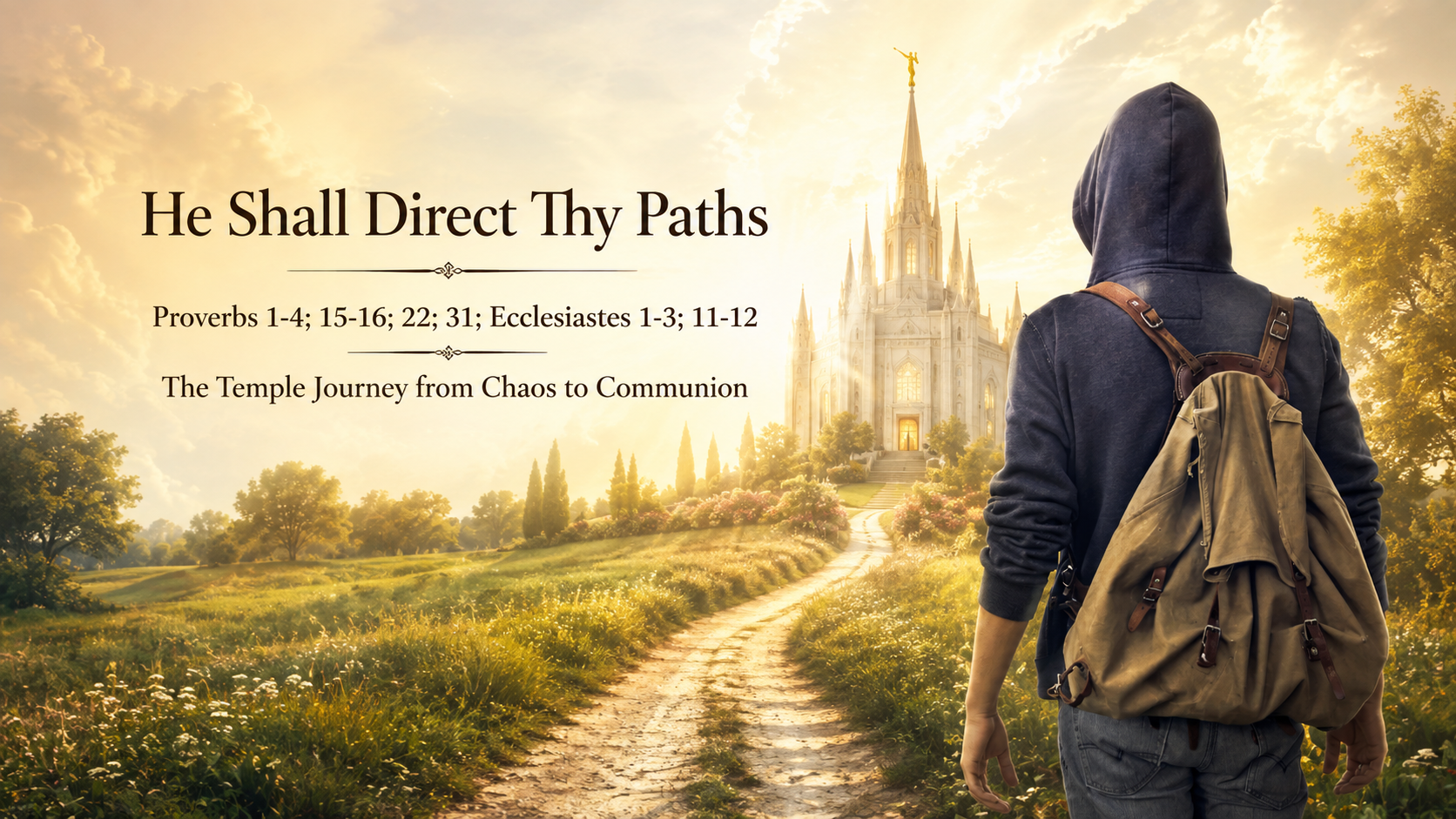
He Shall Direct Thy Paths: Proverbs & Ecclesiastes

He Shall Direct Thy Paths: Proverbs & Ecclesiastes

Proverbs 1-4; 15-16; 22; 31; Ecclesiastes 1-3; 11-12

The Temple Journey from Chaos to Communion

Proverbs teaches us how to walk wisely; Ecclesiastes asks whether wisdom is enough when life remains temporary, unfair, and beyond our control. Together, these books move the covenant disciple from moral formation to eternal perspective, from confidence in human calculation to reverent dependence upon God. Their unity is not a simplistic promise that righteous people will never suffer. It is the deeper testimony that life becomes rightly ordered when the Lord, rather than the isolated self, becomes its center.

This concluding study in the W.I.S.D.O.M. arc follows the appointed Come, Follow Me reading for September 7-13, 2026: Proverbs 1-4; 15-16; 22; 31 and Ecclesiastes 1-3; 11-12. Through Hebrew exegesis, Christ-centered exposition, Latter-day Saint scripture, and respected Jewish and Christian scholarship, we will trace a devotional temple movement from the two paths of wisdom and folly to the final summons to fear God, keep His commandments, and prepare for judgment. The destination is not intellectual mastery but communion: "Trust in the Lord with all thine heart ... and he shall direct thy paths" (Proverbs 3:5-6).

Introduction - When the Road Ahead Disappears

Most of us want God to give us a map. We want the next turn identified, the dangerous roads marked, and the destination guaranteed before we take the first step. Proverbs 3 offers something more demanding and more intimate. It does not promise that we will see the entire road. It promises that when we trust the Lord with the whole heart, refuse to make our own understanding the final authority, and know Him in all our ways, He will make the path straight before us.

That promise matters because discipleship is rarely lived on roads we fully understand. We make decisions with incomplete information. We pray through grief that has not resolved. We obey while consequences remain uncertain. We try to speak gently in a culture trained to reward outrage. We labor faithfully while Ecclesiastes reminds us that achievement, pleasure, wealth, reputation, and even human wisdom cannot defeat mortality. The human problem is not merely that we need better information. The deeper problem is that we are tempted to trust our own perspective as though it were complete.

Proverbs and Ecclesiastes meet us inside that tension. Proverbs says that creation possesses a moral grain: humility, diligence, fidelity, generosity, disciplined speech, and reverence ordinarily lead toward life. Ecclesiastes then refuses to let those observations harden into a mechanical formula. The wise still die. The righteous do not always receive immediate reward. Time overtakes every achievement. Much of life remains hevel - vaporous, fleeting, difficult to grasp. Biblical wisdom therefore matures when it moves beyond technique and becomes covenant trust.

This is why the final installment of our W.I.S.D.O.M. journey must end where the biblical books themselves end: not in admiration of the wise person, but in reverence before God. We have learned to Walk, Invite, Seek, Discern, Observe, and Meet. Each movement has carried us through the recurring wisdom pattern of descent and ascent: from Edenic estrangement into mortal confusion, from lament into remembrance, from self-reliance into surrender, and from the limits of human sight into the presence of the God who sees the whole way.

The 2026 Come, Follow Me manual wisely places Proverbs and Ecclesiastes in conversation. Proverbs teach that life is ordered by divine wisdom; Ecclesiastes asks what faithful life looks like when that order cannot be easily seen. Their combined witness is neither naive optimism nor cynical despair. It is covenant realism: life is temporary and often perplexing, yet it is lived before God, received as His gift, and made eternally significant through trust, obedience, repentance, and Jesus Christ.

Anchor Scripture - Proverbs 3:5-6

Trust in the Lord with all thine heart; and lean not unto thine own understanding.
In all thy ways acknowledge him, and he shall direct thy paths.

The movement of these verses is deliberate. Trust replaces self-sufficiency. The whole heart replaces divided allegiance. Knowing God in every way replaces the habit of confining Him to explicitly religious moments. The promise is not that God will endorse every route we prefer; it is that He will straighten the road of a life yielded to Him.

Sunday, August 30, 2026

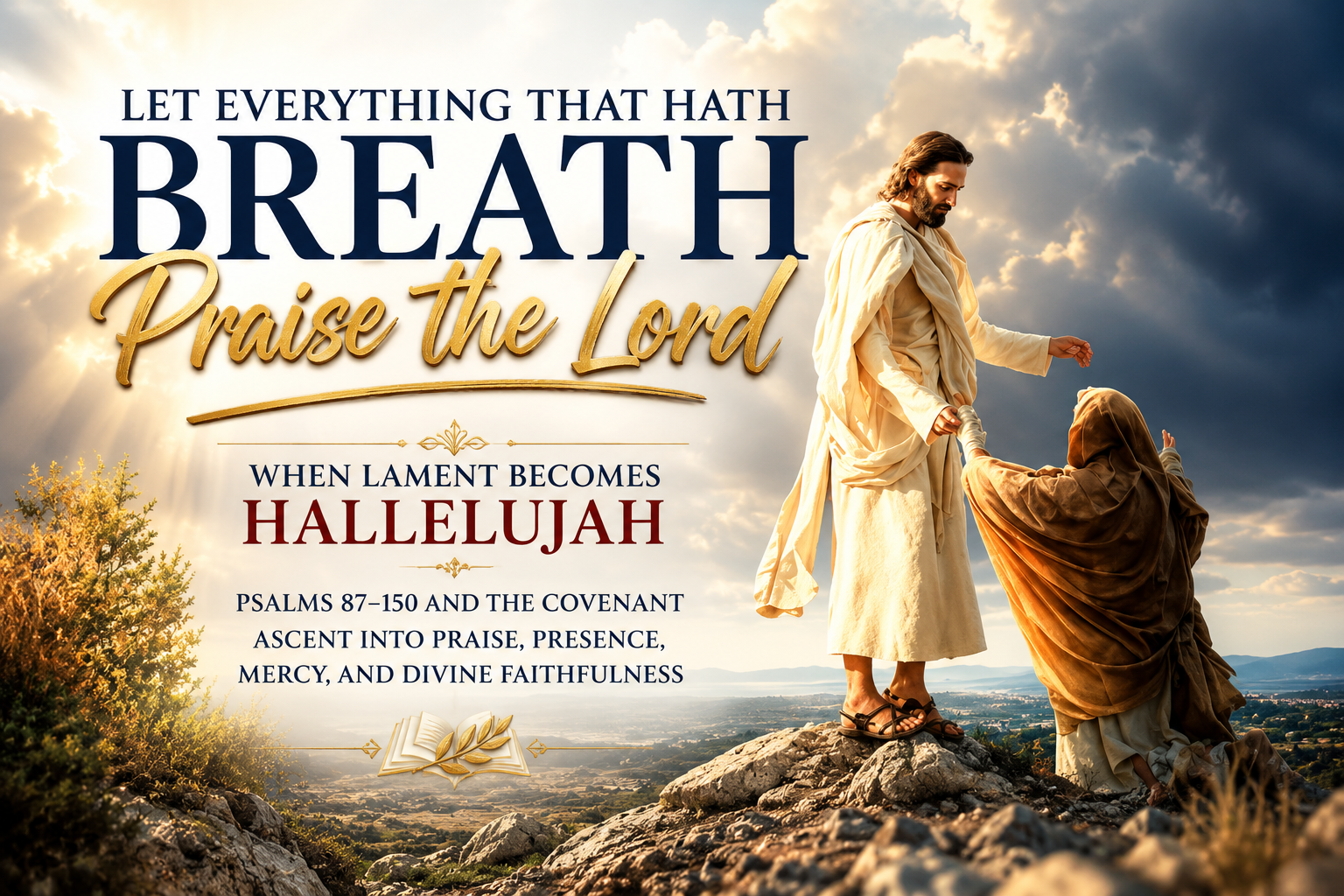
Let Everything That Hath Breath Praise the Lord: When Lament Becomes Hallelujah

Let Everything That Hath Breath Praise the Lord: When Lament Becomes Hallelujah

Psalms 87–150 and the Covenant Ascent into Praise, Presence, Mercy, and Divine Faithfulness


The closing movement of the Psalms rises like a liturgical crescendo, but it does not reach hallelujah by pretending that suffering never happened. It carries affliction, exile, mortality, repentance, unanswered questions, and covenant longing into the presence of God. There, pain is neither minimized nor given the final word. Psalms 87–150 teach that biblical praise is more than religious enthusiasm. Praise is covenant memory: the deliberate act of remembering who God is, what He has done, and why His faithfulness remains trustworthy when life feels unsteady.

This Christ-centered Come, Follow Me study focuses on the 2026 reading assignment—Psalms 102–103; 110; 116–119; 127–128; 135–139; and 146–150—while placing those texts within the wider closing movement beginning with Zion in Psalm 87. Together, these psalms reveal the Lord as Creator, covenant Keeper, healer, righteous King, and refuge of the afflicted. They point Christian readers toward Jesus Christ as the enthroned Lord, eternal High Priest, rejected Cornerstone, and compassionate Savior. The Psalter finally summons every instrument, every nation, and “every thing that hath breath” to praise the Lord—not because mortality is painless, but because mercy endures, God reigns, and the road home remains open.

Reading the Closing Psalms as a Covenant Journey

The traditional Jewish name for the Psalter is Tehillim, “Praises.” That title may initially seem surprising because the book contains grief, protest, confession, fear, anger, royal celebration, wisdom instruction, and even prayers that make modern readers uncomfortable. Yet the name tells us where the whole collection is headed. The Psalms do not say that every moment feels praiseworthy. They teach the covenant people how to bring every moment—including the most painful one—before the God who is worthy of praise. The 2026 Come, Follow Me lesson similarly emphasizes that praise can take the form of singing, praying, bearing testimony, and deepening our commitment to follow the Lord.

Biblical scholar Walter Brueggemann famously describes a recurring movement in the Psalms from orientation, through disorientation, into a new orientation. That pattern is not a mechanical formula, and not every psalm moves through all three stages. It is nevertheless a helpful pastoral lens. Faith begins with received assurances about God and the world; suffering then destabilizes what once seemed secure; grace finally creates a renewed confession that has passed through pain rather than bypassed it. The resulting praise is deeper because it is no longer naïve. It has learned that lament can be faithful speech and that worship can survive the night.

The final two books of the Psalter, Psalms 90–106 and 107–150, also answer the crisis left by the apparent collapse of Davidic kingship in Psalm 89. Human thrones fail, generations pass, and Israel experiences exile, but the Lord remains King. Torah still gives light. Zion still represents divine presence and covenant hope. The final five psalms then gather the entire creation into praise. Canonical scholars such as Gerald H. Wilson and the authors of The Book of Psalms have therefore encouraged readers to attend not only to each psalm individually but also to the theological meaning created by the Psalter’s final arrangement. The destination of this prayer book matters: after every lament has been heard, the last canonical word is hallelujah.

A Note on the Reading Range

The official August 31–September 6, 2026, Come, Follow Me assignment includes Psalms 102–103; 110; 116–119; 127–128; 135–139; and 146–150. This study briefly uses Psalms 87–93 as a bridge from Zion to divine kingship and then concentrates on the assigned passages. That wider frame preserves the larger canonical ascent without confusing the supplemental material with the official reading list.

Sunday, August 16, 2026

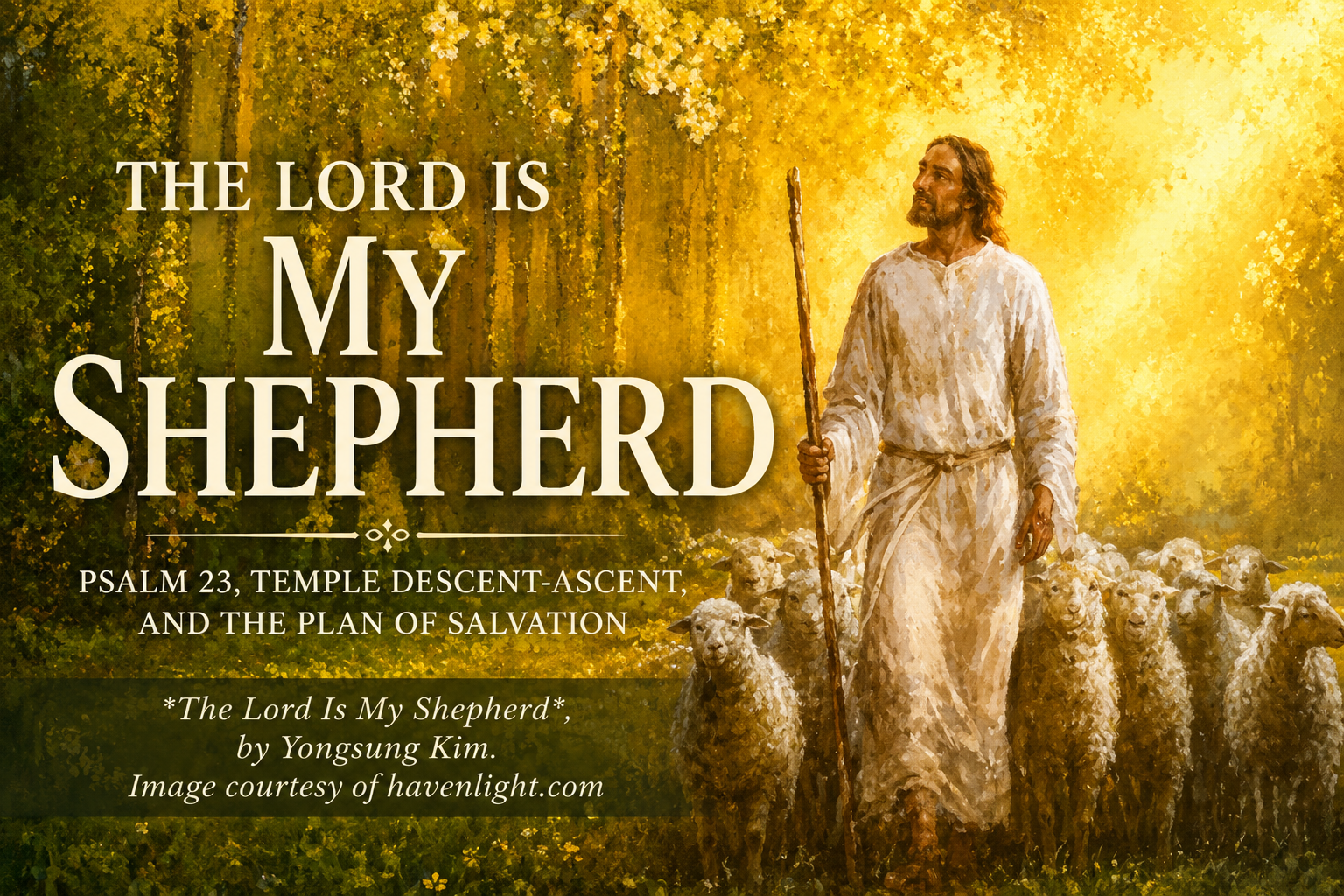
"The Lord Is My Shepherd": Psalm 23, Temple Descent-Ascent, and the Plan of Salvation

"The Lord Is My Shepherd": Psalm 23, Temple Descent-Ascent, and the Plan of Salvation

A Come, Follow Me Study for August 17-23, 2026: Psalms 1-2; 8; 19-33; 40; 46

"For thou art with me." - Psalm 23:4

Most of us first learned Psalm 23 as a psalm of comfort. We hear it at funerals, repeat it in hospital rooms, and reach for it when grief has stripped life down to its most difficult questions. That use is neither accidental nor misplaced. Yet Psalm 23 does more than assure us that God will remain near when we die. It poetically traces an entire journey: the Lord provides, restores, guides, accompanies, protects, welcomes, anoints, and finally brings the worshipper into His house.

That movement makes Psalm 23 especially meaningful for Latter-day Saints. Its imagery can be read as a temple-shaped journey from ordered life into mortal darkness and then upward into covenant fellowship and the presence of God. Read within the immediate sequence of Psalms 22-24, the pattern becomes even more striking: lament and suffering in Psalm 22, the Shepherd's presence in Psalm 23, and ascent to the holy hill with the King of glory in Psalm 24. Nancy deClaissé-Walford's intertextual study similarly argues that these three neighboring psalms form a powerful statement of trust when read together (deClaissé-Walford 139-52).

This interpretation requires one careful qualification. Psalm 23 is not demonstrably a word-for-word transcript of an ancient Israelite temple ceremony, and the full Latter-day Saint plan of salvation should not be projected backward into every Hebrew phrase as though the psalmist were writing a systematic doctrinal manual. Psalm 23 is commonly classified as a psalm of trust or confidence, while a pilgrimage setting that culminates at the temple remains a respected scholarly proposal rather than an uncontested conclusion (Smith 61-66; Tappy 255-80). The temple and plan-of-salvation reading offered here is therefore a disciplined canonical and theological synthesis: it begins with what the Hebrew poem says, follows the intertextual patterns the Psalter supplies, reads the psalm through Jesus Christ, and then asks how Restoration scripture enlarges its hope.

What Come, Follow Me Actually Assigns for August 17-23

The official 2026 reading is often abbreviated as "Psalms 1-46," but the assigned passages are selections rather than every chapter in that range: Psalms 1-2; 8; 19-33; 40; and 46. The manual invites readers to notice the Psalms' vivid images of the Savior, including the green pastures, still waters, rod, staff, and overflowing cup of Psalm 23. It then connects Psalm 24's "hill of the Lord" with the temple and with preparation to enter the presence of God (Come, Follow Me).

The broader three-week schedule is also selective. August 24-30 covers Psalms 49-51; 61-66; 69-72; 77-78; and 85-86, while August 31-September 6 covers Psalms 102-103; 110; 116-119; 127-128; 135-139; and 146-150. Keeping the actual readings clear strengthens the study because it allows Psalm 23 to function as the focal text for this week without forcing an artificial structure onto every psalm from 1 through 46.

Tuesday, April 28, 2026

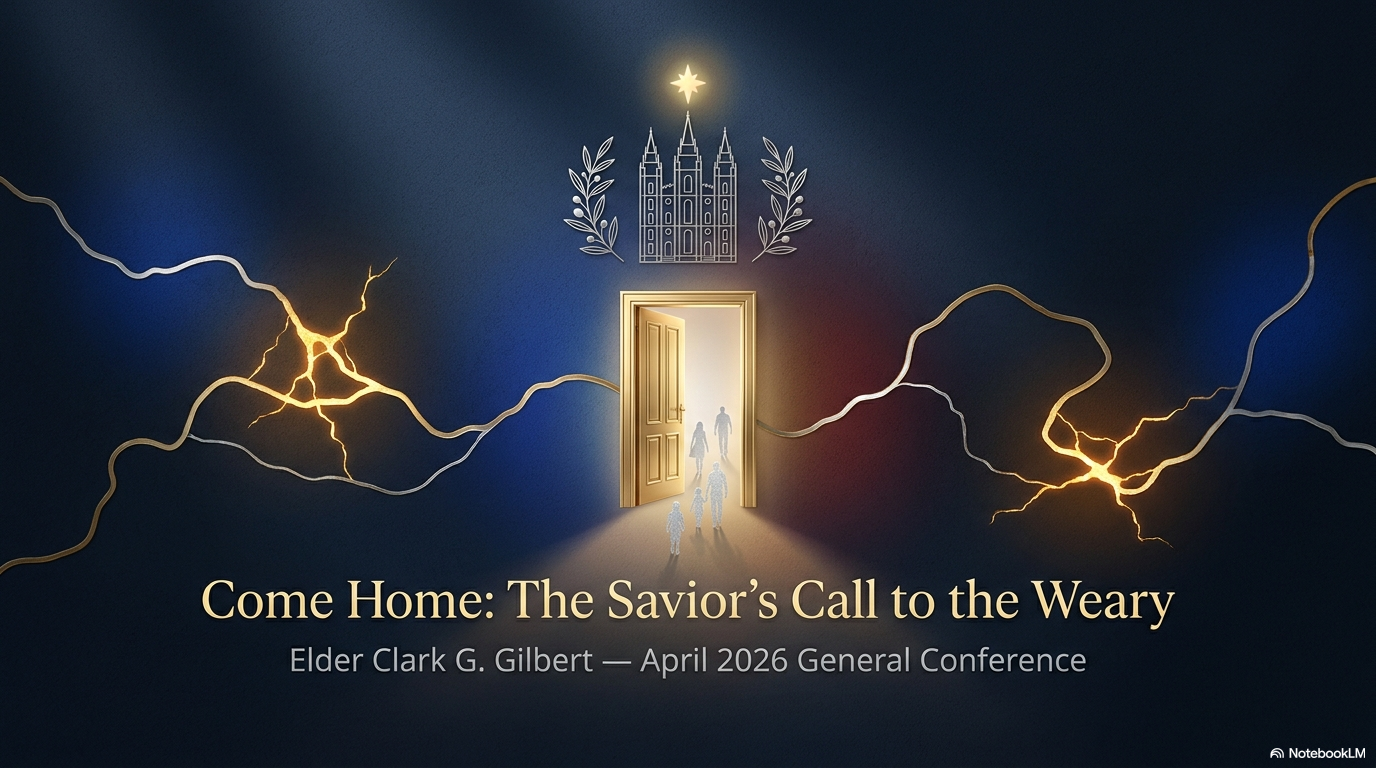
General Conference Reflection: Come Home - The Savior's Call to the Weary

General Conference Reflection: Come Home - The Savior's Call to the Weary

There have been those moments in my own life when silence felt louder than any noise - when distance from God doesn't come through rebellion, it comes through weariness, disappointments, or quiet drifting. In those moments - I never thought of them as sacred hidden places. However, Elder Clark G. Gilbert's message, Come Home, reminded me of how Christ rescued me. Elder Gilbert's testimony is both disarming and deeply personal: Jesus Christ is not waiting to condemn you - He is actively calling you back. This is not an invitation for us to return to any religious belief - it is a return to a covenantal relationship where Christ desires to bring us face-to-face with our Heavenly Father. Through this process, we find healing, restoration, peace, and the joy that surpasses all understanding. It is an invitation for those wandering and lost today.

And here is the profound truth Elder Gilbert centers his message: Christ is not only our Redeemer - but He is also our Repairer. This distinction is of immense importance. Many of us hold to the idea that Jesus forgives us - however, how many of us truly believe and experience the reality of His power to restore us? Through personal stories, doctrinal clarity, and prophetic and apostolic witness, this message unfolds the spiritual reality and truth - no fracture; spiritual, emotional, or relational, is beyond the Savior's power to amend through the gift and tender mercies of the infinite atonement.

Elder Gilbert's message acknowledges the real barriers that prevent people from returning. It is these barriers I have found myself referring back to regarding my own devotional teachings and messages. The very same barriers I’ve struggled with over the years in returning back to the faith of the Restored Gospel. Feelings of not belonging, feelings of inadequacy, doubt, or even feeling trapped within cultural or religious expectations often obscure an intimate relationship with Jesus Christ. Elder Gilbert does not dismiss these struggles; instead, he speaks directly into them with compassion and clarity. His approach is refreshing as it resonates with the hearts of many who grapple with these complex emotions.

For me, the ultimate truth of this message is not about people leaving the faith - it is about the reason they are able to return. And for me, the Gospel of Jesus Christ is not a place for perfect people - it is a home for those returning. This home isn’t just a metaphorical return; it’s a genuine invitation to embrace love, understanding, and acceptance in the arms of a Savior who knows our struggles intimately.

Consider what the Savior taught regarding this profound and yet simplistic principle and truth:

"As Jesus was walking along, he saw a man called Matthew sitting at the tax-collection station, and he said to him, "Follow me." And he got up and followed him. And as he sat at dinner in the house, many tax collectors and sinners came and were sitting with Jesus and his disciples. When the Pharisees saw this, they said to his disciples, "Why does your teacher eat with tax collectors and sinners?" But when he heard this, he said, "Those who are well have no need of a physician, but those who are sick. Go and learn what this means, I desire mercy, not sacrifice. For I have not come to call the righteous but sinners." (Matthew 9:10-13, NRSVUE).

In this scene, Jesus is having a meal with Matthew, a former tax collector, and a mixed crowd of people whom the religious leaders dubbed as tax collectors and sinners. When the Pharisees, the self-appointed guardians of what’s pure and pious, ask why he would spend time with such unclean folks, Jesus turns the whole conversation on its head. He doesn’t see himself as a judge but as a healer. He highlights that his mission isn’t about reaffirming those who think they’re just fine—essentially the self-righteous—but about reaching out to those who are honest enough to see their own brokenness. By quoting the prophet Hosea—“I desire mercy, not sacrifice”—he underscores that compassion trumps strict religious rules or pushing people away.

In addition to this powerful depiction, it's crucial to reflect on the implications of this teaching in our daily lives. The moments we find ourselves in judgment rather than in service can detract from our mission as followers of Christ. When we look at the world with eyes that see brokenness, we are called to serve rather than criticize. Our posture should always be one of humility, recognizing our own need for mercy.

For me, Christ is not waiting to condemn; even the Apostle Paul writes: "Therefore there is now no condemnation for those who are in Christ Jesus" (Romans 8:1, NRSVUE). In my own life, those I have ministered to and sat in counsel with over the years have experienced this invitation to come back to Him. And the sad reality is: how often do we stand in the shoes of the Pharisees? How often are we prone to judge and criticize those who have left the LDS Faith, or even those who have left the Christian faith in general? While the Pharisees saw the dinner table as a place of judgment and an opportunity to avoid those who are deemed unworthy - sinners - Christ saw it as a place of ministry, healing, and deep connection.

One of the oft-repeated excuses that frustrates me is this: The Gospel is Perfect; the Church is True - the people are not. This bumper sticker cliché seems to slap a band-aid on people who have truly been disappointed, hurt, or pushed to the side as if they don't matter or belong. This perspective can inadvertently perpetuate a culture of exclusion rather than inclusion, failing to recognize that the essence of the Gospel is about love and reconciliation.

In reality, Jesus' message invites every individual, regardless of their past or present struggles, to experience the fullness of His grace and mercy—a message that should resonate deeply within the walls of every church and community devoted to His service.

Tuesday, February 24, 2026

Day 2 - A Single Step

Day 2 - A Single Step

And there are also secret combinations, even as in times of old, according to the combinations of the devil, for he is the founder of all these things; yea, ... and he leadeth them by the neck with a flaxen cord, until he bindeth them with his strong cords forever.
~ 2 Nephi 26:22 ~

There’s a reason the scriptures don’t say the adversary drags us with chains from the beginning. They say he starts with a flaxen cord—soft, subtle, almost unnoticeable.

Flaxen cords feel harmless. They feel like “I’m fine.” They feel like “It’s not that bad.” They feel like “Everyone else is the problem.” They can be associated with small compromises and everyday distractions that initially seem trivial, but over time can lead us down a path we never intended to walk.

We might find ourselves rationalizing decisions that, in retrospect, clearly lead away from our values or beliefs. Gradually, we become accustomed to the tightened grip of that cord, oblivious to our increasing vulnerability. Over time, each little distraction or compromise we accept acts as another loop in that cord, binding us tighter and tighter until we feel as though escape is impossible.

And then one day, you wake up and realize you’re not holding the cord. The cord is holding you. The realization can be jolting; it is a moment of clarity where we recognize how far we’ve strayed from our intended path. This moment often comes with feelings of regret, confusion, or despair, as we confront the reality of our situation.

This is exactly how 2 Nephi 26:22 operates in real life. Not with sudden destruction—but with slow spiritual erosion until the truth becomes unavoidable. It's a gradual process, where the adversary uses our own indifference against us, allowing darker patterns to take root before we even realize the danger. Awareness becomes the first step toward liberation. By recognizing the effects of the flaxen cord, we can take action—whether seeking support, reevaluating our choices, or returning to foundational truths that can help strengthen us against the subtlety of temptation. Thus, the journey back to freedom is not only possible but essential for spiritual renewal and growth.

Hello and welcome fellow travelers. Today, we are going to focus on what it means to take that single step. How it breaks the flaxen cords that brought us into captivity, and how we take necessary action when we step out in faith and into God's grace - a grace that empowers us to seek His will, His purpose, and brings us into a right relationship with who he is, his love, tender mercies, and joy.

Let's pray

Tuesday, February 17, 2026

Come Follow Me: Feb 16-22 - Genesis 12-17; Abraham 1-2 | "To be a Greater Follower of Righteousness

Come Follow Me: Feb 16-22 - Genesis 12-17; Abraham 1-2 | "To be a Greater Follower of Righteousness

Abraham’s story is more than ancient history — it is the blueprint for every disciple who seeks covenant belonging, divine protection, and a future filled with hope. This week’s Come, Follow Me study reveals how God transforms ordinary people into extraordinary instruments of righteousness. The narrative not only showcases the life of Abraham but also serves as a powerful reminder that faith can lead to significant change and divine outcomes.

From Abraham’s near‑sacrifice in Ur to the sweeping promises of the Abrahamic Covenant, these chapters unveil the pattern of deliverance, faith, priesthood, and covenant identity that defines the gospel of Jesus Christ. Each event in Abraham’s journey can be viewed as a stepping stone toward understanding how God interacts with humankind and the purpose He has for each of us in fulfilling His divine plan.

Drawing from Genesis, the Book of Abraham, the Pearl of Great Price Student Manual, and the Come, Follow Me 2026 manual, this commentary provides doctrinal clarity, historical context, and practical application for modern disciples. This comprehensive approach allows readers to see the relevancy of Abraham's story in today's context, encouraging them to deepen their understanding of their own faith journeys.

Abraham’s life is a witness that righteous desires shape destiny. Though born into a family steeped in idolatry, Abraham “sought for the blessings of the fathers” and desired “to be a greater follower of righteousness” (Abraham 1:2). His story demonstrates that God honors righteous desire with revelation, deliverance, and covenant belonging. This ideal underscores the power of longing for a deeper connection with God and striving for righteousness, emphasizing that such pursuits are met with divine support and guidance.

This study argues that:

Abraham’s early trials reveal the pattern of divine deliverance. Each trial faced by Abraham not only tested his faith but also set the stage for miraculous intervention by the Lord, reinforcing the belief that faith often precedes divine action.

The Abrahamic Covenant is the foundation of all latter‑day covenant identity. This covenant is essential in understanding the relationship between God and His people, serving as a framework for spiritual growth and community among believers.

Abraham’s life models what it means to walk the covenant path with faith, sacrifice, and obedience. His unwavering commitment in the face of uncertainty illustrates the essence of discipleship. Disciples today are called to emulate this model, highlighting the importance of perseverance, trust, and dedication on their own journeys.

Ultimately, the exploration of Abraham's life serves as both an educational and inspirational guide for individuals seeking to embrace a deeper sense of identity within their covenant relationship with God. It challenges readers to reflect on their own journeys, urging them to strive for the kind of faith that transforms lives and leads to lasting hope.

God often begins His work in the quiet soil of longing, where dreams lie dormant, waiting for the gentle touch of faith to cultivate them. In this sacred space, where silence speaks volumes and sincere desires take root, the heart learns to hope anew, nurturing seeds of potential that, with time and devotion, will blossom into a beautiful manifestation of His divine purpose. It is here that we discover the deep connection between our longings and the unfolding of His plans, reminding us that even in the stillness, something remarkable is taking shape beneath the surface, preparing us for the amazing journey ahead.

Thursday, January 8, 2026

Episode 3: The Courage to Seek

Episode 3: The Courage to Seek

Welcome fellow travelers. This is Grace and Sobriety for Latter-day Saints on a path of recovery and living a sober life through Jesus Christ and His Gospel.

We often think our battle is just against a behavior, a bottle, or a doubt. But what if the real war is actually over your name? The adversary wants you to believe you are just your past mistakes.

But in this week’s study of Moses 1 and Abraham 3, God takes us back before the beginning to settle the score once and for all. He reminds Moses—and He’s reminding you—that before you were anything else, you were His.

Today, we are going to learn how to use your divine identity to silence the darkness. Welcome to the devotional message.

Anchor Verse:

"And, finding there was greater happiness and peace and rest for me, I sought for the blessings of the fathers... desiring also to be one who possessed great knowledge, and to be a greater follower of righteousness, and to possess a greater knowledge, and to be a father of many nations, a prince of peace."Abraham 1:2

In our previous devotionals, we explored Moses 1: first, the humility of realizing our own "nothingness" without God (Day 1), and second, the power of claiming our divine identity when the adversary tries to define us by our past (Day 2).

Additional Scriptures:

  • Moses 1:20: "And it came to pass that Moses began to fear exceedingly; and as he began to fear, he saw the bitterness of hell. Nevertheless, calling upon God, he received strength." (The pivot from fear to action).
  • Abraham 1:5: "My fathers, having turned from their righteousness... refused to hearken to my voice." (The reality that we often have to recover despite our environment).

Today, we transition to Abraham 1, which serves as the perfect companion to Moses’s stand. While Moses illustrates standing your ground against darkness, Abraham illustrates walking away from it. Abraham lived in a toxic environment—Ur of the Chaldees—surrounded by the idolatry of his fathers and a culture of spiritual death. Yet, instead of succumbing to the environment or merely coping with it, Abraham sought something better. He didn't just want to escape the bad; he hungered for "greater happiness and peace."