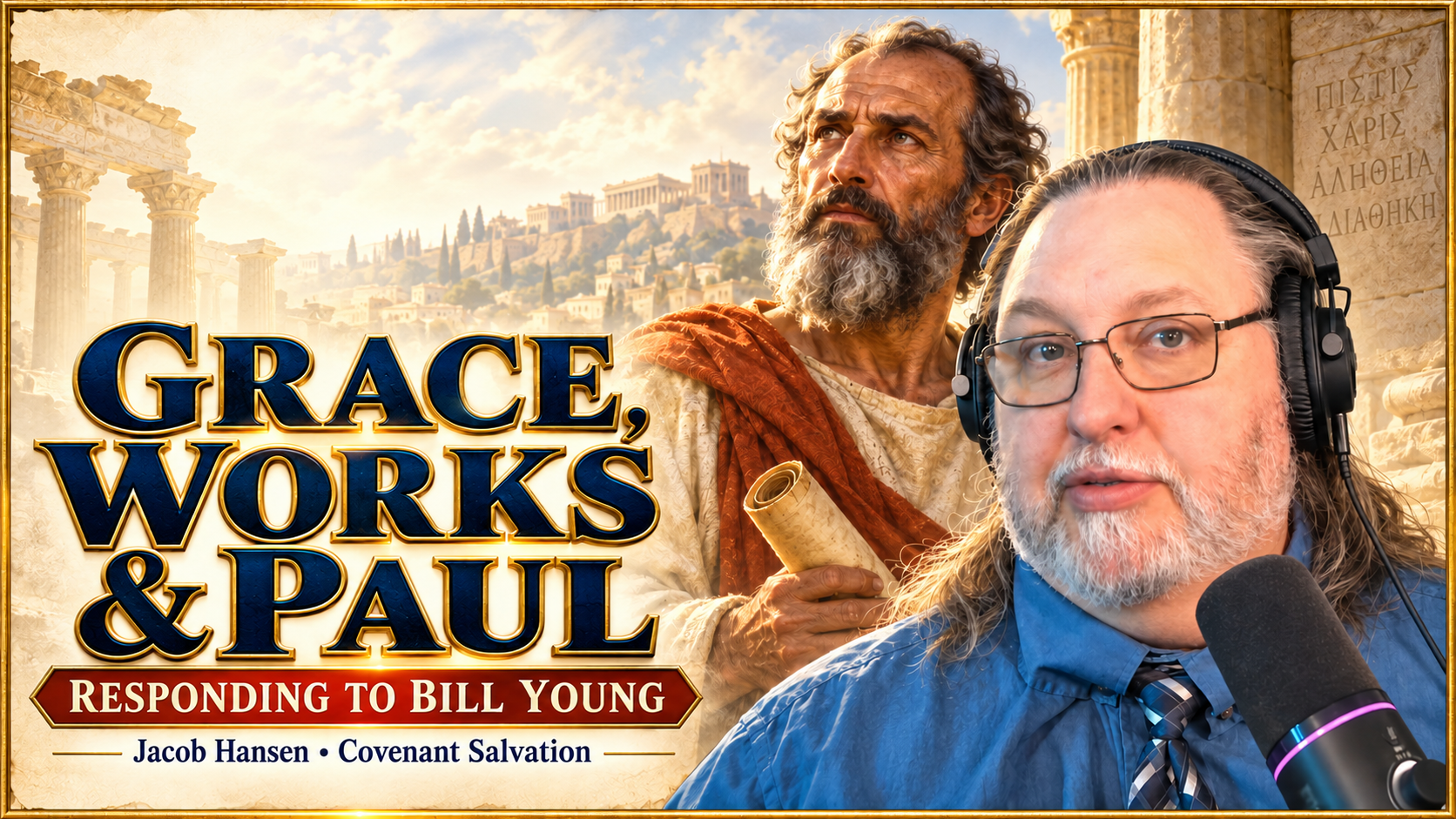
Does obedience turn the gift of salvation into a wage? That is the question beneath Bill Young’s response to Jacob Hansen—and it deserves a better answer than either “Mormonism is counterfeit” or “modern scholarship proves us right.” A Christian can affirm that Christ alone makes salvation possible while still believing that repentance, faithfulness, and a transformed life matter. The dispute begins when we ask how they matter: as payment, as conditions of receiving a gift, as evidence of living faith, or as the life that grace itself creates.
In Episode 104, Young argues that Hansen’s covenant model gives familiar LDS requirements a more attractive vocabulary without changing their function. That objection has force against any explanation that merely renames achievement as relationship. But Young’s broader conclusion—that necessary covenant obedience must therefore amount to earning salvation—requires an additional argument. Neither the presence of conditions nor the fact that human beings actually act establishes that their actions purchase God’s forgiveness.
This response approaches the debate from a Latter-day Saint perspective while taking Protestant objections seriously. It examines the supplied transcript and comment-section record alongside Pauline scholarship, Jewish historical scholarship, LDS sources, and evangelical biblical commentaries. Some of the evidence supports Young’s criticisms of oversimplified apologetics; other evidence directly challenges his portrayal of LDS grace and the scholarly alternatives he dismisses. The purpose is to identify which claims survive careful examination and to hold our treatment of other people to the Christian standard we invoke.
In this response
Young’s strongest objection
Paul, Judaism, and covenant
Grace, necessary works, and merit
“After all we can do”
What LDS leaders have taught
Comments and logical fallacies
The Christian standard
Frequently asked questions
Sources and further reading
What this response examines
The principal source is Young’s “Response to Jacob Hansen’s Covenant Model of Salvation”, identified as Episode 104 in the supplied materials. Quotations below follow the supplied transcript, with punctuation lightly normalized where needed; timestamps identify the relevant passages. The opening Hansen clip is presented within Young’s episode, so this article evaluates the argument as represented there rather than claiming to review every statement Hansen has made elsewhere.
Comment quotations come from the supplied document titled EP 104: Response to Jacob Hansen’s Covenantal Salvation Comment section. Usernames and document paragraph numbers identify excerpts where individual comment permalinks were not supplied. These are selected examples, not a statistical description of the entire audience. The record also contains substantive biblical arguments and objections to mockery. A commenter’s statement is attributed to that account; it is not automatically treated as Young’s own position.
Why Jesus Alone Could Accomplish the Infinite and Eternal Atonement
What manner of man commands the wind and sea—and they obey Him? He who speaks to the chaotic elements and they submit to His will, revealing His divine authority over nature itself. His voice echoes through the storm, bringing peace where there was turmoil, demonstrating an unparalleled mastery that transcends human understanding.
What manner of man possesses the power to lay down His life and take it up again? He who, with the authority inherent to His being, presents the ultimate sacrifice, fully aware of the weight of such a decision. In laying down His life, He unveils the profound mystery of love and redemption. The same strength that allows Him to give Himself away also empowers Him to conquer death, rising triumphantly to provide hope and eternal life to humanity.
What manner of man suffers more than mortal humanity can endure, yet remains until the work of redemption is complete? He bears the weight of all humanity’s sins, feeling the depths of anguish and despair, yet persevering through the agony to fulfill His purpose. His empathy is boundless, experiencing sorrow in ways that only a divine nature could comprehend. In His endurance, He illustrates the profound depth of grace, revealing that true strength is often displayed in vulnerability and unwavering commitment to a higher calling, despite the unbearable cost.
This man is a testament to the coexistence of power and humility, a divine figure whose actions reshape the narrative of humanity's relationship with the Creator. His life and legacy stand as an eternal beacon of hope, a call to embrace the extraordinary potential within each of us to rise above our circumstances and to foster love, compassion, and redemption in a world so often in need of these gifts.
These questions stand at the center of Doctrine Lesson 6, “What the Divinity of Jesus Christ Means to You,” from the 1974–75 Melchizedek Priesthood study guide When Thou Art Converted, Strengthen Thy Brethren. The lesson’s purpose was not merely to establish that Jesus was extraordinary. It invited priesthood holders to understand why Jesus Christ alone possessed power to accomplish the infinite and eternal Atonement—and why every one of us remains completely dependent upon Him.
Nearly five decades later, that central purpose remains unchanged. Some of the language used in the original lesson, however, has generated theological questions and apologetic controversy. In particular, statements by James E. Talmage and Bruce R. McConkie about Christ’s literal divine sonship have been interpreted by critics as teaching that God the Father physically descended and engaged in sexual intercourse with Mary.
A responsible modern treatment must do more than dismiss that criticism. It must distinguish among what scripture reveals, what individual Church leaders have proposed or speculated, and what the Church currently teaches as established doctrine.
It is best we do not allow controversy over the manner of Christ’s conception to distract us from the greater truth: Jesus Christ did for us what we could never do for ourselves.
How Ex-Mormon Influencers, Evangelical Critics, and Online Ministries Repackage the Same Arguments for YouTube, TikTok, Facebook, Podcasts, and Livestreams
In 1989, anti-Latter-day Saint ministries, often referred to as Counter-cult or Anti-Mormon groups, relied heavily on printed tracts, cassette tapes, books, traveling seminars, church presentations, and controversial films—most notably, The Godmakers. Pastors would announce special meetings from their pulpits, offering "classes" on how to witness to Mormons. If you strolled into any brick-and-mortar Christian bookstore, you'd find a substantial collection of books specifically discussing the Church of Jesus Christ of Latter-day Saints. Among the more notable titles were Kingdom of the Cults by the late Walter Martin, Letters to a Mormon Elder by James White of Alpha and Omega Ministries, Mormonism 101 by Bill McKeever and Eric Johnson, and Mormons Answered Verse by Verse by David A. Reed and John R. Farkas. In addition to these apologist works, you'd also discover a range of small group and individual study guides about the LDS faith.
As if that weren't enough, it wasn't uncommon for members of the faith to be invited over to a family friend's or relative's home for dinner, only to be introduced to a friendly couple. The gentleman would often start the conversation with, "I used to be a Mormon, but I’ve found Jesus." This felt like a kind of religious intervention aimed at coaxing you to leave the church. I experienced this firsthand in my early twenties when my mother-in-law invited my then-wife and me over for dinner. That evening plunged me into the world of Anti-Mormonism and apologetics. I had already purchased They Lie in Wait to Deceive by the Browns (I had all four volumes at that time), The Truth About the Godmakers by Gilbert Scharff, and The Gainsayers: A Converted Anti-Mormon Responds to the Critics of the LDS Church by Derrick T. Evenson—this last book serving as the foundation for my Social Media Gainsayers series.
This atmosphere left minimal opportunity for individuals to hear a meaningful response from Latter-day Saints. The urgency of the message was unmistakable: “They are stealing your people. They must be stopped,” as Ed Decker wrote in his letter to pastors, promoting his book and film, The Godmakers. Fast forward more than three decades, and we see that the media landscape has undergone a dramatic transformation. Pamphlets have turned into Facebook posts, and cassette tapes have been replaced by podcasts. Traveling seminars have morphed into YouTube livestreams and channels, while the controversial film The Godmakers has resurfaced on social media platforms, mainly appearing as "The Mormon Banned Cartoon." Church basement presentations have transitioned into TikTok debates and live discussions. The once-printed quotations, often stripped of context, have been condensed into fifteen-second video clips and responses. What used to be the anti-Mormon bookstore shelf has now become algorithmically generated playlists.
The technology has changed, distribution has accelerated, and the audience is now global. Yet, the underlying playbook remains startlingly familiar. Today’s social media gainsayers might identify themselves as Ex-Mormons, evangelical Christian pastors, Christian apologists, cult experts, deconstruction coaches, religious commentators, or former "insiders." Though they use differing methods, it’s crucial to note that not every critic of the Church of Jesus Christ of Latter-day Saints is manipulative, dishonest, or deceptive.
Legitimate criticisms deserve legitimate responses. Difficult historical questions should never be ignored, and former members have every right to share their personal experiences. Likewise, Christians have every right to express their disagreements with Latter-day Saint theology. The challenge arises when personal experiences are framed as universal facts, theological disagreements are marketed as scandals, and mockery and insults take the place of honest discussions. Unfortunately, algorithms often amplify the most hostile narratives.
That’s when criticism turns into gainsaying. As Latter-day Saints, we bear the responsibility to stand firm in our faith and testimony, for it is through “sound doctrine that we both exhort and convince the gainsayers” (Titus 1:9, KJV).
It really never fails that someone who has issues, without tissues, against the Church of Jesus Christ of Latter-day Saints recycle the same accusation and anti-LDS tropes. And typically, the go to Evangelical eisegesis "gotcha" verse is Galatians 1:8. A weaponized verse used to bludgeon Joseph Smith into the status of being accursed, preaching a different gospel and the case is closed. It sounds bold and confident. However, it is mere haughty arrogance posturing from a place of one being completely illiterate of properly interpreting the scriptures. Evidence of another gainsayer who is ever learning and never understanding:
You must understand this, that in the last days distressing times will come. For people will be lovers of themselves, lovers of money, boasters, arrogant, abusive, disobedient to their parents, ungrateful, unholy, unfeeling, implacable, slanderers, profligates, brutes, haters of good, treacherous, reckless, swollen with conceit, lovers of pleasure rather than lovers of God, holding to the outward form of godliness but denying its power. Avoid them! For among them are those who make their way into households and captivate immature women, overwhelmed by their sins and swayed by all kinds of desires, who are always studying yet never able to recognize truth. As Jannes and Jambres opposed Moses, so these people, of corrupt mind and counterfeit faith, also oppose the truth. But they will not make much progress because, as in the case of those two men, their folly will become plain to everyone. ... Indeed, all who want to live a godly life in Christ Jesus will be persecuted. But wicked people and impostors will go from bad to worse, deceiving others and being deceived. But as for you, continue in what you have learned and firmly believed, knowing from whom you learned it and how from childhood you have known sacred writings that are able to instruct you for salvation through faith in Christ Jesus. All scripture is inspired by God and is useful for teaching, for reproof, for correction, and for training in righteousness, so that the person of God may be proficient, equipped for every good work. (2 Timothy 3:1- 9, 12-17).
Yet, such arguments consistently collapse the moment we examine the text, the history, and the logic.
The claim is simple: Because Paul warned about another gospel and because Joseph Smith reported an angelic visitation, therefore the Restoration must be a demonic deception. An arrogant and boastful claim. One that appears to sound quite powerful - until you take the time to read Paul, understand his context, and compare it to what Latter-day Saints actually teach. Yet, these internet gainsayers are mere lazy learners who do not want to test their claims against truth. They want to sound loud and proud screaming into the Social Media landscape to deceive people. And they don't want their claims challenged.
Therefore, I am not here to dodge the passage. In fact, the only person that appears to dodge a real discussion is the gainsayer refusing to have a livestream discussion on whether or not the Book of Mormon is demonic. As such is the individual's claim. Neither am I here to soften Paul. I am here to take the claim seriously, steelman it, and then show how it fails on every textual, historical, and theological level.
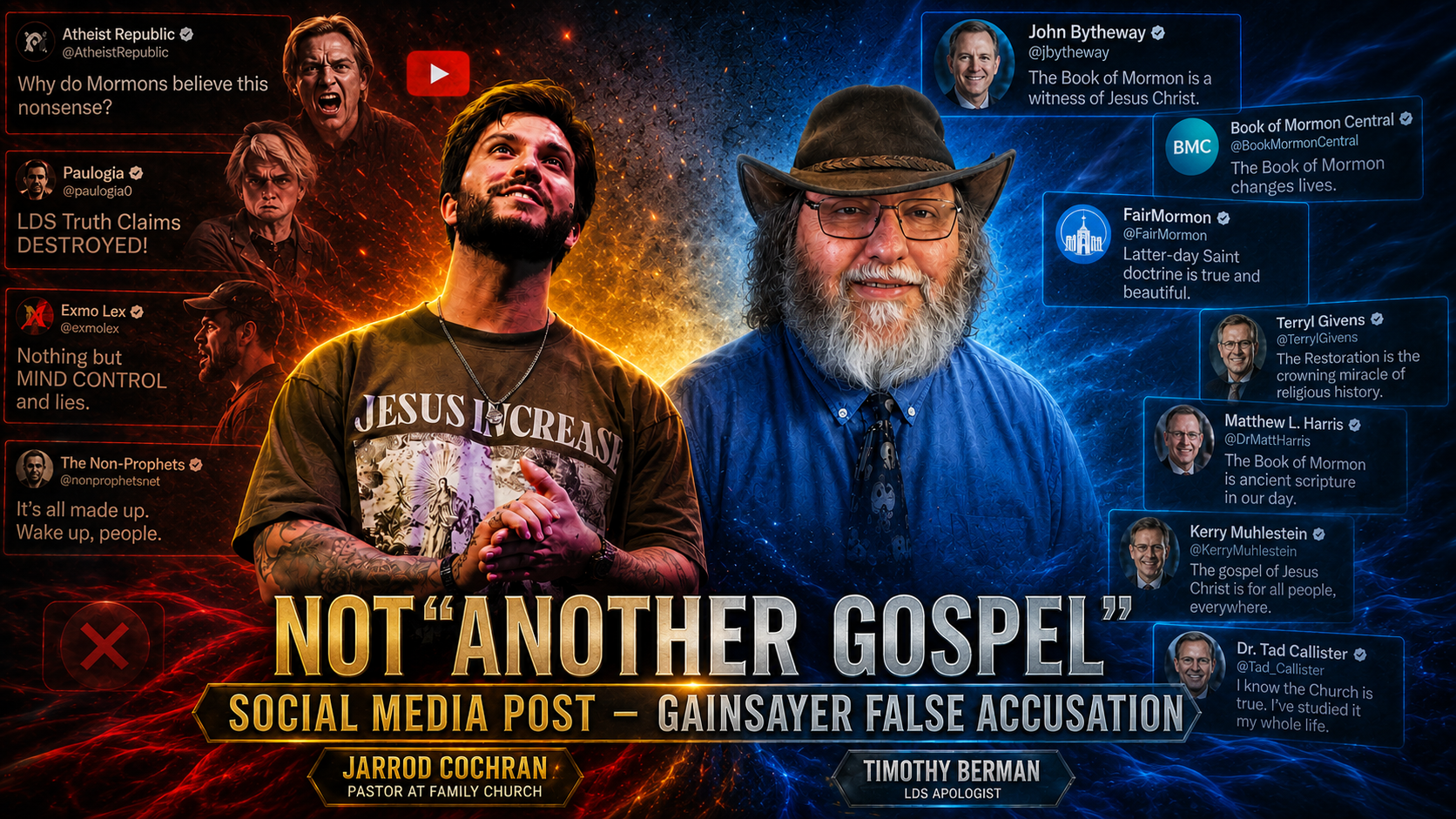
Today, let's examine Jarrod Cochran's claims regarding Joseph Smith, the Book of Mormon, and an unfolding dialogue regarding whether or not this gentleman is speaking truth - or perpetuating ongoing lies and deceptions.
Yellow journalism once referred to the sensationalistic, lurid exaggerations of 19th‑century newspapers — the kind of “sensational chauvinism” that relied on distortion, outrage, and emotional manipulation to attract readers. The term itself emerged from the era of the Yellow Kid comic strip, whose popularity fueled a wave of sensational reporting and media manipulation. Today, the same spirit thrives, but its printing press is no longer ink and paper. It is the algorithm.
At its core, yellow journalism is not merely exaggeration, but an intricate perspective that is biased, zealous, and often militant in its distortion. This form of communication is driven by blind devotion to a cause, frequently accompanied by hostility toward opposing viewpoints. Historically, yellow journalism manifested in various forms such as political propaganda that aimed to shape public opinion by presenting information selectively or misleadingly. Social agitation often followed the sensational narratives promoted by journalists who prioritized flare over factual reporting, heightening tensions around contentious issues.
Furthermore, yellow journalism also found expression through religious polemics, where exaggerated claims and dramatic storytelling were employed to gain adherents or demonize rival beliefs. The fervor of the 19th century, characterized by the quest for readership, led to practices that set the tone for future media. In contemporary times, this distortion is propagated through digital platforms where algorithms curate content that reinforces existing beliefs, often leading to echo chambers.
As society moves deeper into the digital age, the implications of yellow journalism become more pervasive. Information can spread rapidly, while critical thinking and journalistic integrity may wane. The lessons of the past remind us that while sensationalism may attract attention, the long-term impact of such journalism can erode trust in media and polarize societies. It encourages a critical evaluation of news sources, urging consumers to discern truth amidst the cacophony of competing narratives. As such, the battle against yellow journalism is ongoing, requiring vigilance from both media producers and consumers alike to uphold the principles of responsible journalism.
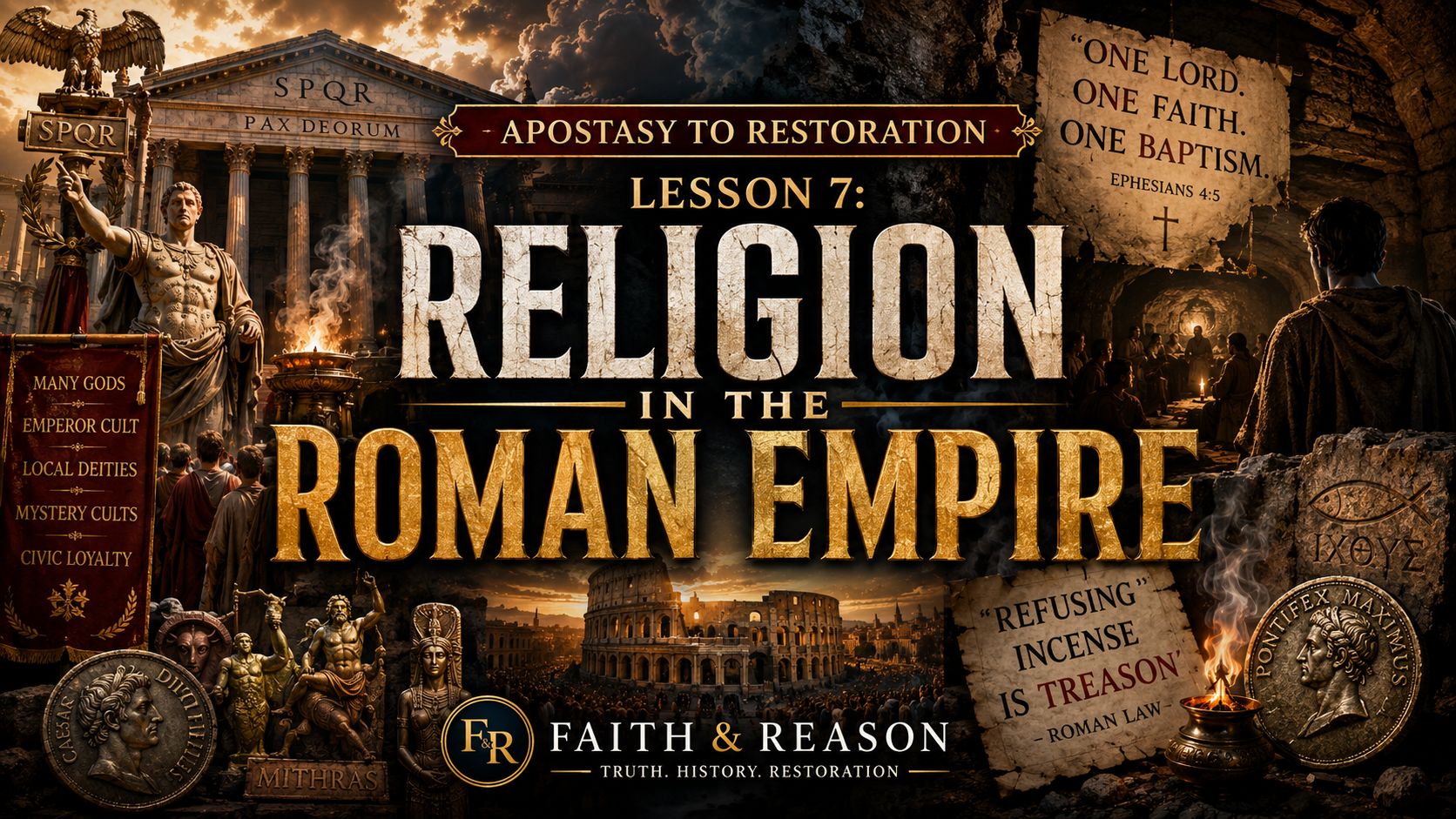
When T. Edgar Lyon first penned Lesson 7 of Apostasy to Restoration in 1960, he invited Latter-day Saints to step into a world where religion was not just a private conviction but a fundamental component of the machinery of empire. This bold assertion set the stage for a deeper exploration of the intricate interplay between faith, culture, and politics. Sixty years later, the landscape of scholarship has transformed dramatically, yet Lyon’s central insight remains strikingly relevant: to truly understand the need for a Restoration, we must first immerse ourselves in the complex milieu that shaped the early Christian Church.
This updated lesson builds upon Lyon’s foundational work, integrating modern archaeological discoveries, peer-reviewed historical research, and contemporary Latter-day Saint scholarship to form a more nuanced understanding of the context in which early Christianity emerged. What emerges from this scholarly synthesis is a clearer, richer, and more compelling picture of the Roman religious world—a world that was teeming with a pantheon of gods, replete with elaborate rituals, and governed by a political theology that made the act of Christian discipleship both radical and perilous.
In a society where loyalty to the state was intricately tied to acts of sacrifice and devotion, where citizens adeptly navigated multiple cults without a hint of contradiction, and where the pursuit of salvation was often sought through clandestine mystery rites and the favor of emperors, the Christian proclamation of “one Lord, one faith, one baptism” represented a profound challenge to the status quo—it was nothing less than a revolutionary stance. This declaration was, in essence, a radical reformation of the religious landscape, directly opposing the established norms that dictated the relationship between the individual, the divine, and the state.
Understanding that world is essential for grasping why the early Church fractured amidst various pressures and why a Restoration was not merely desirable but indeed inevitable. The tensions between emerging Christian beliefs and the entrenched systems of power were not just obstacles to be overcome; they underscored the urgent need for a return to core principles that could unify and reinvigorate the faith community. Lyon’s insights encourage us to reflect on our own circumstances in today’s religious environment, prompting critical questions about the nature of faith, the role of community, and the ongoing quest for spiritual authenticity in an increasingly complex world. As we navigate the remnants of an ancient tapestry interwoven with faith and politics, we find ourselves inspired to reconsider the implications of our shared history and the enduring quest for a true Restoration.
We are stepping into one of the most overlooked patterns within the scriptural narrative of Exodus chapters 7-13 - the journey from the Ten Plagues of Egypt to Exaltation - Divine Glory with Christ and the Father. We are going to look at the trajectory of moving from darkness of Egypt to the radiance of the divine presence of the Father and the Son. From judgment to redemption. From mortality to immortality and eternal life with Christ (Moses 1:39).. The ten plagues are not ancient catastrophes; they are a prophetic roadmap foreshadowing how we are to become heirs and joint-heirs with Christ (Romans 8:17). Having overcome as He has overcame (Revelation 3:21) in order to sit with Christ on thrones the Father has prepared for each of us (Matthew 20:23).
Every plague reverses a day of creation. Every judgment against the Egyptian God’s, Pharaoh, and the Egyptian empire, culture, and society exposes a counterfeit god. And it is every act of divine power pushing Israel one step closer to the mountain of God.
This is the pattern scripture reveals: descent into chaos, confrontation with darkness, and the ascent into God’s presence. Exodus establishes the divine architectural blueprint that Revelation completes.
Christ, and the infinite atonement that is revealed through the plan of salvation, is at the center. It is the redemptive arc narrative - the covenantal path of righteousness we enter into. From the blood in the Nile to the blood of the Lamb of God slain from the foundation of the world (Revelation 13:8), the story is always pointing forward. The plagues themselves reveal the cost of spiritual rebellion. However, they also reveal the depth of God’s divine sovereign grace and mercy.
The Passover Lamb, the Firstborn Son, the deliverance through water - baptism for the remission of sins - these are not mere isolated events. They are shadows of Christ’s victory over sin, death, and spiritual bondage (Matthew 16:18-26).
The purpose of God is specific: to bring to pass the immortality and eternal life of man (Moses 1:39). It was never about escape. God was not simply removing Israel from Egypt; He was raising them into a people with a covenantal identity. Today, our Heavenly Father’s desire is to do the same with each one of us. Bring us out of our own Egypts, our own spiritual bondage, to awaken us so that we may arise from the dust and shake off the awful chains that hold us bound (Isaiah 52:2) so that we are able to put on the armor of righteousness and come forth out of obscurity (2 Nephi 1:23).
The plagues themselves are the very chain breakers. Sinai is where a covenant people are formed. The story of the Exodus is not complete because the redeemed will eventually stand in the glory of God’s presence. For this is what Christ prayed for: This is life eternal that they may know thee, the one true God, and Jesus Christ whom thou hast sent (John 17:3).
Revelation mirrors Exodus because the same God is acting. the bowls, the trumpets, the judgments - they echo the plagues because the final deliverance follows the same pattern as the first. The Saints are not merely escaping Egypt, Babylon, or Jerusalem; they are ascending into divine heavenly Glory, ascending into the New Jerusalem and its Heavenly Temple (Ezekiel 48:35; Revelation 3:12; Revelation 21-22; apocryphal works 4 Ezra, 2 Baruch, 3 Baruch). Directly into the presence of the Lamb of God.
Reason this matters for us today is because every one of us walks this specific journey of spiritual growth and covenantal faith. We are moving from bondage to freedom. From darkness and into light, from spiritual Egypts to the mountain of a Holy Sovereign and Gracious God. The plagues themselves show us the cost of our sin, our spiritual rebellion, and disobedience. They also reveal God’s divine grace, His tender mercies, and the unstoppable trajectory of redemption - from plagues to glory is our covenantal path of righteousness and movement toward spiritual perfection and strait and narrow way that leads toward the Celestial Kingdom (Matthew 7:14).
So, as we begin, keep this truth in mind: God does not leave His people in the place of judgment or condemnation. He leads them through it, beyond it, and into divine heavenly glory. The Exodus narrative is our own personal story and the ascent into immortality, eternal life, and exaltation is our calling.
If there is any given reason for someone to question and leave the Church of Jesus Christ of Latter-day Saints, Tyson Guess has built a shiny logical-looking exit ramp. However, if you are willing to take a moment and slow down to breathe, the architecture of his argument is built on a very sandy foundation - specifically, a fundamental misunderstanding of how God interacts with fallible mortals.
It is in his recent article over at Medium - "One False Revelation Collapses Mormonism" - where he attempts to use the Book of Abraham as a silver bullet to take down the entire Latter-day Saint Faith. He proposes that because the surviving Egyptian papyri does not match the Book of Abraham linguistically, one ought to conclude that Prophet Joseph Smith was a fraud. By extension, he claims that this means the Book of Mormon is a lie perpetuated upon the 19th-Century American populace—and by many individuals today.
What Guess seems to overlook is that faith and belief systems are complex, multifaceted experiences that often transcend mere textual analysis. Having immersed myself in the scriptures and extensively researched various scholarly articles on the Bible, the Book of Mormon, and the Book of Abraham, I am not one to shy away from the hard questions that arise. Indeed, grappling with difficult topics is an integral part of faith development.
Moreover, it is important to remember that neither the Church nor its members need to hide from the papyri or the so-called "missing scroll" theories. These subjects, when approached with integrity and a commitment to truth, can lead to a deepened understanding of the faith. Once we apply proper scriptural exegesis and peer-reviewed scholarship to the questions surrounding these texts, Guess's assertion of an "inescapable conclusion" begins to look more like a desperate reach rather than a definitive argument against the faith.
Ultimately, it's essential to recognize the broader context in which these discussions occur. Many who leave or reconsider their faith do so not only based on intellectual arguments but also due to personal experiences, feelings, and the intricate tapestry of their spiritual lives. Engaging with such matters requires not only scholarly rigor but also compassion and understanding for individual journeys. The dialogue around faith and doubt can be rich and illuminating, offering avenues for personal growth and deeper connections with God and each other.
If the Book of Mormon is true, the Book of Abraham must be true.
The Book of Abraham is demonstrably false.
Therefore the Book of Mormon is false.
That is not a rhetorical flourish. It is a logical necessity rooted in the nature of God himself. God does not put his name on lies. God does not commission a prophet and then authorize that prophet to deliver falsehood as scripture. A divine commission that produces falsehood is not divine. Which means the two books stand or fall together. They claim the same origin: the gift and power of God through Joseph Smith. That origin is either reliable, or it is not. It cannot be selectively reliable. If one product of that commission is demonstrably false, the commission itself is false, and everything resting on it falls with it.
This article proves each premise. By the end, the conclusion is inescapable.
Tyson Guess's argument rests upon presuppositional apologetics and is quite a rigid syllogism where he makes the first point regarding how the Book of Abraham stand or fall together. The second point is how he views the Book of Abraham as "demonstrably false" because it is not a literal linguistic translation of the surviving papyri. And third, he concludes that because the Book of Abraham and the Book of Mormon are false, Joseph Smith, therefore, is a false prophet under the presupposed interpretative understanding of Deuteronomy 18. His argument leads to the conclusion that the entire Latter-day Saint belief system collapses under scrutiny.
Steelmanning Tyson Guess's Assertions
The strongest point he makes is the physical evidence: the Sensen papyri (the fragments recovered in 1967)1 do indeed contain standard Egyptian funerary texts (The Book of Breathings) and do not contain the text of the Book of Abraham. This mismatch is acknowledged by the Church in the Gospel Topics Essays, which lends credibility to his claim. If one's definition of "translation" is strictly limited to a 21st-century academic decoding of hieroglyphs, Guess's point feels quite weighty and compelling.
However, to thoroughly engage with Guess's perspective, it is essential to steelman his position—articulating it in its strongest form—before launching into a counter-argument. A steelman approach involves understanding the nuances of his claims, thus allowing for a more productive discourse. From there, one can examine the logical fallacies that underlie his assertions, such as potential fallacies of composition—implying that the failure of one work invalidates the entirety of a belief system—or false dilemmas that oversimplify complex theological concepts.
In addressing the primary contention regarding translations, scholars advocate for a broader understanding of the term "translation." The restoration of the Book of Abraham is often viewed not merely as a linguistic exercise but as a theological endeavor. Thus, one might argue that the translation in question relies on Divine inspiration rather than strict linguistic fidelity. An exegetical interpretation of the text could highlight its contextual significance within the framework of Latter-day Saint theology, countering Guess's assertion of its demonstrable falsehood.
Engaging with peer-reviewed literature reveals diverse scholarly opinions on ancient texts, translations, and the role of revelatory processes in religious contexts. Numerous Latter-day Saint scholars and Egyptologists have contributed rigorous analyses of the Book of Abraham, arguing that the text retains spiritual truths even if its historical and linguistic basis is complex.
While it is necessary to acknowledge the weight of Tyson Guess's arguments, it is equally important to invite readers to examine the evidence for themselves rigorously. The discourse surrounding the Book of Abraham is multifaceted, integrating historical, linguistic, and theological dimensions. Encouraging critical thought fosters a more robust conversation, allowing individuals to explore the nuances of faith, history, and evidence as they pertain to the Latter-day Saint belief system. Through this lens, one can engage not only with the arguments presented but also with the broader implications for understanding religious texts in a modern context.
Does the Book of Mormon contradict Mormon doctrine—or is this another case of critics debating a faith they haven’t actually given over to comprehend and understand?
There is a recent video discussion between Melissa Dougherty and Keith Walker claims that “The Book of Mormon does not teach what Mormons believe.” That’s a bold assertion. It sounds persuasive. It spreads quickly. And it’s wrong in ways that reveal more about evangelical presuppositions than about Latter-day Saint scripture.
Due to the reality of response needed for this interview between Melissa Dougherty and Keith Walker, I will be addressing each segment of the point-by-point rebuttal in separate and subsequent blog posts and video responses. This approach is essential, as it allows for a thorough engagement with their arguments. Each segment will be dissected, providing not only a rebuttal but also an opportunity to delve into the core teachings of the LDS Faith. I will strive to offer a comprehensive expository and exegetical analysis of their claims.
In my exploration, I aim to shed light on the teachings of the Book of Mormon, contextualizing them within the broader spectrum of Latter-day Saint theology. Over the past thirty years, I have come to profoundly understand and appreciate these teachings, and I believe it is crucial to convey them in their intended spirit. Each post will serve to clarify misconceptions, respectfully counter claims made by the critics, and illustrate how these beliefs are rooted in scripture and prophetic teachings.
To the point, this sequence of responses will also highlight the importance of understanding faith from within. Engaging sincerely with a belief system requires an openness to learn and understand its scriptures and doctrines. Therefore, I encourage readers to approach the upcoming discussions with a willingness to explore different perspectives. Through this method, I hope to foster a respectful dialogue that promotes understanding rather than division.
Therefore, each response does three things' critics rarely do:
Steelman their arguments rather than caricature them. Critics often oversimplify or misrepresent beliefs, making it easy to refute a distorted version of Mormon doctrine rather than engaging with genuine Latter-day Saint teachings. By presenting a more nuanced interpretation, this response aims to foster understanding and promote thoughtful dialogue, which can be a rare occurrence in discussions about faith.
Engage the actual text of the Book of Mormon and the Bible. Many critiques are rooted in a lack of familiarity with the foundational texts themselves. This response will delve deeply into specific verses, themes, and doctrines found in both the Book of Mormon and the Bible that align with Latter-day Saint beliefs. By utilizing the actual scriptures, we provide clarity and context, allowing the audience to comprehend the rich theology woven throughout these sacred texts.
Explain LDS doctrine as Latter-day Saints understand it, not as outsiders imagine it. It's critical to delineate between the caricature of belief often presented by critics and the lived faith of Latter-day Saints. This engagement will showcase how adherents interpret their scriptures, the importance of prophetic revelation in their doctrine, and how teachings have evolved over time within their faith community, promoting a more authentic representation of what Mormons believe.
These are not mere hit pieces. They are well-researched and a careful, evidence-based, expository, and exegetical response. By seeking to understand rather than simply demolish, we create a space for constructive conversation, challenging misconceptions, and illuminating the deeper aspects of a faith that, for many, serves as a guiding light in their lives. The goal is not to dismiss critiques outright but to respond with insight and clarity, enriching the understanding of both Latter-day Saints and those who are curious about their beliefs.
The interview highlights a persistent critique of what some are labeling the Impossible Gospel of Mormonism. Critics argue that this gospel presents a troubling standard: forgiveness is only available following the complete abandonment of sin, a standard that seems unattainable for any individual. Such a viewpoint can be disheartening, especially for those striving to align their lives with gospel principles.
Keith Walker, representing Evidence Ministries, brings over 30 years of experience serving and evangelizing among members of the LDS faith and adherents of Jehovah's Witnesses. His approach emphasizes the concept of same vocabulary, different dictionary, which aims to foster respect for individuals while critiquing their doctrinal views. However, this method can sometimes create confusion about the true nature of Latter-day Saint beliefs.
From a mindful Latter-day Saint apologetic perspective, it is essential to engage in these discussions with an evidence-based and rational framework. While critiques may arise, they often stem from misunderstandings or a lack of familiarity with LDS doctrine. Trust can be built through open, respectful dialogue that accurately represents the beliefs and practices of Latter-day Saints. It is important to clarify that the teachings of the Book of Mormon do, in fact, align with the beliefs of its adherents, emphasizing grace, personal responsibility, and the process of repentance in a way that many might find both rational and life-affirming.
My goal is one of purpose and intention where I want to address these theological discussions. One that requires both an understanding of differing viewpoints and a commitment to presenting LDS doctrine in its true light. Through thoughtful engagement, we can demystify misconceptions and foster understanding amongst all parties involved.
Is the foundation of the Restoration built on a logical contradiction? Critics are claiming they’ve found the 'smoking gun' that proves Joseph Smith was a false prophet. They call it the 'Mormon Dilemma.' But is this a genuine theological collapse, or just a fundamental misunderstanding of how God reveals truth to mankind?
Here at Faith & Reason | Grace & Sobriety, we don’t run from the hard questions. Our mission is to approach these historical and theological challenges with a clear mind and a steady heart. We aren't here for the 'gotcha' moments; we're here for the truth that stands up to scrutiny. If you're looking for a sober, faithful, and intellectually honest look at the restoration of the Godhead, you're in the right place.
In a recent viral presentation by Armor and Ash, a bold claim was made: Joseph Smith’s theology didn’t just grow—it self-destructed. The argument is simple but heavy:
They point to the Book of Mormon, specifically passages like 2 Nephi 31:21 and Ether 3:14, arguing these teach a Trinitarian or even 'Modalist' view where the Father and Son are one personage.
Then, they contrast this with later revelations like Doctrine and Covenants 130:22, which describes a Godhead of distinct, corporeal personages with bodies of flesh and bone.
The 'dilemma' they’ve constructed is this: If the Book of Mormon is true, Joseph’s later teachings are false. If his later teachings are true, the Book of Mormon is false. By invoking the test of a prophet in Deuteronomy 18, they conclude that this doctrinal shift is proof of a failed prophet, paralleling the famous 'Islamic Dilemma' used against the Qur'an.
It’s a powerful logic trap—if you accept their premises. But here at Faith & Reason | Grace & Sobriety, we believe the truth is far more nuanced. Does doctrinal development automatically equal a self-refuting contradiction? Or are we seeing the natural expansion of progressive revelation?
Today, we’re going beyond the surface-level proof-texting. We’re going to look at why the Book of Mormon wasn't a 'Nicene accident,' but a targeted correction to the creeds of the 19th century—and why Joseph’s later clarity on the physical nature of God is the logical fulfillment of the Restoration, not its undoing. Let’s look at the facts with a sober mind and a steady heart.
Latter-day Saints are often exposed to someone who attempts to tell them who their God really is. Not by seeking understanding, but by speaking over them—loudly, confidently, and often inaccurately. When that happens, the question isn’t just, “How do I respond?” It’s, “How do I stay grounded in truth without losing my peace?”
Bill Young’s recent Truth to Mormons episode, “Watch Mormon God Idol Worship,” is the latest in a long line of videos that claim to “expose” Latter-day Saint belief. But beneath the sensational title lies something deeper: a pattern of misrepresentation that doesn’t just distort doctrine—it wounds real people. Many who watch these videos aren’t looking for a fight; they’re looking for clarity, stability, and a faith that can withstand scrutiny without collapsing into fear.
And the sad reality: Like most critics - Bill Young holds himself above any form of teaching, correction, rebuke, or refutation (2 Timothy 3:16).
This article steps into that space—not to trade blows, but to offer light. I am not here to defend God as if He were fragile. I am here to defend the conversation—to show that faith can be examined without being caricatured, and that discipleship grows stronger when we refuse to let someone else narrate our beliefs for us.
I write this as someone who has spent years in recovery, scripture study, apologetics, and theological study—someone who understands how spiritual distortion can harm the soul just as deeply as addiction harms the body. My goal isn’t to “win” against Bill Young or anyone else. My goal is to create a safe, honest, intellectually rigorous space where readers can breathe again, reclaim their spiritual footing, and see their faith through the lens of scripture, history, and lived discipleship—not through the lens of someone else’s outrage.
If you’ve ever felt shaken by videos like this, or if you’re simply seeking clarity in a noisy world, you’re in the right place. Let’s walk through this together with calm minds, open scriptures, and a commitment to truth that doesn’t need to shout to be strong.
Every so often, a post circulates on Facebook claiming to “defend biblical truth” while warning Christians about supposed “Mormon distortions” of Scripture. These posts often sound confident, even authoritative—but confidence is not the same as accuracy. And when Scripture is handled carelessly, God’s people are left with fear instead of clarity, suspicion instead of understanding, and slogans instead of Scripture.
You deserve better than that. You deserve context, exegesis, and the whole counsel of God. Engaging with Scripture requires a dedication to understanding its original intent, cultural background, and the intricate layers of meaning that inform its teachings. It is crucial that we approach biblical texts with a framework that seeks the truth, not merely to validate preconceived notions or biases.
This article is not about defending a denomination. It’s about defending the Bible from misuse, the gospel from reduction, and the promises of God from being shrunk down to fit someone’s theological anxieties. When individuals take snippets of Scripture out of context, or rely on misinterpretations to make sweeping claims about others, it creates a barrier to genuine dialogue and understanding. Instead of fostering unity and exploring our shared beliefs in a respectful manner, it often leads to division and an atmosphere of mistrust.
In exploring differing theological perspectives, we must strive for empathy and open-mindedness. By learning to articulate our own beliefs while honestly engaging with the beliefs of others, we can cultivate a deeper comprehension of the richness of Christian doctrine. This journey is not merely academic; it is a spiritual pursuit that invites us to reflect on our convictions and be willing to grow in our faith.
Ultimately, a robust understanding of Scripture encourages believers to embrace the fullness of God’s word, appreciate the diversity within the body of Christ, and engage with one another as fellow travelers seeking truth, rather than adversaries in a theological battleground. We are called to love and uplift one another, striving for a deep-seated comprehension of the message that binds us together.
Note to Readers: The following piece was originally written in 2014, a pivotal time when I first re-engaged with apologetics from a Latter-day Saint perspective. During this period, I encountered numerous challenges and questions that shaped my understanding of faith and doctrine. While the original message remains intact, I have taken the time to revise and expand this version significantly to better address current questions and provide a more comprehensive analysis. This updated content not only reflects my personal growth and deeper insights but also engages with contemporary issues faced by Latter-day Saints today, ensuring that readers can find relevant and thought-provoking material that resonates with their experiences and spiritual journeys.
Is a person who identifies as a Christian possess stolen faith? If you have read Lilith Helstrom’s recent feature article, Jesus Caused The Palestinian Genocide, in Deconstructing Christianity, you’ve likely felt the sting of her central accusation: That Christianity is nothing more than a “religion of thievery” — a theological kleptomania that stole its holidays from pagans, its God from the Jews, and now, she claims, fuels the fires of genocide in Gaza.
Christians will say that the major theme of their religion is forgiveness and second chance.
I disagree. The most prominent theme in all of Christianity is thievery.
So many gods died and rose again before Christianity existed, including Osiris, Adonis, Attis, and Dionysus. The Sumerian goddess, Inna, was even dead three days and three nights before she was resurrected.
So how did Christians get their forgiveness story of Jesus dying on the cross and rising again? Through theological thievery.
Our culture is in a moment where people seem to be deconstructing from everything — gender, institutions, government, and now even the foundations of history itself. Helstrom’s argument strikes quite a nerve. It is a polemic weave of a terrifying narrative that connects the resurrection of Jesus to the so‑called “Jewish Problem” and the horrors of modern antisemitism.
Is the viral “history” actually historical? Or is it a dangerous distortion that conflates ancient myth with eyewitness reality?
Helstrom’s article is not a mere atheistic critique; it is a sweeping cultural indictment. She argues that because Christianity supposedly “stole” its resurrection story from myths like Osiris and Dionysus, it created a subconscious crisis — a Jewish Problem — that forces Christians either to assimilate Jews (under the guise of Christian Nationalism) or annihilate them (Nazism) to cover up the theft. In her telling, the Christian God becomes the architect of genocide, with a straight line drawn from the empty tomb to the current violence in Palestine.
These are heavy charges, and they demand more than a defensive shrug. They require forensic examination of history. If Christianity is merely a copycat religion, then its moral authority is indeed bankrupt. But if the similarities between pagan myths and the gospel are not evidence of theft, but of a “Divine Pattern” — echoes of truth scattered throughout time to prepare the world for a reality that actually happened — then her entire house of cards collapses.
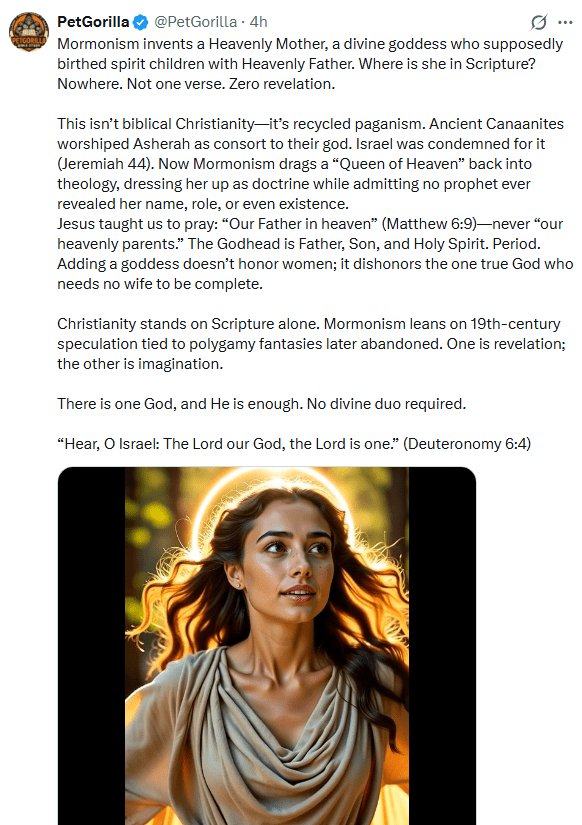
Is the Queen of Heaven truly a pagan intrusion, or is she the Bible's most significant missing person?
While the instinct to defend the One True God against idolatry is scripturally grounded, dismissing the concept of a Heavenly Mother as mere "recycled paganism" or "19th-century speculation" overlooks a mountain of archaeological evidence. The silence you may perceive in the canon may not actually be an absence of the Divine Mother or Divine Feminine. That is, unless you want to hold to heterodoxy tradition of God being a dyadic-non-binary being. And by this - holding to the tradition that God is genderless and encompasses both male and female attributes and characteristic traits. Such a notion stemming from Gnostic heresy and teachings.
However, evidence suggests a deliberate suppression of the divine feminine and divine mother during the Deuteronomistic reforms - a silence that modern revelation breaks. By examining the original Hebrew rendering of the text and historical role of Asherah within the Divine Council, we find that Latter-day Saint theology does not invent a new goddess; rather, it restores the suppressed First Temple theology of the Divine Feminine, aligning the creation narrative and the image of God with the best consensus of contemporary Biblical Scholarship.
To appreciate the Latter-day Saint viewpoint - and then respond to the X user PetGorilla's posting, we want to first dismantle the logical framework used. The rejection of the divine feminine rests not on the absence of evidence, but on a series of interpretive fallacies that mistake historical suppression for theological non-existence.
"And this is life eternal, that they might know thee the only true God, and Jesus Christ, whom thou hast sent." (Jn 17:3, KJV)
Hello, friends! Welcome to the Mindful Latter-day Saint Christian Living and Apologetics Channel, I am your host - Timothy R. Berman, where we explore faith with curiosity and an open heart. Today, we’re tackling a profound question: Does God the Father have a physical body? This is a response to a thought-provoking video by Seth from Theology of Seth titled “Is God an Exalted Man? (A Christian Response to Mormonism).” Seth argues that God is purely spirit, without a physical body, contrasting this with the Latter-day Saint belief that God has a glorified body of flesh and bone. I respect Seth’s dedication to scripture and his desire to share his faith. His arguments are worth engaging with, so let’s dive in with a biblically grounded LDS perspective. We’ll address his points using scripture, scholarly insights, and resources like Faith Answers, Informed Responses to show how our belief aligns with biblical truth. Our aim is to clarify, correct misunderstandings, and invite respectful conversation. If you’re new here, please subscribe and join us on this faith journey. Let’s begin!
I admire Seth’s passion for scripture and his desire to share his faith. His video raises important points that deserve a respectful, biblically grounded reply from a Latter-day Saint perspective. So, let’s unpack his arguments, examine the scriptures, and weave in insights from scholarly blog posts like “Does the Bible Teach that God is a Spirit According to John 4:24?” and “Was God Ever a Man?” Our goal? To clarify what we believe, address possible misunderstandings, and invite dialogue—all with an open heart.
If you’re new here, hit that subscribe button and join us on this journey of faith. Let’s get started!
Nature of God - What Does it Matter?
Does the Bible teach that God is Anthropomorphic - Exalted - and Divine?
Seth’s video centers on a few core arguments:
God is spirit, not physical - based on John 4:24 and Luke 24:39
A Physical God can’t be omnipresent - If God has a body, He’s limited, not everywhere at once
The Holy Ghost inconsistency - Latter-day Saints say a body is needed for godhood, so why doesn’t the Holy Spirit have one?
Biblical Warnings - verses like Hosea 11:9 and Deuteronomy 4:15-16 imply God isn’t physical
Anthropomorphisms are figurative - God’s “hands” or “Eyes” in scripture are not literal
The Incarnation applies only to Jesus - not God the Father, per Trinitarian theology
Seth concludes that Mormonism’s view of God as an exalted man is unbiblical. But are these arguments as airtight as they seem? Let’s explore them one by one, starting with the nature of God.
Is “God a Spirit” a Slam Dunk?
Seth leans heavily on John 4:24, where Jesus says, “God is spirit, and those who worship him must worship in spirit and truth.” He interprets this as proof that God is purely spirit, no body allowed. But let’s dig into the context—because context is king in biblical interpretation.
In John 4, Jesus is chatting with a Samaritan woman about worship locations—mountain or Jerusalem. He shifts the focus: it’s not where you worship, but how—in spirit and truth. The blog “Does the Bible Teach that God is a Spirit According to John 4:24?” nails this: Jesus is talking about the spiritual nature of worship, not defining God’s entire being ontologically. To jump from “God is spirit” to “God has no body” might be a hasty generalization fallacy—assuming a single attribute excludes all others.
He does provide the context of John 4 - yet missteps with the typical Evangelical Eisegesis Interpretation
“Now the Lord is that Spirit: and where the Spirit of the Lord is, there is liberty.” v. 18 “But we all, with open face beholding as in a glass the Glory of the Lord, are changed into the same image from glory to glory, even as by the spirit of the Lord.”
Paul opens up 2 Corinthians 3 with how the Gentile Christians at Corinth were “epistles written on our hearts” (v. 2) and an “epistle of Christ” (v.3) and that they were “written not with ink, but with the spirit of the Living God; not on tables of stone, but in fleshly tables of the heart” (v.3).
The context of 2 Cor. 3 describes the glory of the new covenant and the transformation that takes place in the lives of believers through the Holy Spirit
The Greek nuance here is reflective of worship - and to whom worship is owed - God.
God is invisible (Col. 1:15 describes the Son in the “mirror image and likeness” of the invisible God - who is the Father.
Worshiping God is not about external rituals or places - it is about a true and genuine spiritual connection
Worshiping in Spirit and truth is done sincerely, from the inner being, and according to God’s revealed truth
Correspondence between 2 Corinthians 3;17-18 and John 4:24
God’s invisible - spiritual nature: (John 4:24) is the same divine reality Paul refers to by affirming “the Lord is the Spirit” (2 Cor. 3:17). Both underscore that God’s nature transcends mortal physicality.
Worship “in spirit and truth”: John 4:24b) requires individuals to be led by the Holy Spirit, who dwells within believers (2 Corinthians 3), enabling worship that is genuine, heartfelt, and aligned with God’s truth from Scripture.
Spiritual Freedom: in 2 Corinthians 3 - the Apostle Paul aligns the liberation Jesus promises to true worshipers who engage God beyond any legalistic or ritualistic confines, reflecting the nature of “spirit and truth” of worship in John 4:24.
Authentic connection and worshiping of God come through the Spirit’s indwelling presence: Together, 2 Corinthians 3 and John 4 teaches a relational dynamic between believers and God.
Worship becomes a matter of the heart and spirit - empowered by the Holy Spirit who guides us into all understanding (John 14:26) and sincere adoration.
Believers experience freedom because the Spirit transforms them and frees them from sin and death, as well as religious burdens prescribed by Judaic Law (2 Corinthians 3:17)
True worship requires both Spirit-led sincerity and adherence to God’s revelation through Scripture and modern-day Prophets and Apostles.
This harmonizes inner experience with personal divine revelation
John 4 and 2 Corinthians 3 affirm that God’s spiritual nature demands worship and relationship initiated and empowered by the spirit, producing authentic worship and true freedom for believers
Think about it: 1 John 4:8 says, “God is love.” Does that mean God is only love, nothing else? No—it’s one aspect of His nature. Similarly, “God is spirit” highlights His spiritual essence, not a denial of physical form. Plus, in John 14:9, Jesus says, “He who has seen me has seen the Father.” If Jesus has a body—and He does, post-resurrection—couldn’t that hint at the Father’s nature too?
Seth pairs this with Luke 24:39: “A spirit does not have flesh and bones as you see I have.” Fair point—Jesus is proving His resurrection here, not describing the Father. But does this rule out a glorified, physical God? Not necessarily. Let’s hold that thought.
HOW CAN A PHYSICALLY EXALTED RESURRECTED GOD BE OMNIPRESENT?
SETH MISSES THE MARK ON LDS COSMOLOGY AND THE NATURE OF GOD
Seth argues that a physical body means God can’t be omnipresent—everywhere at once. He cites Psalm 139: “Where shall I go from thy spirit?” and Jeremiah 23:24: “Do I not fill heaven and earth?” In Mormonism, he says, God’s stuck on a planet near Kolob, far from us.
Here’s where a strawman fallacy might creep in—misrepresenting our belief. Latter-day Saints don’t see God as limited by His body. Doctrine and Covenants 88:7-13 explains that God’s influence—through the Light of Christ and the Holy Ghost—permeates all creation. His physical presence may be localized, but His power and awareness are infinite.
The blog “God and the Godhead: A Mindful Latter-day Saint Apologetic Perspective” supports this: God’s “fatherly care” extends universally, not confined by physicality. Scholars like Francesca Stavrakopoulou, in God: An Anatomy (cited in Petersen’s review), argue that ancient Israelites saw God as both physical and transcendent walking in Eden yet ruling all. So, omnipresence and a body aren’t mutually exclusive—it’s about how God operates, not where He’s stuck.
He cites Psalms 139: “Where shall i go from thy spirit?”
He also cites Jeremiah 23:24 “Do I not fill heaven and earth?”
He misrepresents LDS understanding stating that God resides on a planet - when in reality - God’s throne is near the star Kolob:
"And I saw the stars, that they were very great, and that one of them was nearest unto the throne of God; and there were many great ones which were near unto it; . . . And thus there shall be the reckoning of the time of one planet above another, until thou come nigh unto Kolob, which Kolob is after the reckoning of the Lord’s time; which Kolob is set nigh unto the throne of God, to govern all those planets which belong to the same order as that upon which thou standest” (Abraham 3:2, 9; emphasis added)
Doctrine and Covenants 88:7-13 teaches that God’s influence - via the light of Christ and the Holy Spirit - fills the universe. His physical body does not limit His very power and awareness.
Deuteronomy calls God a “all-consuming fire,” yet fire has form and still spreads.
1 John 1:5 says, “God is light,” which is both tangible and pervasive
A resurrected and glorified body does not trap God - it is how He interacts with creation while remaining infinite.
Scholar Francesca Stavrakopoulou notes that ancient Israelites saw God as an anthropomorphic being yet transcendent - walking in Eden, yet ruling all.
Reason the Holy Spirit Does not have a resurrected Body
Is Seth Correct regarding the LDS view on the Holy Spirit? Seth appears to beg the question: “If a body is key to Godhood, why is the Holy Spirit a Spirit?
Seth raises a great question: If Mormons believe a body is essential for progression to godhood, why is the Holy Ghost a spirit? He suggests this is a contradiction, a false dilemma fallacy—assuming it’s either/or without nuance.
In LDS theology, the Godhead—Father, Son, and Holy Ghost—are distinct beings with unique roles. Doctrine and Covenants 130:22 says the Father and Son have glorified bodies, but the Holy Ghost is a “personage of spirit” to fulfill His mission: testifying, comforting, and guiding universally. The blog “The Embodiment of God and the Holy Ghost” explains this via Ronald E. Bartholomew’s research: His spirit nature enables Him to “dwell in us” as an influence, not a literal indwelling.
Progression applies to mortals striving for exaltation—us, not the Godhead. The Holy Ghost’s divine status isn’t diminished; His role is specialized. Seth’s point is valid to question, but it doesn’t dismantle our view—it highlights the Godhead’s harmony.
He argues, based on D&C 130:22 - and the revelation of the Holy Spirit being a “personage of spirit” and not a resurrected, glorified, and exalted being appears contradictory
This is not an inconsistent doctrine as Seth attempts to lead on
Seth sets up a strawman argument via quote mining regarding the Lectures of Faith that were at one time included in the original Book of Commandments (now Doctrine and Covenants)
Critics, like Seth, attempt to charge that since LDS doctrine teaches a body is required for exaltation, the Holy Spirit cannot be fully God - because he does not have a physical body.
Yes, D&C 93:33 (and other scriptures) teach a body is necessary for a fullness of Joy
It is speculated that at some point - the Holy Spirit may receive a resurrected body at some point.
Joseph Fielding Smith observed that one ought to “avoid speculating on destiny of the Spirit” (Joseph Fielding Smith, Doctrines of Salvation, comp. Bruce R. McConkie, 3 vols., (Salt Lake City: Bookcraft, 1954–56), 39)
Joseph Smith proclaimed that the Holy Spirit will eventually receive a resurrected body: “Joseph Smith said the Holy Ghost will one day receive a body. He said: “The Holy Ghost is yet a spiritual body and is waiting to take to himself a body, as the Savior did.”[Joseph Smith, Encyclopedia of Joseph Smith’s Teachings, edited by Larry E. Dahl and Donald Q. Cannon (Salt Lake City: Bookcraft, 1997) See also: The Words of Joseph Smith, p. 382.]
The Holy Spirit actually does have a body - it is a spiritual body, not a resurrected body
It should be worthy to point out that in LDS thought, “There is no such thing as immaterial matter. All spirit is matter, but it is more fine or pure, and can only be discerned by pure eyes; we cannot see it; but when our bodies are purified we shall see that it is all matter.” (D&C 131:7-8). Why exactly the Holy Ghost has not received His Body lies in the realm of speculation.
Do Hosea 11:9 and Deuteronomy 4:15-16 Deny an anthropomorphic God?
Seth cites Hosea 11:9—“I am God and not man”—and Deuteronomy 4:15-16, where God warns against making images since no form was seen at Horeb. He sees these as proof God isn’t physical. But is that the full story?
The blog “Was God Ever a Man?” offers a steelman: In Hosea 11, God’s contrasting His mercy with human fickleness—He won’t destroy Israel despite their rebellion. It’s about character, not ontology. Assuming it denies a body might be eisegesis—reading into the text what isn’t there. Similarly, Deuteronomy 4 is about idolatry, not God’s nature. God didn’t show a form then, but elsewhere—like Genesis 18, where He eats with Abraham—He does.
Mark S. Smith’s The Early History of God (noted in “The Embodiment of God”) shows ancient Israelites saw Yahweh as anthropomorphic—enthroned, tangible—before later abstraction. Hosea and Deuteronomy don’t disprove a physical God; they emphasize His holiness and uniqueness.
God’s Throne - God’s Nature
Point of fact: The Pesachim 54:11 and the Bereshit Rahab both reason that one of the phenomena of creation is the very Throne of Glory prior to the creation of this Earth. This idea seems to mirror the hints we find through Christ himself in answering the mother of the two sons of Zebedee in Matthew 20 where he says that the Father prepares a place for those who will receive such honor - a throne of Glory (Matthew 20:20-23; Mark 10:35-45).
The Throne of Glory and the Temple were created before the world was created, as it is written: “Your Throne of Glory on high from the beginning, in the place of our Sanctuary” (Jeremiah 17:12). The name of Messiah was created before the world was created, as it is written in the chapter discussing the Messiah: “May his name endure forever; his name existed before the sun” (Psalms 72:17). The name of Messiah already existed before the creation of the sun and the rest of the world. This baraita states that Gehenna was created before the world was created and not during twilight before the first Shabbat.
And from Bereshit Rahab 1:
In the beginning, God created” – six items preceded the creation of the world; some of them were [actually] created, and some of them God contemplated creating, [though He did not actually do so]. The Torah and the Throne of Glory were created. Torah, from where is it derived? As it is stated: “The Lord made me at the beginning of His way” (Proverbs 8:22). The Throne of Glory, from where is it derived? “Your throne stands firm from earliest time, [You are from eternity]” (Psalms 93:2).
Here, the question is begged - if God is without beginning or end, and unchanging - then how come these Jewish commentaries that are authoritative give the notion that the Throne of Glory was created? Does this not imply that prior to their creation - such a throne had not existed? Furthermore, does it bring up another question - If the Father of Christ, and the father of us all, is preparing (creating) thrones of glory - one of which Christ will receive through divine inheritance - what does that say in relation to us as we are heirs and joint heirs with through Christ? (Romans 8:17).
In Jewish tradition, several prophets, including Micah, Isaiah, Ezekiel, and Daniel, were granted extraordinary visions of God seated on a throne, referred to in Hebrew as "kisse." These visions highlight the majesty and supreme authority of God over creation. The Jewish Virtual Library provides a detailed entry on this theme:
The vision of God sitting on a throne (kisse) is described by several prophets, among them Micaiah (I Kings 22:19), Isaiah (Isa. 6), Ezekiel (Ezek. 1), and Daniel (Dan. 7:9). Talmudic and midrashic sources developed this theme further, and it entered into religious poetry, liturgy, and mystical heikhalot tracts of the early centuries C.E., which speak of the throne as the merkavah, or "chariot" (see *Merkabah Mysticism). Among Jewish philosophers, Saadiah and Maimonides, who objected to all anthropomorphic descriptions of God, attempted to explain the visions of the throne allegorically, in contrast to Judah Halevi who accepted a more literal interpretation of the chariot vision (Kuzari, 3:65) and who used the image of the throne in his religious poems.
This diversity of interpretation reflects the richness of Jewish thought. Philosophers like Saadiah and Maimonides sought to distance these visions from physical depictions of God, favoring symbolic meanings, while Judah Halevi embraced a more tangible understanding, weaving the throne imagery into his poetic expressions of faith. Regardless of approach, these visions underscore the Throne of Glory as a powerful symbol of divine rule.
Among these prophetic accounts, Ezekiel’s vision stands out for its vividness and depth, offering a striking portrayal of God’s divine glory enthroned. Recorded in Ezekiel 1:1-28 and 3:12, this inaugural vision and commission bring Ezekiel as close as possible to perceiving God directly. He witnesses God’s throne, hears its movement, and is overwhelmed by the divine Presence. This passage serves as the haftarah reading for Exodus 19:1-20:23, recited on the first day of Shavuot, the festival commemorating the Torah’s revelation at Mount Sinai.
Rabbinic tradition calls this narrative "the episode of the chariot" due to its use of imagery linked to the Ark of the Covenant, which 1 Chronicles 28:18 describes as God’s chariot (see also Psalms 68:18; 18:11). The Ark, often depicted as the place where the "Lord of Hosts is enthroned on the cherubim" (1 Samuel 4:4; 2 Samuel 6:2; 1 Chronicles 13:6), connects Ezekiel’s vision to the Holy of Holies in the Temple. This linkage aligns with Pesachim 54:11, which states that the Throne of Glory and the Temple were created before all else, uniting God’s heavenly throne with His earthly sanctuary.
Given the profound and sensitive nature of this material, the Mishnah stipulates that it should only be expounded by a "sage that understands his own knowledge"—a scholar fully versed in Jewish tradition. This restriction underscores the need for careful interpretation to avoid misrepresentation of God’s nature.
The Jewish Study Bible’s commentary on Ezekiel 1:4-28a (p. 1045) notes that this vision of God’s Throne Chariot draws heavily on the imagery of the Holy of Holies, reinforcing the connection to the Temple’s preeminent creation. In verses 26-28 (p. 1048), Ezekiel offers a detailed description of the divine Presence:
(26) Sapphire (possibly lapis lazuli), see Exodus 24:10, which employs the imagery of blue sapphire or lapis to depict the pavement under God’s feet, which humans see as the sky. (27) Gleam as of amber and fire convey the power and incorporeality of the divine Presence. (28) The rainbow symbolizes God’s covenant with creation (see Genesis 9:8-17). The Presence of the Lord, a priestly term for God’s glory (Exodus 16:6-7; 40:34-38). The voice of someone speaking: Cf. 1 Kings 19:12, which portrays the Divine Presence as "a still small voice" or "a soft murmuring sound." Ezekiel, in a sign of reverence and fear, lies prostrate before the Ark in the Holy of Holies of the Temple (1 Kings 8:54; Psalm 5:8; 99:5; 132:7; 138:2; 1 Chronicles 16:29; 2 Chronicles 20:5-18).
Ezekiel sees a figure on the throne resembling a man, with a lower part like fire and an upper part gleaming like amber, symbolizing God’s power and transcendence. The rainbow encircling the throne recalls God’s covenant with humanity (Genesis 9:8-17), while the "voice of someone speaking" evokes the "still small voice" of 1 Kings 19:12. In awe and reverence, Ezekiel falls prostrate, mirroring the posture of worship before the Ark in the Temple’s innermost sanctuary.
The Throne of Glory thus embodies God’s divine sovereignty, majesty, and authority over all creation. This concept extends into Christian theology, where the throne signifies the preeminence of Christ, described as the Creator of all things in Colossians 1:16. Furthermore, Revelation 3:21 promises that those who overcome, as Christ has, will sit with Him on His throne, just as He sits with the Father. This foreshadows a future where believers share in Christ’s glory and authority, fulfilling the divine plan initiated before creation.
In both Jewish and Christian traditions, the Throne of Glory represents God’s ultimate governance. Ezekiel’s vision, with its rich imagery and theological depth, bridges the heavenly and earthly realms, while Christ’s role as Creator and the promise of shared glory expands its significance, offering a vision of divine sovereignty that transcends time and creation itself.
Seth attempts to reason from Hosea 11:9 and Deuteronomy 4:15-16
Seth points to Hosea 11:9 - “I am God and not man”
Seth also points to Deuteronomy 4:15 - 16, where no form was seen at Horeb, arguing God is not physical
Seth argues that context matters - and yet fails to follow his own understanding of appealing to the context of scripture here
Hosea (as I have mentioned in a previous video and blog post) contrasts God’s mercy with human weakness - He won’t destroy Israel despite their sin.
Deuteronomy 4 warns of idolatry - not God’s very nature
Genesis 18 reveals that God appeared to Abram (YHWH - Pre-incarnate Christ and two angels/messengers
Mark S. Smith’s research reveals early Israelites viewed God as anthropomorphic - tangible and enthroned
Genesis 1:26-27 Hebrew literally means - exact image and likeness of God in nature and being.
Critics fail to understand that throughout the Old and New Testament - God is described as “Sitting on a Throne”.
Thrones depict divine authority, supremacy, and divine presence
God is described as seated before a divine council (e.g. Job 1, 2).
Christ is seated on a throne of Glory with the Father (Revelation 3:21)
God’s throne is tied to the Holy of Holies - the Ark of the Covenant - and Davidic King’s Throne
Christ taught that the Apostles themselves will be seated with Christ on Divine Thrones of Glory (Matthew 19)
Christ also taught that the “Father prepares a place” for those who will receive “thrones of Glory” (Matthew 20).
Pesachim 54:11 and Bereshit Rahab 1 all refer to God’s Throne of Glory coming into existence - being created
Is it Figurative or Literal?
Seth says biblical mentions of God’s “hands” or “eyes”—like Psalm 8 or Proverbs 15—are figurative, not literal. He warns against a “woodenly literal” view, citing wings and feathers as absurd if taken literally. Fair critique—context matters. But here’s a slippery slope fallacy risk: dismissing all anthropomorphisms as metaphors might overlook intent.
Exodus 33:11—God speaks to Moses “face to face”—and Acts 7:56—Stephen sees Jesus at God’s right hand. Are these just poetic? Scholarly work, like Stavrakopoulou’s, suggests early biblical writers meant them as real descriptors of a relatable God.
In LDS theology, Genesis 1:26-27—“in our image, after our likeness”—includes physical form. Hebrews 1:3 calls Jesus the “express image” of the Father’s person. If Jesus has a body, why not the Father? We see these as glimpses of truth, not mere symbols.
Seth creates a false dichotomy where he reasons that if one takes a literal (anthropomorphic interpretation) then passages that say God has wings is literally defining God as having physical wings.
There is a difference in poetic language interpretation that is figurative and not literal
God having winds is poetic expression - utilizing a metaphor
It is like saying - “If God is spirit” and another says “God is Love” then God is literally Love
Exodus 33:11 is not figurative as it is literal in that Moses saw God “face to face’
Acts 7:56 is where Stephen sees in vision the Glory of the Father and Christ at His right hand through the power of the Holy Spirit
Non-LDS Scholar Stephen H. Webb notes that “Mormons” revived early Christian beliefs in an embodied God - discarding Greek-influenced creeds
Christ’s Incarnation and Resurrection
Seth recites John 1:14 and appears to imply that Chris is the “only begotten” in the sense of the incarnation - Latter-day Saints actually agree with this
Seth further claims that this applies to Christ alone and not to the Father
He attempts to reason this by reinterpreting John 5:19 as being in the context of the miracles he just preformed and not mortality.
Seth argues to appeal to context of scripture regarding John 5:19 and only focuses on the verses prior to John 5:19 - not the context of verses that proceed after John 5:19 regarding the two resurrections, judgment, and Christ laying down His life, as he seen the Father do, in order to raise it up again - being the first fruits (cf. John 5:19-47)
Christ’s very real bodily resurrection (1 Corinthians 15) speaks volumes to the reality of a divine being taken on mortality, living, dying, and then rising up with a resurrected body.
Seth, like all critics, attempt to reason from a 3rd century Gnostic and Greek influenced, immaterial God - Far from what the Bible actually describes and reveals
Biblical Scholars affirm Latter-day Saint belief on God’s ontological nature
Does the Incarnation Prove Only Jesus Has a Body? What of His Resurrection?
Seth argues that Jesus’ incarnation—John 1:14, “The Word became flesh”—applies only to the Son, not the Father, per Trinitarian distinctions. He tackles John 5:19—“The Son does what he sees the Father do”—saying it’s about miracles, not mortality.
This assumes a begging the question fallacy—presupposing the Trinity to refute our view. In LDS theology, the Godhead isn’t one essence but three beings. “Was God Ever a Man?” explores John 5:19 through the “eternal now principle”—Christ sees the Father’s timeless acts, possibly including a past mortal phase (King Follett Discourse). If Jesus became mortal and resurrected, mirroring the Father’s path isn’t far-fetched.
John 20:17— “I ascend to my Father and your Father”—and Colossians 1:15— “the image of the invisible God”—suggest a physical connection. The incarnation shows divinity can embrace physicality without losing glory.
Seth recites John 1:14 and appears to imply that Chris is the “only begotten” in the sense of the incarnation - Latter-day Saints actually agree with this
Seth further claims that this applies to Christ alone and not to the Father
He attempts to reason this by reinterpreting John 5:19 as being in the context of the miracles he just preformed and not mortality.
Seth argues to appeal to context of scripture regarding John 5:19 and only focuses on the verses prior to John 5:19 - not the context of verses that proceed after John 5:19 regarding the two resurrections, judgment, and Christ laying down His life, as he seen the Father do, in order to raise it up again - being the first fruits (cf. John 5:19-47)
Christ’s very real bodily resurrection (1 Corinthians 15) speaks volumes to the reality of a divine being taken on mortality, living, dying, and then rising up with a resurrected body.
Seth, like all critics, attempt to reason from a 3rd century Gnostic and Greek influenced, immaterial God - Far from what the Bible actually describes and reveals
Biblical Scholars affirm Latter-day Saint belief on God’s ontological nature
Seth’s arguments are rooted in a spirit-only God shaped by Greek philosophy, as “The Embodiment of God” notes via Petersen. But ancient texts—like the Book of Jubilees or Sumerian myths in “The Nature of God and Creation”—depict a physical deity creating in His likeness. This aligns with Joseph Smith’s First Vision: God and Jesus as tangible beings.
Our belief isn’t unbiblical—it’s a restoration of early truths. We don’t worship a “different God,” as Seth claims; we see Him as a loving Father, relatable yet infinite. His body doesn’t limit Him—it exalts us, promising resurrection (1 Corinthians 15) and eternal growth.
Conclusion: A Call to Reflect
Thanks, Seth, for sparking this convo. Your points are sincere, and I hope our response shows where we agree—and differ—mindfully. To my viewers: What do you think? Does God’s physicality change how you see Him? Drop your thoughts below—I’d love to hear them.
For more, check out those blog posts linked in the description. Let’s keep seeking truth together, with respect and faith. Until next time, may you feel God’s love—however you envision Him.
LATTER-DAY SAINT THEOLOGY AND COSMOLOGY ON GOD’S ONTOLOGICAL NATURE IS FIRMLY ROOTED IN BIBLICAL TRUTH
SETH MISSES THE MARK ON LDS COSMOLOGY AND THE NATURE OF GOD
SETH USES A HASTY GENERALIZATION FALLACY REGARDING JOHN 4:24 ALONG WITH TYPICAL TRINITARIAN EISEGESIS PROOF TEXTING
SETH EMPLOYS A STRAWMAN ARGUMENT REGARDING HOW GOD CAN’T BE OMNIPRESENT IF HE IS AN EMBODIED EXALTED BEING
SETH USES A FALSE DILEMMA ARGUMENT REGARDING THE NATURE OF THE HOLY SPIRIT WHERE HE ASSUMES AN EITHER/OR WITHOUT PROPER NUANCE
SETH USES MORE EISEGESIS INTERPRETATION RATHER THAN EXEGESIS INTERPRETATION REGARDING HOSEA 11:9 AND DEUTERONOMY 4:15-16
SETH USES A SLIPPER SLOPE FALLACY REGARDING FIGURATIVE AND LITERAL INTERPRETATIONS REGARDING ANTHROPOMORPHIC DESCRIPTORS - POETIC VERSES NON-POETIC
SETH BEGS THE QUESTION REGARDING THE INCARNATION OF CHRIS WHEN IT COMES TO JOHN 1:14 AND JOHN 5:19
BIBLICAL SCHOLARSHIP PROVES THE TRINITARIAN DOCTRINE OF GOD AS UNBIBLICAL
HISTORICAL ANALYSIS PROVES THE TRINITARIAN DOCTRINE OF GOD AS UNBIBLICAL










.jpg)
