Showing posts with label Apostle Paul. Show all posts

Monday, September 14, 2026

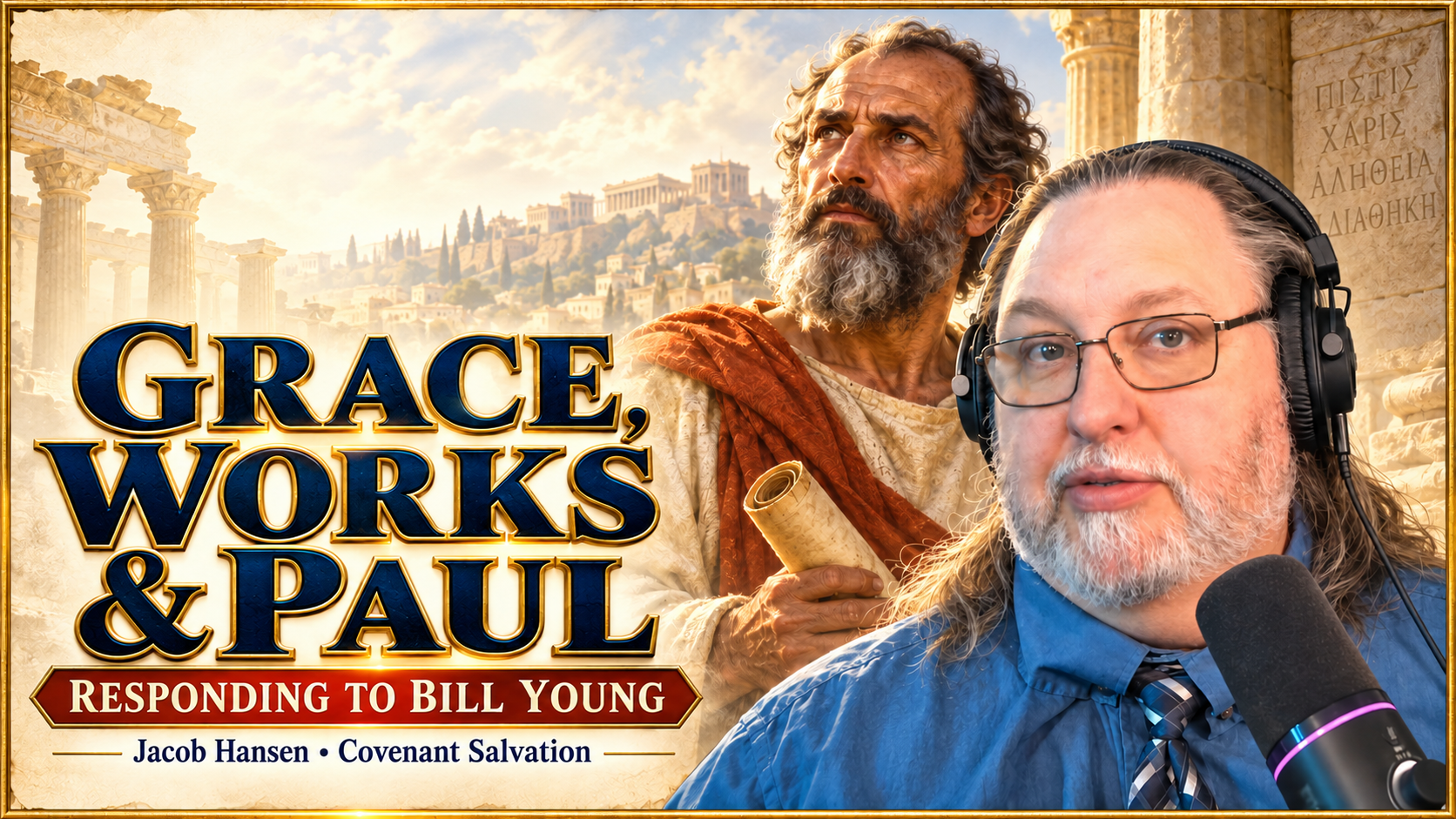
Bill Young's Response to Jacob Hansen: Does Covenant Obedience Deny Grace?

Bill Young's Response to Jacob Hansen: Does Covenant Obedience Deny Grace?

Does obedience turn the gift of salvation into a wage? That is the question beneath Bill Young’s response to Jacob Hansen—and it deserves a better answer than either “Mormonism is counterfeit” or “modern scholarship proves us right.” A Christian can affirm that Christ alone makes salvation possible while still believing that repentance, faithfulness, and a transformed life matter. The dispute begins when we ask how they matter: as payment, as conditions of receiving a gift, as evidence of living faith, or as the life that grace itself creates.

In Episode 104, Young argues that Hansen’s covenant model gives familiar LDS requirements a more attractive vocabulary without changing their function. That objection has force against any explanation that merely renames achievement as relationship. But Young’s broader conclusion—that necessary covenant obedience must therefore amount to earning salvation—requires an additional argument. Neither the presence of conditions nor the fact that human beings actually act establishes that their actions purchase God’s forgiveness.

This response approaches the debate from a Latter-day Saint perspective while taking Protestant objections seriously. It examines the supplied transcript and comment-section record alongside Pauline scholarship, Jewish historical scholarship, LDS sources, and evangelical biblical commentaries. Some of the evidence supports Young’s criticisms of oversimplified apologetics; other evidence directly challenges his portrayal of LDS grace and the scholarly alternatives he dismisses. The purpose is to identify which claims survive careful examination and to hold our treatment of other people to the Christian standard we invoke.

In this response

  • Young’s strongest objection
  • Paul, Judaism, and covenant
  • Grace, necessary works, and merit
  • “After all we can do”
  • What LDS leaders have taught
  • Comments and logical fallacies
  • The Christian standard
  • Frequently asked questions
  • Sources and further reading

What this response examines

The principal source is Young’s “Response to Jacob Hansen’s Covenant Model of Salvation”, identified as Episode 104 in the supplied materials. Quotations below follow the supplied transcript, with punctuation lightly normalized where needed; timestamps identify the relevant passages. The opening Hansen clip is presented within Young’s episode, so this article evaluates the argument as represented there rather than claiming to review every statement Hansen has made elsewhere.

Comment quotations come from the supplied document titled EP 104: Response to Jacob Hansen’s Covenantal Salvation Comment section. Usernames and document paragraph numbers identify excerpts where individual comment permalinks were not supplied. These are selected examples, not a statistical description of the entire audience. The record also contains substantive biblical arguments and objections to mockery. A commenter’s statement is attributed to that account; it is not automatically treated as Young’s own position.

Friday, January 31, 2025

Gnostic Wisdom from the Nag Hammadi Library: The Prayer of the Apostle Paul


Exploring the Prayer of the Apostle Paul – Ancient Wisdom for Modern Faith

The Prayer of the Apostle Paul is one of the most intriguing and spiritually rich texts found in the Nag Hammadi Library, an essential collection of ancient Christian and Gnostic writings discovered in 1945. This unique prayer, translated by Dieter Mueller, is located on the front flyleaf of Codex I (Jung Codex), offering a rare and profound insight into early Christian thought beyond the canonical scriptures.

Paul, one of the most influential figures in early Christianity, is widely known for his prayers recorded in his New Testament epistles, such as those in Ephesians, Philippians, and Colossians. His biblical prayers emphasize themes of spiritual growth, divine wisdom, strength through the Holy Spirit, and unity in Christ. However, the Prayer of the Apostle Paul, preserved in the Gnostic tradition, expands on these themes by delving deeper into mystical understanding, divine illumination, and personal transformation—concepts that resonate with both Christian and esoteric traditions.

This prayer calls upon the supreme, ineffable God and reflects Paul’s desire for spiritual enlightenment, not only for himself but for all who seek a profound connection with the Divine. It echoes the yearning of the human soul to transcend worldly limitations and attain a deeper, spiritual awakening. Whether interpreted through the lens of traditional Christian theology or viewed as a Gnostic meditation, the Prayer of the Apostle Paul offers a timeless message of divine wisdom, inner transformation, and the pursuit of truth.

In today’s fast-paced and often chaotic world, where people struggle with uncertainty, doubt, and spiritual disconnection, Paul’s ancient words still hold immense relevance. This prayer encourages believers and seekers alike to look beyond the material realm, seek divine wisdom, and cultivate a deeper faith that transcends religious boundaries. By exploring this ancient text, modern readers can find inspiration, strength, and a renewed sense of purpose in their spiritual journey.

🌟 Read the full article on Medium to dive deeper into the meaning, history, and modern significance of Paul’s prayer. 


Tuesday, January 14, 2025

2 Corinthians 11:14 and the Angel Moroni: Dispelling Myths About Satanic Deception

Moroni Appears to Joseph Smith in His Room, by Tom Lovell

Paul’s words in 2 Corinthians 11:14 caution us about Satan’s ability to disguise himself as an angel of light. This verse is often cited in criticism of Joseph Smith’s account of the Angel Moroni’s visitation, with claims that Moroni was a deceptive figure akin to Satan or a demonic apparition. While these arguments may seem compelling at first glance, they often overlook the context of Paul’s warning and the profound differences between such deceptions and Joseph’s experience. In this post, I’ll address these criticisms, providing clarity rooted in scripture and evidence, and showing why the Angel Moroni does not align with the warning in 2 Corinthians.

Understanding 2 Corinthians 11:14

Paul’s statement in 2 Corinthians 11:14—“And no marvel; for Satan himself is transformed into an angel of light”—serves as a powerful warning about deception cloaked in righteousness. This passage has sparked much debate, particularly when applied to experiences like Joseph Smith’s account of the Angel Moroni’s visitation. Let’s unpack how this verse fits into Paul’s broader message and explore how biblical principles on spiritual discernment provide clarity.

Paul’s Warnings Against Deception

Paul’s words resonate with urgency. In the context of 2 Corinthians 11, he cautions against false apostles and deceitful workers who masquerade as messengers of God. For Paul, deceit isn’t always obvious; it often mimics truth to mislead the faithful. By comparing Satan to an "angel of light," Paul illustrates how evil can present itself as virtuous, appealing, or even divine.

Why does this matter? Because it underscores the need for vigilance. Throughout his letters, Paul emphasizes that appearances can deceive, pushing believers to rely on the Spirit and scripture rather than surface impressions. Misinterpreting 2 Corinthians 11:14 risks conflating legitimate heavenly visitations, like Moroni’s, with the malicious deceptions Paul warns about. A post-mortal being appearing with messages aligned with God’s plan is far from fitting the description of Satan’s cunning disguises.

When critics equate the Angel Moroni with this passage, they ignore the larger context. Paul wasn’t condemning every angelic appearance but rather the specific phenomenon of spiritual impostors sowing chaos. Does Moroni’s message reflect this? Or does it inspire faith, lead to Christ, and bring forth fruit worthy of the Spirit?

Testing Spirits by Their Fruits

To discern truth, the Bible provides practical frameworks. In 1 John 4:1, believers are urged to “test the spirits” to see whether they come from God. This test isn’t just theoretical; it’s rooted in evaluating fruits. Matthew 7:15-20 reinforces this, comparing false prophets to bad trees that produce corrupt fruit. “By their fruits ye shall know them.”

If we apply these principles to Moroni’s visitation, the results are obvious:

  • Does the message align with God’s doctrines? Moroni’s message called for repentance and restored gospel truths that lead to Christ.
  • What fruits followed the event? The Book of Mormon emerged, bringing millions closer to God. Corrupt spirits don’t yield such outcomes.
  • Is the Spirit’s witness present? Those who sincerely study Joseph Smith’s account and seek guidance find peace, clarity, and testimony.

The method of testing spirits by their fruits highlights critical distinctions. Satan’s deceit leads to confusion, despair, and division. Moroni’s message leads to light, understanding, and divine unity. This contrast is undeniable when we examine the evidence.

By following these principles, we recognize that not all claims of angelic visitation fall into the deception Paul warns against. Moroni’s impact, both spiritually and practically, stands as a testament to its divinely inspired purpose.

The Angel Moroni’s Visit: A Christ-Centered Message

Moroni’s visitation to Joseph Smith carries profound significance, not just for its spiritual weight but for its Christ-centered focus. Rather than being a random apparition, his message ties deeply into scripture, restoration, and direct adherence to the teachings of Christ. Let’s break this down through the lens of the scriptures he cited, the call for restoration, and the unchanging principles Moroni emphasized.

Scriptures Cited by Moroni

During his visits, Moroni quoted several powerful scriptures: Malachi 3:1, Isaiah 11, Acts 3:22-23, and Joel 2:28-32. These verses weren’t chosen at random; they point to central themes of Christ’s mission, the gathering of Israel, and the restoration of truth.

  • Malachi 3:1 speaks of a messenger preparing the way for the Lord. Moroni’s quoting of this verse underscores the idea of Joseph Smith as a preparatory figure in restoring the gospel before Christ's second coming.
  • Isaiah 11 prophesies the gathering of Israel and the reign of Christ as the righteous judge. Moroni directly tied this chapter to the role the Book of Mormon would play in uniting scattered Israel under Christ’s banner.
  • Acts 3:22-23 references Moses’ prophecy of a prophet to come. Moroni made it clear that Christ’s gospel, present since ancient times, was being restored in fullness through Joseph Smith.
  • Joel 2:28-32 beautifully foretells the outpouring of the Spirit in the latter days, pointing to visions, dreams, and spiritual gifts. Moroni’s reference to this prophecy highlighted the growing role of divine revelation in modern times.

Each passage cited emphasizes how Moroni’s mission was firmly rooted in establishing Christ as the center of faith, with all roads leading back to Him. His words align with themes of repentance, renewal, and the fulfillment of ancient prophecies.

The Restoration and Modern-Day Revelation

Moroni’s message was a direct catalyst for the Restoration. He illuminated the need for the return of priesthood authority, scripture, and divine guidance. His visitation wasn’t just symbolic; it marked the beginning of a series of events that re-established Christ’s church.

The translation of the Book of Mormon fulfilled prophecies hinted at in Isaiah and other books. This sacred text provided clarity to doctrines misunderstood or lost over time. It’s not just another volume of scripture—it’s the keystone that unites biblical teachings with modern revelation. Moroni’s role in restoring these truths reflects the divine hand guiding humanity back to Christ.

Moreover, modern-day revelation builds upon Moroni's visit. As prophesied in Joel, the heavens are not closed. The Restoration confirms that God continues to speak directly to His children, guiding them to walk in Christ’s light. Faithful members today can look to the fruits of this restoration—the priesthood, temples, and additional scripture—as evidence of divine truth tied back to Moroni’s message.

Consistent Principles in Moroni’s Instructions

At the heart of Moroni’s instruction were enduring principles: faith, prayer, repentance, and adherence to Christ's teachings. These are timeless themes that connect heaven and earth.

  1. Faith: Moroni urged Joseph to trust in God, even when faced with challenges. Faith became the foundation upon which the Restoration was built.
  2. Prayer: He emphasized prayer as a direct line to God. Joseph’s first prayer led to the First Vision, and Moroni reaffirmed the necessity of ongoing communication with God.
  3. Repentance: As a messenger of Christ, Moroni’s call for repentance laid the groundwork for a reawakening of righteousness among individuals and nations.
  4. Adherence to Christ’s Teachings: Every aspect of the visitation directed attention to Christ. Moroni was a servant, but his purpose was to point all efforts back to the Savior.

Moroni’s words and actions resonate with clarity. His focus wasn’t on himself but wholly on enabling others to return to Christ through faith and obedience. By following these principles, Joseph Smith not only witnessed miracles but also became an instrument in the Lord’s hands to restore the fullness of the gospel.

Moroni’s visit is more than a historical event—it’s a reflection of God’s unwavering devotion to His children. Through scripture, restoration, and consistent teachings, Moroni’s message continues to shine brightly, centered entirely on Christ and His divine mission.

Countering Misinterpretations of 2 Corinthians 11:14

Paul’s caution in 2 Corinthians 11:14 about Satan disguising himself as an angel of light is often misused to discredit the visitation of the Angel Moroni to Joseph Smith. Critics argue that Moroni mirrors the "angel of light" Paul warned about, but these claims overlook significant evidence. Scripture provides us tools to distinguish divine truth from cunning deceit. Moroni’s message and its fruits speak clearly to its noble, Christ-centered origin.

Evaluating the Fruits of Moroni’s Message

In the Bible, Jesus teaches, "By their fruits ye shall know them" (Matthew 7:20). This simple test helps us discern between true prophets and impostors. The fruits of Moroni’s message, encapsulated in the Book of Mormon, provide compelling evidence of divine inspiration.

  1. A Christ-Centered Text: The Book of Mormon mentions Jesus Christ nearly 4,000 times, testifying of His divinity, atonement, and resurrection. It directs believers to follow Him more closely. Could a deceptive message inspire such unwavering focus on the Savior?
  2. Tangible Spiritual Impact: Millions of people worldwide testify of the Book of Mormon’s power to transform lives. It invites readers to grow in faith, cultivate humility, and embrace repentance. Its teachings lead individuals closer to God, which aligns with divine purposes, not satanic deceit.
  3. A Unique Role in God’s Plan: The Book of Mormon restores significant lost truths. Its purpose of gathering Israel and pointing to Jesus Christ is deeply rooted in biblical prophecy, echoing the mission of ancient apostles and prophets.

If Moroni’s visitation resulted in confusion, rebellion, or pride, then concerns might hold weight. But its fruits lead to light, knowledge, and spiritual growth—hallmarks of divine origin, not deception.

Differentiating Between Deception and Divine Truth

Paul’s warning about false apostles and Satanic imitations in 2 Corinthians 11:14 emphasizes deception's distinct traits. Satan thrives on manipulation characterized by selfishness, disobedience, and chaos. Does this describe the Angel Moroni’s message? Not at all.

  • Satan’s Deceptions: His model is clear—sow confusion and pride, reject obedience, and pull individuals away from God. His lies fuel apostasy and division.
  • Moroni’s Message of Obedience: Moroni called Joseph Smith to repentance, prayer, and humility. He urged him to act as God’s instrument in restoring truth. This message reflects exact obedience to God, a stark contrast to the rebellion Satan champions.
  • Encouraging Faith: Those who prayerfully examine Joseph Smith’s vision and Moroni’s visitation often feel confirmation from the Holy Spirit. Peace and clarity follow, not turmoil—a sign that divine truth is at work.

By looking at these traits, it’s clear that Moroni’s visitation was far removed from evil. Satan’s pattern of self-promotion is diametrically opposed to Christ-focused humility, the hallmark of the angel’s message.

The Role of Persecution in Validating Truth

Criticism and persecution often serve as hidden validators of truth. Christ Himself said, "Blessed are ye, when men shall revile you, and persecute you... for my sake" (Matthew 5:11). Look at what Joseph Smith endured after sharing Moroni’s message.

Joseph faced public ridicule, legal harassment, violent mobs, and relentless opposition. Why would someone endure such trials unless they genuinely believed their experience to be divine? Deceivers typically seek personal gain or glory, not hardship or sacrifice.

Moreover, this persecution aligns with patterns we see throughout scripture. Prophets like Moses, Jeremiah, and Christ Himself were criticized, doubted, and attacked for teaching God’s truth. Persecution, therefore, becomes a marker of authenticity, not fraudulence.

In contrast, Satan’s goals tend toward comfort and self-gratification. Would he inspire a message that leads to lifelong hardship for its messenger and selfless service among its adherents? The evidence suggests otherwise.

Moroni’s visitation, when viewed through the lens of scripture and spiritual discernment, stands firmly on the side of divine truth, not deception. As we align with biblical counsel to test spirits and evaluate their fruits, the truth becomes clear: Moroni’s message passes every test Paul and Christ provide.

Comparison: Joseph Smith vs. Muhammad

Critics often compare Joseph Smith and Muhammad, claiming similarities in both figures being visited by angels and founding religious movements. While at first glance these parallels might seem significant, a deeper examination reveals profound differences in their messages, methods, and goals. These distinctions challenge the notion that their experiences can be equated, especially in the context of claims that both were influenced by Satan or deceptive forces.

Christ-Centered Teachings vs. Alternative Theology

Joseph Smith’s role in the Restoration firmly places Christ at the center of Mormon theology. Every aspect of his message—from his First Vision to the translation of the Book of Mormon—points to Jesus Christ’s divinity, atoning sacrifice, and leadership as the head of His church. In contrast, Muhammad’s theological message in Islam was strictly monotheistic, emphasizing submission to Allah and rejecting Jesus Christ’s role as the divine Son of God.

For Joseph, Christ was the cornerstone of salvation. The Book of Mormon testifies of Christ nearly 4,000 times, presenting Him as the Savior of the world. Muhammad, however, positioned Jesus as a revered prophet but denied His divinity and the necessity of His atonement. These theological contrasts reveal that Joseph’s restorationist vision sought to expand upon and complement biblical Christianity, while Muhammad’s message rejected core Christian doctrines to establish a distinct faith.

Ask yourself: can a Christ-centered movement originate from Satan? The fruits of Joseph Smith’s teachings—repentance, faith in Christ, and spiritual growth—are fundamentally at odds with the rebellion and deception that Paul warns against in 2 Corinthians 11:14. By contrast, Muhammad’s rejection of Christ’s divine role marks a clear theological departure from the gospel message.

The Book of Mormon and the Qur’an

Another striking difference lies in their respective texts, the Book of Mormon and the Qur’an. The Book of Mormon explicitly complements the Bible, aiming to restore lost truths and clarify doctrines that had been obscured over time. It describes itself as "Another Testament of Jesus Christ," lending support and additional witness to His ministry. Its teachings build upon biblical foundations, emphasizing themes of grace, repentance, and the gathering of Israel.

The Qur’an, on the other hand, positions itself as a corrective to the Bible, declaring earlier scriptures as flawed or corrupted. It replaces key doctrines, such as the Trinity and the divinity of Christ, with alternative Islamic teachings. Where the Book of Mormon seeks to unite believers around Christ’s gospel, the Qur’an delineates a distinct path, often in opposition to Christian theology.

If we compare their fruits—another method Christ taught for discerning truth—the differences become even more apparent. The Book of Mormon promotes unity in Christ, while the Qur’an’s message has historically been accompanied by divisions between Islam and Christianity. This is not to criticize cultural or historical context but to highlight the theological distinctions of both texts.

Restoration of Priesthood Authority

Joseph Smith’s teachings include an essential component absent in Islamic tradition: the restoration of priesthood authority through angelic ordination. According to Latter-day Saint beliefs, this priesthood—lost during the Great Apostasy—was returned to the earth by heavenly messengers. Angels such as John the Baptist and Peter, James, and John restored this sacred power, allowing for the performance of ordinances like baptism and sealing in Christ’s name.

In Islam, no comparable concept of restored priesthood exists. Muhammad’s role as a prophet did not include an emphasis on a centralized holy authority like the priesthood. Instead, Islam focuses on submission to Allah without a structured priesthood lineage. For Christians grappling with the idea of heavenly messengers, this distinction is crucial. Joseph’s experience was not just about receiving knowledge or scripture but about re-establishing the authority to act in God’s name.

Is it plausible that Satan would restore divine authority, a gift meant to unite families and bring followers closer to Christ? The very nature of the priesthood—selfless, service-oriented, and tied to Jesus Christ—suggests its source is divine, not deceptive.


Through these comparisons, the unique Christ-centered focus of Joseph Smith's mission becomes clear. The theological divergence between Joseph’s restoration message and Muhammad's prophecy challenges critics’ claims and highlights how essential it is to evaluate spiritual truth based on fruits and alignment with Christ’s teachings.

Historical Context of Moroni’s Visitation

The story of Moroni’s visitation to Joseph Smith cannot be fully understood without considering the historical and cultural climate in which it occurred. In the early 19th century, America was a land of great religious upheaval and fervor, deeply influenced by movements like the Second Great Awakening. This environment shaped how people viewed divine encounters and revelations, making Joseph Smith’s experiences all the more significant.

The Influence of the Second Great Awakening

The Second Great Awakening swept through early 19th-century America, sparking widespread religious revival. Western New York, known as the "Burned-Over District," became a hotspot for this spiritual fervor. The region earned its name because it had been so heavily evangelized that there was little “fuel” left for further revivalism. Religious meetings were held in fields, churches, and homes, with fiery preachers calling for heartfelt repentance and conversion.

This revivalist movement encouraged personal connections with the divine, with many believing that visions or spiritual manifestations were evidence of true faith. It created an environment where extraordinary claims of divine revelation were not only acceptable but expected. Against this backdrop, Joseph Smith’s description of an angelic visitation resonated with a culture primed for supernatural occurrences. Moroni’s appearance, however, stood out for its structured purpose and ultimate goal—restoring Christ’s gospel rather than merely inspiring personal change.

While the Second Great Awakening celebrated spiritual encounters, it also sowed confusion. Competing denominations, theological debates, and fragmented sects vied for dominance, leaving many individuals spiritually adrift. Joseph himself expressed confusion over the conflicting doctrines being preached. Moroni’s message came at a time when clarity and divine direction were urgently needed, offering a solution to the chaos by pointing toward a unified gospel message and a tangible scripture—the Book of Mormon.

Distinguishing Joseph Smith’s Experiences from Other Claims

Joseph Smith’s accounts of Moroni’s visitation are remarkable for their consistency and Christ-centered focus, especially when compared to other purported spiritual encounters of the time. Revivalist preachers, visionary figures, and even treasure-seekers often reported divine or angelic experiences during this period. However, these claims were frequently scattered, self-serving, or inconsistent.

What sets Joseph’s encounter with Moroni apart? First, it adhered to a clear purpose. Moroni delivered a precise message: prepare for the Restoration of the gospel. This included instruction about the gold plates and their translation into the Book of Mormon. Unlike many revivalist accounts that glorified the individual’s experience, Joseph’s narrative continually directed attention to Christ.

Second, Joseph’s retelling remained consistent over time. Critics often argue that alleged divine visitations are prone to embellishments or changes, but Joseph’s accounts of Moroni’s visits have remained anchored in essential details. This reliability contrasts sharply with scattered and conflicting reports of other visions or spiritual claims made by contemporaries.

Third, the fruits of Moroni’s visitation—namely, the Book of Mormon—reflect divine origins. This sacred text focuses on Christ’s atonement, repentance, and gathering Israel. Could a deceptive message produce scripture with such an enduring spiritual legacy? When compared to conflicting and often divisive claims made during the era, Moroni’s message stands out for its unity and focus on God’s plan.

While the Second Great Awakening shaped how people perceived revelation, Joseph Smith’s unique experiences transcend the time period. His visionary encounters, particularly with Moroni, were not just products of revivalist fervor but catalysts for a new dispensation of the gospel.

Addressing Critical Perspectives on Moroni’s Visit

The visitation of the Angel Moroni to Joseph Smith represents a foundational moment for the Restoration. However, critics often analyze this event through a skeptical lens, raising concerns over reported inconsistencies and perceived scriptural alterations. Let’s explore these critiques and unpack how Latter-day Saint beliefs provide strong, reasoned responses to these arguments.

Consistency Across Accounts

One common critique involves alleged inconsistencies in Joseph Smith’s descriptions of Moroni’s visits over time. Some critics point to early references where the angel was reportedly called "Nephi" or to differences in detail between accounts. They argue that this indicates embellishment, confusion, or even fabrication.

But let’s dig into this more carefully. What some call "inconsistencies" are typical variations in how people recount life-changing events across different contexts and audiences. Consider how the Gospels in the Bible sometimes describe the same event with differing details or emphases. Does this diminish their credibility? Not at all. We intuitively understand that testimony often adjusts naturally based on purpose and audience.

In Joseph’s case, his core narrative remained consistent. Across all accounts, he maintained the essential facts: Moroni appeared as a heavenly messenger, directed him to the gold plates, and emphasized a divine mission to restore Christ’s gospel. Variations in smaller, nonessential aspects don’t undermine the overarching story. In fact, they reflect an authentic human element at work—much like witnesses in legal testimony sometimes focus on different details without altering the truth of their central claim.

Critics also overlook the cultural and historical context from which Joseph’s language emerged. In early reports, discrepancies like referring to the angel as "Nephi" were likely a product of transcription errors or evolving understanding within a young religious movement. Such issues, minor as they are, do not detract from the spiritual significance of Moroni’s message.

Finally, the fruits of Moroni’s message—such as the publication of the Book of Mormon and the Restoration’s rapid growth—reinforce its divine origin. If Joseph was lying or confused, why would his message produce enduring spiritual transformation? Individuals experiencing crises of faith can take comfort in the unwavering Christ-centered purpose that ties all accounts of Moroni's visits together.

Scriptural Alterations and Moroni’s Citations

Another critique challenges the way Moroni quoted and, in some instances, seemingly altered scripture during his addresses to Joseph Smith. For example, Moroni’s repetition of Malachi 3 emphasized slightly different wording than the Bible. Critics argue that such modifications contradict divine intent or reveal deceptive origins.

This objection unravels under closer scrutiny. Variations in scriptural citation are common throughout both ancient and modern revelation. Biblical authors, including Paul, Matthew, and John, routinely paraphrased or adapted earlier scriptures to suit their inspired messages. By that logic, would we consider their writings suspect? Clearly not.

In Moroni’s case, his scriptural adjustments underscore a unique, Restoration-centered purpose. When he quoted Malachi, Joel, and Isaiah, his subtle changes highlighted themes of prophecy fulfillment. Take, for example, Malachi 4:5-6. Moroni adjusted this passage to focus on the return of Elijah and temple-related covenants—aligning it with principles of priesthood and family restoration, vital to Latter-day Saint doctrine. These additions didn’t contradict the original text; they expanded upon it within a purposeful framework of restoration.

Modern revelation, a cornerstone of LDS belief, provides context here. Latter-day Saints recognize that God continues to communicate with His children, adapting His words to address present needs. If the Divine Author inspired the Bible through imperfect human prophets, why should ongoing adjustments through Moroni raise suspicion? Such revelations mirror the continued expansion of divine truth across dispensations.

Moreover, the message Moroni delivered consistently pointed to Christ. The scriptures he quoted—Isaiah 11, Acts 3, and Joel 2, among others—all carried Christ-centered themes, from repentance to the gathering of Israel. Alterations were not aimed at distorting God’s word but at refining and clarifying spiritual truths for a new dispensation of the gospel.

For anyone grappling with these issues, I encourage seeking spiritual confirmation. Sincerely pray, study the scriptures Moroni cited, and reflect on how they lead back to Christ. Gaining a testimony of his message doesn’t come from circular intellectual debates but through the quiet, confirming power of the Holy Ghost.

Moroni’s visitation continues to stand as a testimony of God’s hand in directing His children, aligning perfectly with the principles of modern revelation and eternal truth. It wasn’t a contradiction of scripture but a restoration of its fullness.

Moroni’s Message and Paul’s Caution in 2 Corinthians 11:14

The connection between the Angel Moroni and Paul’s caution in 2 Corinthians 11:14 is often misunderstood or misinterpreted. Critics point to Paul’s warning about Satan disguising himself as an angel of light as evidence to discredit Moroni’s visitation to Joseph Smith. However, a careful examination shows that not all claims of angelic visitation fall into the deception Paul warns about. By evaluating Moroni’s message through scripture and the fruits it produced, it becomes clear that his purpose aligns with God’s plan, not the cunning disguises outlined by Paul.

Paul’s Warning in Context

Paul’s warning about Satan appearing as an angel of light isn’t a blanket condemnation of all spiritual encounters—it’s an urgent call for discernment. In 2 Corinthians 11, Paul addresses the dangers of false apostles who infiltrate the church with deceptive teachings. These deceitful workers, Paul emphasizes, take on the appearance of righteousness to mislead believers.

Paul’s message is focused on exposing these false apostles who promote a counterfeit Jesus, distorted gospel, and misleading spirit. He cautions believers to rely not on appearances but on spiritual discernment and the guidance of the Holy Spirit. This context is critical. Paul doesn’t assert that all spiritual beings are deceptive but that some will attempt to appear divine while leading people away from Christ.

If we apply this understanding to Moroni’s visitation, the message becomes clear. Moroni’s purpose and message do not align with the behaviors or intentions that Paul associates with Satan’s deceptions. The fruits of Moroni’s visit, including the restoration of Christ’s gospel and the publication of the Book of Mormon, affirm rather than distort Christ’s teachings.

Moroni As a Messenger of Light

Unlike the false apostles Paul describes, Moroni did not preach a counterfeit gospel or promote personal gain. Instead, his visit was firmly Christ-centered. Moroni’s message called for repentance, faith, and the restoration of divine truths. His visit paved the way for the translation of the Book of Mormon, a text that consistently points readers to Jesus Christ.

Here are key distinctions between Moroni’s message and the deceptions Paul warns about:

  • A Christ-Centered Focus: Moroni’s message was about repentance, humility, and devotion to Christ. It emphasized the Savior’s atonement and the need to draw closer to Him.
  • Alignment with God’s Work: By guiding Joseph Smith to the gold plates, Moroni facilitated the restoration of scripture lost over time. The Book of Mormon complements the Bible, uniting Christian teachings across various dispensations.
  • Calling for Obedience: Moroni instructed Joseph to prepare himself through obedience and prayer. He urged faithfulness to God’s commandments, a direct contrast to rebellion or prideful disobedience.

These fruits are not consistent with the traits of deception that Paul outlines in his warning about Satanic guises. Instead of fostering confusion and division, Moroni’s message has inspired faith, unity, and deeper understanding of gospel principles.

Evaluating the Fruits of Moroni’s Visitation

Christ taught us to evaluate spiritual phenomena by their fruits, saying, “By their fruits ye shall know them” (Matthew 7:16). This principle helps distinguish true messengers of God from impostors. Let’s assess the fruits of Moroni’s visitation using this standard:

  1. Did his message align with God’s teachings? Absolutely. Moroni’s message brought about the restoration of gospel truths, centered on Jesus Christ.
  2. What resulted from his visitation? The Book of Mormon emerged, a sacred text that has led millions to deepen their faith in Christ.
  3. How did it affect its recipients? Those who study Moroni’s message often experience peace, spiritual clarity, and a strengthened relationship with God.

Falsehoods lead to chaos and division. In contrast, Moroni’s message has fostered unity, enlightenment, and a powerful sense of purpose. These outcomes reflect divine origins, not deceit.

Satan’s Deceptions vs. Divine Purpose

Satan’s strategy involves chaos, rebellion, and pride. He manipulates by drawing people away from God, glorifying himself, and sowing confusion. Moroni’s visitation, however, demonstrated the exact opposite. It reflected humility, obedience, and a clear focus on Jesus Christ.

Paul’s words in 2 Corinthians 11:14 warn us, but they also empower us to discern. The Angel Moroni’s visit provided tools for spiritual growth, clarity, and renewed commitment to Christ. Rather than detracting from the gospel, it reaffirmed its eternal truths.

Just as Paul urged the Corinthians to stay vigilant against false apostles, we too are called to be spiritually discerning. By examining Moroni’s message, we see a divine pattern at work—one that echoes Christ’s teachings, not deceptive fabrications.

Monday, January 13, 2025

Responding to Robin Schumacher’s Critique: Joseph Smith’s First Vision and Apostolic Parallels


Robin Schumacher’s op-ed comparing Joseph Smith to the Apostle Paul raises a familiar yet thought-provoking question: can Joseph’s First Vision truly align with Paul’s divine encounter? For members of The Church of Jesus Christ of Latter-day Saints, this discussion touches on fundamental beliefs about prophecy, revelation, and the foundation of their faith. Critics often challenge the First Vision’s authenticity, using developmental arguments or claims of historical inconsistency. However, a closer look at the historical and spiritual context, supported by scripture and scholarly insights, provides a stronger case for Joseph Smith’s prophetic calling. This post aims to provide clarity for those seeking a balanced response to these critiques while affirming the significance of the First Vision in LDS Church history.

Overview of the Christian Post Op-Ed by Robin Schumacher

Robin Schumacher’s op-ed in the Christian Post takes a critical approach to comparing Joseph Smith, the founder of The Church of Jesus Christ of Latter-day Saints, and the Apostle Paul. By drawing parallels between Joseph Smith's First Vision and Paul’s Damascus experience, the article invites reflection on their credibility as spiritual witnesses. Schumacher raises questions about the legitimacy of Joseph Smith’s prophetic claims and highlights key differences between the historical and theological narratives surrounding the two figures.

Schumacher’s Perspective on Prophetic Claims

Schumacher begins by analyzing the foundational stories behind both Joseph Smith and the Apostle Paul. He underscores Paul’s theophany on the road to Damascus as a well-documented New Testament account. Paul’s encounter with Christ is presented as immediate and consistently preserved in biblical tradition. The op-ed contrasts this with Joseph Smith's First Vision, noting its initial absence from early Mormon narratives.

Schumacher suggests that Joseph Smith’s First Vision account, which describes his experience of seeing God the Father and Jesus Christ, developed over time. He argues that the earliest retellings of this event—dating to the 1830s—raise questions about its accuracy, given the significant gap between the event (1820) and its formal documentation. According to the op-ed, this timeline differentiates it from Paul’s vision, which has multiple, closely contemporaneous attestations like those in the Acts of the Apostles and Paul’s letters.

The columnist claims that Smith’s vision reflects elements of religious enthusiasm and 19th-century revivalist influence more than divine communication. He also takes issue with the LDS claim that Joseph Smith’s First Vision is the most significant religious event since Christ's resurrection. Schumacher challenges readers to consider whether this narrative could stand up to the apostolic qualifications emphasized in the New Testament.

Central Critiques of Joseph Smith’s Vision

The op-ed identifies several aspects of Joseph Smith’s First Vision that Schumacher finds problematic, starting with inconsistencies in its retellings. He argues that later iterations of the vision claim introduced elements not found in the original account. This, he says, undermines confidence in its authenticity and aligns more with the evolving mythos of a religious movement than a credible divine encounter.

Another central point in Schumacher’s critique is the historical context of Smith’s vision. He posits that the cultural environment of 19th-century America—marked by spiritual revivalism, fervor, and theological experimentation—may have shaped the narrative’s construction. Schumacher points to parallels between Smith’s vision and other theophanic claims from the same era, such as revivalist visions or the Methodist experiences frequently reported at the time.

Lastly, Schumacher unpacks the theological implications of Joseph Smith’s claims. He challenges the validity of a two-person Godhead as described in the vision, which contradicts traditional Christian interpretations of the Trinity. In Schumacher’s view, this theological divergence places Smith’s vision in direct opposition to the biblical and apostolic witness.

By questioning the origins, timeline, and theological ramifications of Joseph Smith’s First Vision, Schumacher’s op-ed seeks to diminish its standing as a legitimate theophany. For Schumacher, the absence of early corroboration and its alignment with revivalist trends suggest human—rather than divine—authorship.

This section presents Schumacher’s arguments, which provide foundational critiques for ongoing debates between LDS members and broader Christian apologetics. Stay tuned as we explore counterarguments validating Joseph Smith's First Vision through scripture, historical research, and spiritual insight.

Historical and Theological Background of Joseph Smith’s First Vision

Joseph Smith's First Vision is more than just an origin story for the Church of Jesus Christ of Latter-day Saints—it sits at the crossroads of history, theology, and personal spirituality. This event, where Joseph claimed to have seen God the Father and Jesus Christ, has been both a cornerstone of faith for millions and a frequent target of scrutiny. Understanding its historical accounts and the cultural context of Joseph’s time can illuminate its profound significance.

Revisiting the First Vision’s Primary Accounts

There are multiple accounts of Joseph Smith’s First Vision, written at different times and for different audiences. Each sheds light on the circumstances of his encounter and the evolving understanding of its meaning, both to Joseph and the growing Church.

Joseph’s earliest recorded account in 1832, written in his own hand, focuses on his desire for forgiveness and mentions the appearance of Jesus Christ. Later accounts, such as the detailed narration in 1838 (now part of Joseph Smith—History in the LDS scripture), introduce additional elements, including the appearance of God the Father and a clearer denunciation of existing Christian denominations. Historians have noted slight variations in tone, detail, and emphasis across his retellings.

Does this undermine the vision’s credibility? Critics might say yes, but let’s consider a practical parallel. Think about how people recount life-changing events. A soldier tells a vivid wartime memory differently to a child than to a fellow veteran. The core truth remains intact, even if the focus shifts depending on the audience.

Additionally, faithful scholars often compare the variations in Joseph’s accounts to the multiple versions of Paul’s conversion detailed in Acts. Paul’s accounts, like Joseph’s, are not identical but complementary, revealing unique facets tailored to the circumstances in which they were shared. Seen in this light, the First Vision's accounts align closely with biblical patterns of prophetic testimony.

Cultural and Religious Context

To fully understand Joseph Smith and the First Vision, we need to step into the world of early 19th-century America—a time of religious revival, experimentation, and upheaval like few others in history.

Joseph lived during the Second Great Awakening, a period of intense spiritual fervor. The “burned-over district” of western New York, where he grew up, was a hotbed of revivalist activity. Ministers from diverse denominations held fiery camp meetings, preached of sudden conversions, and encouraged personal interactions with the divine. People hungered for spiritual clarity in an environment where religious competition was fierce, and doctrines were no longer taken as universally agreed upon.

Young Joseph, surrounded by this fervor, became spiritually uneasy. He longed to know which church taught the truth, mirroring the spiritual questions revivalists raised. Yet, his vision didn’t emerge as a typical revivalist experience. Where others might claim enlightenment or personal salvation, Joseph described a direct encounter with God and a declaration unlike anything his contemporaries were sharing: all existing churches were wrong, and he had been chosen for a divine mission.

Critics have pointed to this environment as evidence that Joseph’s vision was merely a product of his times. However, the uniqueness of his claim challenges this assumption. If his vision were fabricated to fit revivalist norms, why would it so drastically set him apart from the religious movements around him? His story didn’t just riff off revivalism; it defied it, introducing an entirely new dispensation of truth that clashed with his surroundings.

This cultural backdrop helps explain the tension and eventual persecution Joseph faced but also the fertile ground for spiritual growth. Seeking answers during this spiritually charged period aligns naturally with both the historical and theological context of prophetic callings. It is this combination of personal quest and external circumstances that makes his First Vision stand out among religious experiences of the era.

Let’s not forget for believers, the significance of Joseph’s First Vision lies in its profound message of divine communication and its pivotal role in restoring Christ’s church. Whether skeptic or faithful, examining this event through its history and theology invites deeper reflection.

What do you think? Have these contexts changed your perception of Joseph Smith or historic revelations? Let us know in the comments below and share this post if you found it insightful! For continued exploration of LDS history and doctrine, consider subscribing or leaving a donation to support more in-depth content.

Key Similarities Between Joseph Smith and Apostle Paul

When comparing Joseph Smith and the Apostle Paul, it's clear their lives share remarkable parallels. Both were central figures in their respective faiths, reshaping spiritual landscapes through divine encounters and enduring skepticism. Let's dive into the core similarities that connect these two prophetic figures.

Divine Encounter and Revelation

Both Joseph Smith and Apostle Paul claimed direct, transformative encounters with the divine. Paul’s experience on the road to Damascus, as described in Acts 9:3-6, involved a vision of the resurrected Jesus calling him to discipleship. Similarly, Joseph Smith’s First Vision stands as the foundational moment of the Restoration, during which he witnessed God the Father and Jesus Christ.

What ties their experiences together? Both occurred at pivotal moments of confusion and spiritual searching. Paul sought to eradicate what he saw as heresy within early Christianity; Joseph sought answers amid profound denominational conflict during America’s Second Great Awakening. In each case, the divine intervention not only gave clarity but also defined their mission to transform lives and spread the gospel.

Importantly, these encounters set both men apart among their peers. Their claims of direct revelation, seen as radical departures from tradition, challenged established norms. For their followers, these moments demonstrated the personal and ongoing nature of God's communication with humanity.

Transformative Impact of Their Experiences

The divine revelations experienced by both men became the catalyst for dramatic changes in their lives and missions. For Paul, the Damascus encounter completely reversed his trajectory from a persecutor of Christians to one of Christianity’s fiercest advocates. As 2 Corinthians 5:17 puts it, "If anyone is in Christ, he is a new creation." Paul’s life reflected this change, marked by tireless missionary efforts and theological contributions that shaped the early Church.

Joseph Smith underwent a similar transformation. From an unknown farm boy to the founder of a worldwide religious movement, he served as prophet, translator, and leader. His First Vision didn’t just settle his personal questions; it set the stage for the Restoration of the gospel, with far-reaching theological and organizational implications. Doctrine such as the nature of God, priesthood authority, and ongoing revelation emerged from this event.

In both cases, their theophanies were not merely personal experiences—they became movements. Their revelations gave rise to a legacy of faith that transcends time and geography. Both Joseph and Paul proved that a single moment with God could change lives and inspire generations.

Facing Opposition and Skepticism

Few transformative leaders avoid persecution, and both Joseph Smith and Apostle Paul exemplify this truth. From the moment they began sharing their divine experiences, they met resistance. Paul’s ministry involved constant threats—from being stoned in Lystra (Acts 14:19) to eventual imprisonment and martyrdom. His message of the resurrected Christ was dismissed by many as blasphemous.

Similarly, Joseph Smith’s prophetic claims were met with widespread disbelief. As he began to share his vision and subsequent revelations, he faced ridicule, violent mob attacks, lawsuits, and ultimately, martyrdom. His unflinching declaration that God had called him to restore the gospel challenged existing Christian traditions, making him a target.

Both men were accused of inconsistency. Critics of Paul pointed to variations in his accounts of his Damascus vision (Acts 9:3-9; Acts 22:6-16) as evidence of embellishment. Joseph Smith experienced similar scrutiny over his multiple First Vision accounts, despite their consistent core message.

What kept them going? Their unwavering belief in their callings. Both were willing to sacrifice comfort, safety, and even their lives to fulfill their missions. As Paul wrote in Romans 8:31, “If God be for us, who can be against us?” Joseph Smith echoed similar confidence, declaring, “I will gladly lay down my life in defense of the truth.”

In these parallels, we see profound lessons in courage and conviction. Both men left behind testimonies that continue to inspire faith and reflection, even in the face of opposition.

Addressing Criticisms of Joseph Smith’s Vision

Critics often scrutinize Joseph Smith’s First Vision, focusing on variations in its accounts, questioning the reliability of memory, or alleging fabrication. These critiques, while familiar, can be addressed with historical and scholarly insights that affirm both the vision’s authenticity and its significance.

Narrative Variations Across Accounts

The existence of multiple accounts of Joseph Smith’s vision has been a focal point for critics, who suggest that variations undermine credibility. However, these differences actually reflect something natural: evolving understanding and adjustments for different audiences.

Think about how you’d describe an impactful moment in your life to two distinct groups—strangers at a party versus close friends. Naturally, you’d focus on different elements depending on what resonates with each group. Joseph Smith’s retellings followed a similar logic. His 1832 account, for example, highlights his personal struggle for forgiveness, while his 1838 account expands the narrative to include a denunciation of contemporary religions. These shifts don’t nullify the event; they showcase how its significance grew as the Church solidified and audiences changed.

Early Christian narratives share similar features. Paul’s conversion on the road to Damascus, recounted multiple times in Acts, contains differences in detail depending on the retelling. Does this invalidate Paul’s testimony? Of course not. Similarly, Joseph’s accounts—whether written personally or recorded by scribes—are complementary, forming a broader, more profound portrait of the First Vision.

Moreover, faithful Latter-day Saints recognize these differences as part of the living nature of spiritual experiences. Just as scripture is written “line upon line,” personal understanding unfolds incrementally, deeply rooted in faith and personal growth.

The Role of Memory and Testimony

Critiques of Joseph Smith often hinge on the fallibility of memory, suggesting his accounts are unreliable because they were recorded years after the event. While human memory is indeed complex, it’s worth noting that spiritual experiences are not ordinary memories—they are transformative moments that imprint on the soul.

Consider oral traditions throughout history. Many of the world’s most significant historical events were transmitted verbally long before being committed to writing. This was true for early Christians as well, who relied on oral testimony about Christ for decades before the Gospels were penned. Joseph’s delay in writing about his vision aligns with this pattern. In fact, his initial hesitation to share such a sacred moment speaks to his reverence, not deception.

Additionally, documentation wasn’t immediately synonymous with validation in Joseph's era. Like Paul before him, Joseph relied on verbal accounts to reach others, and these later evolved into written records tailored for specific audiences. The core message remained: he saw God the Father and Jesus Christ, and they communicated a divine mission.

Spiritual recollections, while subject to minor variances, often hold their central truth firmly. While details may shift, the spiritual essence transcends those shifts, much like the passing of a melody from one instrument to another. The music may sound slightly different, but the song remains the same.

Authenticity Versus Literary Constructs

Allegations that Joseph Smith’s vision was fabricated often cite evolving narratives as evidence of literary invention. Yet, examining contemporary records reveals a pattern of consistency, not contradiction. Early accounts, like his personal 1832 manuscript, align seamlessly with accounts written years later, emphasizing forgiveness, divine communication, and his profound spiritual awakening.

Critics frequently accuse Smith of constructing his vision to fit revivalist tendencies of the time. But consider this: why would someone intent on blending into the crowd make such a radical claim as the complete apostasy of all other churches? Far from seeking acceptance, Joseph’s vision set him apart, inviting persecution and rejection. Fabrication is typically designed to win favor, not jeopardize one’s safety or reputation.

Furthermore, firsthand accounts from those close to Joseph, such as Orson Pratt and Orson Hyde, corroborate his testimony. These contemporaries bore witness to the consistency of his claims over years of retelling, strengthening the argument for authenticity. Unlike an invented narrative that weakens over time, Joseph’s vision stood firm, forming the foundation of an enduring faith.

For believers, Joseph Smith’s First Vision isn’t just a historical event—it’s a reaffirmation that God continues to reach out to humanity. Instead of dismantling faith, these critiques offer opportunities to examine the depth and resilience of this sacred event. How do you interpret this evidence? Share your thoughts below, and if you found these insights valuable, consider supporting more content on LDS history and apologetics.

Insights from Scholarly Perspectives

The First Vision, Joseph Smith’s account of seeing God the Father and Jesus Christ, is foundational for Latter-day Saint theology. Scholars across various disciplines have weighed in on its significance, historical context, and theological implications. Their insights not only provide depth to the discussion but also strengthen the case for its authenticity.

Contributions by Richard L. Bushman

Richard L. Bushman, a prominent historian and member of The Church of Jesus Christ of Latter-day Saints, has extensively analyzed the First Vision. His work places Joseph Smith’s experience within the historical and cultural tapestry of early 19th-century America. Bushman emphasizes that Joseph’s encounter reflects a personal, divine response to the religious upheaval and intense spiritual fervor of the Second Great Awakening.

Bushman sees the First Vision as both groundbreaking and unique for its time. Where other revivalists spoke in generalities about divine enlightenment, Joseph described a tangible theophany—an actual appearance of God and Christ. Bushman highlights how this sets Joseph apart and establishes the vision as something beyond the trends of revivalist movements. It wasn’t just a product of the “burned-over district” but a direct confrontation with the doctrinal uncertainties of the era.

Additionally, Bushman notes how the First Vision’s messages—God’s love, the rejection of false churches, and the promise of a restoration—directly challenged established Christian norms. For Bushman, this historical context doesn’t undermine the vision’s credibility. Instead, it illustrates how Joseph Smith's experience addressed the profound spiritual and doctrinal questions of his time.

Findings by Steven C. Harper

Steven C. Harper, another respected Latter-day Saint scholar, has focused much of his research on the multiple accounts of the First Vision. Harper argues that the variances in Joseph Smith’s retellings are natural and even expected for a sacred experience shared with different audiences over time.

Harper breaks down how these variations enhance our understanding. For example:

  • 1832 Account: Written in Joseph's hand, it emphasizes his personal quest for forgiveness.
  • 1838 Official Narrative: The most detailed and doctrinally expansive, it highlights the condemnation of existing churches.
  • 1842 Account (Wentworth Letter): Written for public dissemination, it portrays a concise and polished version of events.

Harper suggests these differences mirror what happens when anyone recalls pivotal life events. Memory adapts stories based on context, audience, and purpose, all without losing the central truths. Joseph remembered seeing God and Jesus Christ, and their fundamental messages of forgiveness and restoration remained consistent across all accounts.

Harper compares this to Paul’s multiple accounts of his Damascus Road encounter, where tone and focus also shifted depending on the setting (Acts 9, 22, and 26). These similarities offer a compelling argument for the theological integrity of Joseph’s testimonies.

Support from James B. Allen and Milton V. Backman

James B. Allen and Milton V. Backman, both esteemed LDS historians, provide further support by exploring contemporary corroborations of Joseph Smith’s narratives. Allen examines early publications and diaries that reference the First Vision, showing that Joseph’s claims had consistent support within his circle. His findings dismantle the argument that the vision was fabricated retroactively to legitimize Joseph’s role as a prophet.

Milton V. Backman contextualizes Joseph’s experience with other personal firsthand accounts—such as family or local witnesses. These testimonies strengthen the argument that Joseph did not work in isolation but shared his experiences with those close to him. Backman also highlights how other prophetic figures, like Moses or Isaiah, faced similar skepticism early in their ministries. This historical pattern lends credibility to Joseph’s claims of divine communication.

Their combined research underscores one key point: critics cannot overlook the body of evidence supporting Joseph Smith’s vision. It was not an isolated story; instead, it had roots in the broader testimonies and experiences of those around him.

Apologetic Insights by Daniel C. Peterson

Daniel C. Peterson, a modern LDS scholar and apologist, has drawn rich connections between the First Vision and scriptural precedents. His work highlights the recurring scriptural theme of divine visitations as the cornerstone of prophetic authority. Peterson points to parallels with Moses' encounter at the burning bush and Paul’s vision of Christ on the road to Damascus.

Peterson emphasizes Joseph’s unwavering testimony of a corporeal God and Jesus Christ as distinct beings. This aligns with the First Vision’s theological depth, which redefined God’s nature in contrast to creedal Christianity. Such a bold pronouncement—defying Trinitarian orthodoxy—elevates the vision’s importance, underscoring Joseph’s prophetic mantle.

In addition to his theological insights, Peterson tackles criticisms directly. He argues convincingly that the minor differences in Joseph’s accounts reflect natural growth in understanding and articulation. Much like Paul’s evolving testimony, Joseph’s retellings provide complementary, not contradictory, perspectives on a sacred encounter.

Peterson challenges readers to consider the practical impossibility of sustaining such a consistent account for decades while enduring widespread persecution. For him, the integrity and enduring legacy of Joseph’s vision are its strongest defenses.


How do these scholarly insights shape your understanding of Joseph Smith’s First Vision? Let us know in the comments below! If you appreciate this analysis, share it with others and subscribe for more thoughtful content on LDS faith and history. Interested in supporting our work? Consider leaving a small donation—your contributions directly fund projects like this one!

Theological Implications of Prophetic Theophanies

Prophetic theophanies—visible manifestations of God to His chosen messengers—carry profound theological significance. They serve as defining moments in scriptural narratives, establishing divine authority, bringing clarity to God’s purposes, and reaffirming His involvement in human affairs. In the context of Joseph Smith’s First Vision, parallels to scriptural theophanies validate his role as a prophet and underscore the enduring pattern of revelation through chosen individuals.

God’s Pattern of Revelation Through Chosen Messengers

From Moses and Isaiah to Paul and Joseph Smith, divine encounters consistently follow recognizable patterns. Theophanies—manifestations of God's presence—reveal His uniqueness, authority, and intricate involvement in human history. The First Vision of Joseph Smith fits seamlessly into this biblical tradition.

In the Old Testament, Moses' experience at the burning bush (Exodus 3:1-6) marked his prophetic calling, while the collective theophany at Mount Sinai (Exodus 19) solidified Israel’s covenant with God. These encounters often involve natural phenomena—fire, light, or voice—demonstrating God's power in human terms. Similarly, Paul’s encounter on the road to Damascus (Acts 9:3-6) came with a blinding light and divine commission, highlighting his transition from opposition to apostleship.

Joseph Smith’s First Vision mirrors these archetypes. Seeking wisdom, Joseph entered a sacred grove to pray, just as James 1:5 invites believers to “ask of God.” His vision of God the Father and Jesus Christ, accompanied by light and clarity, carried a divine message to restore Christ’s church. This parallels Moses receiving a mission to liberate the Israelites or Paul receiving the call to preach the gospel to the Gentiles.

Notably, the pattern reflects a recurring theme: individuals are often first overcome by fear or confusion, then reassured by divine love and purpose. Joseph reported a similar response: intense opposition from an unseen force followed by deliverance through heavenly light. Like other prophetic theophanies, the event emphasized God’s direct communication and personalized guidance for His work on earth.

The First Vision’s alignment with these scriptural precedents challenges the argument that it lacks authenticity. It reinforces the idea that God reveals Himself to servants to guide humanity, reaffirming continuity from ancient prophets to Joseph Smith as a chosen messenger in a modern dispensation.

Restoration Versus Early Christian Apologetics

A comparison between Joseph Smith and the Apostle Paul sheds light on their unique roles in advancing God’s plan. Both men experienced transformative theophanies that prepared them for foundational missions: Paul to establish the early Christian Church, and Joseph to restore Christ's church in a fallen world.

Paul’s primary mission, as outlined in Acts and his epistles, was to testify of Christ’s resurrection. His apostolic authority rested on this direct witness, as seen in 1 Corinthians 15:8-10. For early Christians, Paul’s theophany offered essential apologetics against skepticism, affirming Jesus’ divine nature and victory over death. In contrast, Joseph Smith’s theophany addressed a fractured Christian landscape, declaring the need for restoration rather than reformation.

Where Paul’s theophany authenticated the risen Christ, Joseph’s vision clarified two core doctrines lacking in traditional Christianity at the time: the physical nature of God and the existence of continuing revelation. By appearing as distinct, glorified beings, God the Father and Jesus Christ refuted Trinitarian views while answering Joseph’s plea for truth. This groundbreaking revelation initiated the Restoration—a movement uniquely positioned to restore priesthood authority, sacred ordinances, and doctrinal clarity.

Critics often downplay Joseph’s vision as a product of revivalism, suggesting it lacks the evidential weight of Paul’s well-documented ministry. Yet, historical and theological contexts suggest otherwise. Paul’s mission sparked opposition, often from those rooted in tradition, just as Joseph faced persecution for his claims. Both men bore testimony with unwavering conviction, even unto death.

Additionally, their messages were inherently disruptive. Paul defied Jewish orthodoxy, proclaiming salvation through Christ, not the Law. Joseph’s First Vision rejected all denominations, asserting they had strayed from God’s truth. Like Paul, Joseph transformed his encounter into a lifelong mission, enduring trials to fulfill it.

For believers, Joseph’s First Vision stands alongside Paul’s experience as a pivotal theophany. Both testimonies, rooted in divine manifestation, affirm God’s willingness to provide personal guidance in times of spiritual confusion. While Paul’s ministry laid the foundation for early Christianity, Joseph's vision restored the fullness of the gospel, inherently linking their missions as evidence of God’s enduring love for His children.

Conclusion

Schumacher’s op-ed prompts a critical analysis of the differences between Joseph Smith’s First Vision and Paul’s theophany. However, examining historical patterns of divine callings highlights key parallels that affirm the legitimacy of Joseph's First Vision as a prophetic experience.

Joseph Smith’s testimony aligns with biblical standards for divine encounters, and his enduring conviction under persecution mirrors the Apostle Paul’s unwavering faith. Dismissing his vision oversimplifies its historical and theological significance, which directly addressed 19th-century religious turmoil and laid the foundation for the Restoration.

For believers and seekers alike, the parallels challenge us to reflect on God’s consistent communication throughout history. How does the First Vision resonate with your own understanding of faith? Comment, like, and share your thoughts below. Subscribe for more thoughtful content on LDS history and doctrine. Consider supporting our work by leaving a donation to help keep content like this coming.

Monday, July 29, 2024

Alma 36; 38:5-6 - Being Born of God | Unveiling Spiritual Renewal: Understanding Born Again Scriptures

Born Again: Insights from Alma and the New Testament

Have you ever wondered what it means to truly be "Born of God"? In the scriptures, this powerful concept is explored and illuminated, offering profound insights for both Latter-day Saints and Evangelical Christians. Alma 36 recounts Alma's transformative conversion, highlighting his spiritual rebirth. Similarly, John 3:3-8 underscores the necessity of being born again to see the Kingdom of God, while Acts 2:36-37 reinforces the call to repentance and baptism as essential steps in this spiritual journey.

Being Born of God is more than just a phrase; it's a fundamental shift in our spiritual identity and relationship with the Savior. It signifies an inner renewal and commitment that affects every aspect of our lives. Through thoughtful study and personal reflection, we can better understand this process and its significance. Whether you're seeking reassurance in your faith or exploring new dimensions of spiritual growth, these passages provide valuable guidance and inspiration.

Join me as we explore what it means to be Born of God and how embracing this transformative experience can deepen our faith and connection with God. I encourage you to share your thoughts and experiences in the comments below, fostering a community of growth and understanding.

Overview of Key Scriptures

Understanding these key scriptures gives us a better picture of the power of being "Born Again". Each passage provides unique insights into what it means to undergo a spiritual transformation, allowing us to live a life closer to God.

Alma 36 Insights

In Alma 36, we find Alma the Younger's remarkable testimony. Alma shares his transformative experience with his son Helaman. He recounts his rebellious youth and the profound change he underwent after an angel's visit. This chapter vividly illustrates the concept of being born again.

Alma's narrative describes deep remorse and intense joy. He shifts from a state of despair to one of profound relief as he accepts Jesus Christ's atonement. His transformation is powerful:

  • Remorse and Guilt: Alma feels "harrowed up" by his sins, an intense feeling of regret and pain.
  • Deliverance and Joy: Once he calls upon Jesus Christ, he feels immediate relief and joy, signifying his new spiritual birth.

This experience underscores the power of repentance and the possibility of change, no matter how far one may have strayed. Alma's story encourages us to seek God's grace and embrace the transformative power of being born again.

John 3:3-8 Analysis

In John 3:3-8, Jesus speaks with Nicodemus about the necessity of being "born again". This passage is central to understanding spiritual rebirth.

When Jesus tells Nicodemus that "no one can see the kingdom of God unless they are born again," He emphasizes that this is not a physical rebirth but a spiritual one. Jesus explains that being born again involves being born of water and the Spirit:

  • Water Birth: Often interpreted as baptism, symbolizing purification and a new beginning.
  • Spirit Birth: Represents the Holy Spirit's role in transforming our hearts and minds.

The dialogue shows Nicodemus' confusion as he grapples with this concept. However, Jesus firmly states that this rebirth is essential for entering God's kingdom. This passage reminds us that our relationship with God requires a fundamental transformation, more profound than just following religious practices.

Acts 2:36-37 Context

Acts 2:36-37 captures a pivotal moment after Peter's powerful sermon at Pentecost. Peter, filled with the Holy Spirit, addresses the crowd, declaring that Jesus, whom they crucified, is both Lord and Christ.

The crowd's reaction is immediate and intense; they are "cut to the heart." They ask Peter and the apostles, "Brothers, what shall we do?" Peter's reply is straightforward and transformative:

  1. Repent: A call to turn away from sin and towards God.
  2. Be Baptized: Symbolizing a public declaration of faith and the washing away of sins.

Peter's sermon and the response of the people highlight a moment of spiritual awakening. This collective realization and the subsequent actions by the crowd are powerful examples of what it means to be born again. It's a call to wholeheartedly embrace faith and undergo a profound inner change.

These passages collectively emphasize the necessity and power of being born again. They remind us that spiritual rebirth is a transformative journey that involves repentance, acceptance of Jesus Christ, and a commitment to living a new life guided by the Holy Spirit. Each scripture offers a unique perspective, encouraging us to reflect on our own spiritual path and strive for a closer relationship with God.

Comparative Analysis of Related Scriptures

Exploring the importance of being "Born Again" is a topic richly covered in the scriptures. By understanding the teachings from Mosiah, Alma, Helaman, and New Testament scriptures, we can grasp the necessity and impact of spiritual rebirth.

Mosiah and Alma's Teachings

Mosiah and Alma offer profound insights into the necessity of spiritual rebirth. They emphasize that being Born Again isn't just a one-time event but a transformative process that changes our nature and brings us closer to God.

  • Alma's Conversion: Alma the Younger provides a personal account of his conversion in Alma 36. He describes feeling the torment of his sins and the joy of redemption as he called upon Jesus Christ. Alma’s transformation from a wayward man to a committed follower exemplifies the power of spiritual rebirth. When he says, "I was born of God," it highlights that this change isn't merely external but deep within our soul.
  • Mosiah’s Confirmation: In Mosiah 27, Alma's experience is echoed as he recounts how he saw an angel and was struck with the seriousness of his sins. The fear and subsequent joy Alma felt underscore the all-encompassing nature of being Born Again. It's a complete turnaround, a new birth into a life filled with God's grace.

Through these scriptures, we see that being Born Again means experiencing a profound change. It’s an embrace of humility and repentance, showing that true faith leads to an enduring conversion that alters our very behavior and outlook on life.

Understanding Helaman’s Perspective

Helaman offers another layer to our understanding with Helaman 3:35. He provides insights into how believers continuously undergo transformation, reinforcing the ongoing nature of spiritual rebirth.

  • Daily Rebirth: Helaman speaks about believers who "did fast and pray oft, and did wax stronger and stronger in their humility, and firmer and firmer in the faith of Christ." This passage illustrates that being Born Again is not a one-time occurrence but a continuous process. By daily seeking God's guidance, our spiritual rebirth is nurtured and grows stronger.
  • Transformation of Believers: The constant efforts to align one's life with Christ's teachings result in a transformation. It’s like a potter molding clay; our lives are shaped and reshaped by divine influence. We don't just change once; we keep changing, becoming more refined in our faith, and more resilient in our humility.

Together, Alma and Helaman’s teachings provide a comprehensive view of spiritual rebirth. They show us that being Born Again is both an initial awakening and an ongoing journey. We are continually reborn as we deepen our faith and commitment to God. This process is crucial for our spiritual growth and ultimately our salvation. So, why not reflect on your own journey? How are you experiencing spiritual rebirth in your daily life?

Feel free to share your thoughts and experiences in the comments below. Let's grow together in understanding and faith.

Conversion Stories: Alma the Younger and Paul

When we talk about being "born again," few stories resonate as deeply as those of Alma the Younger and Paul. Their transformations are powerful examples of how faith and repentance can lead to a renewed life in Christ. Let's dive into these two inspiring accounts and see what they teach us about spiritual rebirth.

Alma's Transformation

Alma the Younger was once a rebellious soul who went against the teachings of his father, Alma the Elder. He and his friends were known for their wickedness, leading many people astray. But everything changed when an angel appeared to him, delivering a message that would alter his path forever.

This divine intervention brought Alma to the brink of death, leaving him in torment for three days and nights. During this time, he was forced to reckon with his sins. He later described seeing his life flash before his eyes, feeling deep sorrow for his rebellion.

However, Alma's story isn’t just one of sorrow. It’s a story of hope and redemption. He prayed for forgiveness and felt an overwhelming joy and light filling his soul. From that moment on, Alma the Younger dedicated his life to spreading the gospel.

What can we learn from Alma's experience?

  1. Repentance is powerful: Alma's transformation teaches us that no matter how far we stray, we can always come back to Christ.
  2. God's love is infinite: The dramatic change in Alma's life shows us that God's love and forgiveness are always within reach.
  3. Change is possible: Alma’s transformation shows that with faith, anyone can be born again.

Paul's Encounter with Christ

Paul, originally known as Saul, was a fierce persecutor of early Christians. He was on his way to Damascus to arrest more believers when he had a life-altering encounter with Jesus. A bright light from heaven blinded him, and he heard Jesus’ voice questioning his actions.

This sudden encounter left Paul blind for three days, during which he fasted and prayed. A disciple named Ananias, guided by a vision from God, visited Paul, laid hands on him, and restored his sight. Paul was then baptized and filled with the Holy Spirit.

Paul’s transformation was nothing short of miraculous. He went from persecuting Christians to becoming one of the most influential apostles in spreading the teachings of Jesus.

What are the takeaways from Paul's experience?

  1. Even the hardest hearts can change: Paul's story reminds us that God's grace can reach anyone, no matter their past.
  2. Spiritual rebirth is real: Paul's encounter with Christ is a powerful example of being born again through faith.
  3. Purpose in transformation: Paul’s journey shows that God can use anyone for His purpose if they are willing to follow Him.

Both Alma the Younger and Paul show us that being born again is a transformative process that can lead to a life filled with purpose, joy, and a deeper connection with God. These stories inspire us to reflect on our own lives and consider how we can be reborn through faith and repentance.

Feel the courage to share your thoughts in the comments. How can these conversion stories impact our journey to becoming born again? Let's engage in a meaningful discussion!

The Doctrine of Regeneration

Being "Born Again" is a core concept in Christian theology. It explains spiritual rebirth through faith in Jesus Christ, signifying a person's acceptance and renewal in God's eyes. Let's look closer at how regeneration is taught in different Christian traditions.

Regeneration in Christian Theology

Regeneration, or being "Born Again," is viewed differently in Latter-day Saint and Evangelical traditions. Here's a detailed look:

Latter-day Saint Beliefs

In the Latter-day Saint tradition, regeneration is understood as a process that involves both faith and action. Key elements include:

  • Faith in Jesus Christ: It starts with faith in Jesus Christ as the Savior. This faith inspires individuals to follow His teachings and example.
  • Repentance: A vital part of regeneration is genuine repentance, turning away from sin and striving to live a Christ-like life.
  • Baptism by Water: Baptism is necessary for the forgiveness of sins. It's seen as a significant act of obedience to God's commandments.
  • Gift of the Holy Ghost: After baptism, individuals receive the gift of the Holy Ghost, which provides spiritual guidance and strength to live a righteous life.

The Latter-day Saint perspective emphasizes ongoing transformation and adherence to Jesus Christ’s teachings, reflecting a lifelong commitment to improvement and spirituality.

Evangelical Beliefs

The Evangelical view on regeneration differs slightly but maintains the centrality of being "Born Again." Main points include:

  • Personal Conversion: Evangelicals stress the importance of a personal conversion experience where an individual accepts Jesus Christ as their Lord and Savior.
  • Grace Through Faith: Regeneration happens by grace through faith alone. It's not about works but about God's gift of salvation.
  • Immediate Change: When someone is born again, they experience an immediate inner change. Their desires, actions, and outlook on life transform to align with Christ’s teachings.
  • New Creation: Evangelicals believe being born again makes a person a new creation. This involves a fresh start, putting away old sinful behaviors, and beginning a new life in Christ.

Evangelicals focus heavily on the grace of God and the personal transformation that comes from accepting Jesus Christ. This underscores the belief that salvation cannot be earned but is a divine gift.

Reflecting on these perspectives shows how the concept of being "Born Again" fosters a deeper, more personal relationship with God. Whether through the structured approach of the Latter-day Saints or the grace-centered focus of Evangelicals, regeneration stands as a testament to the life-changing power of faith in Jesus Christ.

How do you view the process of being born again in your own religious journey? Feel free to share your thoughts and experiences in the comments below.

Insights from Charles Spurgeon's Sermon

Charles Spurgeon, often called the "Prince of Preachers," has left us with rich insights on the concept of being "Born Again."1 His sermons are timeless, providing a deep understanding of spiritual rebirth in a way that's still relevant today. I found some key points from his teachings that can help us comprehend what it means to be born again.

Regeneration is Essential

Spurgeon emphasized the fundamental need for regeneration. He quoted John 3:3, “Except a man be born again, he cannot see the kingdom of God.” For him, this wasn't just a change of mind or behavior but a complete transformation of the soul. This is more than simply adopting new habits or beliefs; it’s about becoming a new person.

New Birth Brings New Nature

In his sermon "Every Man's Necessity,"2 Spurgeon explained that being born again involves gaining a new nature. He said, “Ye must have a new nature; ye must be born again.” This new nature is different from our old sinful one. It's like a butterfly emerging from a caterpillar; we are completely transformed and renewed by God's grace.

Spiritual Adoption Completes the Process

Spurgeon also highlighted the importance of spiritual adoption3. He taught that being adopted into God's family after being born again is like getting a double portion of God’s blessing. We are not only changed inwardly, but we also gain a new identity and family. This is a full embrace into God's kingdom.

Practical Implications for Daily Life

Spurgeon wasn't just about theology; he always brought it back to daily living. He urged believers to live out their new nature by showing love, kindness, and humility. Our new birth should be evident in how we treat others and live our lives.

Key Points from Spurgeon:

  • Rebirth is essential: Without it, we can’t see God’s kingdom.
  • New nature is required: It’s a profound inner change.
  • Adoption: We become part of God’s family.
  • Live it out daily: Let your new nature shine in your actions.

Understanding Spurgeon's insights on being born again can be a profound step in your spiritual journey. It encourages us to reflect on our own lives and consider if we are living out the new nature God has given us. What steps can you take today to show that you are truly born again? Feel free to share your thoughts in the comments; I'd love to hear your reflections!

Elder D. Todd Christofferson's Address

Elder D. Todd Christofferson has given some profound insights on the concept of being born again4. His words offer clarity and depth for those seeking to understand and experience spiritual rebirth in their lives.

Born Again: What It Means

Elder Christofferson has emphasized that being born again is much more than a simple change of heart; it's a profound transformation. He described it as a fundamental shift in our very nature, one that aligns us more closely with God's will.

  • Spiritual Rebirth: Just like physical birth brings us into the world, spiritual rebirth brings us into the kingdom of God. It is a process that starts with faith in Jesus Christ.
  • Repentance: This is a key part of being born again. According to Elder Christofferson, true repentance involves turning away from sinful behaviors and turning towards God.

Personal Transformation

He often speaks about how being born again is not a one-time event but a continuous process. Elder Christofferson advises that we need to constantly strive to live in accordance with God’s teachings.

  • Daily Commitment: Transformation requires daily effort. It's about consistently choosing to follow Jesus.
  • Holy Ghost: The Holy Ghost plays a crucial role. Elder Christofferson has taught that the Holy Ghost helps us understand divine truths and gives us the strength to change.

Achieving a New Life

Elder Christofferson urges us to seek this rebirth with sincerity. By doing so, we can enjoy the blessings that come with a new life in Christ.

  • Sacraments: Participating in sacraments like baptism and the Eucharist provides the grace necessary for this transformation.
  • Scripture Study: Regular study of scriptures, especially passages like John 3:3-8 and Acts 2:36-37, can deepen our understanding of what it means to be born again.
  • Prayer: Persistent prayer helps us maintain a connection with God, which is essential for spiritual growth.

Reflecting on Elder Christofferson’s words, we can see that being born again is a journey—one that involves continuous effort and reliance on God’s grace. Are you ready to start this transformation in your own life? Leave your thoughts in the comments below.

Brent L. Top's Perspectives on Being Born Again

Understanding the concept of being "Born Again" from a religious standpoint can be deep and meaningful. Brent L. Top, a respected scholar, offers some insightful perspectives that can help us understand what it means to be spiritually reborn5. Let's break it down.

Spiritual Rebirth

Brent L. Top emphasizes the importance of spiritual rebirth in the life of a believer. This isn't just a casual change; it’s a profound transformation. According to him, spiritual rebirth means completely turning our lives toward God and his teachings. It’s like pressing a reset button on our souls.

  • New Life: Just as a newborn begins life, being spiritually reborn means starting a new life in Christ.
  • Change of Heart: This rebirth involves a significant change of heart and mind, leading to new actions and attitudes.
  • Ongoing Process: It's also important to remember that being born again isn’t a one-time event. It’s a continuous journey of faith and growth.

The Role of Faith

Faith plays a crucial role in this transformation. Brent L. Top points out that without genuine faith, the process of being born again cannot begin. Faith isn't just belief in religious doctrines; it's an active, living trust in God.

  • Trust in Jesus: Faith means trusting Jesus completely and trying to follow His example every day.
  • Evidence Through Actions: True faith is shown through our actions. It’s not enough to say we believe; we need to live out our faith by serving others and making righteous choices.
  • Strengthens Over Time: Just as muscles grow stronger with exercise, our faith grows stronger the more we practice and rely on it.

Scriptural Foundation

Brent L. Top often points back to the scriptures to explain the concept of being born again. Key passages in the Bible and the Book of Mormon reinforce the idea that spiritual rebirth is a divine requirement.

  • John 3:3-8: Jesus explains to Nicodemus that one must be born of water and the Spirit to enter the kingdom of God.
  • Alma 36 and 38:5-6: Alma shares his own experience of a change of heart and mind, emphasizing the joy and peace that come from being born again.
  • Acts 2:36-37: Peter’s words cut to the heart of his listeners, leading them to repentance and baptism, the first steps in being born again.

Personal Reflection

As we explore these perspectives, it’s essential to take a moment for personal reflection. Ask yourself:

  • Have I experienced a change of heart?
  • Am I living out my faith daily?
  • Do my actions reflect my commitment to following Jesus?

Brent L. Top's Influence

Brent L. Top's teachings have inspired many to seek a deeper understanding of being born again. His perspectives are not only rooted in scripture but also in personal experience and dedicated study.

As we reflect on these insights, let’s engage in discussion and share our thoughts. Feel free to comment below and let’s grow together in our journey of faith.

The Sacred Ordinance of Baptism

Baptism is one of the most meaningful and sacred practices in Christianity, representing a person's faith and entry into God's kingdom. Through baptism, we become spiritually "Born Again" and start a new chapter in our spiritual journey. Let's explore this transformative ordinance in more detail.

A Symbol of Cleansing and Renewal

When we undergo baptism, it symbolizes our cleansing from sin and our spiritual renewal. Imagine washing away all the dirt and grime that accumulates on us daily. Baptism works in a similar way but on a spiritual level. The act of being submerged in water and then emerging represents the cleansing of our old life and the beginning of a new one.

  • Cleansing: The water symbolizes purification of our sins.
  • Renewal: Rising from the water signifies our rebirth as a new person in Christ.

Following Christ’s Example

Jesus himself was baptized, setting a perfect example for us to follow. In Matthew 3:13-17, Jesus is baptized by John the Baptist, not because He needed cleansing, but to set an example. By following His footsteps, we show our commitment to living a Christ-like life.

  • Obedience: It is a commandment from Christ to be baptized (Matthew 28:19).
  • Example: Jesus' baptism serves as a model for us.

A Public Declaration of Faith

Baptism is also a public statement of our faith in Jesus Christ. When we choose to be baptized, we're telling everyone that we believe in Jesus and are committed to following Him.

  • Witnessing: Our baptism can be a testimony to others.
  • Commitment: It marks our decision to live our lives according to Christian principles.

Essential for Salvation

Many Christians believe that baptism is essential for salvation. According to John 3:5, Jesus said, "No one can enter the kingdom of God unless they are born of water and the Spirit." This makes baptism not just a symbol, but a necessary step towards being "Born Again."

  • Born Again: We must experience this rebirth to enter the kingdom of God.
  • Spiritual Transformation: Baptism marks the beginning of our new life in Christ.

Personal Reflection

It’s important to reflect on your own baptism or consider the decision if you haven’t taken this step yet. Ask yourself:

  • Have I felt the cleansing and renewal that baptism brings?
  • Am I living up to the commitment I made during my baptism?
  • How can baptism help me feel more connected to the spiritual community?

Encourage thought and commentary in the comment section below. Sharing your experiences can be a source of inspiration and strength for others in their journey to be "Born Again."

Stay tuned for our next section where we will explore the role of the Holy Spirit in being "Born Again."

Baptismal Regeneration

Baptismal regeneration is the belief that baptism is essential for spiritual rebirth or being "born again." This concept has sparked many discussions and differing interpretations among various Christian denominations. Here, I'll break down the key aspects of baptismal regeneration.

What is Baptismal Regeneration?

Baptismal regeneration means that through the act of baptism, a person is not only symbolically cleansed but also spiritually reborn. This belief is held by many Christian traditions, including Latter-day Saints and some Evangelical Christians. To put it simply, it suggests that the physical act of being baptized in water corresponds with a spiritual renewal or being "born again."

Biblical References Supporting Baptismal Regeneration

Various scriptures are often cited to support baptismal regeneration:

  1. John 3:3-8: Jesus speaks to Nicodemus, explaining the necessity of being "born of water and the Spirit" to enter the kingdom of God.
  2. Acts 2:36-37: Peter tells the crowd to "repent and be baptized" for the forgiveness of sins and receipt of the Holy Spirit.
  3. Titus 3:5: Paul refers to the "washing of regeneration" and renewal by the Holy Spirit.

These verses are critical for understanding how different Christian groups interpret the relationship between baptism and being born again.

Different Interpretations Among Christians

Not all Christians see baptismal regeneration the same way. Here are a few perspectives:

  • Catholic and Orthodox Churches: They believe in infant baptism, arguing that baptism cleanses original sin, thereby allowing even infants to be "born again."
  • Evangelical Christians: Some Evangelicals see baptism as an outward sign of an inward change, but not necessarily the means of regeneration. They believe that faith alone is sufficient for salvation.
  • Latter-day Saints: Baptism is seen as essential for salvation and must be performed by individuals with the proper priesthood authority, emphasizing both the physical and spiritual significance of the act.

Personal Reflection

Consider this: Have you ever thought deeply about the role of baptism in your spiritual life? Developing a personal understanding of baptismal regeneration can include:

  • Prayer: Ask for spiritual guidance to understand baptism's significance in your life.
  • Study: Dive into scriptures like John 3:3-8 and Acts 2:36-37 to see how they speak to you.
  • Community: Discuss your thoughts with church members or leaders to gain deeper insights.

Baptism is an intimate and profound act that signifies a renewed relationship with God. It's essential to ponder what it means to be born again and how baptism contributes to this spiritual transformation.

Join the Discussion

What are your thoughts on baptismal regeneration? Do you believe baptism is essential for being born again? Feel free to share your reflections and engage with others in the comment section below. Your insights can provide valuable perspectives on this important topic.

The Process of Being Born Again

Being born again is a powerful transformation, a renewal of the soul that changes one's life forever. But how does one get to this point? What steps need to be taken to experience this spiritual rebirth? Let's explore the key components of being born again.

Recognizing the Need for a Savior

First, we must recognize our need for a Savior. We all make mistakes, and we can’t erase those mistakes on our own. Just like a broken tool needs a craftsman to fix it, we need Jesus to mend our hearts. Acknowledge that you are a sinner and that you need Jesus Christ to save you from your sins.

Repentance and Turning Away from Sin

Being born again involves a complete turnaround. It’s not just about feeling sorry for our sins, but it’s about making a commitment to change. Repentance means we’re willing to turn away from the behaviors and actions that separate us from God. It’s like deciding to steer a ship away from stormy waters and towards safe harbor.

Faith in Jesus Christ

Faith is the cornerstone of being born again. It means trusting Jesus fully as your Lord and Savior. But faith isn’t just a momentary feeling; it’s an ongoing action. It’s like planting a seed that needs to be watered and nurtured to grow. Believing in Jesus means trusting Him to guide your life every single day.

Receiving the Holy Spirit

Once we place our faith in Jesus, the Bible tells us that we receive the Holy Spirit. The Holy Spirit acts as our guide and comforter. Think of it as having a wise friend who walks with you and helps you make the right decisions. The Holy Spirit also empowers us to live our new life in Christ.

Public Declaration

Lastly, being born again often includes a public declaration of your faith. This can be through baptism, which symbolizes dying to your old self and being raised to new life in Christ. It’s a powerful outward expression of the inward change. Just like wearing a team’s jersey shows your support, baptism shows your commitment to following Jesus.

Steps to Being Born Again:

  1. Recognize your need for a Savior.
  2. Repent and turn away from sin.
  3. Place your faith in Jesus Christ.
  4. Receive the Holy Spirit.
  5. Publicly declare your faith through actions like baptism.

Being born again is a beautiful, life-changing experience. It’s the start of a new journey with Jesus by your side. Have you experienced this transformation? If not, what’s holding you back? Share your thoughts in the comments below!

Conclusion

Spiritual rebirth is the foundation of a transformative relationship with God. By understanding the teachings in Alma 36, 38:5-6, John 3:3-8, and Acts 2:36-37, we come to realize that being Born Again means embracing a new life in Christ.

It's important to reflect on our spiritual paths and identify how we can align more closely with God's will. This journey requires faith, repentance, and a commitment to live according to His teachings.

I invite you to think about your own spiritual journey. Have you experienced this rebirth? What steps can you take today to draw nearer to God?

Share your thoughts and experiences in the comments. Let's grow spiritually together.

ENDNOTES

Footnotes

  1. Charles H. Spurgeon; "Pricked in their Heart": Sermon on Acts 2:36-37 given on September 1, 1889, and published in the Metropolitan Pulpit, Vol 35.
  2. Charles H. Spurgeon: "Every Man's Necessity": Sermon on John 3:7
  3. Charles H. Spurgeon: "Adoption" - Sermon on Ephesians 1:5
  4. Elder D. Todd Christofferson: General Conference Address, April 2008 - "Born Again": Spiritual rebirth originates with faith in Jesus Christ, by whose grace we are changed.
  5. Brent L. Top: The Book of Mormon and the Message of the Four Gospels - Spiritual Rebirth: Have Ye Been Born of God?